Artwork
Untitled
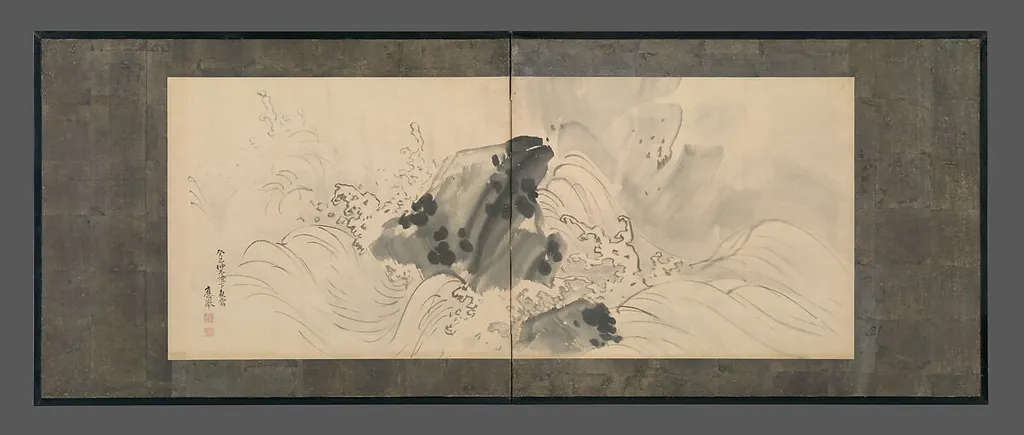
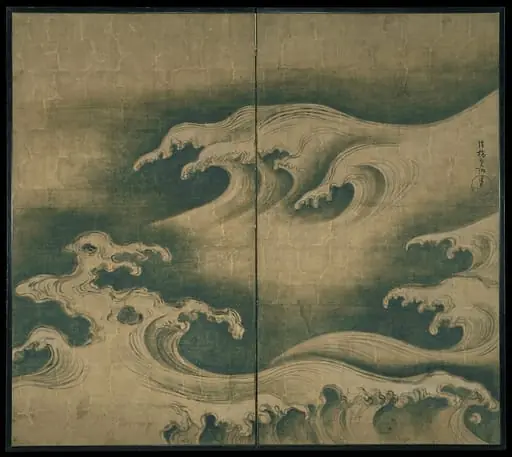
Untitled is an ink painting by the Romanticist artist Maruyama Ōkyo 円山応挙. It dates from 1773 and is held in the collection of the Metropolitan Museum of Art. Created in 1773, this two‑panel folding screen by Maruyama Ōkyo presents a single, sweeping wave that stretches across both sheets of paper.
About this work
You see two tall paper panels side by side: a single wave curling across both sheets, foam spraying like tiny white fireworks.
You see two tall paper panels side by side: a single wave curling across both sheets, foam spraying like tiny white fireworks.
Ōkyo painted this in 1773, when most Japanese artists still worked in flat, decorative patterns. Here, the wave feels alive—ink washes build depth, and fine brushstrokes suggest the water’s weight and speed. It’s not a copy of nature; it’s Ōkyo’s quiet experiment with how much feeling you can pack into ink on paper.
If you like the way the wave moves, look up *waves, japan* next.
Overview
Created in 1773, this two‑panel folding screen by Maruyama Ōkyo presents a single, sweeping wave that stretches across both sheets of paper. Rendered in ink and color, the composition captures the motion of water with a dynamic curl and a spray of foam that resembles tiny bursts of white light.
Subject & Meaning
The work depicts a solitary wave, an elemental motif that invites contemplation of nature’s power and transience. Rather than a literal landscape, the image functions as an abstracted study of movement, suggesting both the physical weight of the water and the fleeting, almost poetic quality of its crest.
Technique & Style
Ōkyo employs layered ink washes to generate depth, while delicate brushstrokes articulate the wave’s texture and velocity. This approach diverges from the flat decorative patterns typical of mid‑eighteenth‑century Japanese art, emphasizing a more naturalistic rendering that relies on tonal variation and subtle line work to convey atmosphere.
History & Provenance
The screen has been part of The Metropolitan Museum of Art’s collection since its acquisition, where it remains a representative example of Ōkyo’s experimental phase. Its preservation on paper underscores the artist’s skill in handling a medium that demands careful handling and conservation.
Artist & collection

 Eight Views of the Xiao and Xiang Rivers
 波濤図屏風|Rough Waves
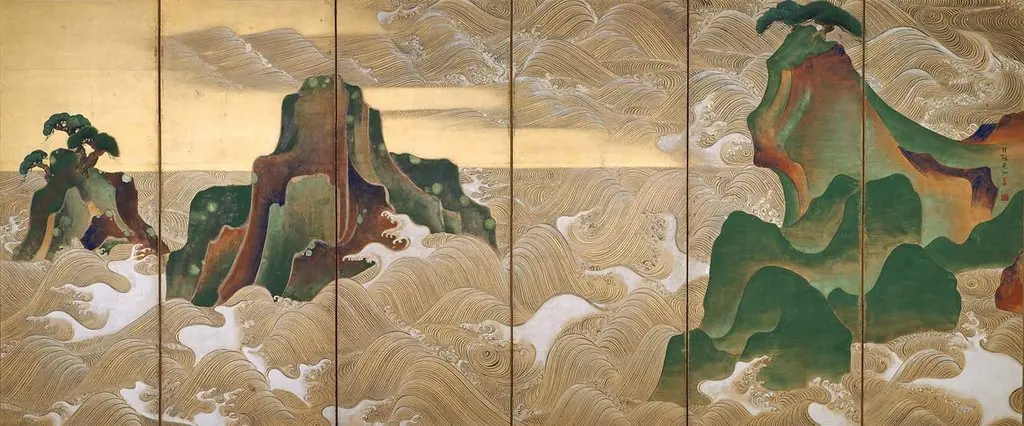 Waves at Matsushima
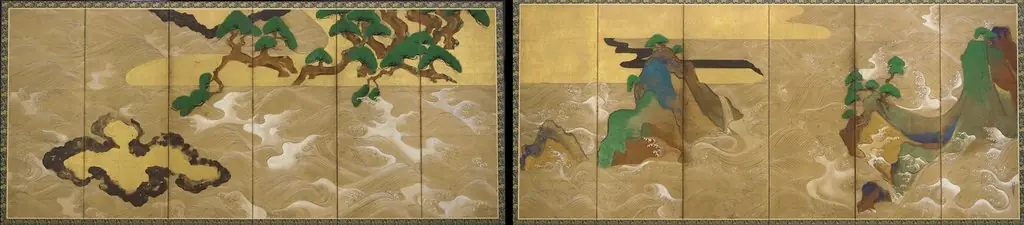 Waves at Matsushima
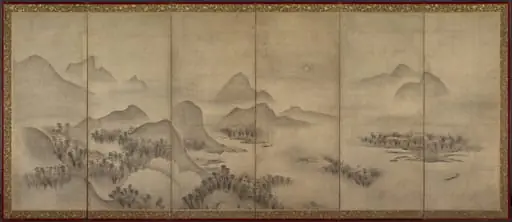 Moonlit Landscape (one of a pair)
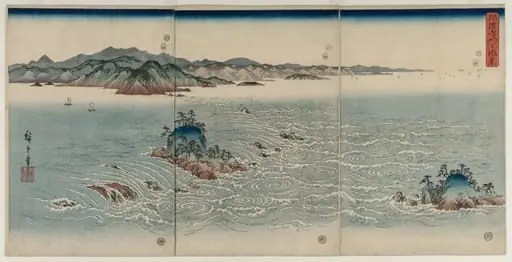 The Whirlpools of Awa
 四季山水図屏風|Landscapes of the Four Seasons
 Chinese Landscape
 Landscape with Motifs from the Eight Views of Xiao-Xiang
 The Four Seasons
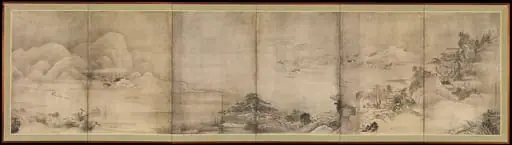 近江八景|Eight Views of Ōmi (Ōmi hakkei)
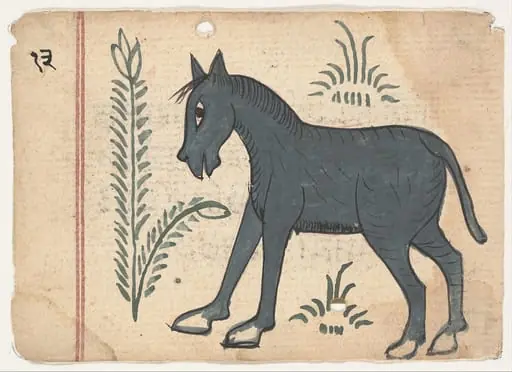 Untitled