Artwork
Studies of an Archangel and a Wind God (verso)
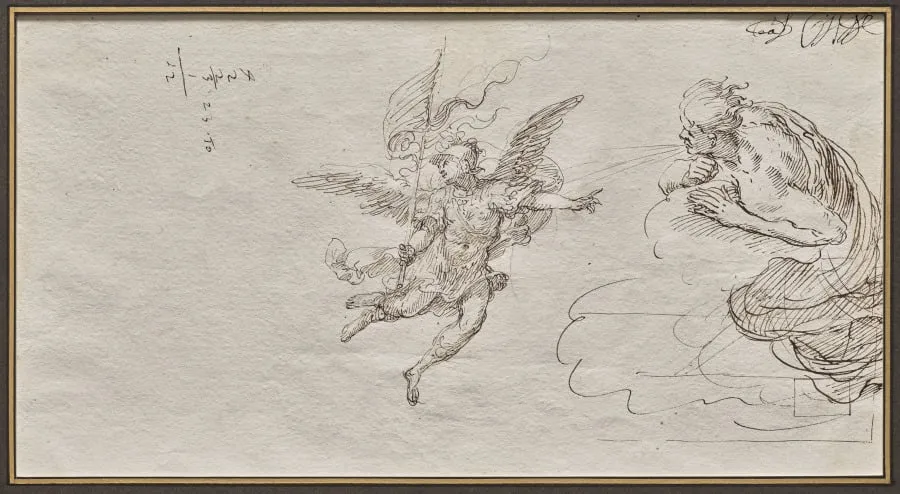
Studies of an Archangel and a Wind God (verso) is a drawing by the Baroque artist Massimo Stanzione. It dates from 1624 and is held in the collection of the Cleveland Museum of Art.
About this work
Overview
This drawing, created by Massimo Stanzione in the 1620s, consists of two rapid studies on the reverse of a sheet: a winged archangel and a bearded wind deity.
This drawing, created by Massimo Stanzione in the 1620s, consists of two rapid studies on the reverse of a sheet: a winged archangel and a bearded wind deity. Executed in ink, these sketches served as preparatory work for a larger altarpiece commissioned for the Monasterio de la Descalzas Reales in Madrid. Though Naples was then dominated by Caravaggisti intensity, Stanzione’s approach favored clarity and restraint, reflecting his alignment with classical ideals over theatrical naturalism.
Subject & Meaning
The archangel reflects a devotional tradition centered on the Seven Angelic Princes, a cult promoted by the Sicilian friar Antonio Del Duca and widely observed in both Naples and Spain. The wind god, likely a classical allusion, may symbolize divine forces or serve as a compositional counterpoint. Together, the figures suggest Stanzione’s synthesis of Christian iconography with classical mythology, a practice that enriched the spiritual narrative of his final painting without compromising its devotional purpose.
Technique & Style
Stanzione employed loose, fluid ink lines that convey movement and thought rather than polished finish. The archangel’s wings and drapery are suggested with economical strokes, while the wind god’s beard and musculature are hinted at through swift contours. This unpolished quality reveals his working process—testing forms and gestures before committing to oil. His handling of light and volume, though subtle, anticipates the balanced chiaroscuro of the finished work, distinguishing it from the stark contrasts favored by contemporaries like Ribera.
History & Provenance
The drawing was made as part of Stanzione’s preparation for a commissioned altarpiece depicting the Seven Archangels, delivered to the Descalzas Reales in Madrid around 1625. The painting’s subject resonated with Spanish Habsburg religious patronage, which favored angelic hierarchies. The drawing’s survival suggests it was retained by the artist or his studio, possibly as a reference. Its current location and acquisition history remain undocumented beyond its association with Stanzione’s known oeuvre.
Context
In 1620s Naples, Caravaggio’s legacy dominated painting through emotional intensity and stark lighting. Stanzione stood apart by favoring harmonious composition and restrained drama, drawing inspiration from Raphael and Bolognese classicism. His engagement with the cult of the Seven Archangels aligned with broader Iberian devotional trends, while his classical leanings positioned him as a bridge between Neapolitan naturalism and the emerging Baroque ideal of ordered grace.
Legacy
Stanzione’s preparatory drawings, including this one, illustrate his methodical approach to large-scale religious commissions. Though less celebrated than his more dramatic peers, his balanced style influenced later Neapolitan artists seeking refinement over spectacle. The survival of such sketches offers insight into the transition from sketch to finished work, revealing how classical principles were quietly integrated into Baroque religious art despite prevailing trends.
Artist & collection
Artist
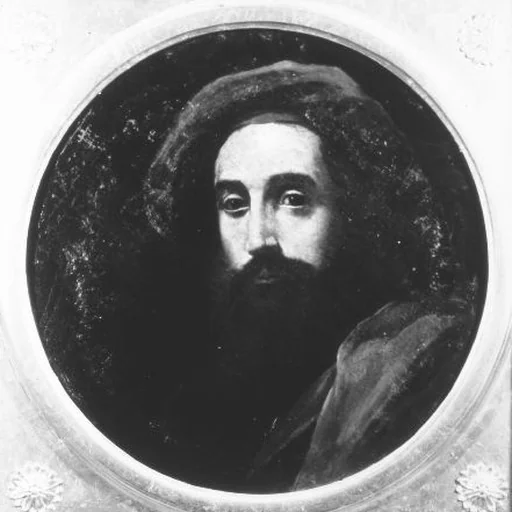
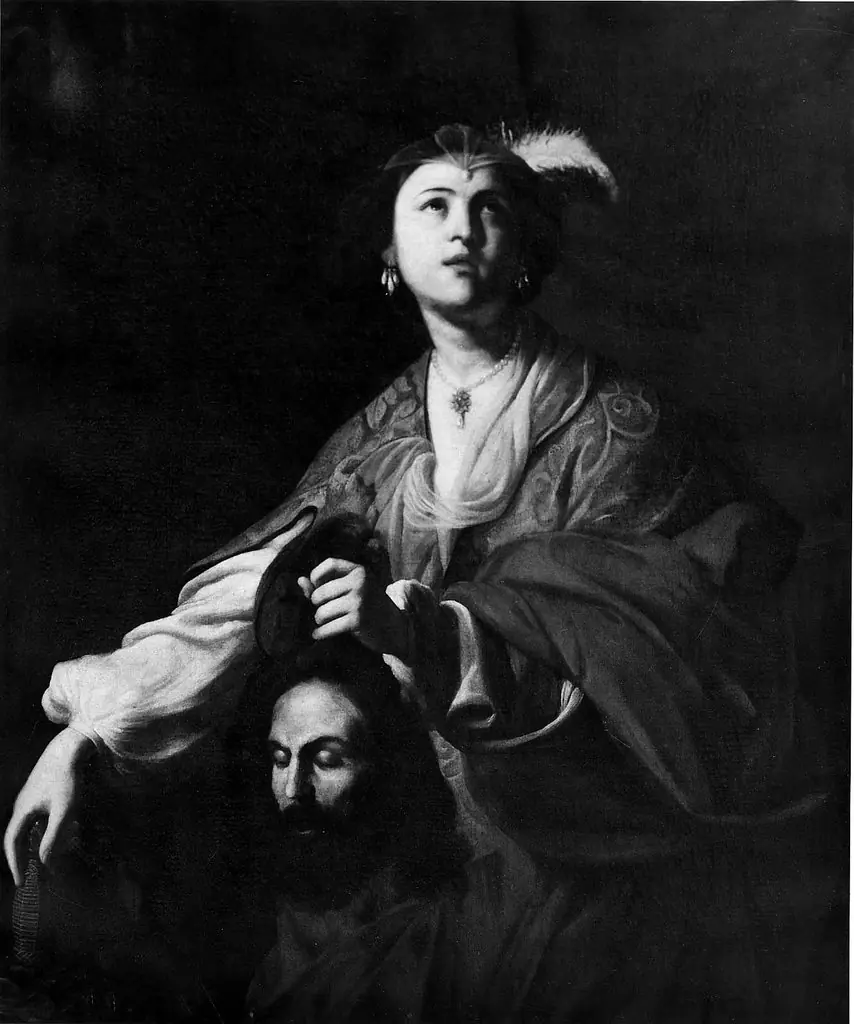
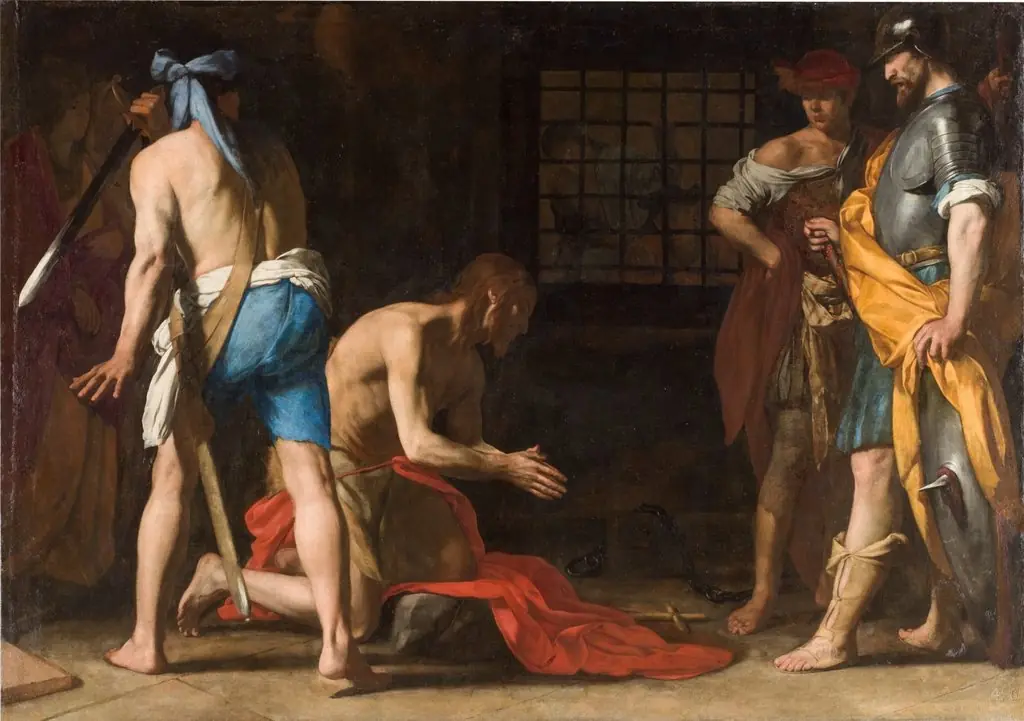
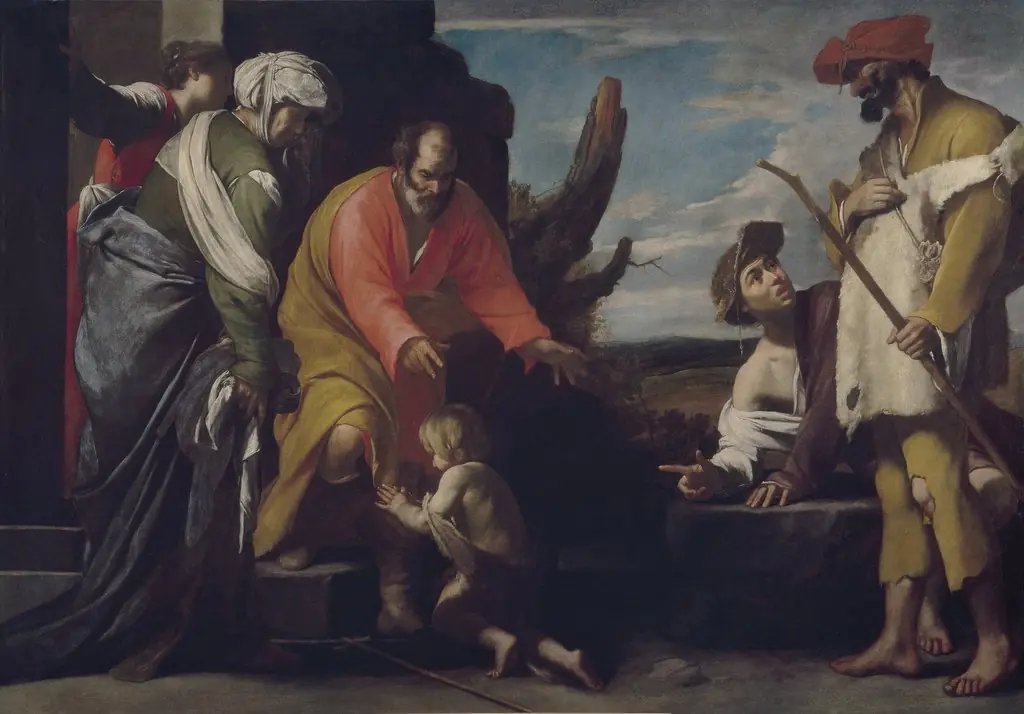
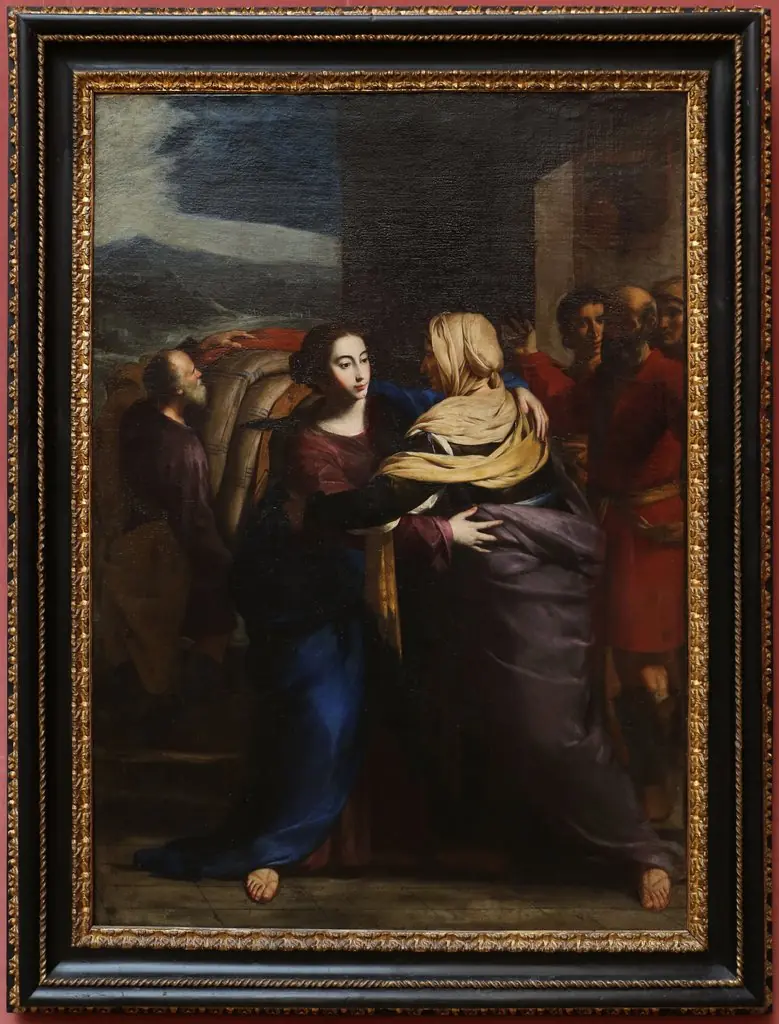
Massimo Stanzione (also called Stanzioni; Frattamaggiore 1585 – Naples 1656) was an Italian Baroque painter, mainly active in Naples, where he and his rival Jusepe de Ribera dominated the painting scene for several decades.

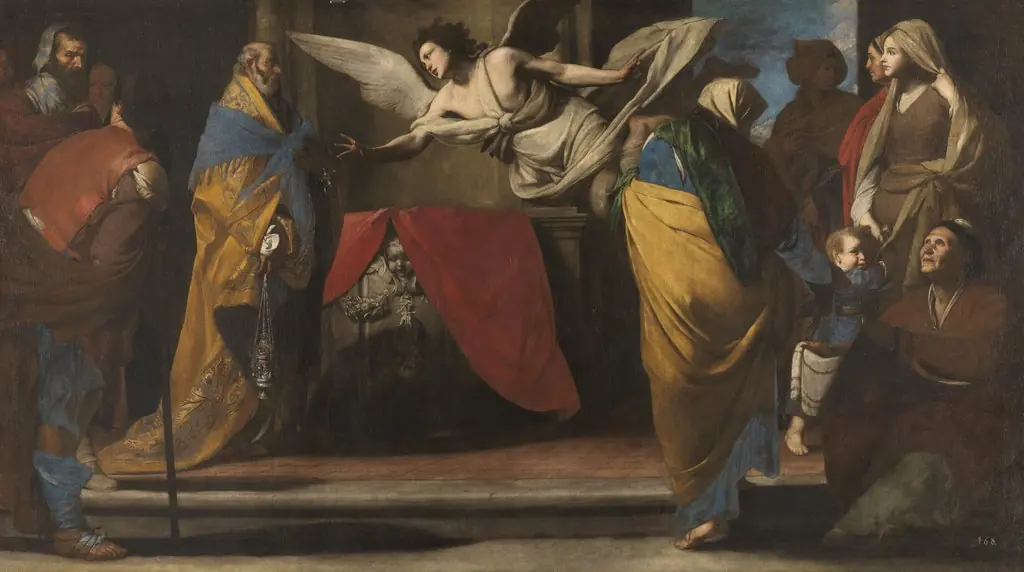
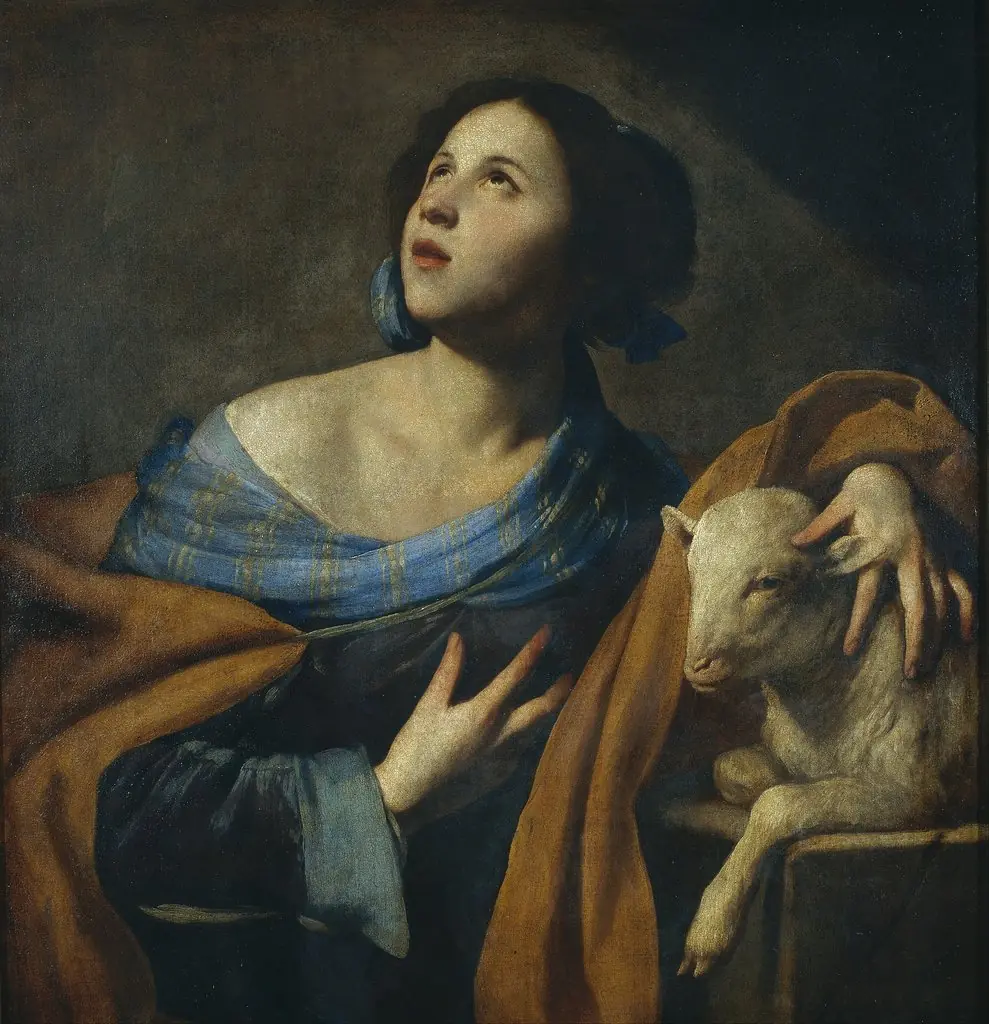
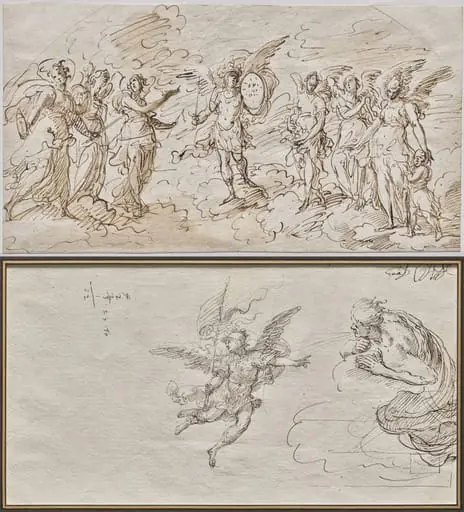 The Seven Archangels (recto); Studies of an Archangel and a Wind God (verso)
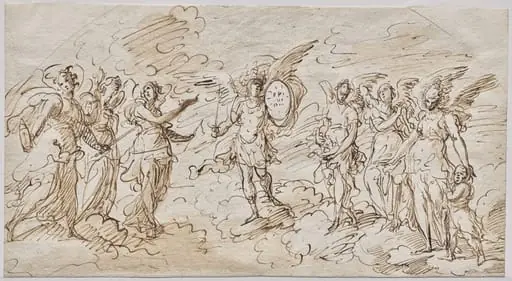 The Seven Archangels (recto)
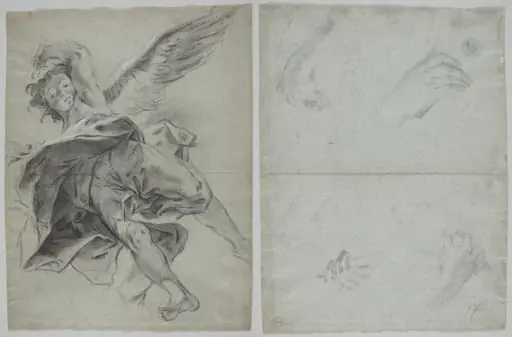 A Flying Angel (recto); Studies of Hands Playing Instruments (verso)
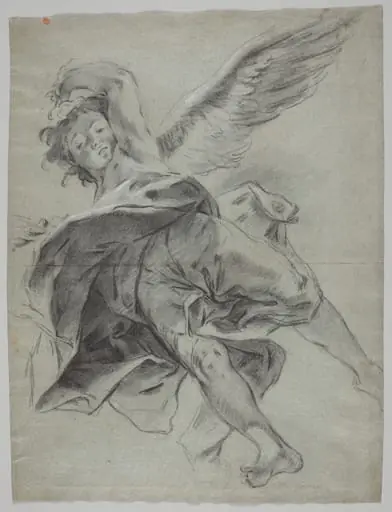 A Flying Angel (recto)
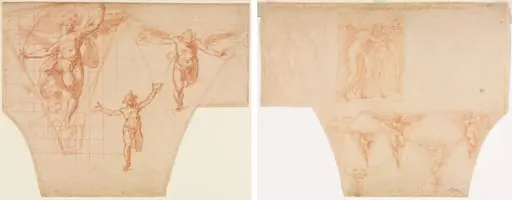 Three Studies of Angels for a Pendentive (recto); Studies for Christ Meeting His Mother on the Road to Calvary, Studies of an Angel in a Pendentive (verso)
![Studies of Figures for an Adoration of the Magi [verso], by Donato Creti](https://artifactworldgallery.com/img/donato-creti--studies-of-figures-for-an-adoration-of-the-magi-verso--a4ea202b1ff86cc6-w320.webp) Studies of Figures for an Adoration of the Magi [verso]
Studies of Figures for an Adoration of the Magi [verso]