Artwork
Saint John the Baptist says goodbye to his Parents
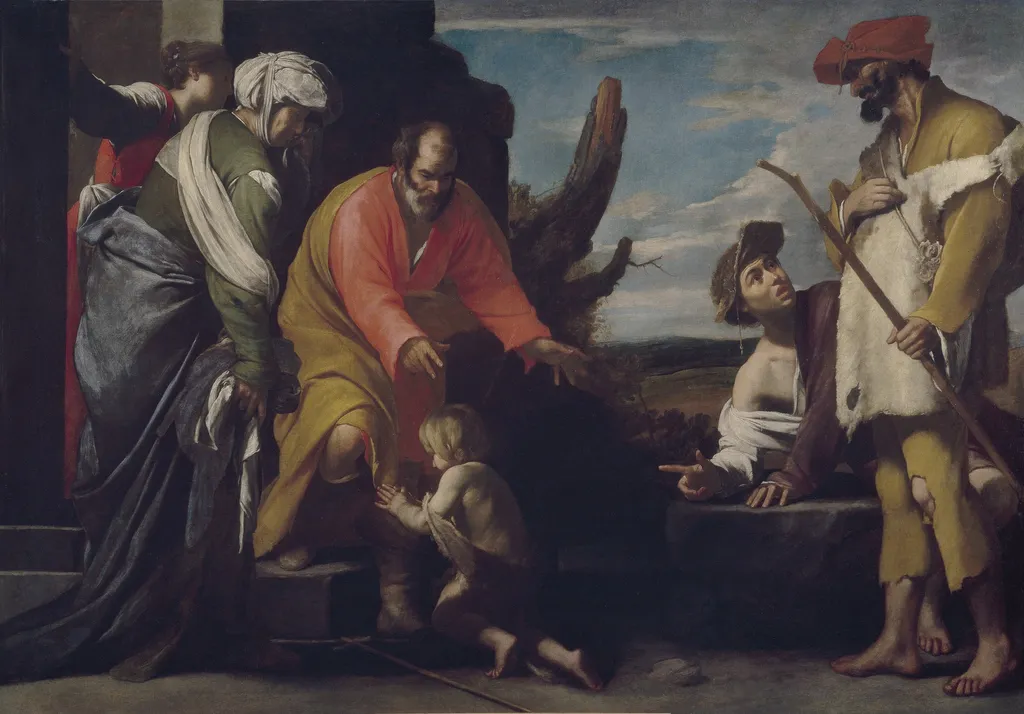
Saint John the Baptist says goodbye to his Parents is an oil painting by the Early Baroque Italian artist Massimo Stanzione. It dates from 1634 and is held in the collection of the Museo del Prado.
About this work
Overview
Executed in 1634, this oil painting by Massimo Stanzione exemplifies the early Baroque period in Naples. Stanzione, recognized for his religious compositions, renders a biblical narrative with a balance of emotional restraint and visual clarity. The work remains part of the Museo del Prado’s holdings, where it continues to represent the artist’s engagement with sacred themes.
Subject & Meaning
The scene captures the moment Saint John the Baptist, depicted as a youth in humble attire, takes leave of his parents. Zachariah, seated on a rock, and Elizabeth, standing with a comforting hand on his shoulder, frame the farewell. The quiet intimacy of the exchange underscores themes of duty and divine calling, central to the Gospel account of John’s departure for the wilderness.
Technique & Style
Stanzione employs chiaroscuro to model the figures, directing light across the composition to emphasize volume and texture. The landscape recedes into a softly rendered sky, its muted tones contrasting with the warm illumination on the central figures. Brushwork remains controlled, favoring smooth transitions that align with the idealized naturalism characteristic of Neapolitan Baroque painting.
History & Provenance
Created in 1634, the painting entered the Spanish royal collection before becoming part of the Museo del Prado’s founding holdings in the early nineteenth century. Documentation of its earlier history remains sparse, though its presence in Madrid suggests acquisition during the period of Habsburg patronage, when Neapolitan art enjoyed favor in the Spanish court.
Context
This work aligns with the era’s preference for accessible, emotionally resonant depictions of biblical narratives, intended to inspire piety in viewers.
During the seventeenth century, Naples emerged as a vibrant center of Baroque art, with Stanzione among its leading figures. Religious commissions dominated artistic production, reflecting both Counter-Reformation ideals and local devotional practices. This work aligns with the era’s preference for accessible, emotionally resonant depictions of biblical narratives, intended to inspire piety in viewers.
Own this work as a print
Artist & collection
Artist
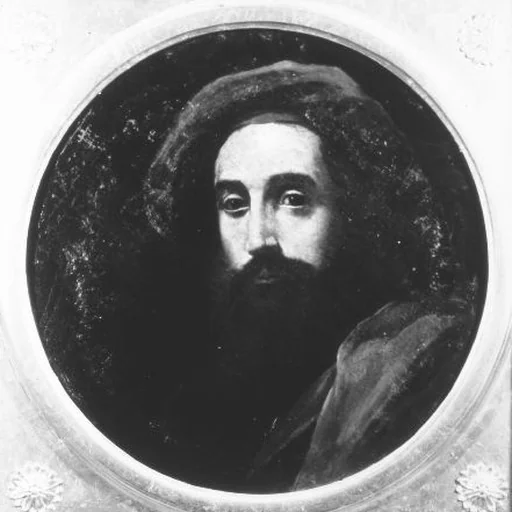
Massimo Stanzione (also called Stanzioni; Frattamaggiore 1585 – Naples 1656) was an Italian Baroque painter, mainly active in Naples, where he and his rival Jusepe de Ribera dominated the painting scene for several decades.

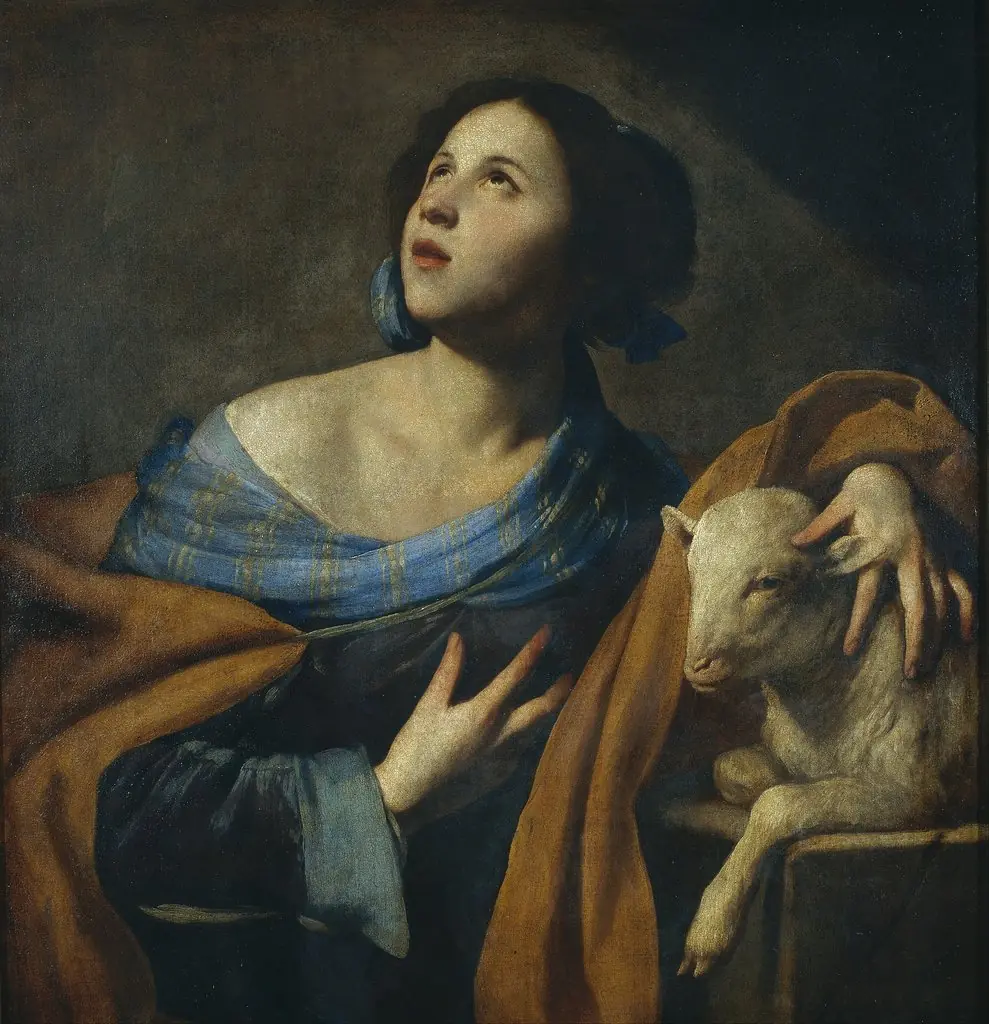
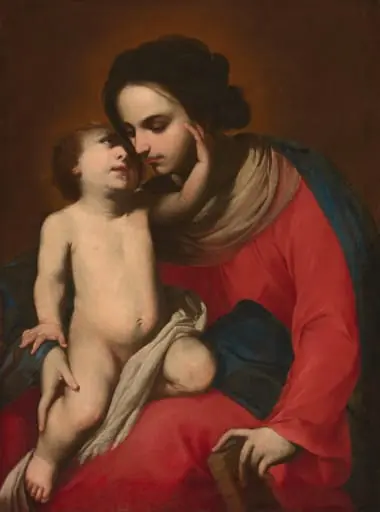
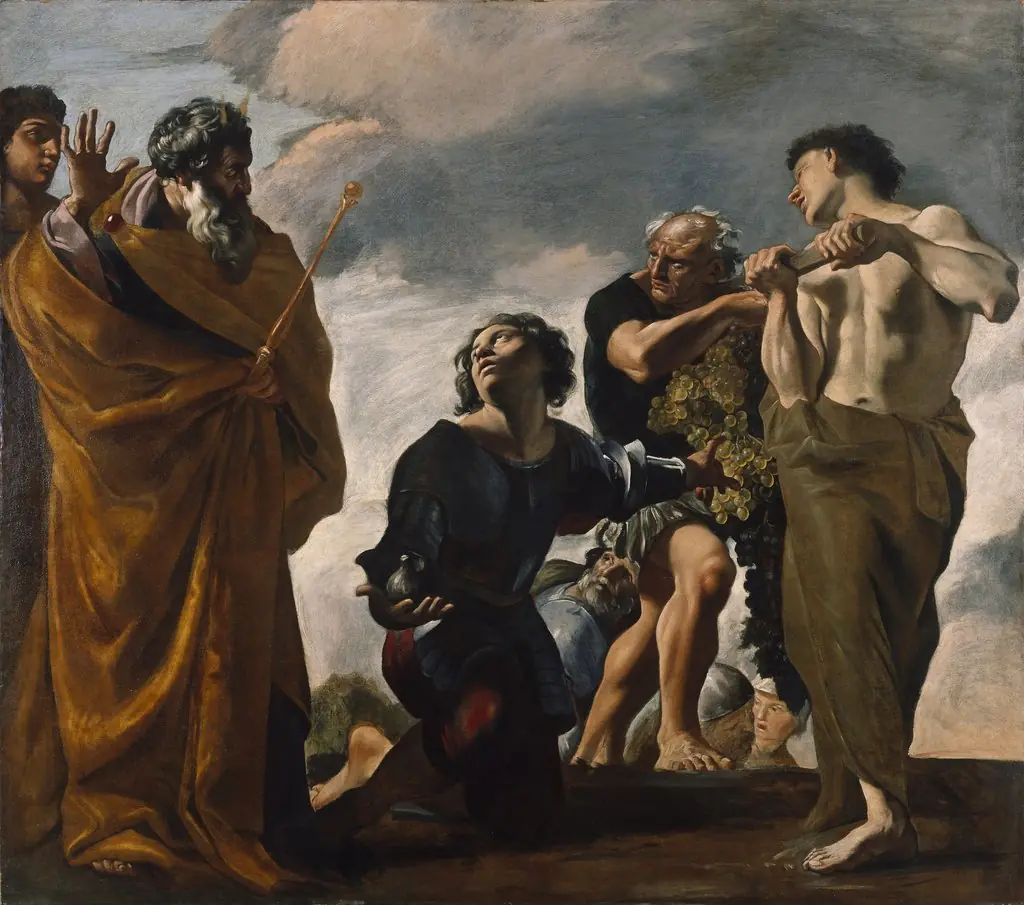 Moses and the Messengers from Canaan
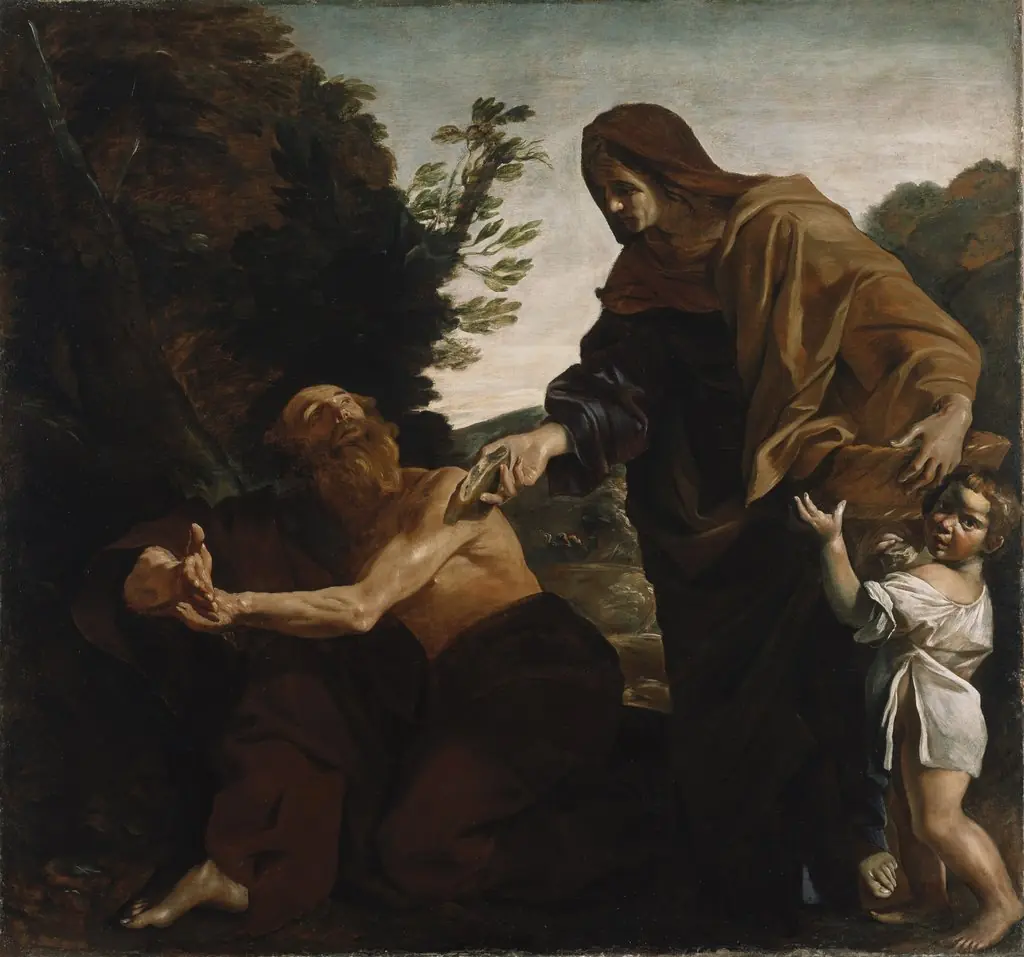 Elijah Receiving Bread from the Widow of Zarephath
 Die Verleugnung Petri
 El hijo pródigo
 Johannes Kastaja saarnaa
 Joseph sold by his brothers
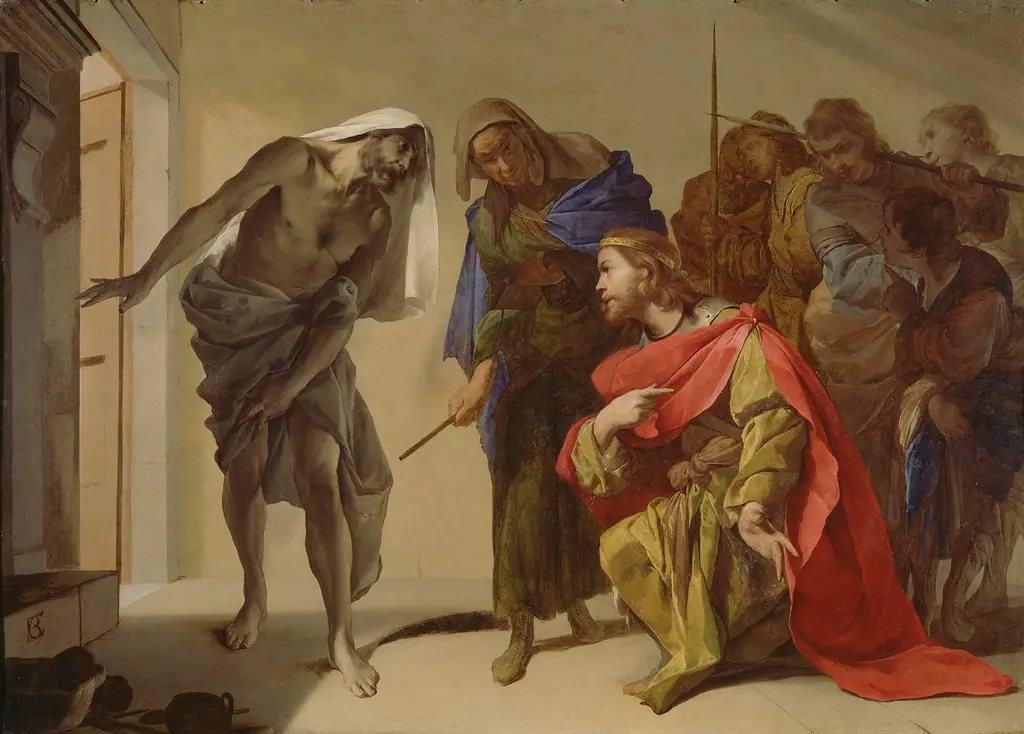 The Shade of Samuel Invoked by Saul
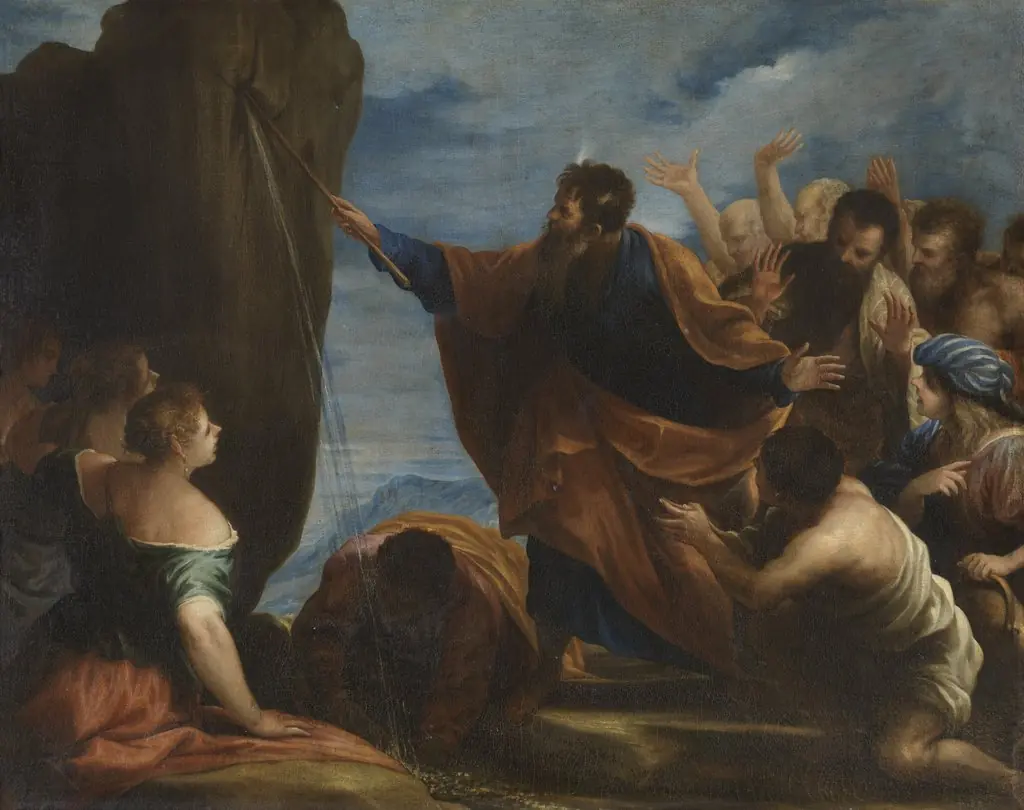 Moisés y el agua de la roca
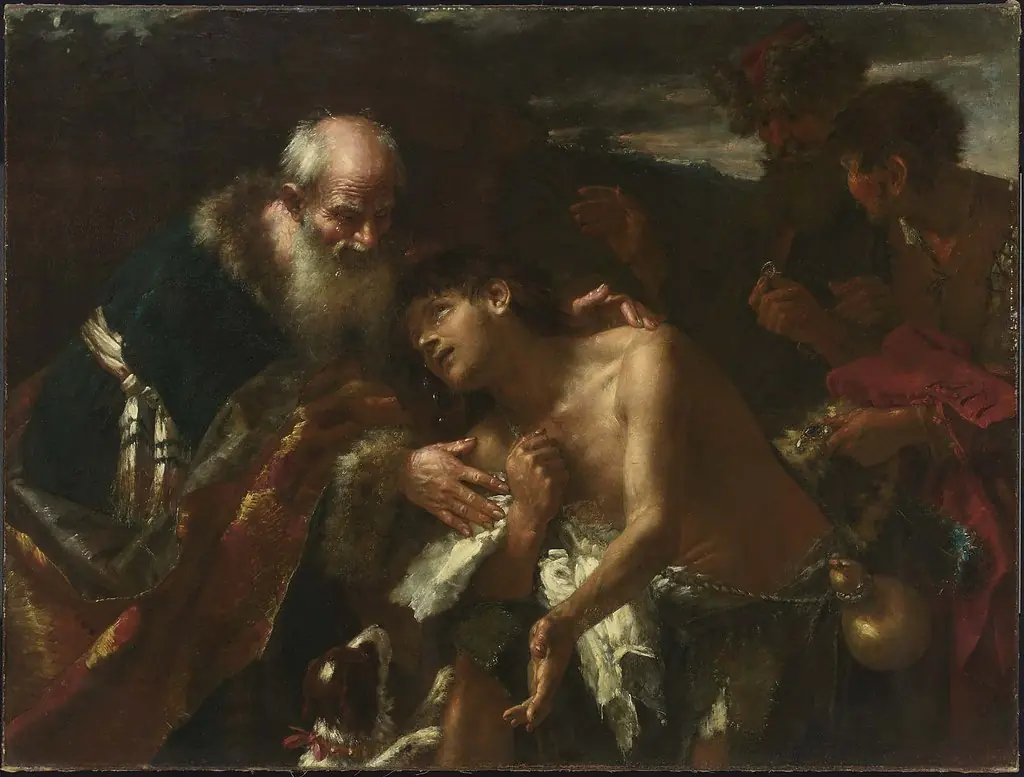 The Return of the Prodigal Son
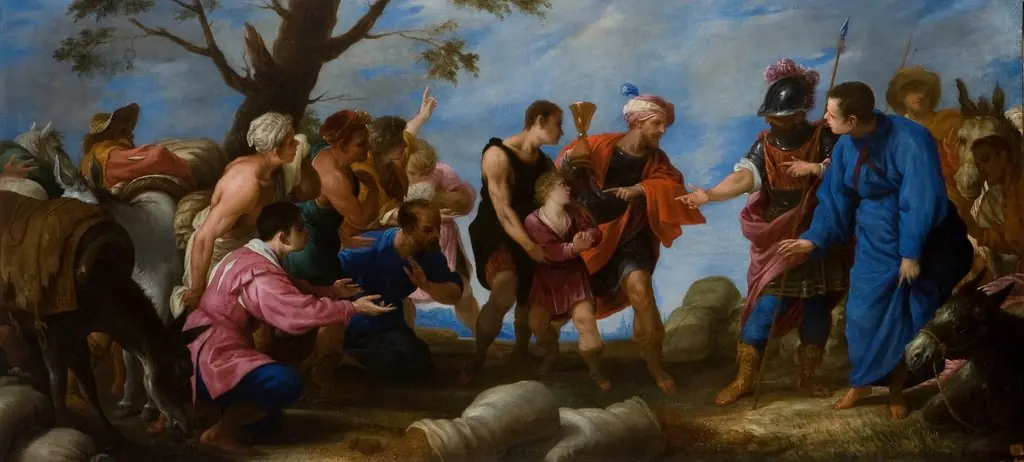 La copa en el saco de Benjamín
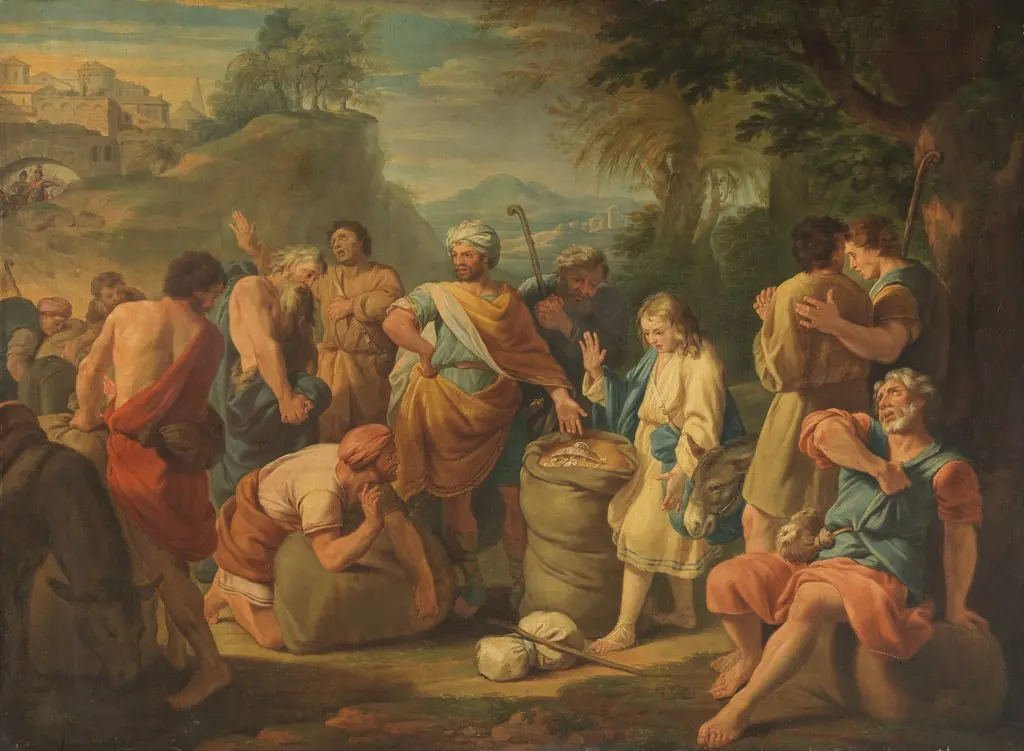 The Finding of the Money in Benjamin's Sack