Artwork
Apocalypse triptych
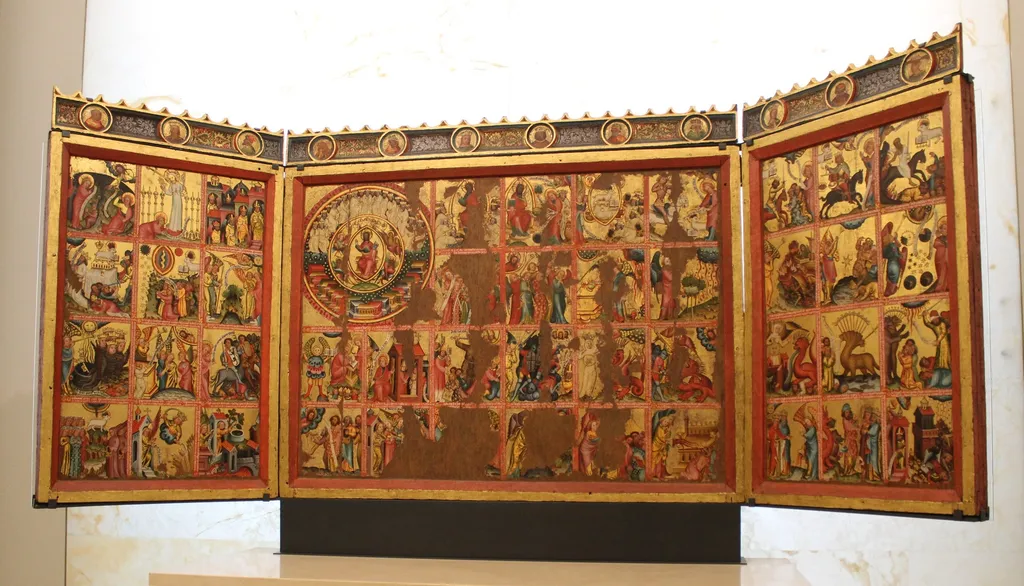
Apocalypse triptych is an unspecified painting by Master Bertram. It dates from 1400 and is held in the collection of the Victoria and Albert Museum.
About this work
Overview
Executed in the International Gothic style, it was designed for devotional use, with panels that fold to protect the imagery.
Created around 1400 by the German painter Master Bertram, the Apocalypse triptych is a three-paneled religious altarpiece composed of detailed narrative scenes drawn from the Book of Revelation. Executed in the International Gothic style, it was designed for devotional use, with panels that fold to protect the imagery. The central panel dominates in size and complexity, subdivided into numerous small vignettes, while the outer wings frame the central narrative with ornate gold and red borders.
Subject & Meaning
The triptych illustrates apocalyptic events from the Book of Revelation, including the Four Horsemen, the Last Judgment, and celestial visions. Each small scene within the central panel functions as a discrete moment in the unfolding divine drama, blending literal biblical episodes with symbolic imagery. The arrangement invites contemplation, guiding the viewer through a sequence of divine punishment, redemption, and cosmic transformation, characteristic of late medieval theological visualization.
Technique & Style
Master Bertram employed tempera and gold leaf on wood, applying fine brushwork to render intricate figures, textiles, and architectural details. The International Gothic style is evident in elongated forms, rich coloration, and decorative patterning. Scenes are arranged in a grid-like structure within the central panel, creating a visual rhythm that mimics manuscript illumination. Gold backgrounds and vivid hues enhance luminosity, while the layered textures suggest both material richness and spiritual intensity.
History & Provenance
The triptych was likely commissioned for a church or private chapel in northern Germany, possibly Hamburg or Lübeck, during the late 14th or early 15th century. It entered the Victoria and Albert Museum’s collection in the 19th century, having survived the Reformation’s iconoclastic campaigns. Its preservation is unusual, as many such altarpieces were destroyed or dismantled; its survival reflects its artistic value and possibly its location outside major ecclesiastical centers.
Context
Produced during a period of social upheaval and religious anxiety, the triptych responds to widespread fears of divine judgment following the Black Death and ecclesiastical corruption. Its detailed imagery aligns with contemporary devotional practices that emphasized visual meditation on sacred narratives. The work reflects the growing influence of lay piety and the role of art in personal spiritual experience, even as the Church remained the primary patron of such commissions.
Legacy
Master Bertram’s triptych stands as one of the few surviving large-scale works attributed to him, offering insight into regional German painting before the rise of Northern Renaissance naturalism. Its complex iconography and meticulous execution influenced later altarpieces in the Hanseatic region. Though not widely known outside specialist circles, it remains a key example of late medieval narrative painting and the visual culture of apocalyptic expectation.
Artist & collection
Artist
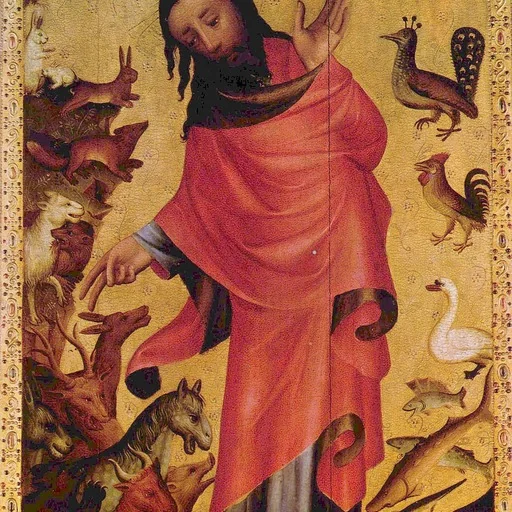
Master Bertram (c.1345–c.1415), also known as Meister Bertram and Master of Minden, was a German International Gothic painter primarily of religious art.

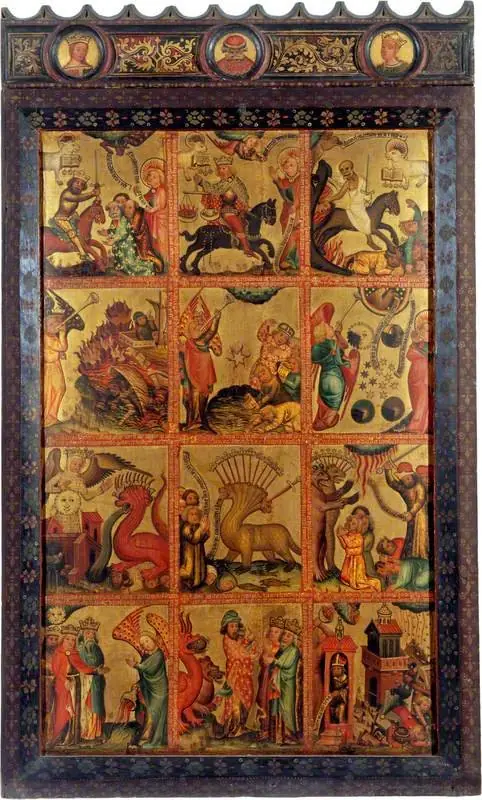 12 Scenes of the Apocalypse (triptych altarpiece, right wing, inner)
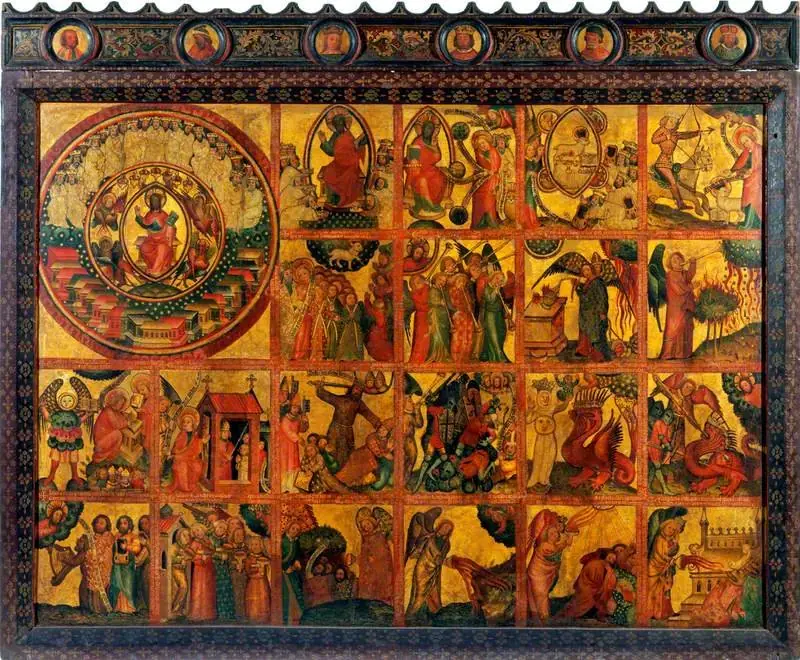 21 Scenes of the Apocalypse (triptych altarpiece, centre panel)
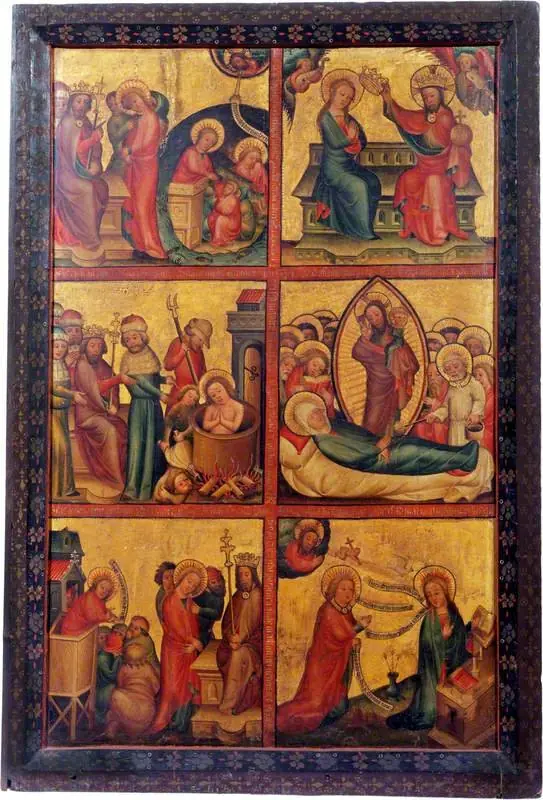 3 Scenes from the Life of Saint John the Evangelist; 3 Scenes from the Life of the Virgin (triptych altarpiece, left wing, outer)
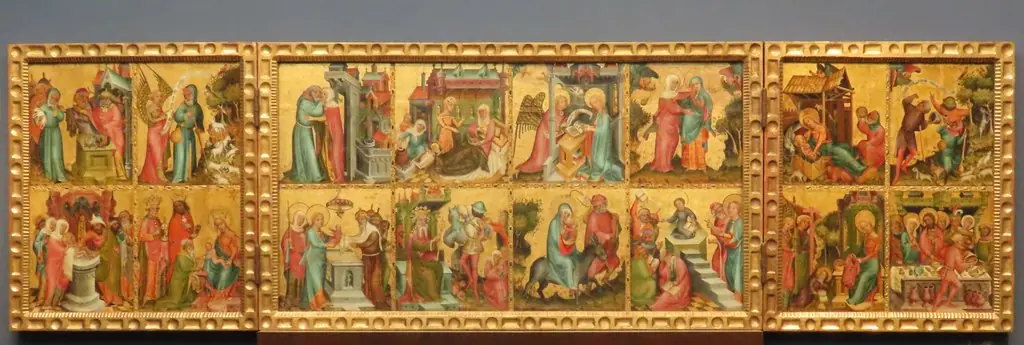 The Buxtehude Altar
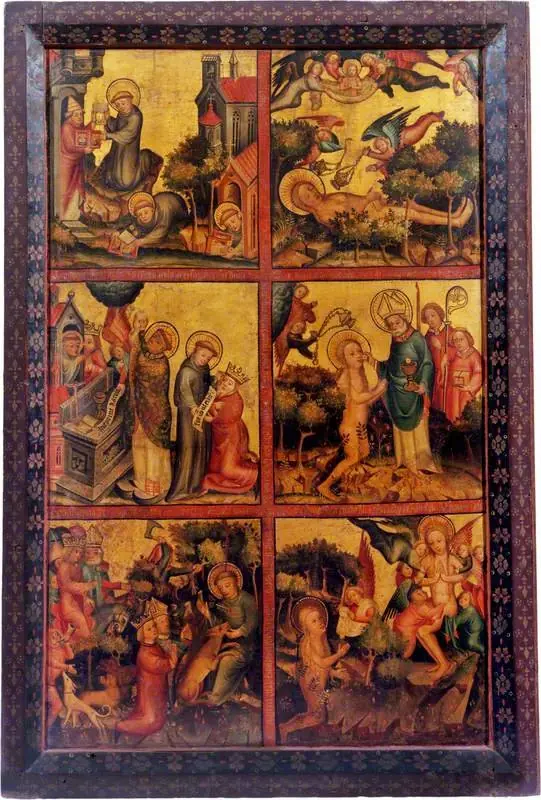 3 Scenes from the Life of St Giles; 3 Scenes from the Life of Saint Mary Magdalen (triptych altarpiece, right wing, outer)
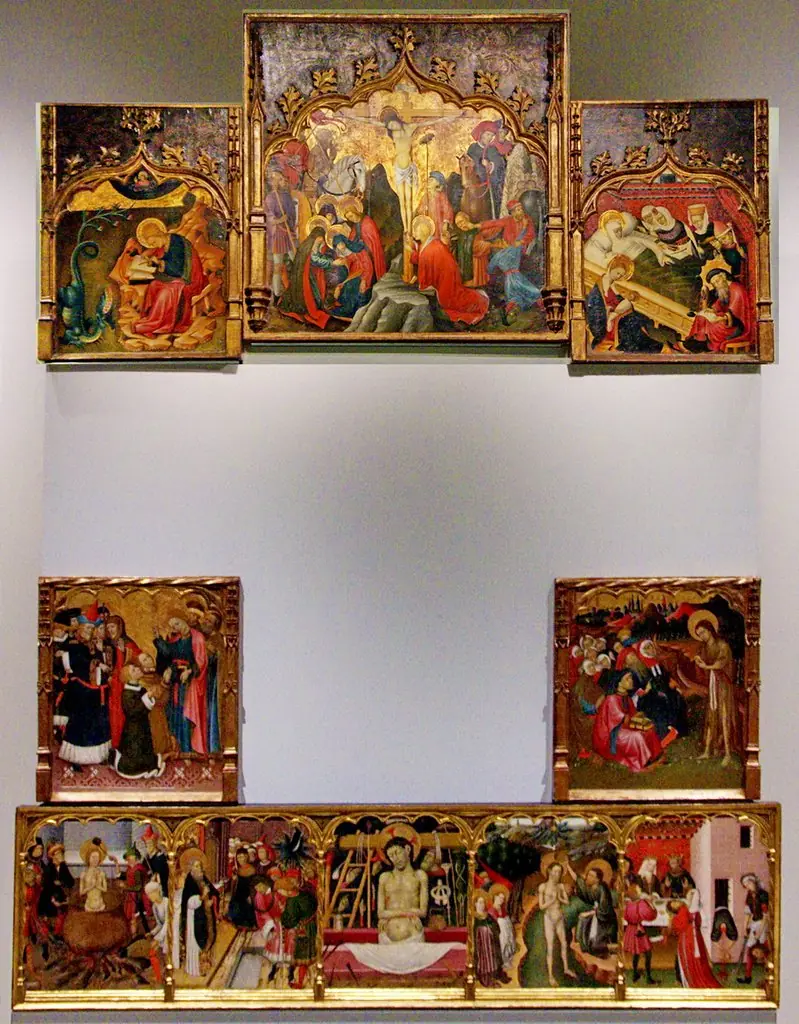 Altarpiece of the Saints John
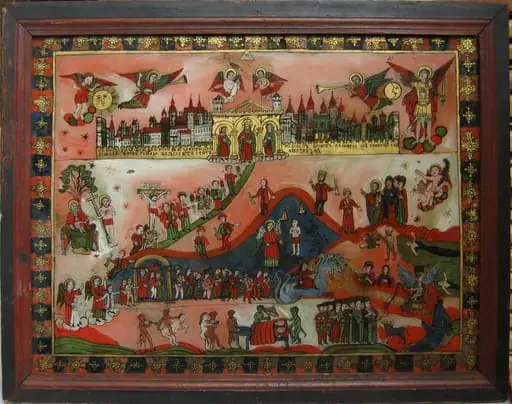 Înficoșătoarea Judecată de Apoi
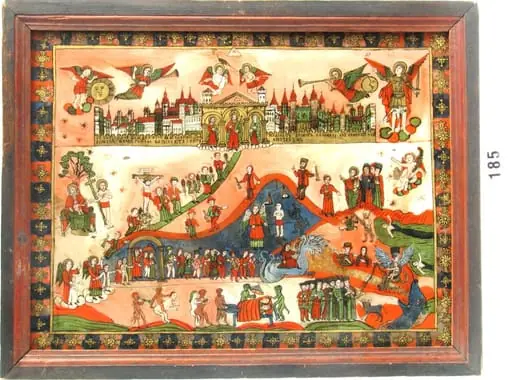 Înfricoșătoarea judecată de apoi
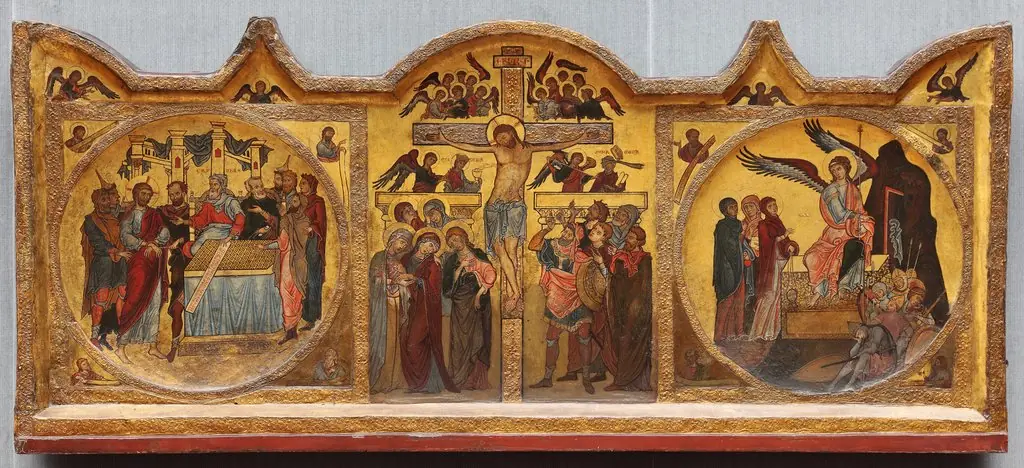 Crucifixion retable from Soest
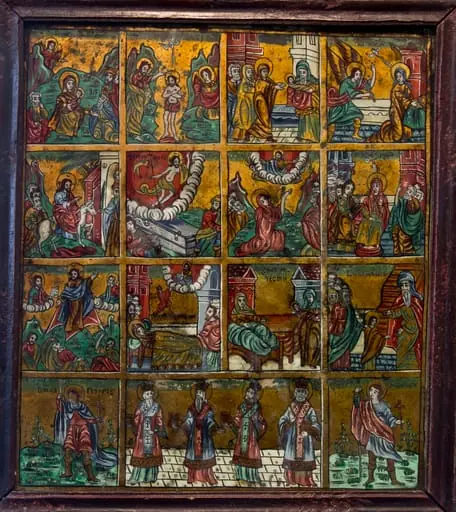 Prăznicar – Scene din viața lui Iisus
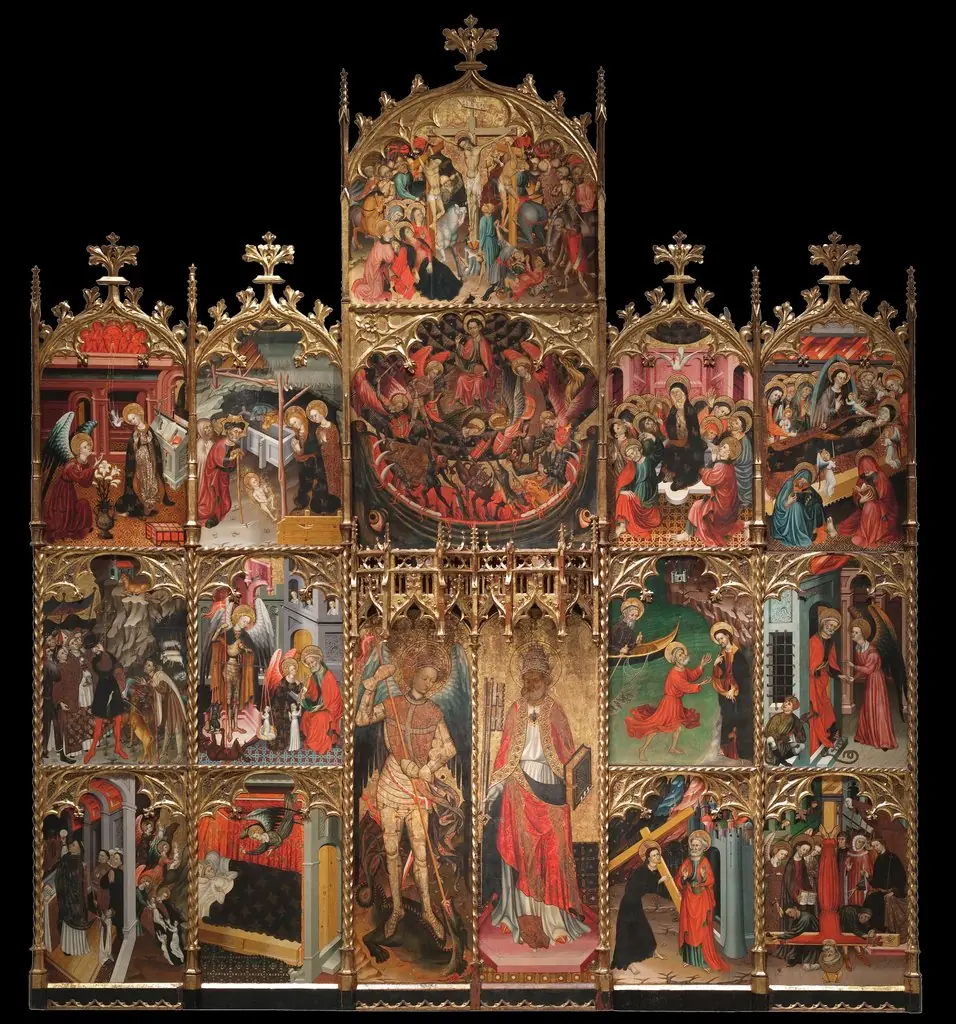 Altarpiece of Saint Michael and Saint Peter
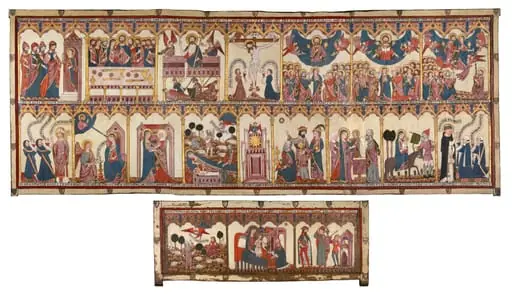 Retable and Frontal of the Life of Christ and the Virgin
 Scene biblice
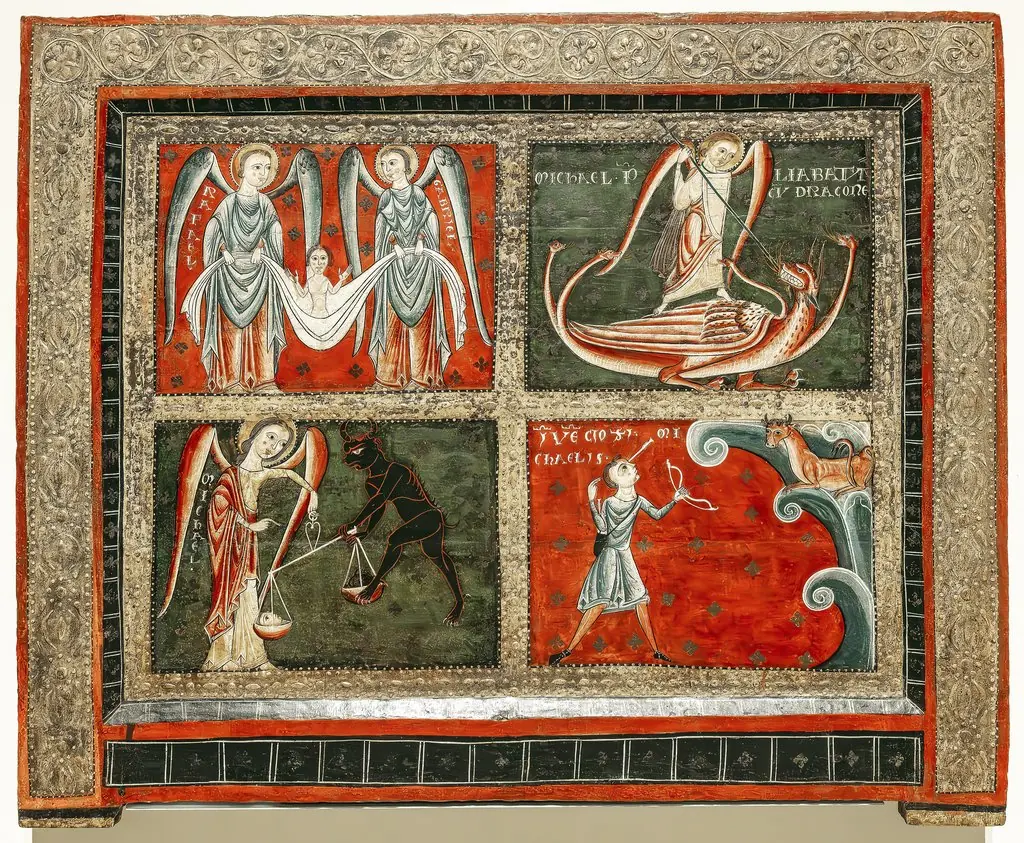 Altar frontal of the Archangels
 The Day of Judgement from Santa Maria de Taüll
 Altarpiece of Saint George