Artwork
Samson Rending the Lion
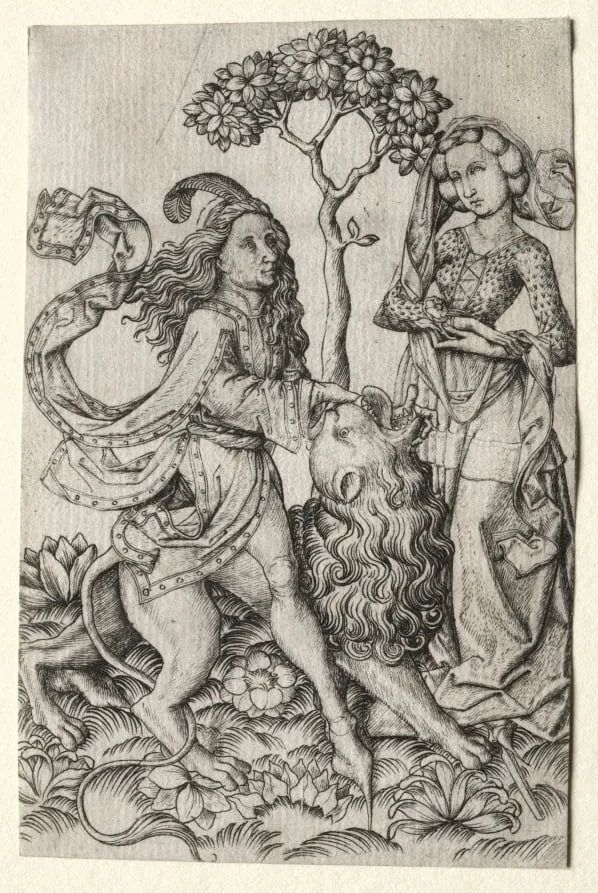
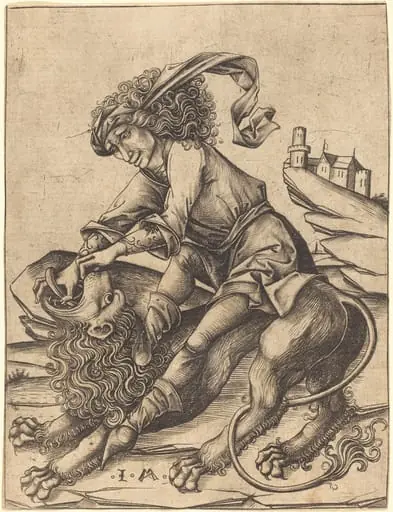
Samson Rending the Lion is a print by the Renaissance artist Master E.S.. It dates from 1458 and is held in the collection of the Cleveland Museum of Art. This early print depicts the biblical figure Samson engaged in a dramatic struggle with a lion, his hands bare.
About this work
Overview
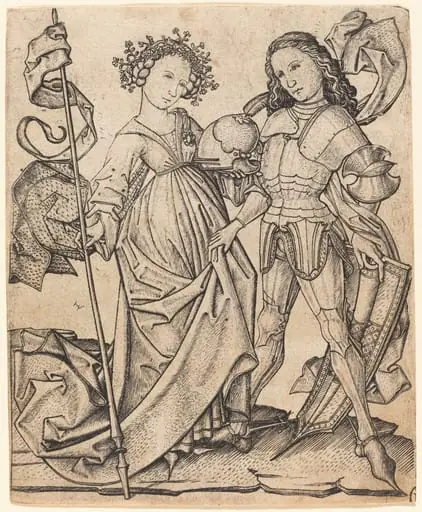
This early print depicts the biblical figure Samson engaged in a dramatic struggle with a lion, his hands bare. He is dressed in the elaborate costume of a medieval courtier, a visual choice that situates the ancient narrative within a contemporary, aristocratic setting. The composition emphasizes physical power and tension, inviting viewers to contemplate the hero’s legendary strength.
Subject & Meaning
The scene draws on the story of Samson and the lion from the Book of Judges, but adds a courtly maiden identified by early viewers as the woman of Timnah, Samson’s future wife who later betrays him. By pairing the hero’s feat with a potentially treacherous female figure, the print reflects a common early‑modern motif that even the mightiest men are vulnerable to the influence of women.
Technique & Style
Executed in the chiaroscuro tradition, the print employs stark contrasts of light and dark to model Samson’s muscular form and the lion’s fur, heightening the sense of three‑dimensionality. The intricate detailing of the courtier’s attire—rich fabrics, jeweled accessories—demonstrates the artist’s skill in line work and hatching, typical of high‑quality woodcut or engraving of the period.
History & Provenance
Produced in the early modern era, the print belongs to a series of biblical illustrations that circulated widely among literate audiences.
Produced in the early modern era, the print belongs to a series of biblical illustrations that circulated widely among literate audiences. Its circulation contributed to the popular visual vocabulary linking biblical heroes with contemporary courtly ideals. The work’s provenance traces through several European collections before entering its present museum holdings, where it remains a valuable example of narrative printmaking.
Artist & collection

Artist
Master E. S. (c. 1420 – c. 1468; previously known as the Master of 1466) is an unidentified German engraver, goldsmith, and printmaker of the late Gothic period. He was the first major German artist of old master prints…