Artwork
Saint Paul
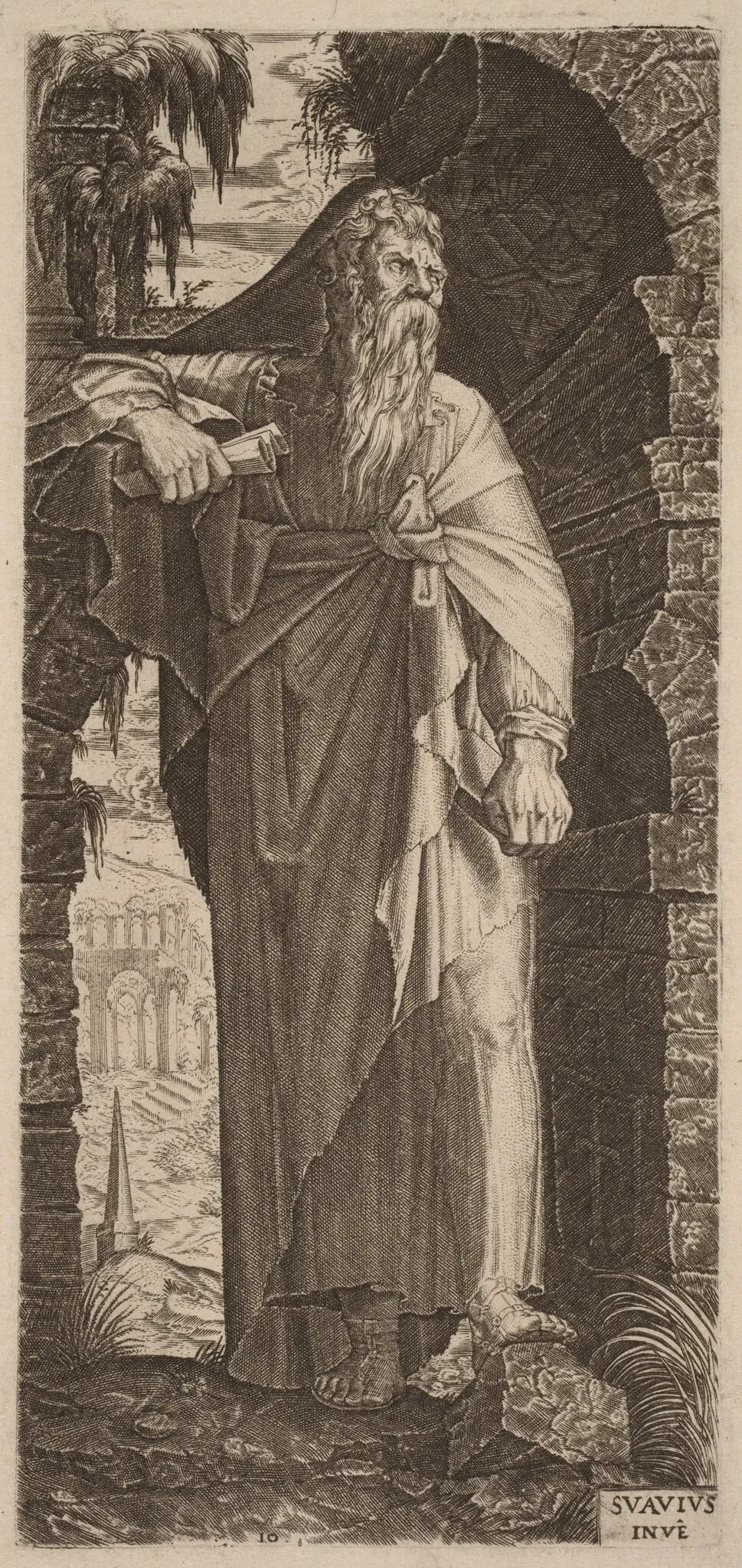
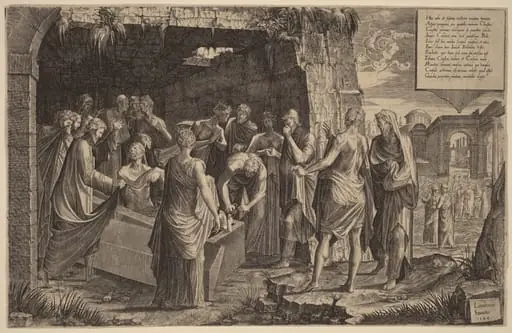
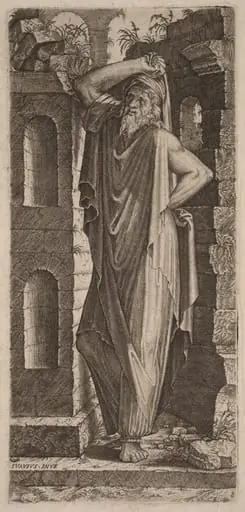
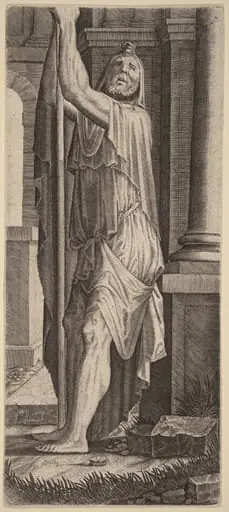
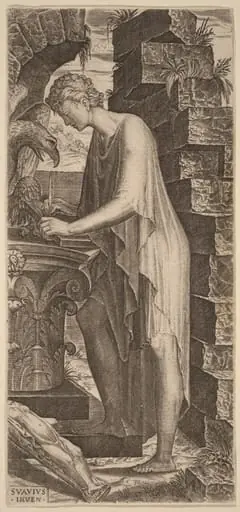
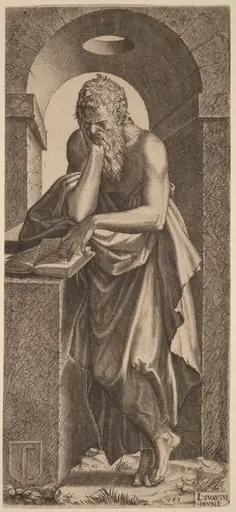
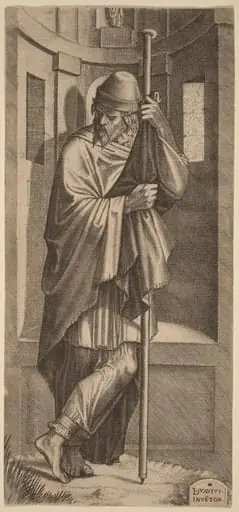
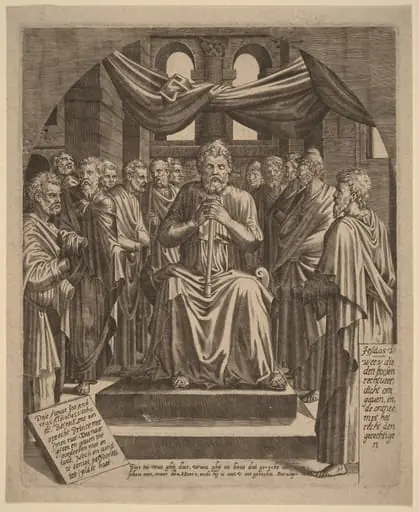
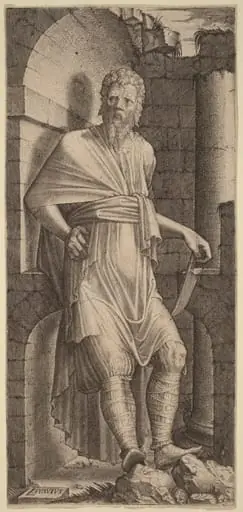
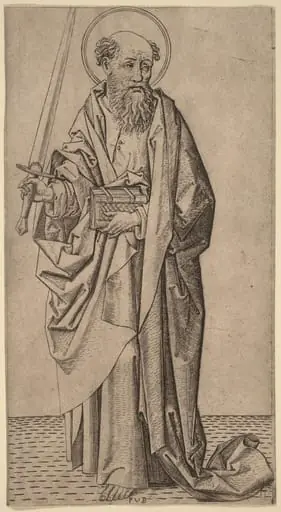
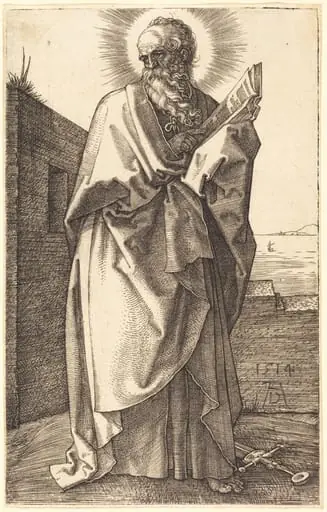
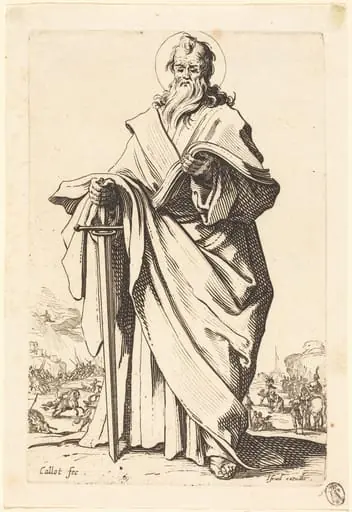
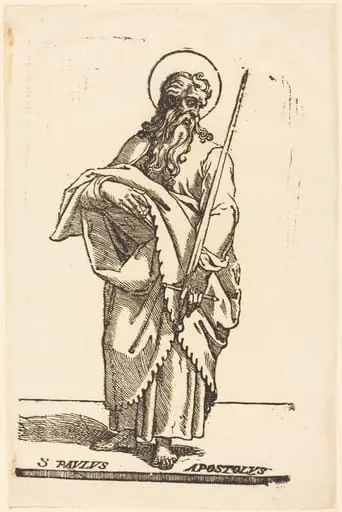
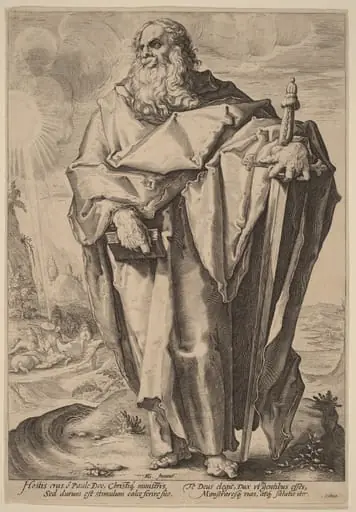
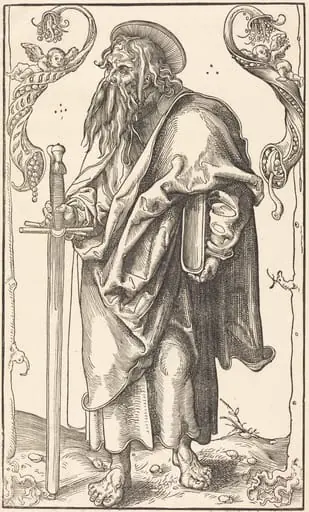
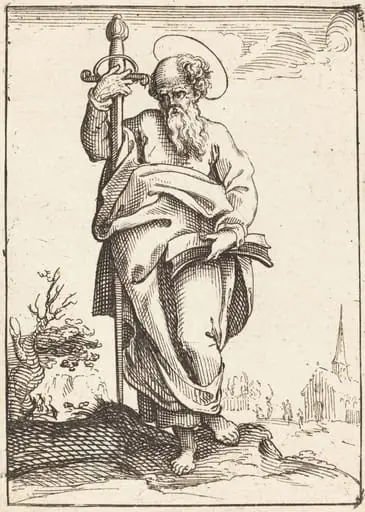
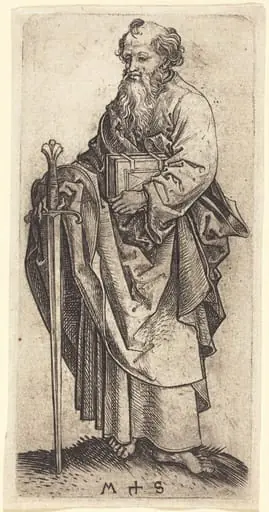
Saint Paul is an ink print by the Renaissance artist Lambert Suavius. It dates from 1545 and is held in the collection of the National Gallery of Art.
About this work
Overview
Lambert Suavius’s engraving of Saint Paul, dated around 1545, presents a monochrome portrait of the apostle in a contemplative pose. The figure, an elderly man with a white beard and curled hair, is rendered in fine line work on laid paper, typical of mid‑sixteenth‑century printmaking.
Subject & Meaning
The apostle is depicted holding a scroll in one hand and a book in the other, symbols of his missionary journeys and theological writings. His loose robe and sandals suggest a humble, itinerant preacher, while the surrounding architecture and landscape hint at the biblical settings associated with his life.
Technique & Style
Suavius employed the engraving process, incising delicate lines into a metal plate that were then transferred to paper. The artist achieved texture through cross‑hatching, especially in the folds of the garment and the rugged stone wall behind the figure, creating a sense of depth characteristic of Renaissance prints.
History & Provenance
The work originates from the mid‑Renaissance period in the Low Countries, a time when printmaking served both devotional and didactic purposes. While specific ownership records are scarce, the engraving has been catalogued among Suavius’s religious series, reflecting the era’s demand for portable images of saints.
Context
Printed on laid paper, the image would have been accessible to a broad audience, extending the reach of religious iconography beyond churches. The inclusion of architectural elements and a distant landscape aligns with contemporary efforts to situate holy figures within recognizable, earthly environments.
Artist & collection