Artwork
The Mount of Calvary
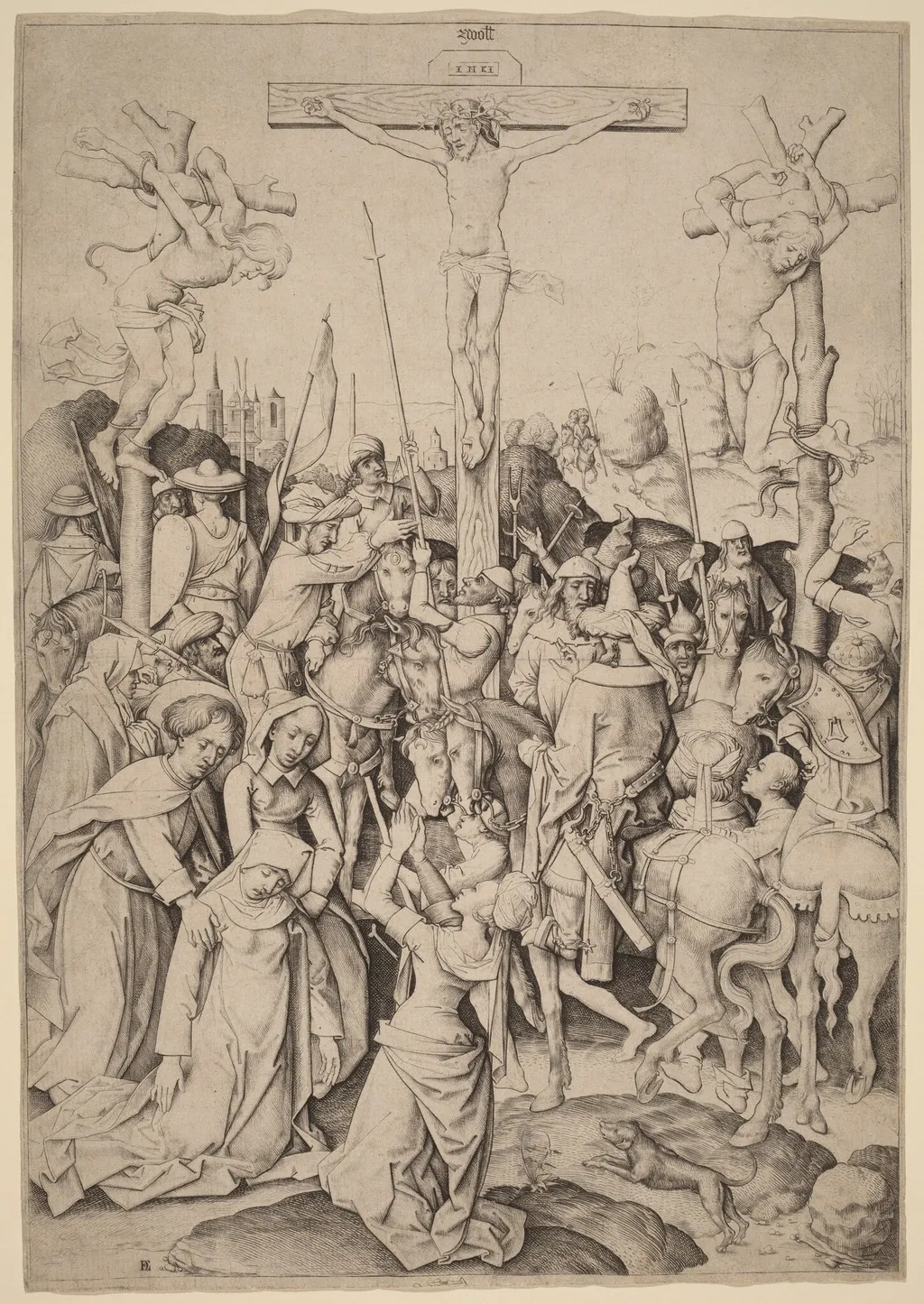
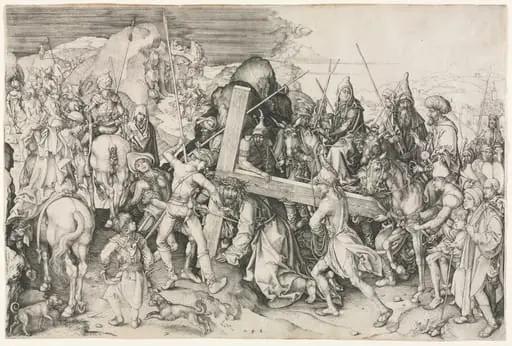
The Mount of Calvary is an ink print by the Renaissance artist Master I.A.M. of Zwolle. It dates from 1480 and is held in the collection of the National Gallery of Art.
About this work
Overview
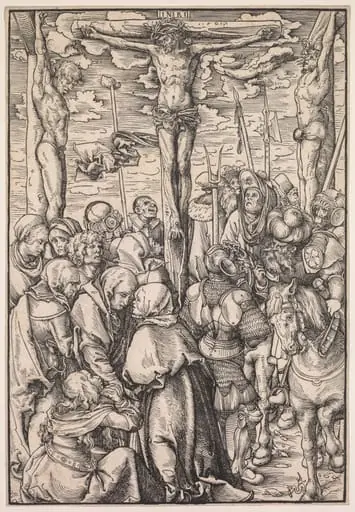
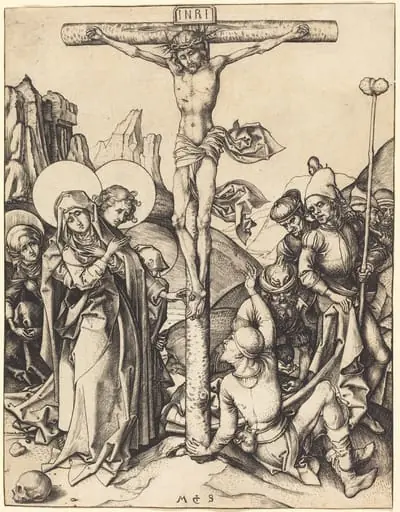
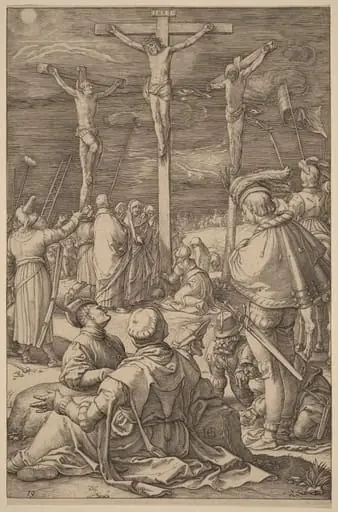
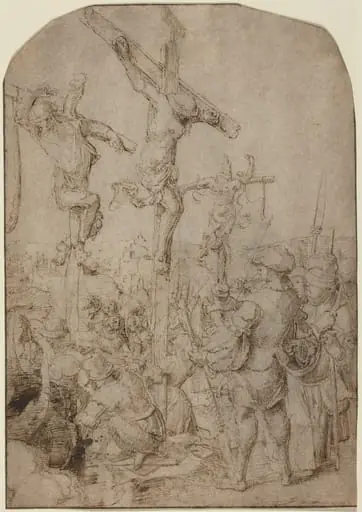
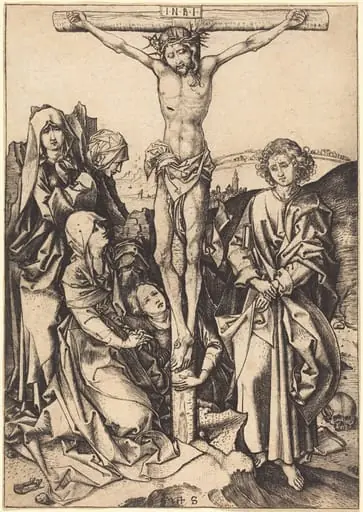
The work depicts the crucifixion of Jesus amid a dense assembly of figures, rendered with fine, precise lines.
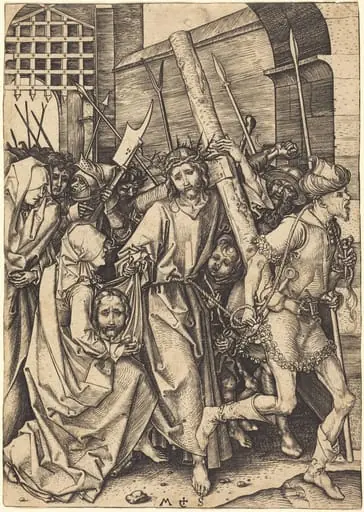
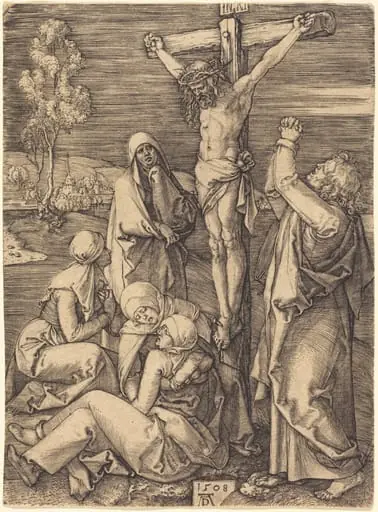
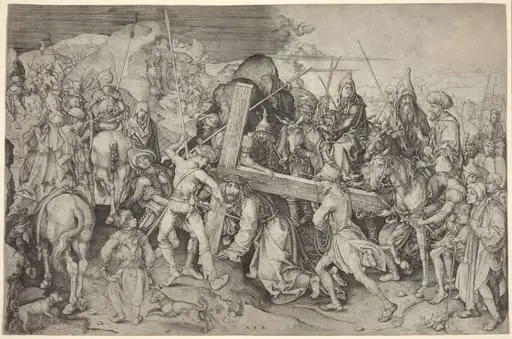
Created around 1480, The Mount of Calvary is an engraving on laid paper by an artist known as Master I.A.M. of Zwolle. The work depicts the crucifixion of Jesus amid a dense assembly of figures, rendered with fine, precise lines. The composition fills the entire field, emphasizing the weight and gravity of the moment through tightly packed forms and controlled tonal contrasts achieved via cross-hatching.
Subject & Meaning
The scene centers on Christ on the cross, his body framed by a banner bearing the inscription of his title. Below, armored soldiers press forward in orderly rows, while a group of robed onlookers stands quietly at the foreground. The juxtaposition of action and stillness suggests a moment suspended between violence and contemplation, inviting reflection on the theological significance of the event.
Technique & Style
The artist employs fine-line engraving with dense cross-hatching to model form and generate deep shadows. The background features gnarled trees and a distant structure, rendered with minimal detail to focus attention on the central figures. The figures are stylized but expressive, their postures and gestures conveying emotional tension without overt realism, characteristic of late Gothic printmaking traditions.
History & Provenance
The print is attributed to Master I.A.M. of Zwolle, a Northern European engraver active in the late 15th century, likely based in the Netherlands. Few works by this artist survive, and this engraving is among the most complete examples of his output. Its survival in multiple impressions suggests it was circulated among religious communities or collectors interested in devotional imagery.
Context
Produced during a period of growing demand for devotional prints, the work reflects the influence of both Flemish painting and the emerging print culture of the Low Countries. Its crowded composition echoes contemporary altarpieces, while its technical precision aligns with the rise of engraving as a medium for disseminating religious narratives beyond manuscript illumination.
Legacy
Though not widely known today, the engraving exemplifies the skill and spiritual intensity of late medieval printmakers. Its use of spatial compression and tonal contrast influenced later Northern European engravers. As one of the few surviving works by Master I.A.M., it remains a key reference for understanding the evolution of religious printmaking before the Reformation.
Artist & collection