Artwork
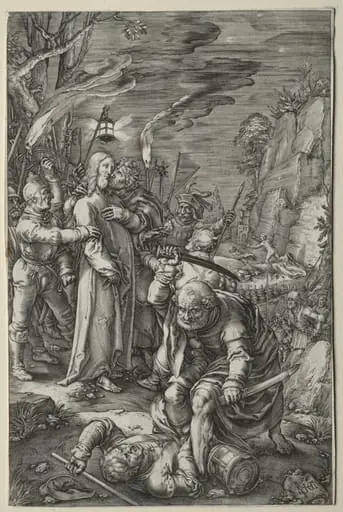
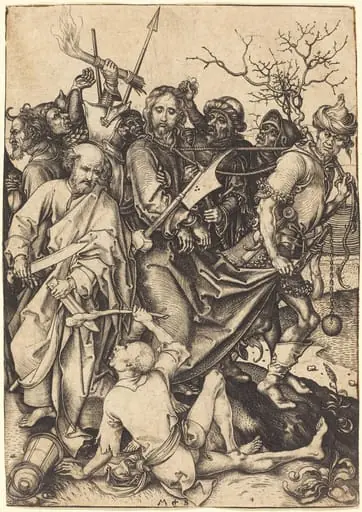
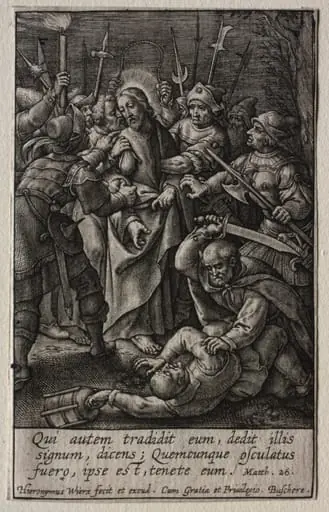
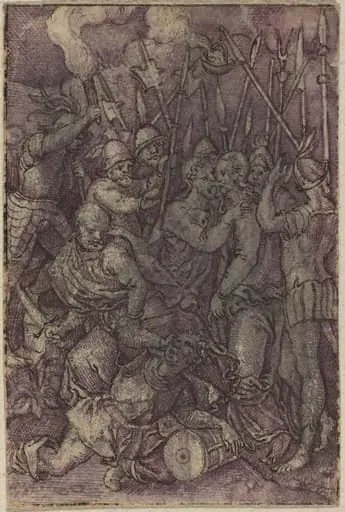
The Betrayal of Christ
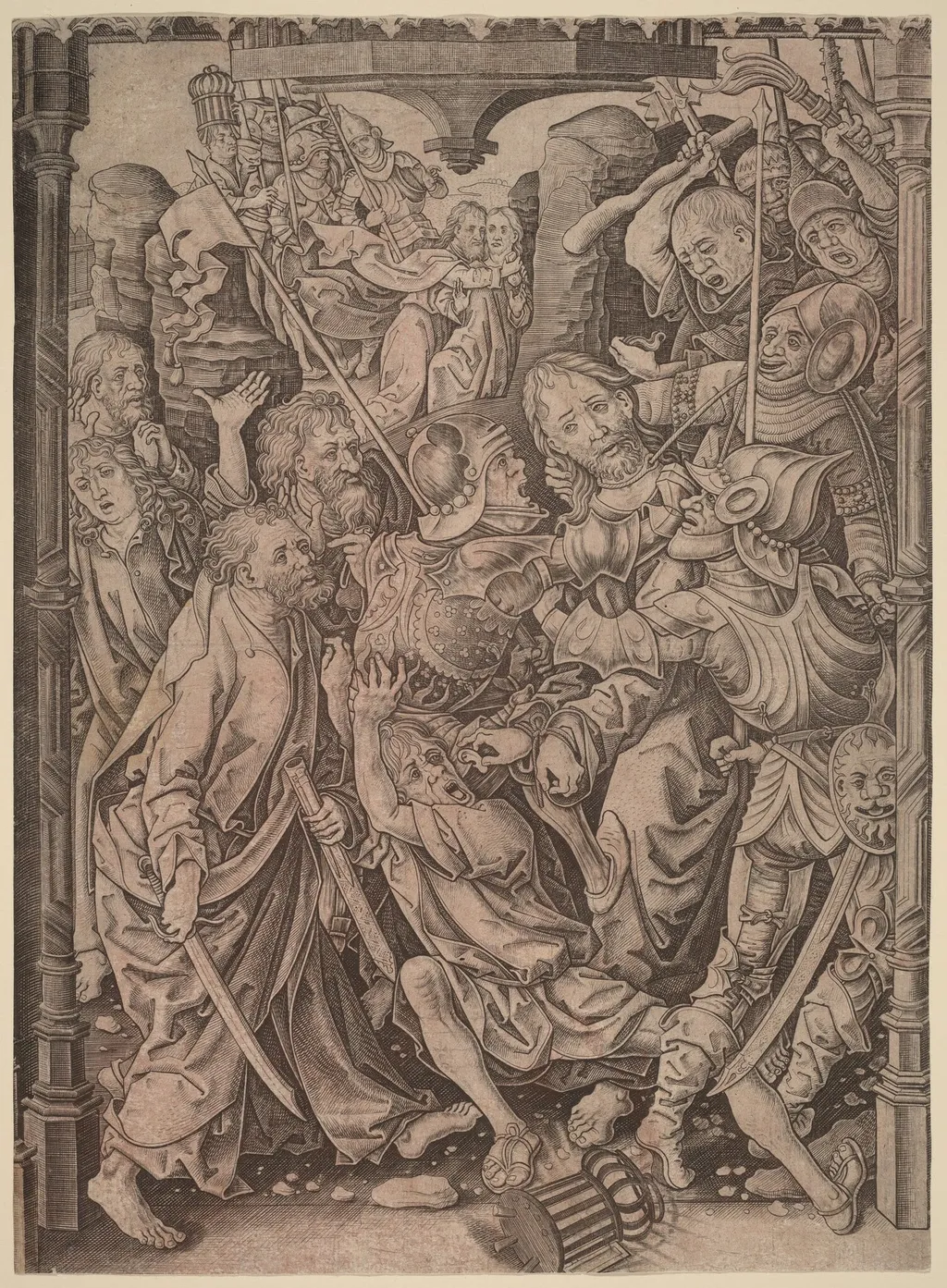
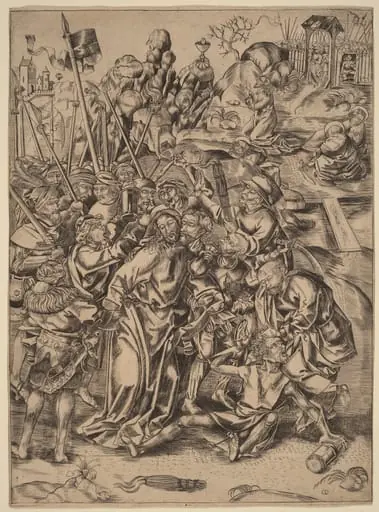
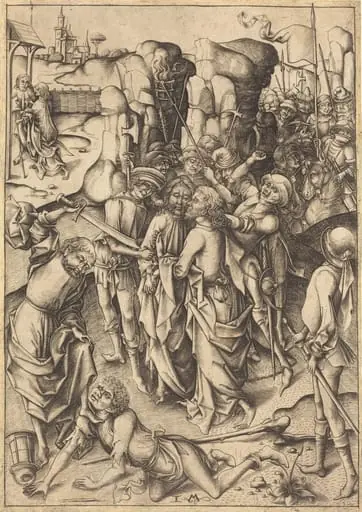
The Betrayal of Christ is an ink print by the Renaissance artist Master I.A.M. of Zwolle. It dates from 1485 and is held in the collection of the National Gallery of Art.
About this work
Overview
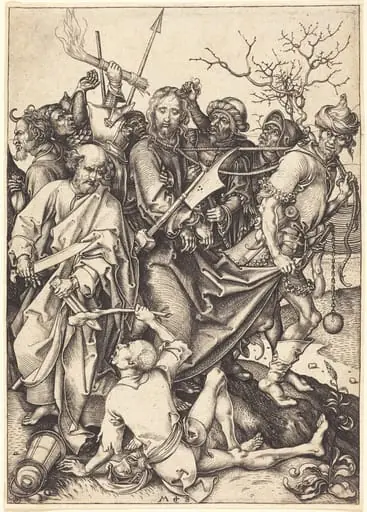
Created around 1485, this religious print bears the title The Betrayal of Christ and is attributed to the anonymous master known as I.A.M. of Zwolle. Executed as an engraving on laid paper, the work presents a densely populated scene in which numerous figures converge in a confined space, their gestures and expressions conveying a moment of intense turmoil.
Subject & Meaning
Some participants are shown in armor, others in prayerful or anguished poses, while a central figure brandishes a staff, suggesting authority or accusation.
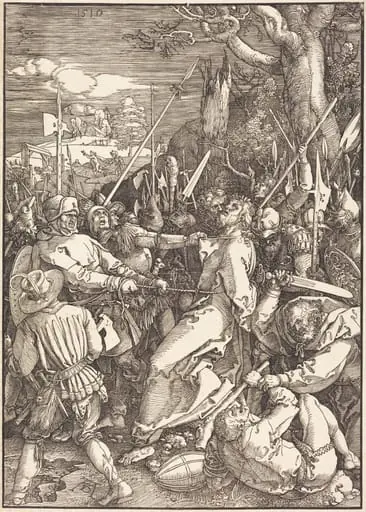
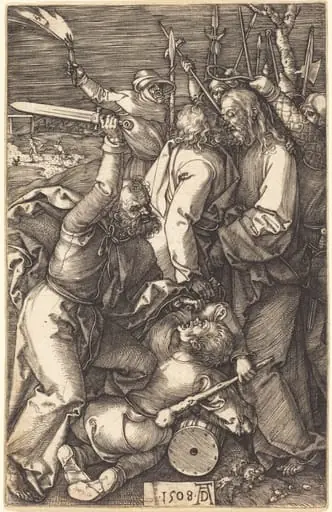
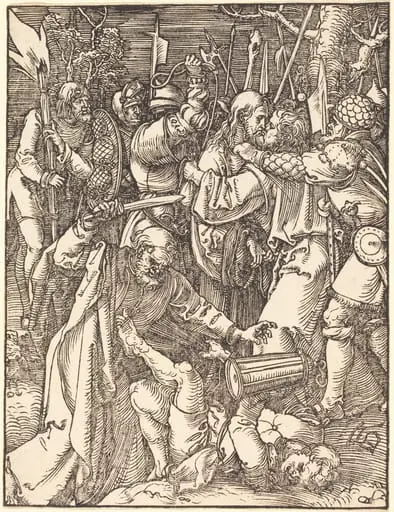
The composition depicts the biblical episode of Christ’s betrayal, gathering the disciples, soldiers, and onlookers in a chaotic tableau. Some participants are shown in armor, others in prayerful or anguished poses, while a central figure brandishes a staff, suggesting authority or accusation. The crowded arrangement underscores the emotional upheaval and collective responsibility surrounding the event.
Technique & Style
Carved with bold, dark lines, the engraving employs a heavy hand that compresses the multitude of bodies into a cramped visual field. Overlapping faces, hands, and garments create a sense of immediacy, while the laid paper’s textured surface, likely the result of hand-pressing, adds tactile depth to the stark black-and-white imagery.
History & Provenance
Attributed to the workshop of Master I.A.M. of Zwolle, a figure active in the late fifteenth‑century Netherlands, the print reflects the period’s devotional print culture. Though specific ownership records are scarce, the work survives in several museum collections, attesting to its circulation among religious and private patrons of the era.
Artist & collection