Artwork
The Crucifixion
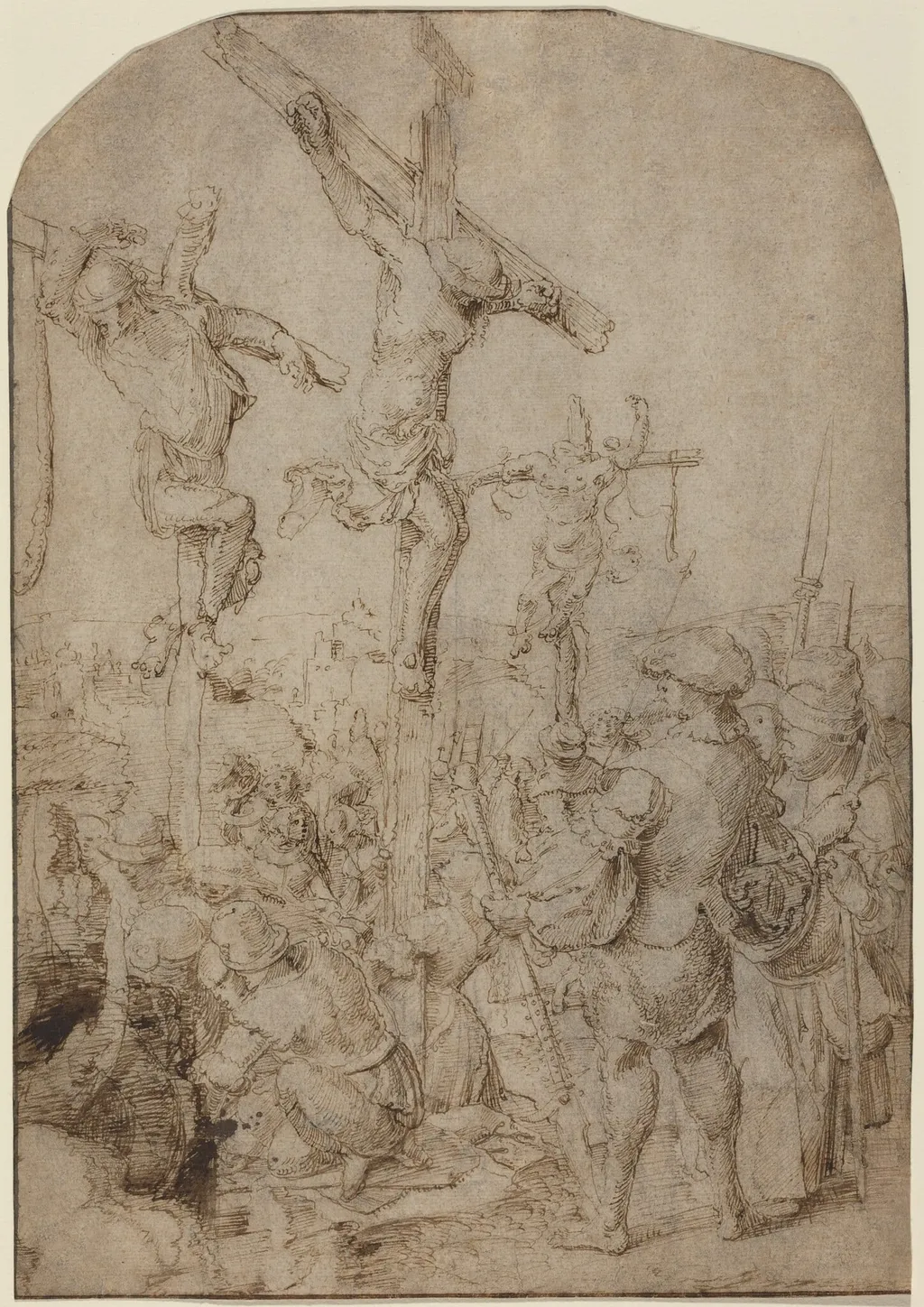
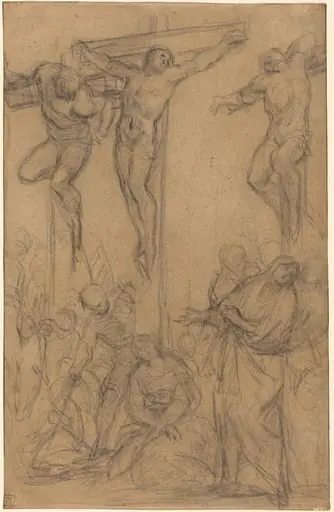
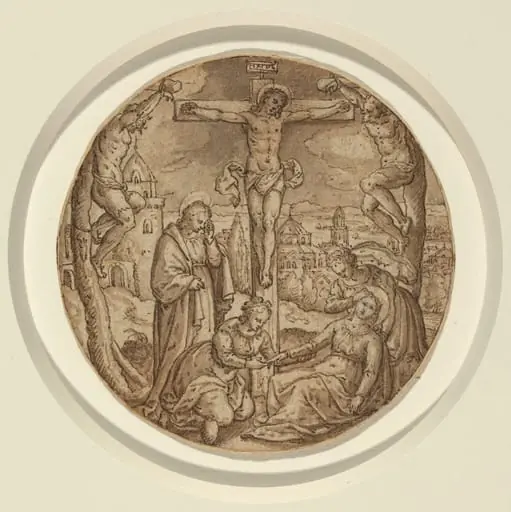
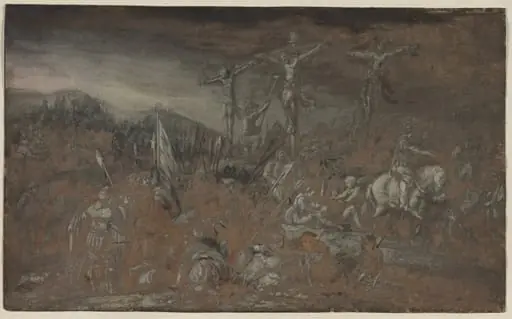
The Crucifixion is a chalk drawing by the Renaissance artist Netherlandish 16th Century. It dates from 1520 and is held in the collection of the National Gallery of Art.
About this work
Overview
The work, titled The Crucifixion, is a drawing executed on laid paper. The artist employed pen and brown ink applied over a foundation of black chalk, creating a monochromatic composition that depicts the biblical scene of Christ’s crucifixion.
Subject & Meaning
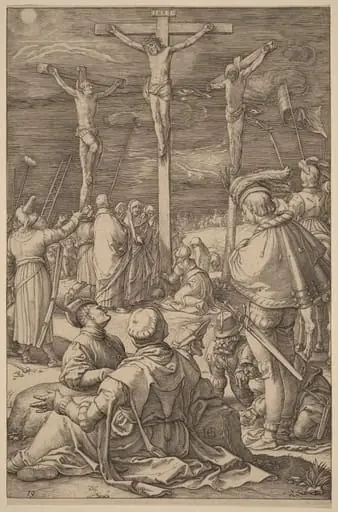
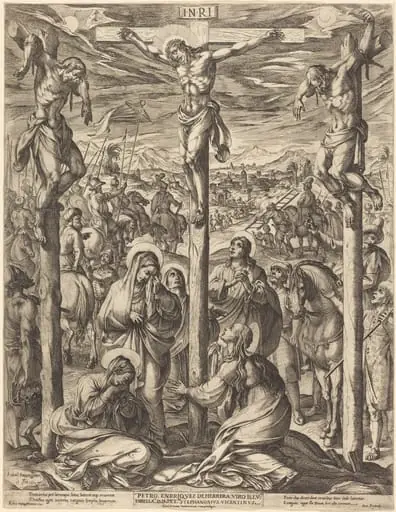
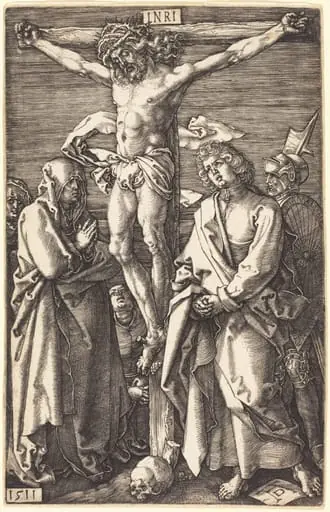
The image presents the traditional narrative of the crucifixion, focusing on the central figure of the crucified Christ surrounded by attendant figures. The composition emphasizes the solemnity of the event through its restrained palette and careful arrangement of forms.
Technique & Style
The drawing is characterized by intricate cross‑hatching, where closely spaced lines of pen and ink generate tonal variation and depth. The underlying black chalk serves as a tonal base, allowing the brown ink to build contrast and model the figures with subtle shading.
Context
Created as a pen‑and‑ink study, the piece reflects the broader practice of using drawing to explore religious subjects in a preparatory or devotional capacity. Its use of laid paper and monochrome materials aligns with the drawing traditions of the period in which such works were often produced for personal contemplation or as models for larger compositions.
Artist & collection

Artist
This artist carved scenes with fine lines, mostly religious and mythological ones.