Artwork
The Nativity
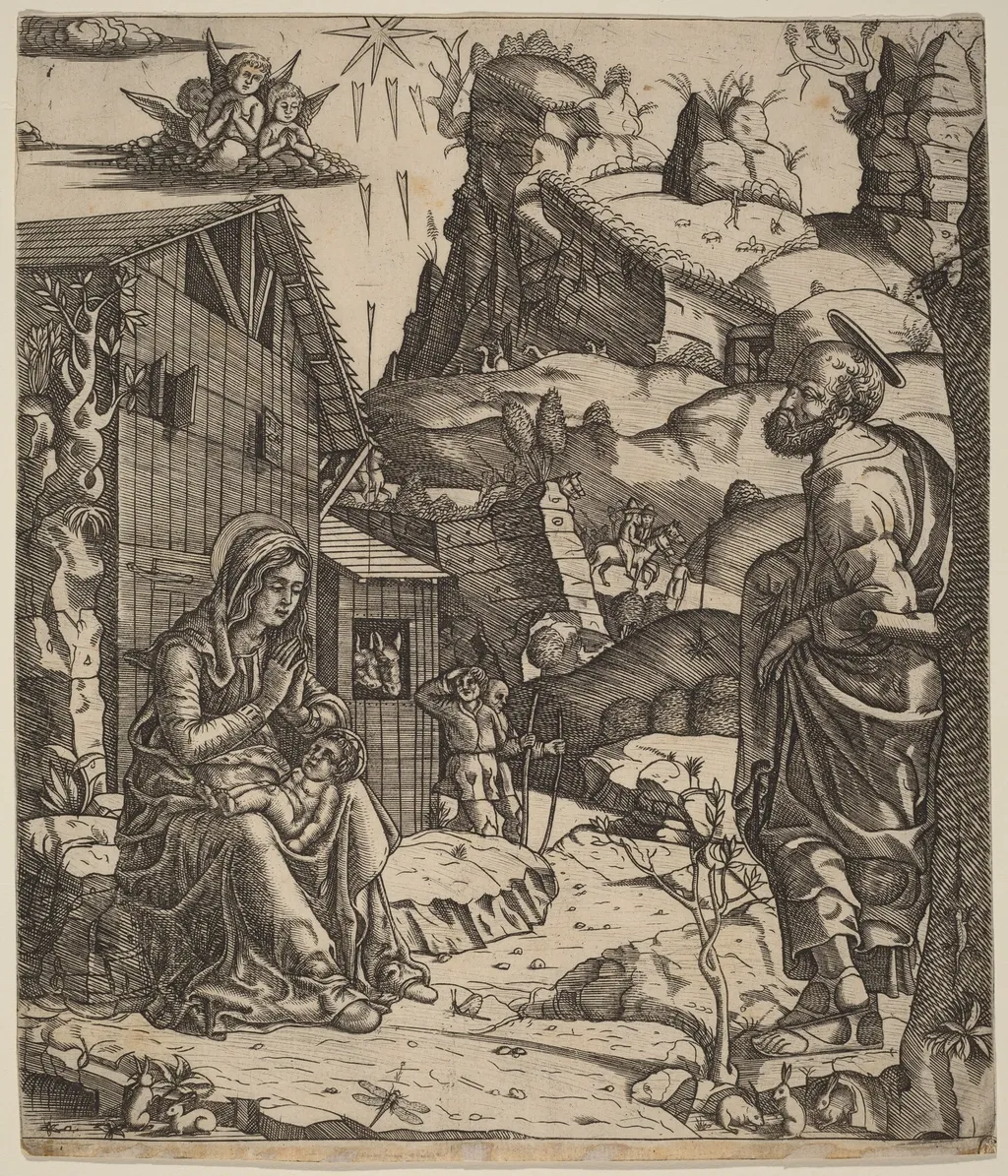
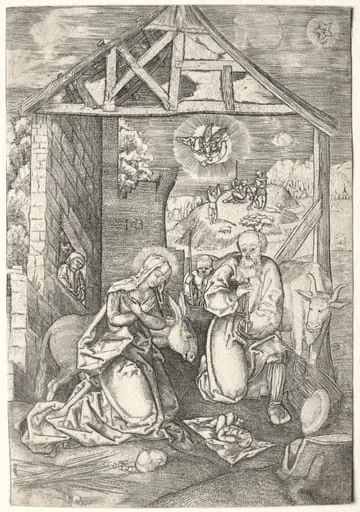
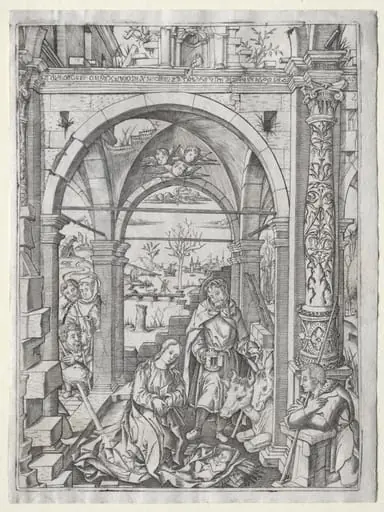
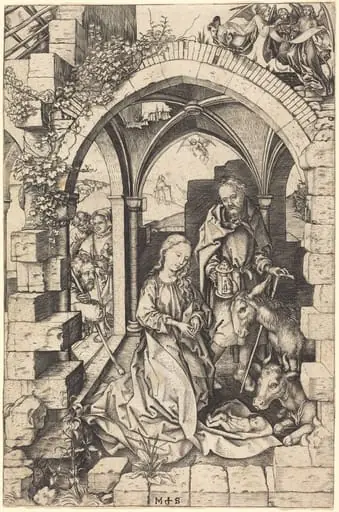
The Nativity is an ink print by the Renaissance artist Master I.I.CA. It dates from 1505 and is held in the collection of the National Gallery of Art.
About this work
Overview
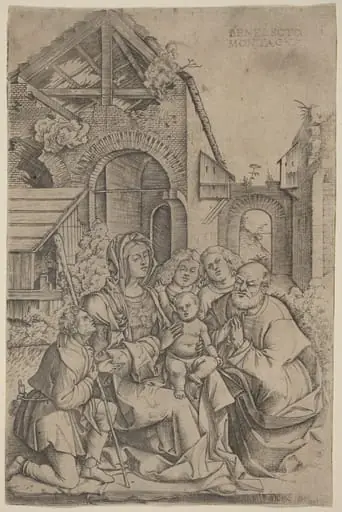
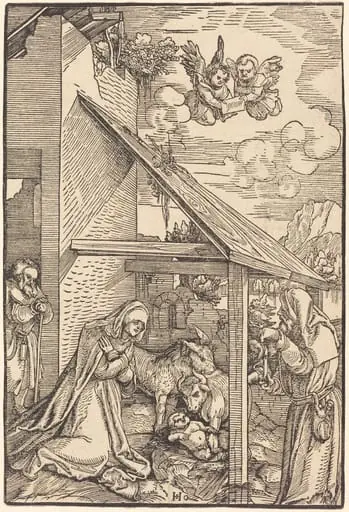
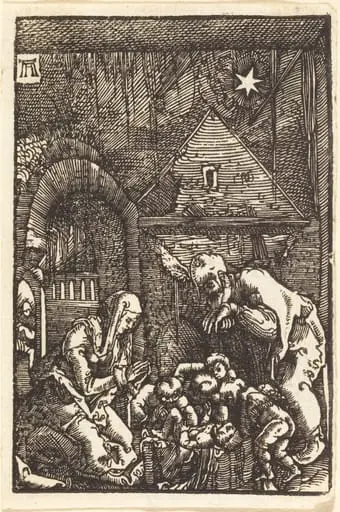
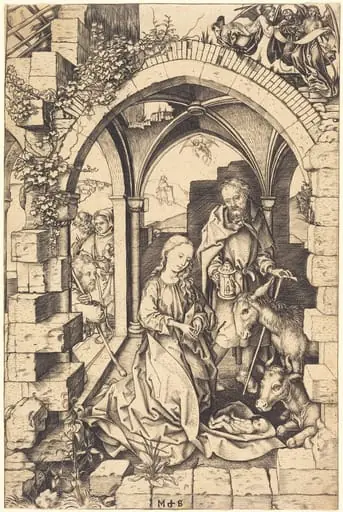
The Nativity is an early sixteenth‑century engraving, attributed to the anonymous master known as I.I.CA and dated to around 1505. Executed as a black‑and‑white print, the work presents a nocturnal tableau centered on a seated woman cradling an infant, surrounded by a modest assembly of figures and animals.
Subject & Meaning
The composition depicts the biblical birth scene, with the mother and child occupying the focal point. Flanking them are a donkey and a cow, traditional symbols of the stable setting, while ethereal figures—interpreted as angels—hover above, underscoring the event’s sacred significance.
Technique & Style
The print is rendered through dense hatching and cross‑hatching, employing countless fine lines to model light and shadow. This meticulous approach creates a pronounced contrast that gives the figures a three‑dimensional presence despite the flat medium, while the crowded arrangement maintains visual balance around the central pair.
Context
Produced during the Northern Renaissance, the engraving reflects contemporary devotional practices that favored intimate, narrative depictions of holy episodes. The work’s emphasis on detailed line work aligns with the period’s printmaking innovations, which sought to disseminate religious imagery beyond the confines of painted altarpieces.
Artist & collection