Artwork
The Nativity
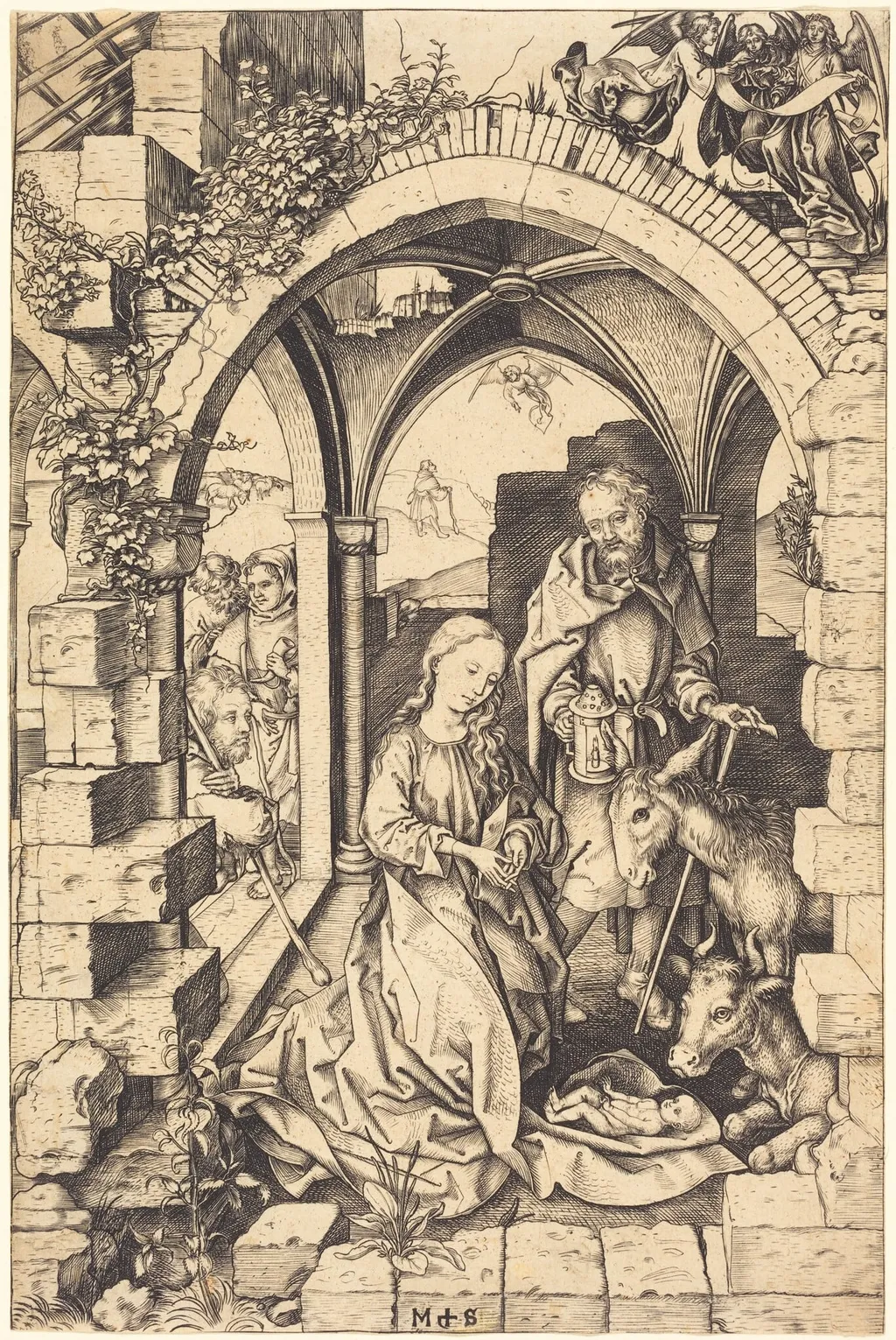
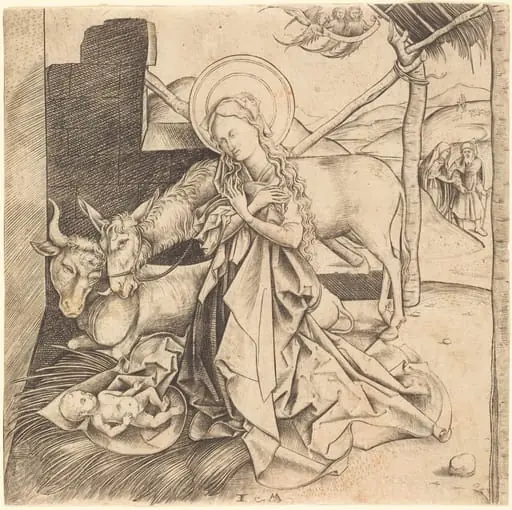
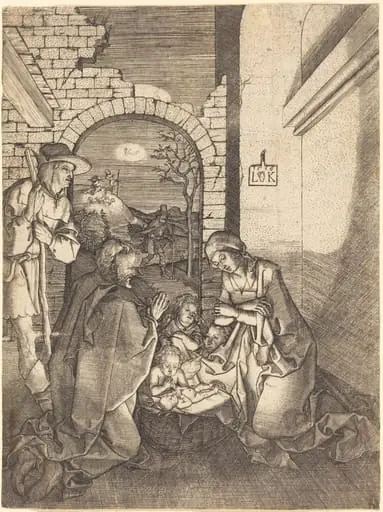
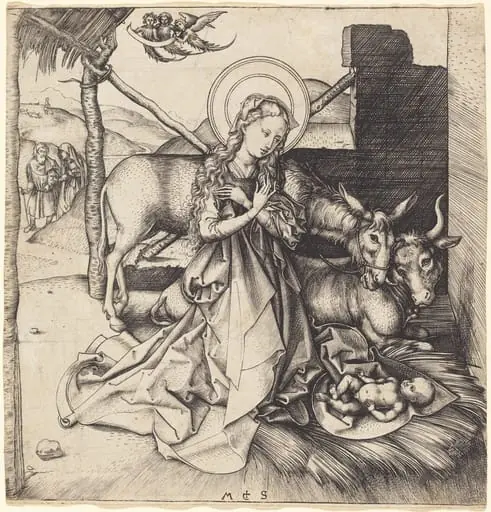
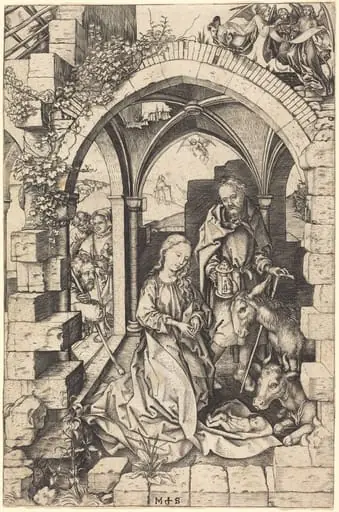
The Nativity is an ink print by the Renaissance artist Martin Schongauer. It dates from 1472 and is held in the collection of the National Gallery of Art.
About this work
Overview
Created around 1472, Martin Schongauer’s *The Nativity* is an engraving on laid paper that captures the birth of Christ through intricate line work.
Created around 1472, Martin Schongauer’s *The Nativity* is an engraving on laid paper that captures the birth of Christ through intricate line work. As one of 116 known engravings by the Alsatian artist, it exemplifies his mastery of early Northern European printmaking. The work is held in the National Gallery of Art in Washington, D.C., and stands as a key example of devotional imagery produced before the rise of Albrecht Dürer, who later admired and collected Schongauer’s prints.
Subject & Meaning
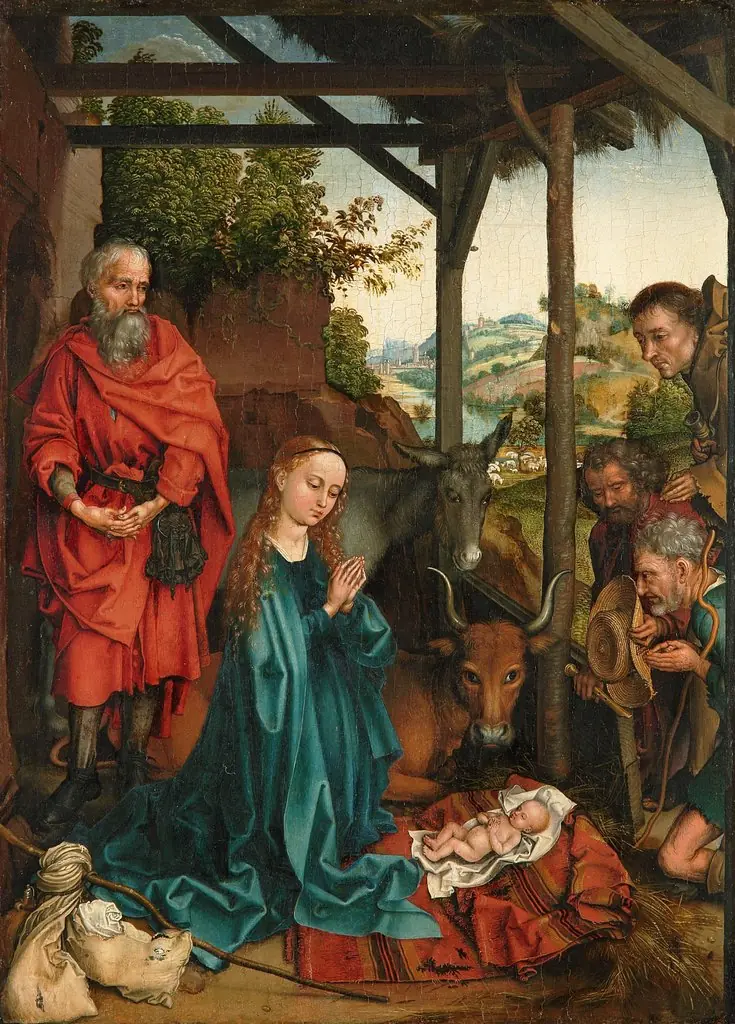
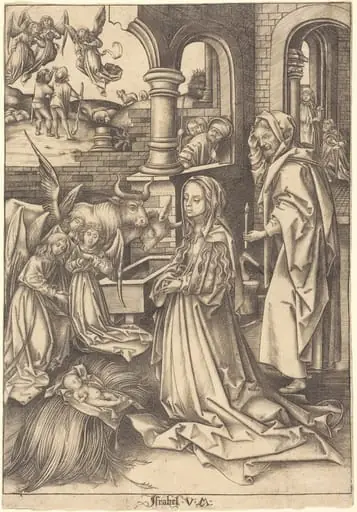
The scene centers on the Virgin Mary cradling the infant Jesus in a stone manger, attended by Joseph, who kneels with a staff. Behind them, an ox and a donkey rest quietly, while a distant figure tends a lantern, suggesting the humble setting of the event. Above, angels hover in the archway, their presence elevating the moment beyond the earthly. The composition emphasizes stillness and reverence, reflecting the theological significance of Christ’s birth as a quiet, sacred revelation.
Technique & Style
Schongauer employed fine, precise engraving lines to model form and depth, using cross-hatching to build rich tonal contrasts without pigment. The stone arch, folds of fabric, and textured walls are rendered through layered, intersecting strokes that create shadow and volume. The delicate handling of light and surface distinguishes this work from earlier, flatter prints, demonstrating a sophisticated understanding of spatial illusion and tactile detail unique to his method.
History & Provenance
The engraving was produced during Schongauer’s active years in Colmar, a center of artistic exchange in the late 15th century. Its survival in good condition reflects its early circulation among collectors and religious institutions. It entered the National Gallery of Art’s collection in the 20th century, having passed through private hands and institutional holdings in Europe before its acquisition in Washington, D.C.
Context
In the decades before the Reformation, religious imagery in print form became increasingly accessible, allowing devotional scenes to reach wider audiences. Schongauer’s engravings, including this one, were widely distributed across Europe, influencing both artists and patrons. His work bridged the gap between manuscript illumination and the emerging print culture, helping to establish engraving as a serious artistic medium in Northern Europe.
Legacy
Schongauer’s technical precision and compositional clarity set a standard for later printmakers, most notably Albrecht Dürer, who studied and copied his engravings. His influence extended beyond his lifetime, shaping the development of Northern Renaissance printmaking. Though his career was brief, his body of work helped define the expressive potential of the engraving medium, leaving a lasting imprint on the visual language of religious art in the early modern period.
Artist & collection

Artist
Martin Schongauer, also known as Martin Schön or Hübsch Martin by his contemporaries, was an Alsatian engraver and painter.