Artwork
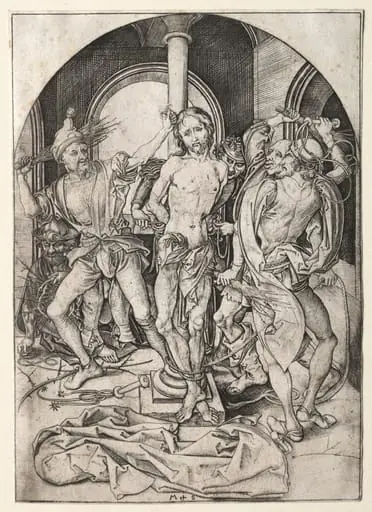
The Flagellation
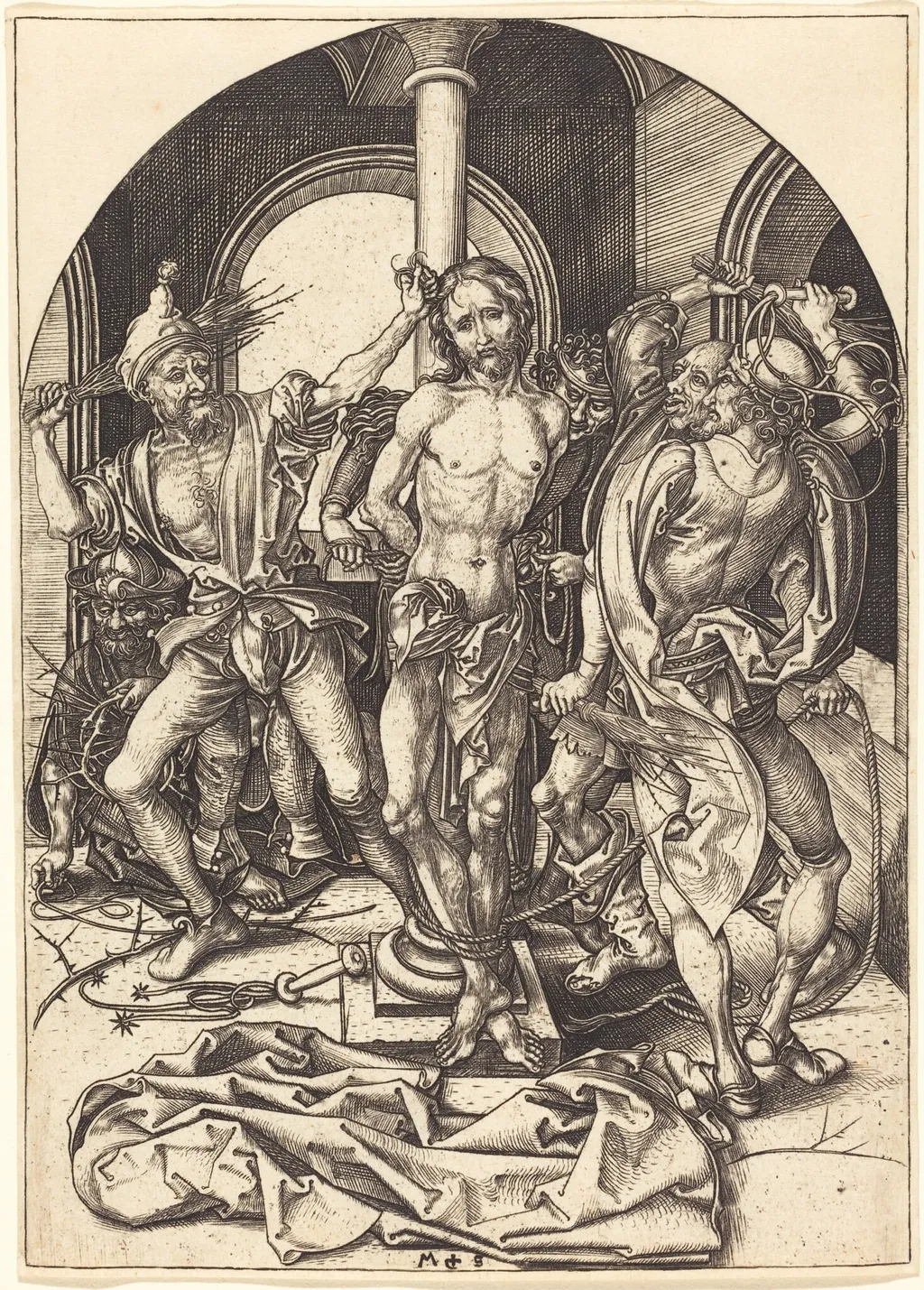
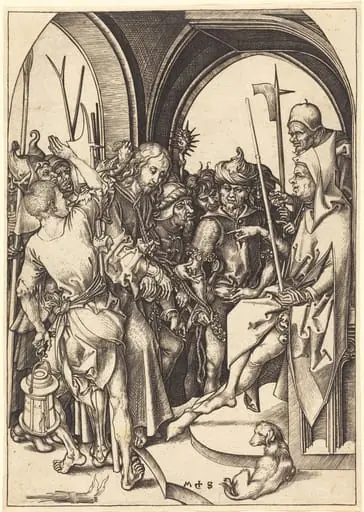
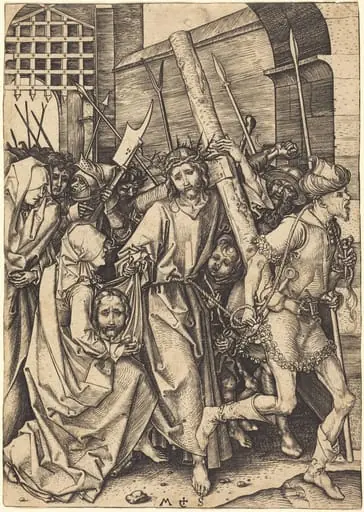
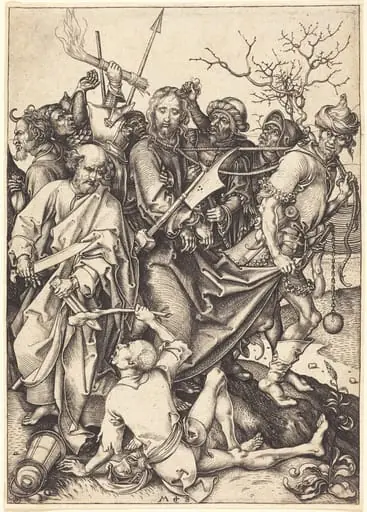
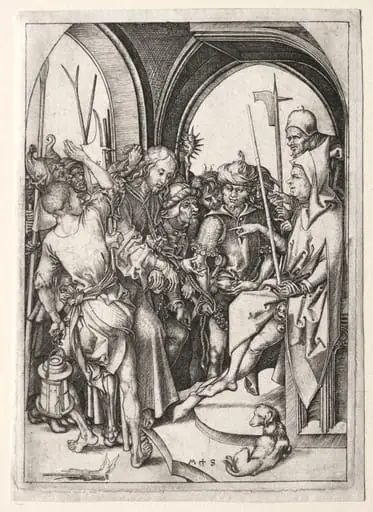
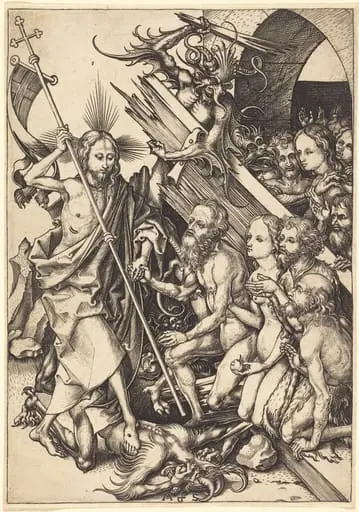
The Flagellation is an ink print by the Renaissance artist Martin Schongauer. It dates from 1480 and is held in the collection of the National Gallery of Art.
About this work
Overview
Martin Schongauer created the engraving *The Flagellation* around 1480, capturing a moment from the Passion of Christ.
Martin Schongauer created the engraving *The Flagellation* around 1480, capturing a moment from the Passion of Christ. As one of 116 known engravings by the Alsatian artist, it exemplifies his technical precision and command of line. Working in Colmar, Schongauer emerged as the leading printmaker in Northern Europe before Dürer, bridging late medieval traditions with emerging Renaissance sensibilities through the medium of copperplate engraving.
Subject & Meaning
The scene portrays Christ bound to a column, enduring scourging at the hands of two executioners. The composition isolates the moment of physical suffering, emphasizing Christ’s quiet endurance amid violence. The setting—a stone chamber with architectural detail—grounds the sacred event in tangible space, reinforcing its emotional weight without overt symbolism. The focus remains on human frailty and divine sacrifice, central themes in late medieval devotional imagery.
Technique & Style
Schongauer employed fine, controlled lines and dense cross-hatching to model form and depth with remarkable subtlety. The play of light across Christ’s back and the tiled floor reveals his skill in rendering texture and volume without color. The architectural elements—arches, columns, and floor patterns—are rendered with geometric clarity, enhancing spatial realism. His technique, likely honed through goldsmithing training, achieves a sculptural quality rare in prints of the period.
History & Provenance
Created in the final decades of the 15th century, the engraving circulated widely across Europe through print distribution networks. Though no early ownership records are documented, its technical sophistication ensured its reproduction and study by later artists. Schongauer’s prints were collected by both clergy and secular patrons, reflecting their dual role as devotional aids and artistic objects in the pre-Reformation era.
Context
In the decades before the Reformation, religious imagery in Northern Europe increasingly emphasized intimate, emotionally charged scenes from Christ’s life. Schongauer’s work responded to growing demand for personal devotion, where detailed realism invited contemplation. His engravings, accessible through print, extended the reach of sacred narratives beyond illuminated manuscripts and altarpieces, shaping lay piety through visual immediacy.
Legacy
Schongauer’s *The Flagellation* influenced a generation of Northern artists, notably Albrecht Dürer, who studied and copied his engravings. His mastery of line and spatial construction set a standard for printmaking that endured into the 16th century. Though overshadowed later by Dürer’s fame, Schongauer’s innovations in tonal gradation and narrative focus laid foundational techniques for the evolution of the print as an independent art form.
Artist & collection

Artist
Martin Schongauer, also known as Martin Schön or Hübsch Martin by his contemporaries, was an Alsatian engraver and painter.