Artwork
Ecce Homo
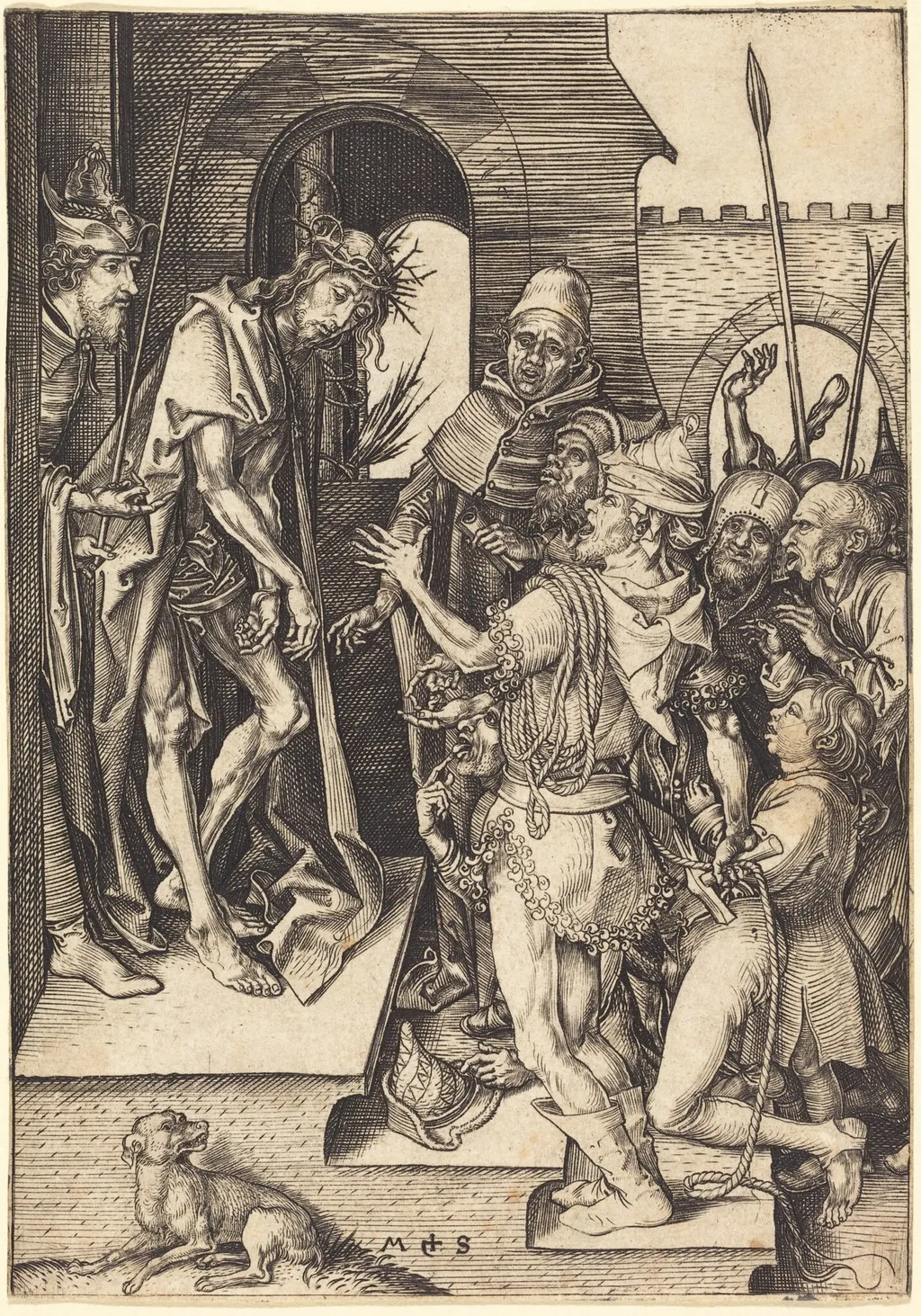
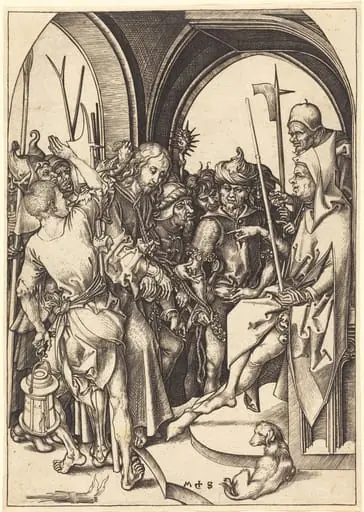
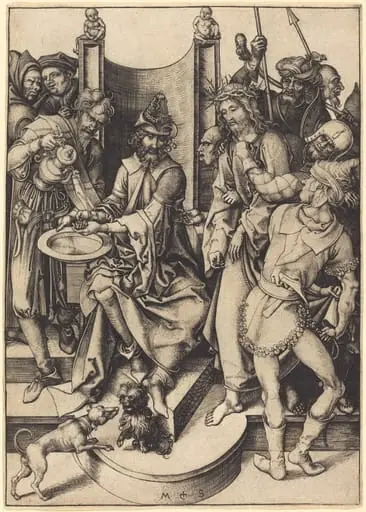
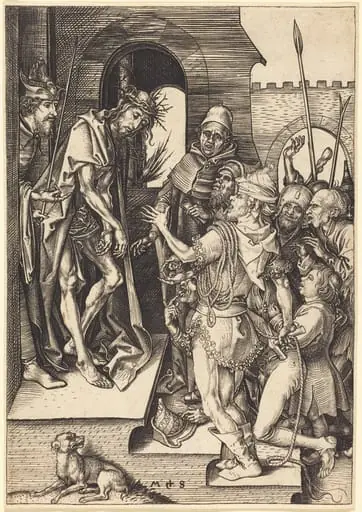
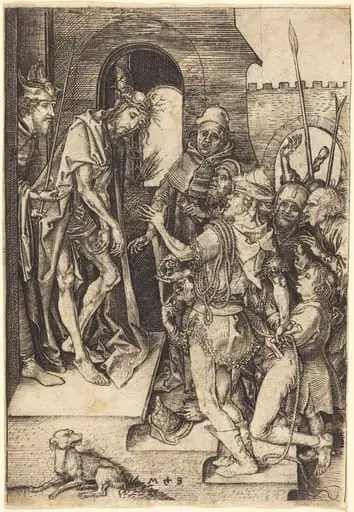
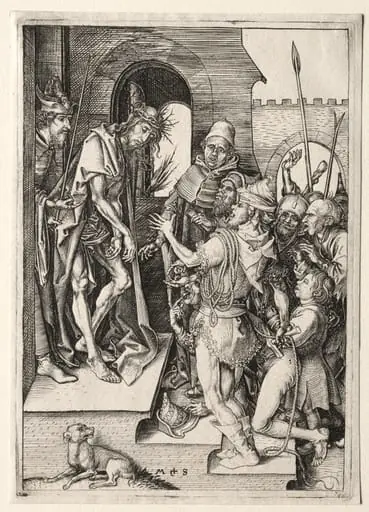
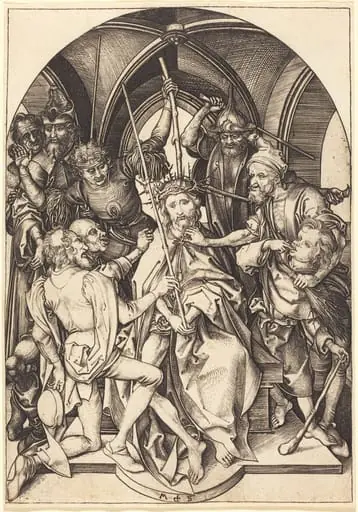
Ecce Homo is an ink print by the Renaissance artist Martin Schongauer. It dates from 1480 and is held in the collection of the National Gallery of Art.
About this work
Overview
Executed in fine line engraving, the work exemplifies Schongauer’s mastery of the medium.
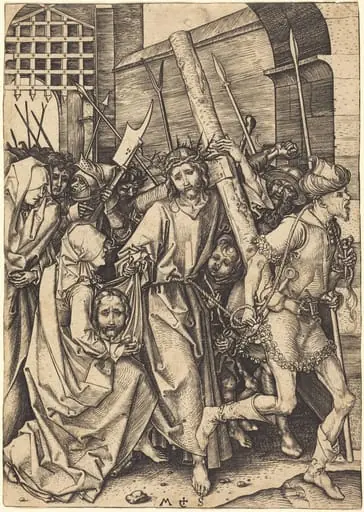
Martin Schongauer’s engraving Ecce Homo, dated circa 1480, captures a moment from the Passion narrative in which Pontius Pilate presents the scourged Christ to the people of Jerusalem. Executed in fine line engraving, the work exemplifies Schongauer’s mastery of the medium. As one of 116 known engravings by the artist, it reflects his technical precision and deep engagement with religious subject matter, positioning him as a pivotal figure in Northern European printmaking before Dürer’s rise.
Subject & Meaning
The scene illustrates Pilate’s declaration of 'Ecce Homo'—'Behold the Man'—as Christ, crowned with thorns and clad in a pale robe, stands silently before a hostile crowd. Figures lean forward, some reaching out, their gestures conveying curiosity, scorn, or complicity. The composition emphasizes Christ’s isolation amid the mob, reinforcing the theological weight of his suffering and the moral ambiguity of those who witness it without intervening.
Technique & Style
Schongauer employed fine, controlled engraving lines to render texture and volume with remarkable subtlety. Cross-hatching builds shadow and depth, particularly in the folds of Christ’s robe and the stone architecture behind. The cityscape in the background, rendered with architectural clarity, anchors the scene in a tangible world. His training as a goldsmith informs the precision of the lines, while his painterly sensibility lends emotional nuance to the figures.
History & Provenance
Created in Colmar, where Schongauer maintained a workshop, the engraving circulated widely across Europe in the late 15th century. Its popularity is evidenced by numerous surviving impressions and later copies. Though no early ownership records are documented, its presence in major collections today—such as those of the British Museum and the Metropolitan Museum of Art—attests to its enduring status among early printed images of religious subjects.
Context
In the decades before the Reformation, devotional prints like this served as aids for private meditation and public instruction. Schongauer’s work emerged in a cultural milieu where religious imagery was both spiritually potent and commercially viable. His engravings bridged the gap between manuscript illumination and mass-produced imagery, making complex theological scenes accessible to a broader audience beyond the clergy.
Legacy
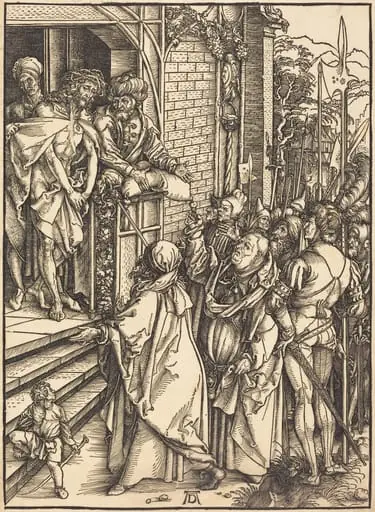
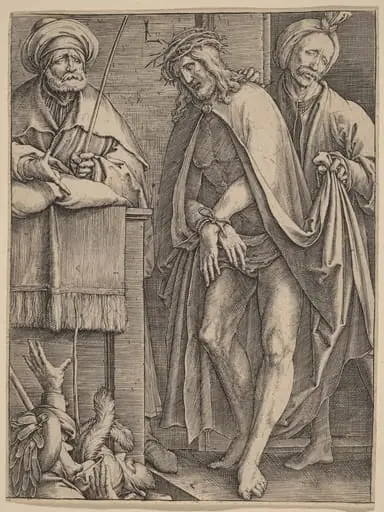
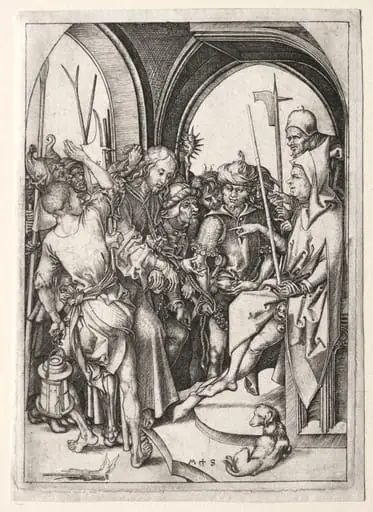
Schongauer’s Ecce Homo influenced generations of Northern artists, including Albrecht Dürer, who studied and copied his engravings. The work’s emotional restraint, compositional clarity, and technical innovation set a standard for religious printmaking. Its legacy lies not in grandeur but in its quiet authority—offering a model of how line and detail could convey spiritual gravity without overt drama.
Artist & collection

Artist
Martin Schongauer, also known as Martin Schön or Hübsch Martin by his contemporaries, was an Alsatian engraver and painter.