Artwork
Die Apostel Petrus, Paulus, Jakobus d. J. und Simon
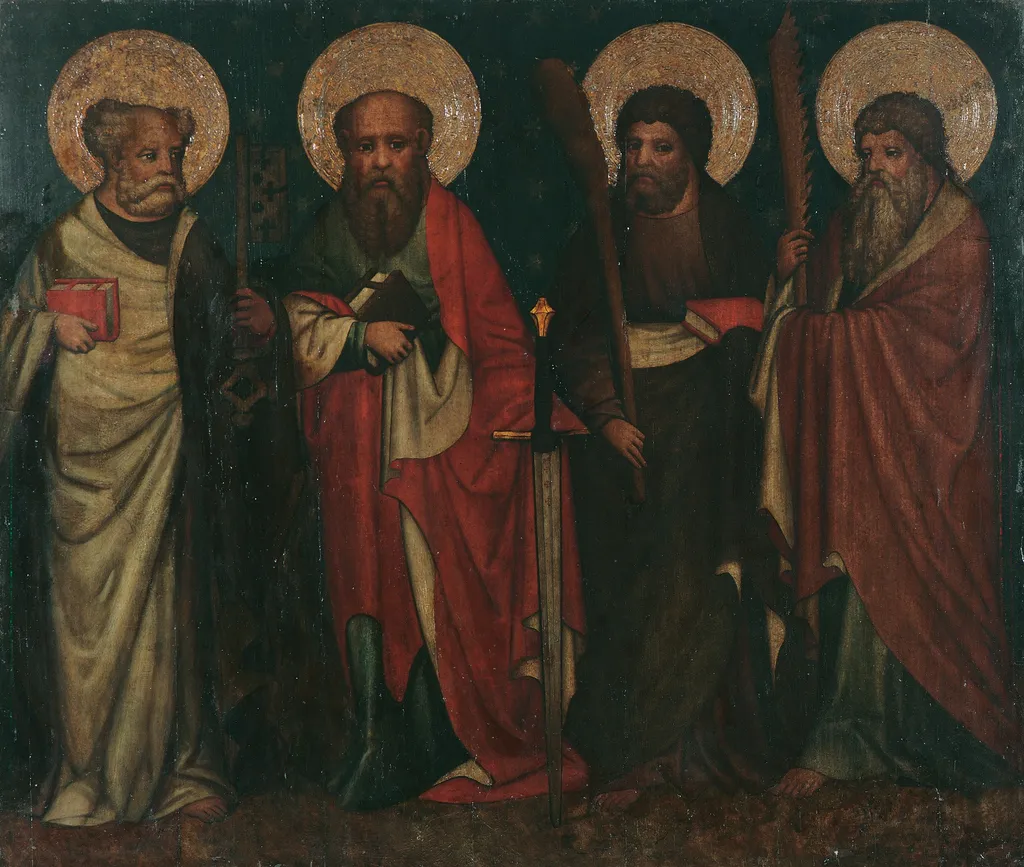
Die Apostel Petrus, Paulus, Jakobus d. J. und Simon is an unspecified painting by the Northern Renaissance artist Meister von Laufen. It dates from 1457 and is held in the collection of the Kunsthistorisches Museum.
About this work
Overview
Painted in 1457 by an anonymous artist known as Meister von Laufen, this work depicts four apostles—Peter, Paul, James the Younger, and Simon—standing in solemn alignment. Executed in tempera on panel, it resides in the Kunsthistorisches Museum in Vienna. The composition emphasizes verticality and stillness, with figures rendered against a deep, unmodulated background to heighten their presence.
Subject & Meaning
The four apostles are identified by their traditional attributes: Peter holds keys, Paul a book, James a staff, and Simon a scroll. Their halos signify sanctity, while their beards and robes reflect ecclesiastical authority. The calm, unsmiling expressions convey spiritual gravity rather than emotion, aligning with devotional ideals of the period that prioritized reverence over narrative drama.
Technique & Style
The artist employs subtle chiaroscuro to model the folds of the red robes, creating a sense of volume against the flat, dark ground.
The artist employs subtle chiaroscuro to model the folds of the red robes, creating a sense of volume against the flat, dark ground. Facial features are simplified, with minimal detail in the eyes and mouths, focusing attention on symbolic attributes. The use of tempera allows for crisp lines and luminous color, particularly in the rich reds, which contrast sharply with the muted tones of the tan robe and background.
History & Provenance
The painting was likely commissioned for a religious setting in the late medieval German-speaking regions, possibly as part of a larger altarpiece. It entered the Kunsthistorisches Museum’s collection in the 19th century, following the consolidation of Habsburg holdings. Its attribution to Meister von Laufen derives from stylistic parallels with other works from the same workshop active in the Upper Rhine area around mid-15th century.
Context
Created during a period of intense religious devotion and regional artistic specialization, the painting reflects the enduring influence of late Gothic devotional imagery. Unlike Italian Renaissance works of the same era, it avoids spatial depth and naturalism, favoring symbolic clarity and hierarchical composition suited to liturgical use and private meditation.
Legacy
Though unsigned and attributed by stylistic analysis, the work remains a representative example of regional German panel painting from the mid-15th century. It contributes to scholarly understanding of workshop practices and the transmission of iconographic traditions in Central Europe, preserving a quiet, disciplined aesthetic distinct from the more dynamic trends emerging in Italy.
Own this work as a print
Artist & collection
Artist
A German painter active in the mid-1400s, this artist made altarpieces and devotional scenes in oil paint.

 SS. bishop, Petrus, Paulus and a diacon
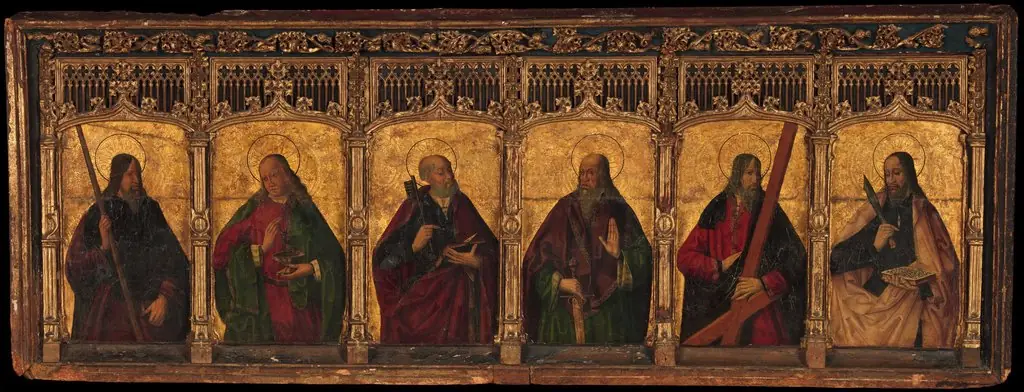 Six Apostles
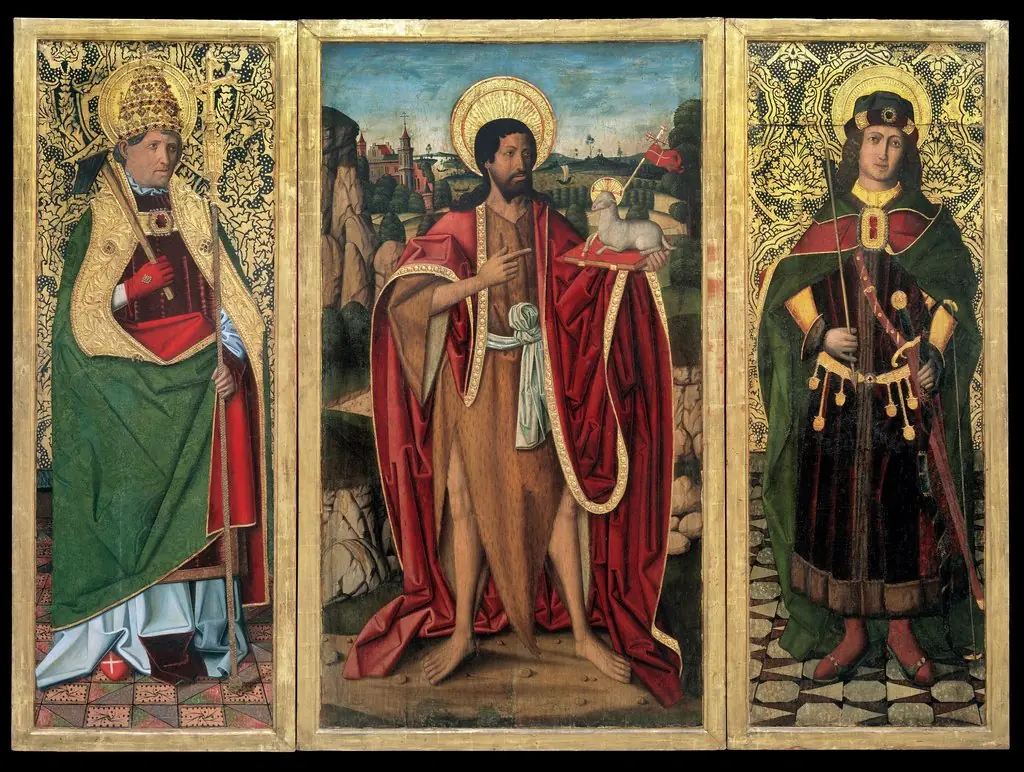 Saint John the Baptist, Saint Fabian and Saint Sebastian
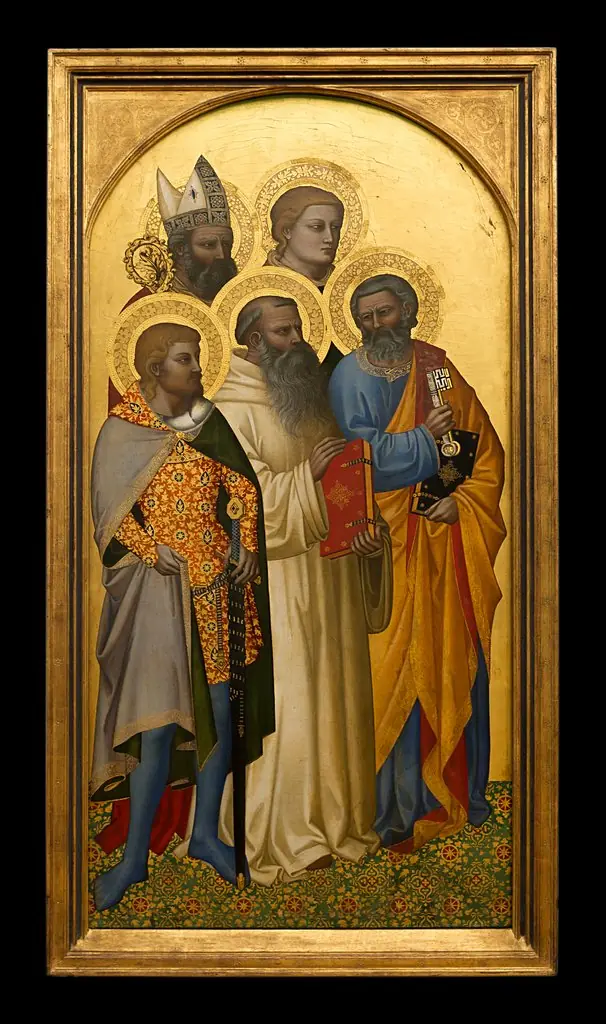 the Saints Peter, Benedict, Julian (?), Stephan (?), and a holy bishop (Nicholas of Bari?)
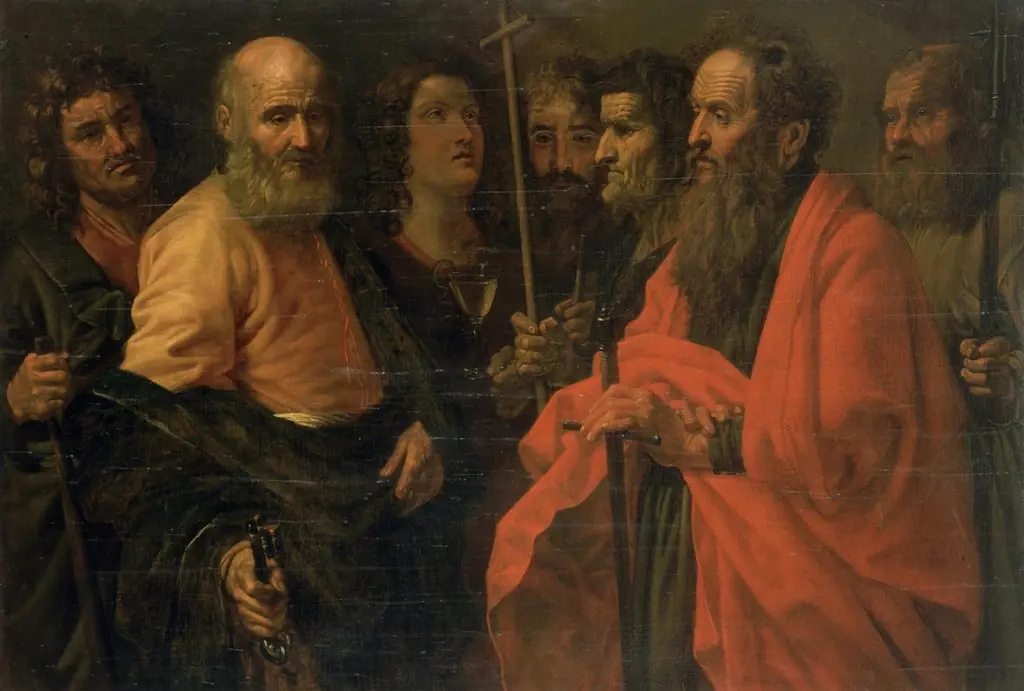 St James the Less, Sts Peter, Paul, John, Thomas, Philip, Judas and Thaddeus the Apostles
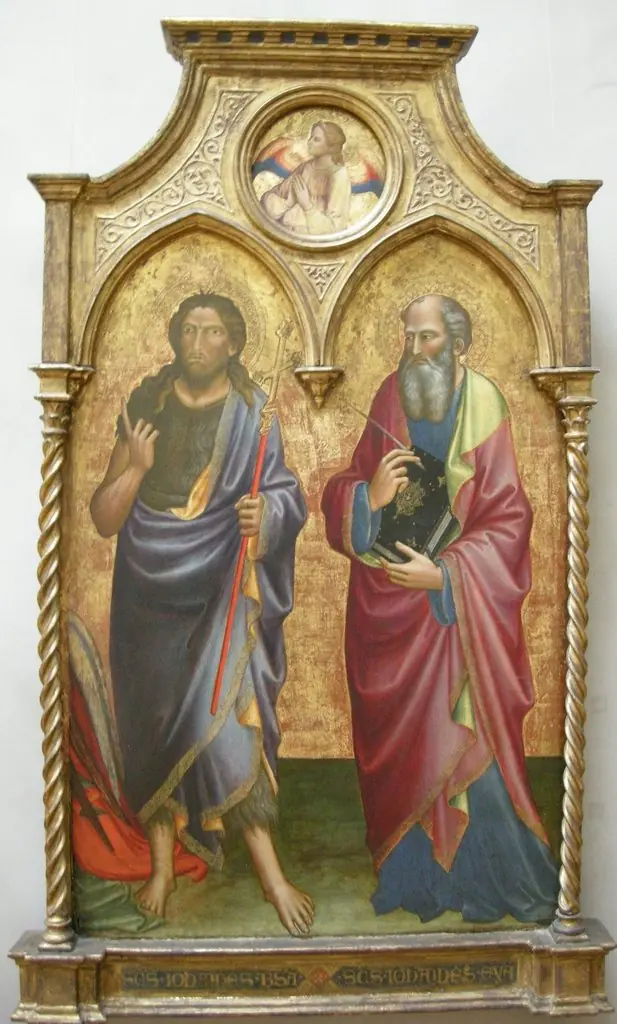 Saints John the Baptist and John the Evangelist
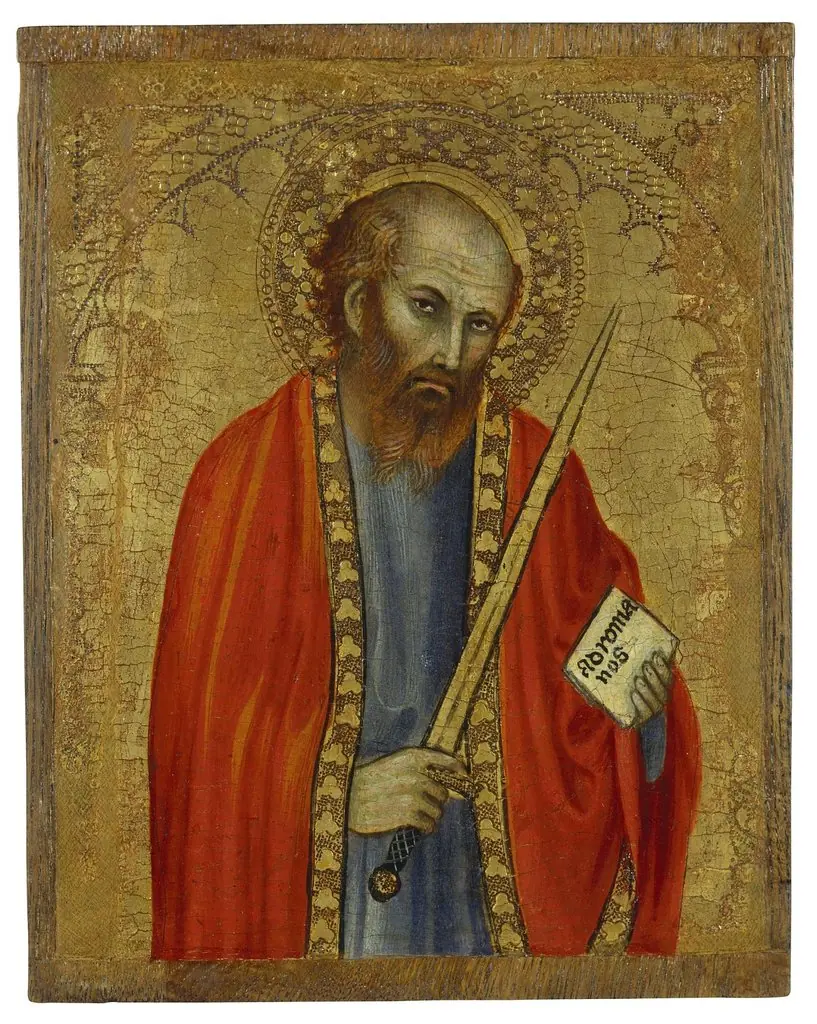 St Paul the Apostle
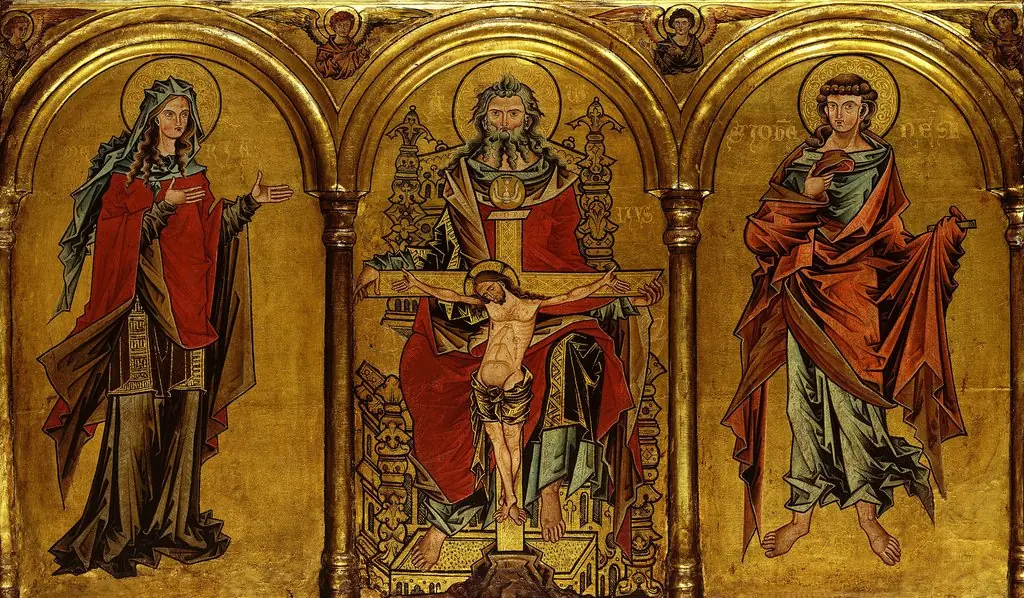 Retable with the seat of mercy
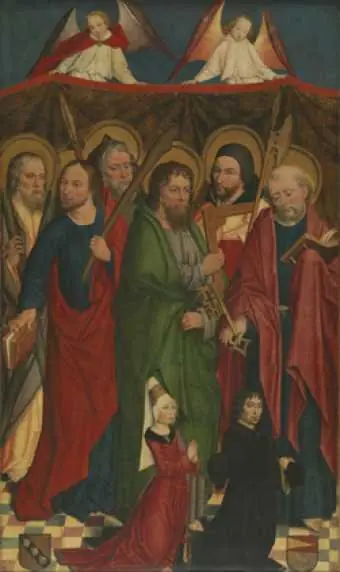 Left wing of St. Laurenz triptych - 6 Apostles and the donor Gerhard von Wesel (1443-1510) with his third wife Adelheid Bischof
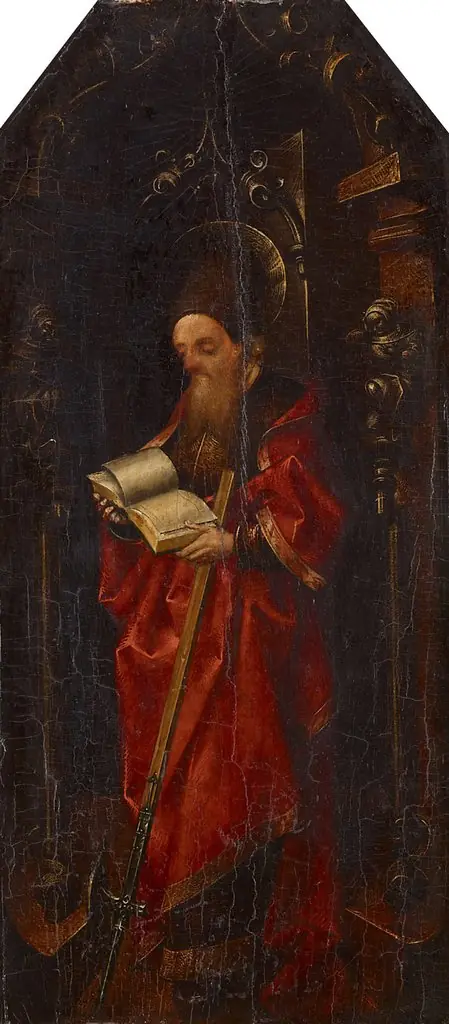 The Apostle Matthew
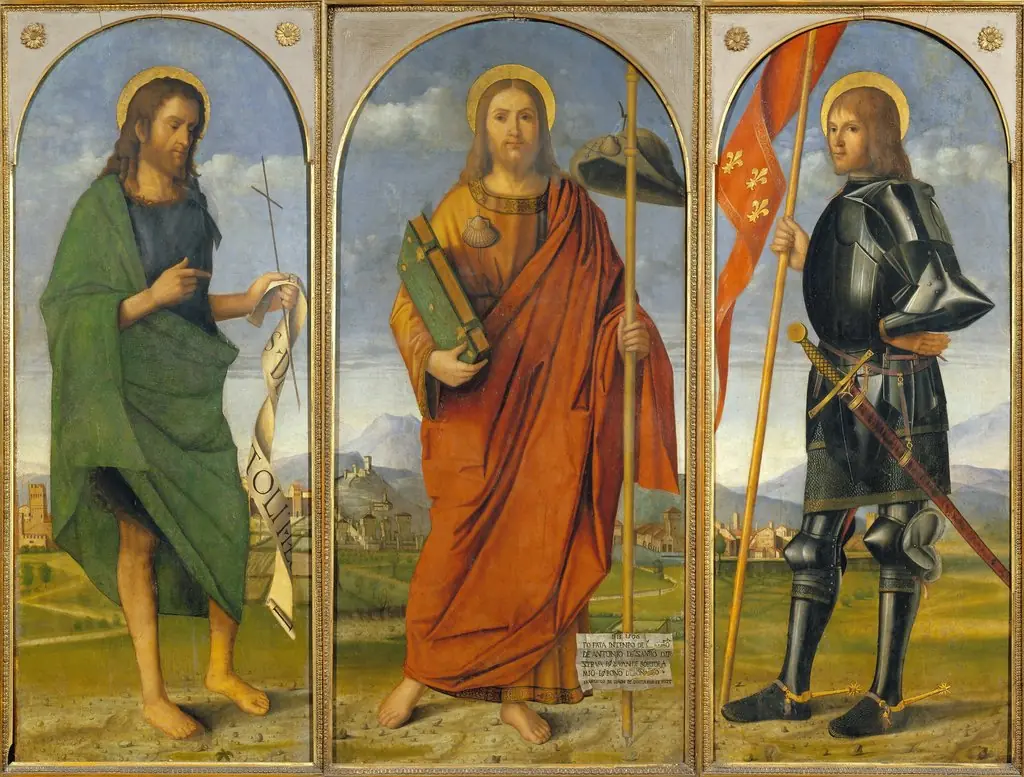 Trittico di Lepreno
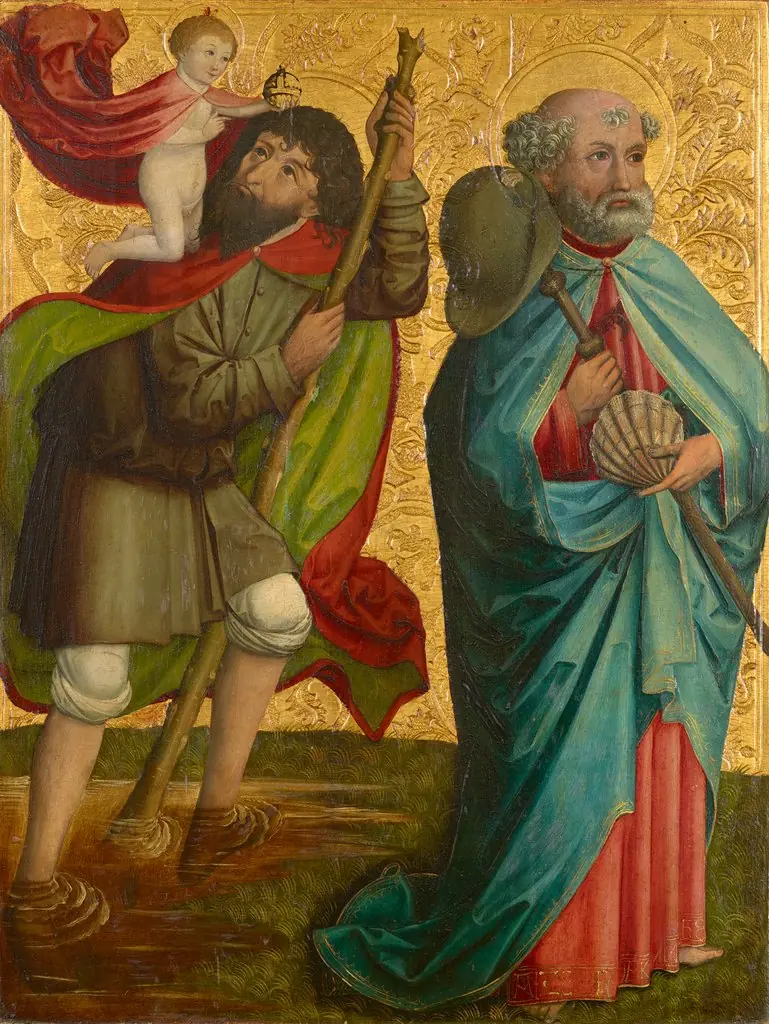 Linker Flügel des sog. Pretschlaipfer-Triptychons: Hll. Christophorus und Jakobus Major (Innenseite); Verkündigung an Maria (Außenseite)