Artwork
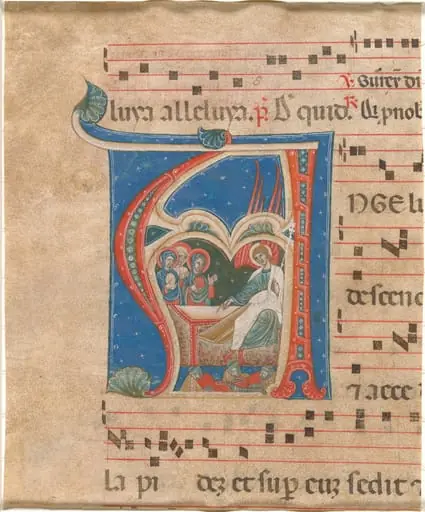
The Three Maries at the Tomb with the Angel of the Resurrection
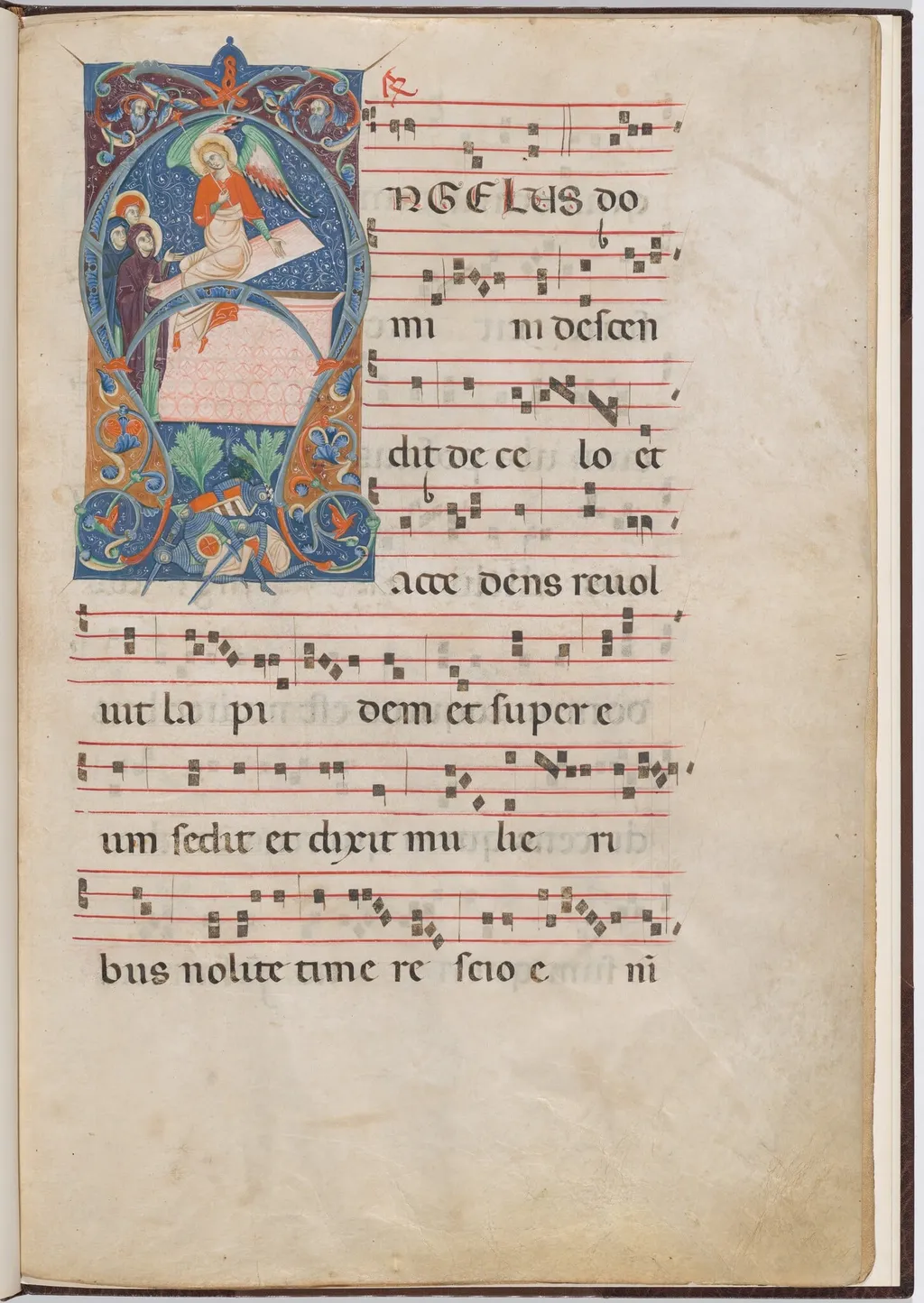
The Three Maries at the Tomb with the Angel of the Resurrection is a tempera drawing by Master of Imola. It is held in the collection of the National Gallery of Art. This miniature, created around 1275, originates from a fragment of a liturgical antiphonal written on vellum.
About this work
Overview
The scene occupies a corner of the page, its compact composition framed by decorative borders and musical notation.
This miniature, created around 1275, originates from a fragment of a liturgical antiphonal written on vellum. Executed in tempera, it once formed part of a larger manuscript used in monastic chant services. The scene occupies a corner of the page, its compact composition framed by decorative borders and musical notation. Its survival as a single leaf reflects the common practice of disbinding medieval books for reuse or sale.
Subject & Meaning
The image depicts the Three Maries visiting Christ’s tomb on the morning of the Resurrection, as described in the Gospels. A winged angel, seated on a stone, holds an open book—likely symbolizing divine proclamation. The women, cloaked in elongated robes and with hands folded in reverence, face the open sepulcher. The scene conveys quiet awe rather than dramatic revelation, aligning with contemplative liturgical use.
Technique & Style
Tempera paint, made from pigments mixed with egg yolk, was applied in thin, opaque layers to achieve vivid, enduring color. The figures are rendered with flat, stylized forms and minimal modeling, typical of late Italo-Byzantine traditions. Gold leaf stars and swirling vine motifs fill the background, creating a luminous, otherworldly space that emphasizes sacred time over physical space.
History & Provenance
The fragment is attributed to the Master of Imola, an anonymous artist active in northern Italy during the late 13th century. Likely produced in a scriptorium connected to a religious community, it was later separated from its original codex. Acquired by the National Gallery of Art in Washington, D.C., it survives as a rare example of devotional book art from this period.
Context
This miniature belonged to a liturgical manuscript used in the Divine Office, where chants and readings accompanied daily prayer. The inclusion of musical notation above the Latin text indicates its function in sung worship. Such miniatures served as visual aids for meditation, reinforcing the liturgy’s narrative through symbolic imagery rather than naturalism.
Legacy
As a surviving fragment of a medieval antiphonal, it offers insight into the integration of text, music, and image in monastic life. Its stylistic features reflect the transition from Byzantine conventions toward early Italian Gothic sensibilities. Though unsigned and anonymous, its craftsmanship preserves the devotional priorities of its time, bridging ritual and visual contemplation.
Artist & collection


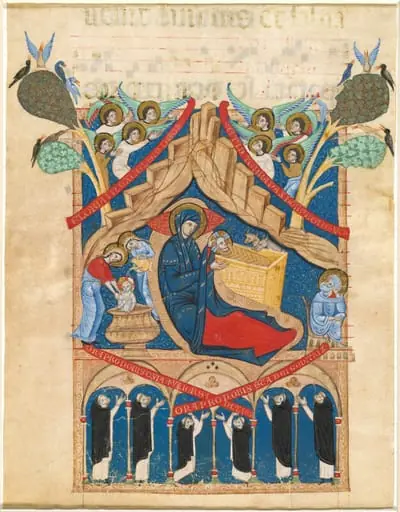
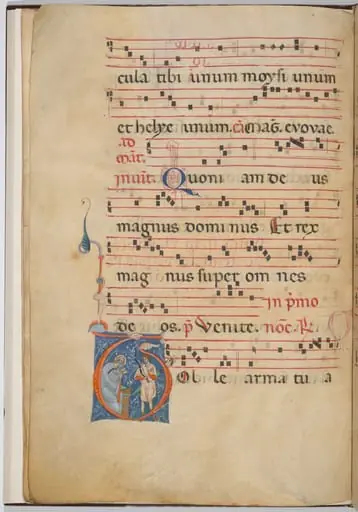
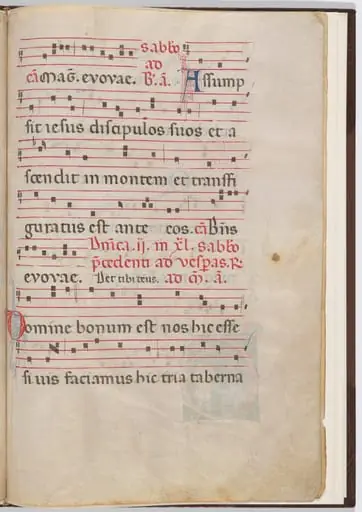 Leaf 7 from an antiphonal fragment
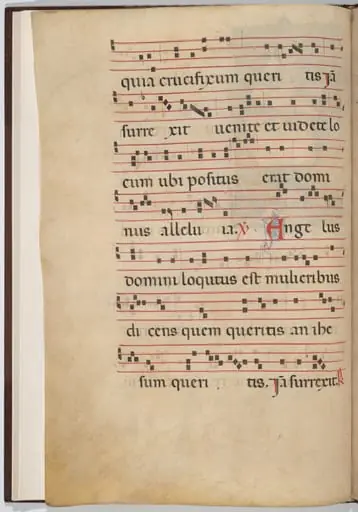 Leaf 1 from an antiphonal fragment (verso)
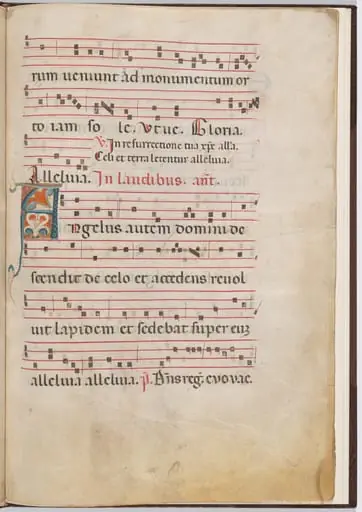 Leaf 3 from an antiphonal fragment
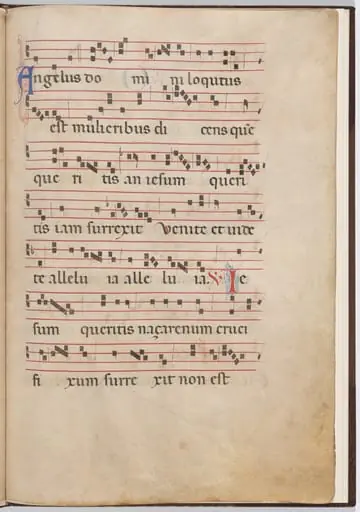 Leaf 2 from an antiphonal fragment
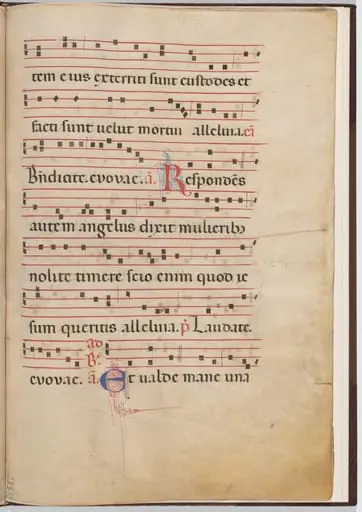 Leaf 4 from an antiphonal fragment
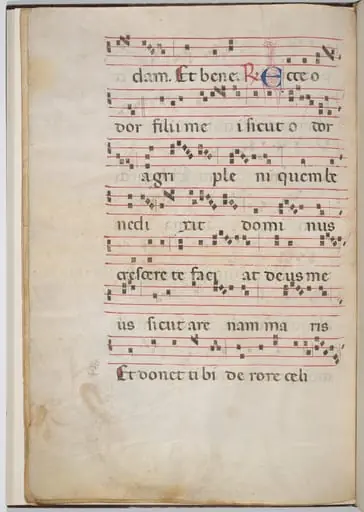 Leaf 8 from an antiphonal fragment (verso)
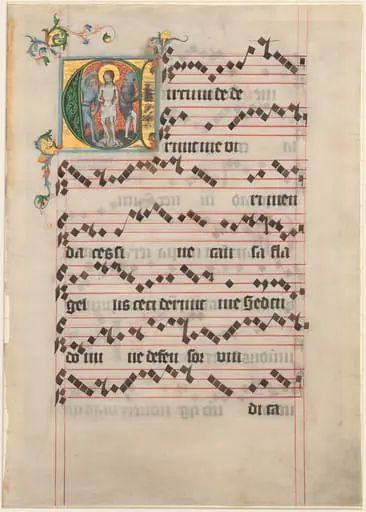 The Flagellation
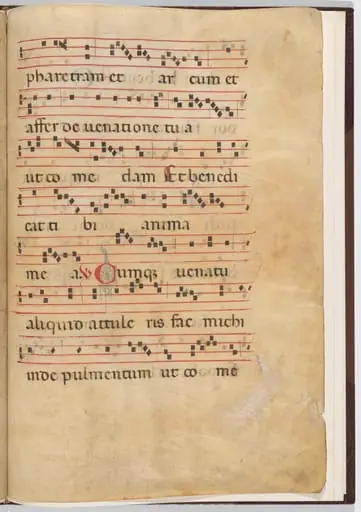 Leaf 8 from an antiphonal fragment
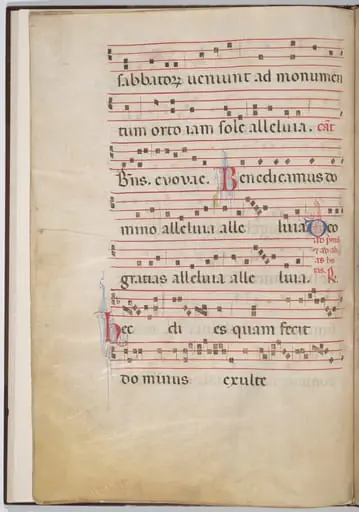 Leaf 4 from an antiphonal fragment (verso)
 Leaf 6 from an antiphonal fragment
 The Three Holy Women at the Tomb