Artwork
Isaac Sending Esau Out to Hunt
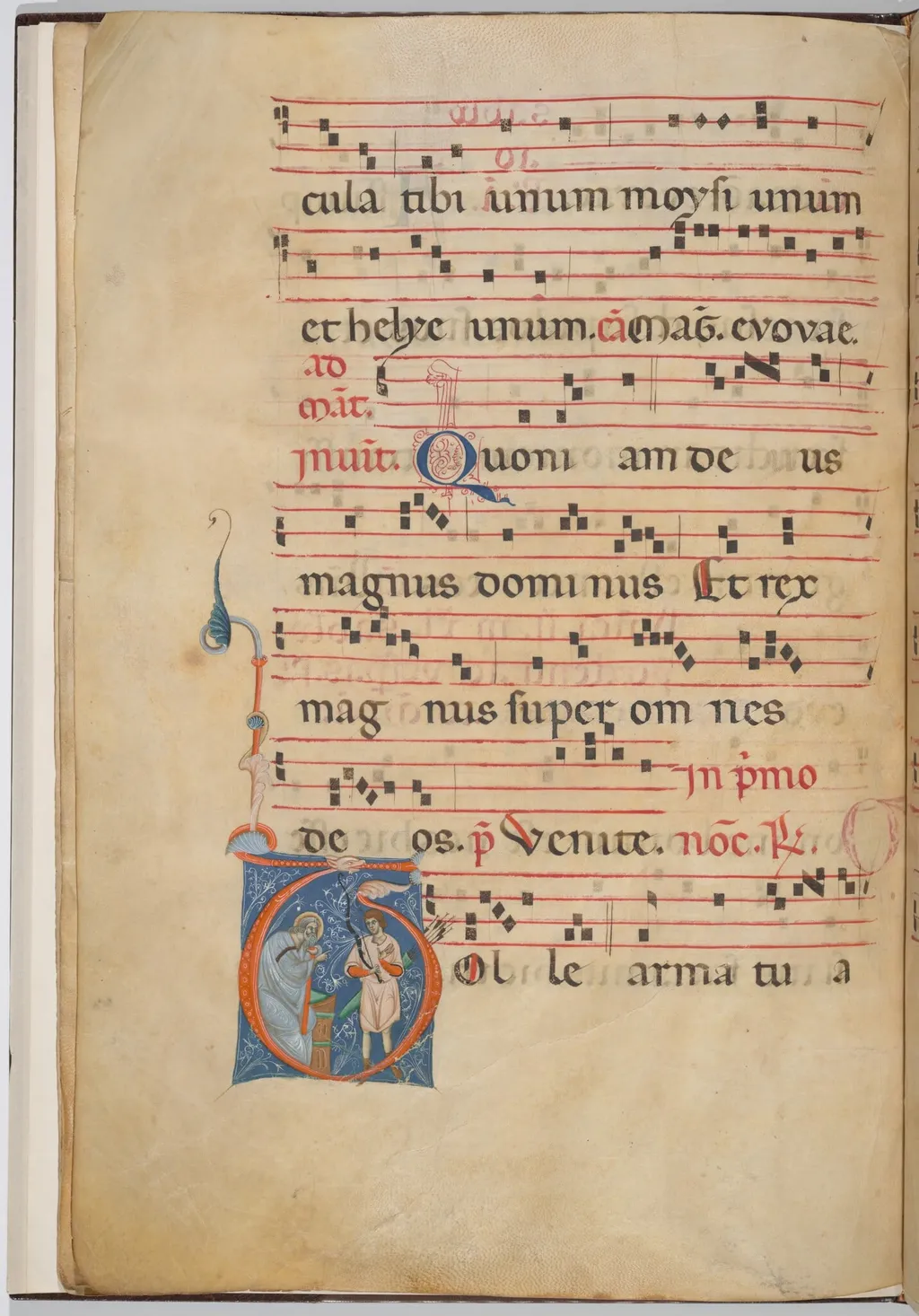
Isaac Sending Esau Out to Hunt is a tempera drawing by Master of Imola. It is held in the collection of the National Gallery of Art.
About this work
Overview
Measured within a circular border, the scene is one of many devotional illustrations in a manuscript intended for choir use.
This miniature, painted in tempera on a vellum leaf from a liturgical antiphonal, dates to around 1275 and originates from the workshop associated with the Master of Imola. Measured within a circular border, the scene is one of many devotional illustrations in a manuscript intended for choir use. Its small scale and integration into a musical text reflect the devotional practices of medieval monastic communities, where visual narratives reinforced liturgical themes.
Subject & Meaning
The scene depicts the biblical moment from Genesis when Isaac, an aging patriarch, instructs his son Esau to hunt game and prepare a savory meal. The older man, Isaac, gestures as he passes a vessel, while Esau, dressed for travel, prepares to depart. The narrative serves a liturgical function, illustrating themes of obedience, blessing, and divine providence—key motifs in the psalms and antiphons sung during services.
Technique & Style
Tempera paint, applied with fine brushes on vellum, allows for crisp outlines and vivid hues. The figures are rendered with stylized drapery and minimal spatial depth, typical of late 13th-century Italian manuscript illumination. The circular frame is bordered in red and gold leaf, drawing attention to the scene. Above, Latin text is written in a clear script with red ruling and neumes, indicating its musical purpose and integrating image with chant.
History & Provenance
The leaf was once part of a larger antiphonal, likely produced in northern Italy for use in a religious community. It was later disbound, possibly during the 19th century, when manuscripts were often broken up for sale. The fragment entered the National Gallery of Art’s collection in the 20th century, where it is preserved as an example of early Italian illumination rather than as a complete codex.
Context
In the 1270s, liturgical manuscripts were central to monastic life, combining sacred text with illuminations that aided contemplation. Artists like the Master of Imola worked in regional workshops, adapting Byzantine and Romanesque styles into compact, colorful scenes. This miniature reflects the growing emphasis on narrative clarity in devotional books, where visual storytelling supported the rhythm of daily prayer and chant.
Legacy
Though the Master of Imola remains an anonymous figure, his work contributes to the understanding of Italian manuscript production before the rise of humanist illumination. This fragment, like others from his circle, demonstrates how religious narratives were condensed into portable, intimate forms. Today, such miniatures are studied for their craftsmanship and their role in shaping medieval visual piety.
Artist & collection


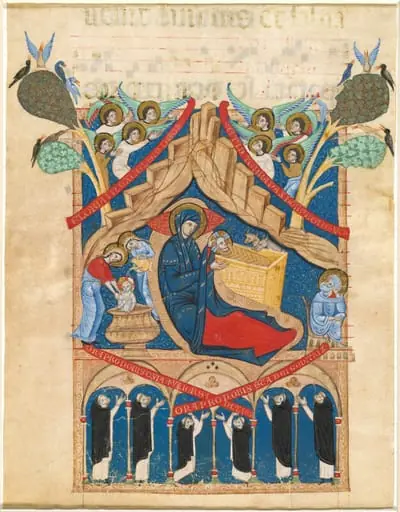
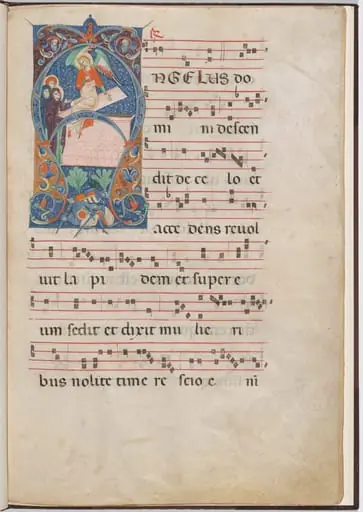
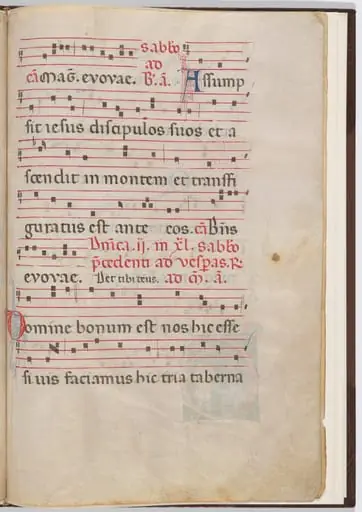 Leaf 7 from an antiphonal fragment
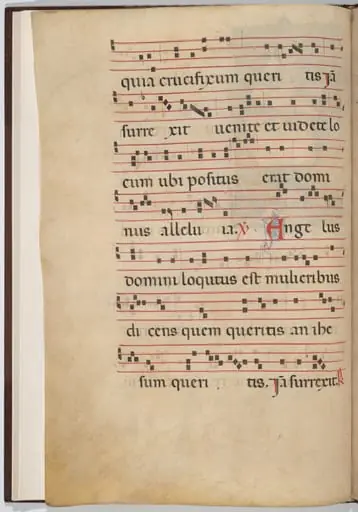 Leaf 1 from an antiphonal fragment (verso)
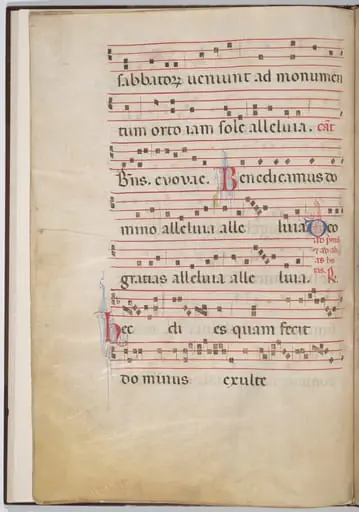 Leaf 4 from an antiphonal fragment (verso)
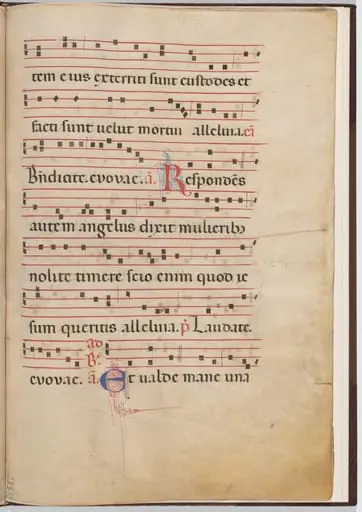 Leaf 4 from an antiphonal fragment
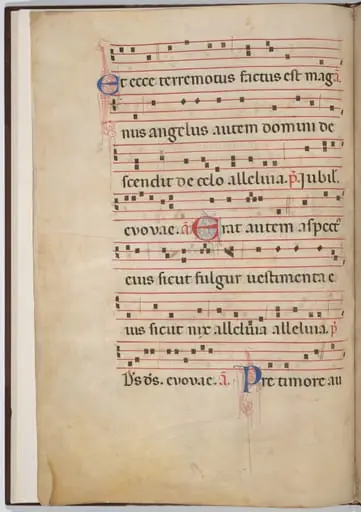 Leaf 3 from an antiphonal fragment (verso)
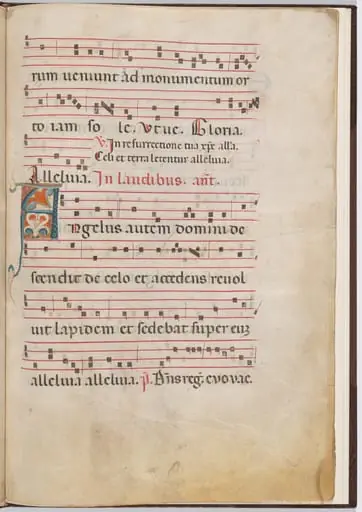 Leaf 3 from an antiphonal fragment
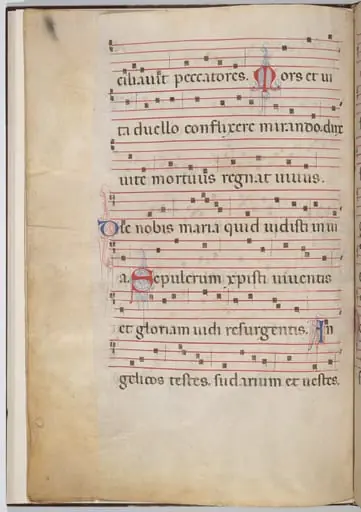 Leaf 6 from an antiphonal fragment (verso)
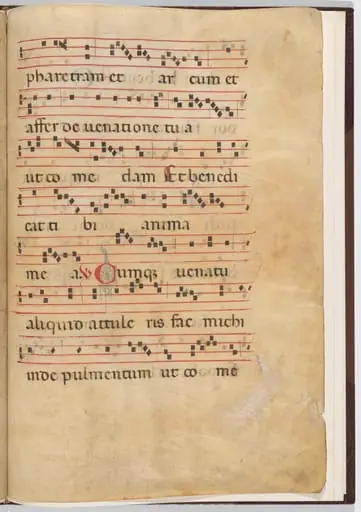 Leaf 8 from an antiphonal fragment
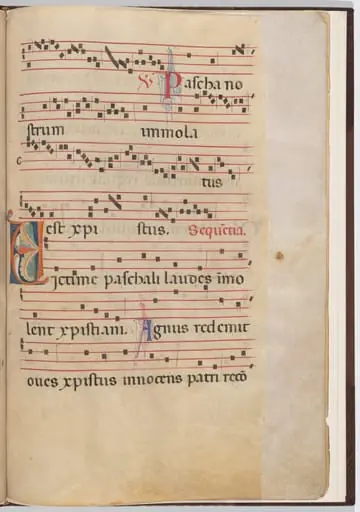 Leaf 6 from an antiphonal fragment
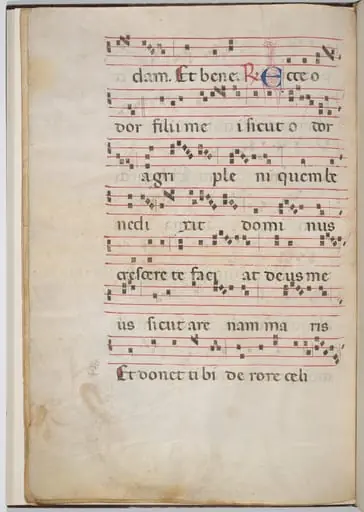 Leaf 8 from an antiphonal fragment (verso)
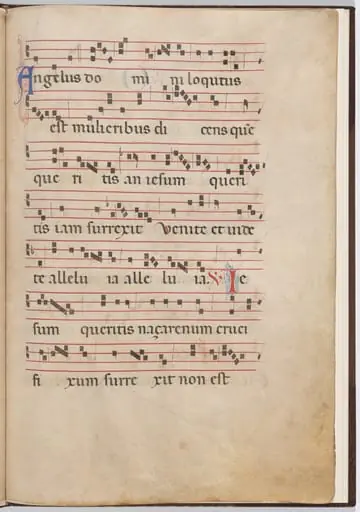 Leaf 2 from an antiphonal fragment
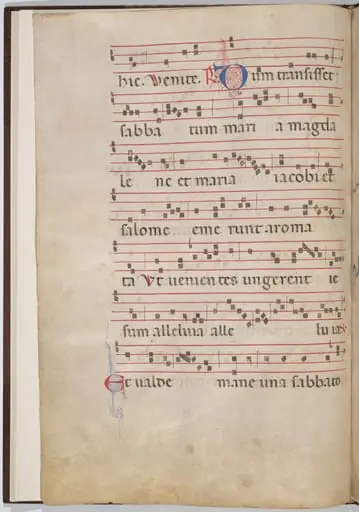 Leaf 2 from an antiphonal fragment (verso)