Artwork
Saint Ulrich of Augsburg
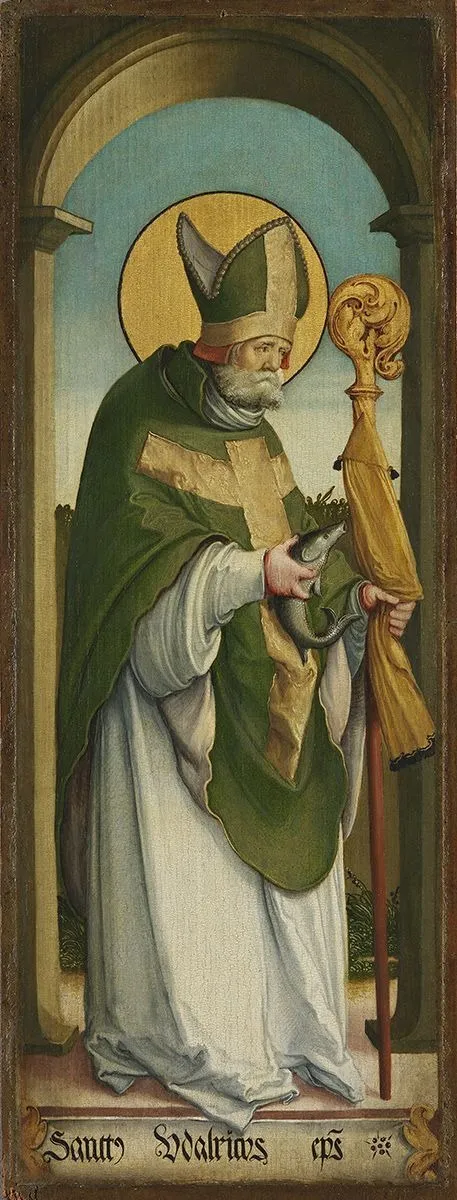
Saint Ulrich of Augsburg is a wood painting by the Early Baroque Italian artist Master of Messkirch. It dates from 1537 and is held in the collection of the Bavarian State Painting Collections.
About this work
Overview
Created in 1537 by the anonymous Master of Messkirch, this work portrays Saint Ulrich of Augsburg. Executed on a softwood panel, the image now belongs to the collection of the Alte Pinakothek. The composition centers on a solemn figure in ecclesiastical dress, holding a gilded staff and a book entwined by a black serpent, rendered in flat, vivid hues without pronounced chiaroscuro.
Subject & Meaning
The saint is shown in traditional clerical garb, his green outer robe trimmed with a white lining and a tall, pointed mitre accented by a red band. The golden staff signifies his episcopal authority, while the serpent coiled around the book references the hagiographic legend in which Ulrich triumphs over a poisonous creature, symbolising spiritual victory over evil.
Technique & Style
Painted on softwood, the piece employs a limited palette of bright, unmodulated colors that give the surface a decorative quality. Modeling is achieved through simple tonal shifts rather than deep modelling, resulting in a flattened appearance characteristic of certain mid‑sixteenth‑century German devotional panels.
History & Provenance
After its production in the workshop associated with Messkirch, the panel entered private collections before being acquired by the Bavarian state museum. It has been on permanent display at the Alte Pinakothek in Munich, where it contributes to the museum’s representation of early modern religious art.
Context
The depiction aligns with contemporary practices of venerating local saints through portable devotional images. Saint Ulrich, a 10th‑century bishop of Augsburg, was a popular intercessor in the region, and his iconography—particularly the serpent motif—was widely reproduced in liturgical objects and church frescoes of the period.
Artist & collection

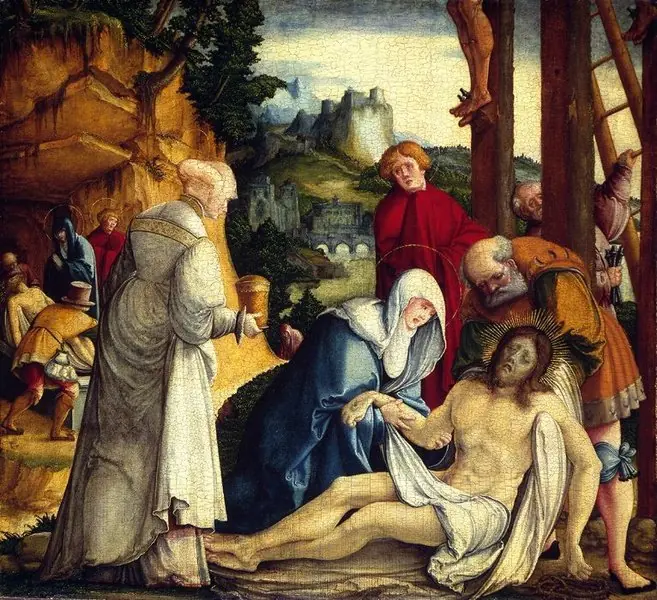
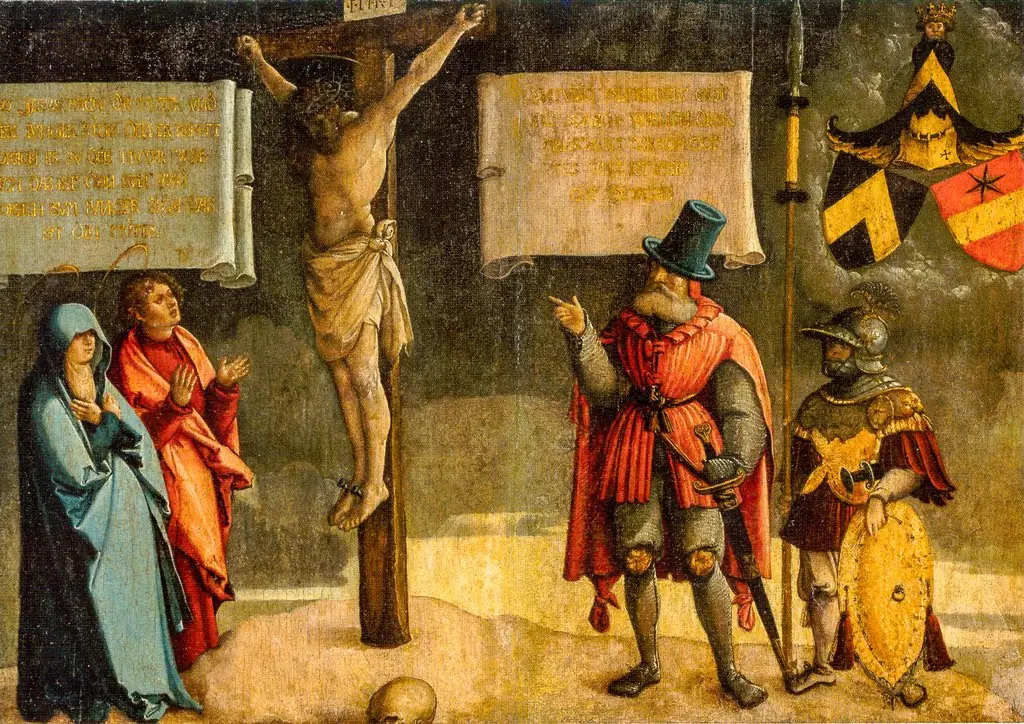
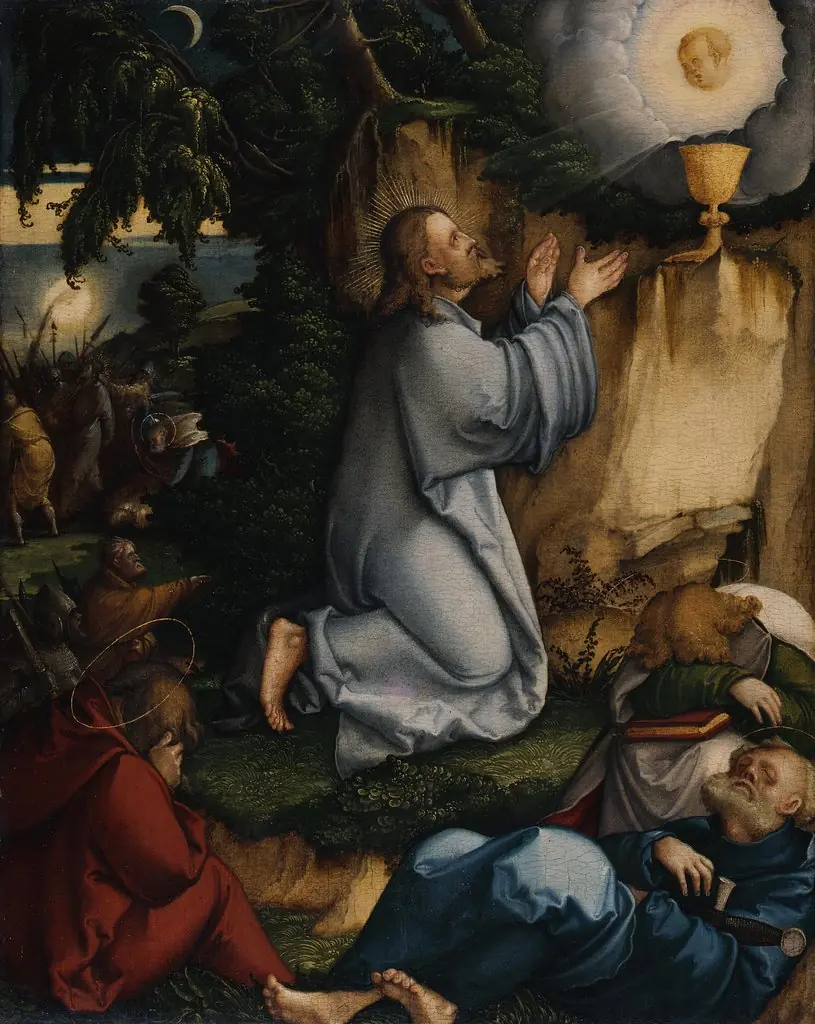
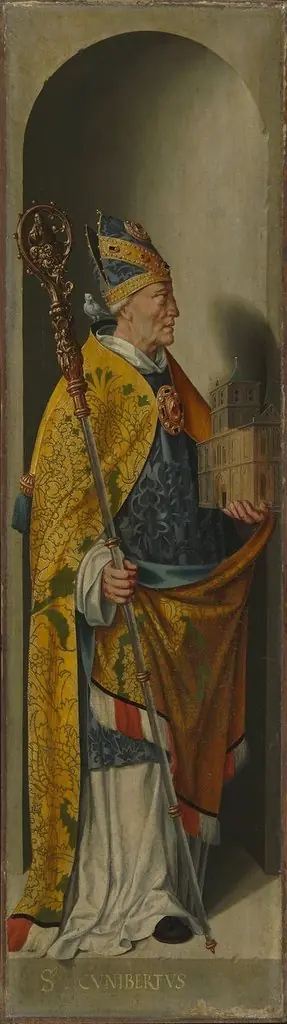 Beweinungsaltar, Flügelaußenseite: Hl. Kunibert
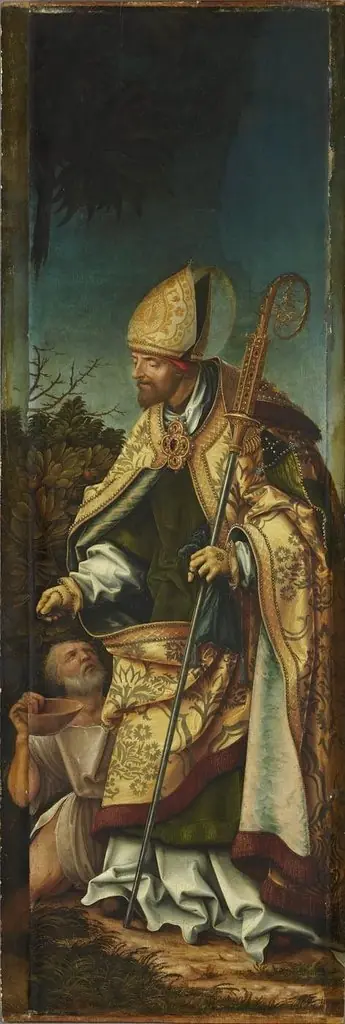 Johannesaltar, rechter Flügel: Hl. Martin
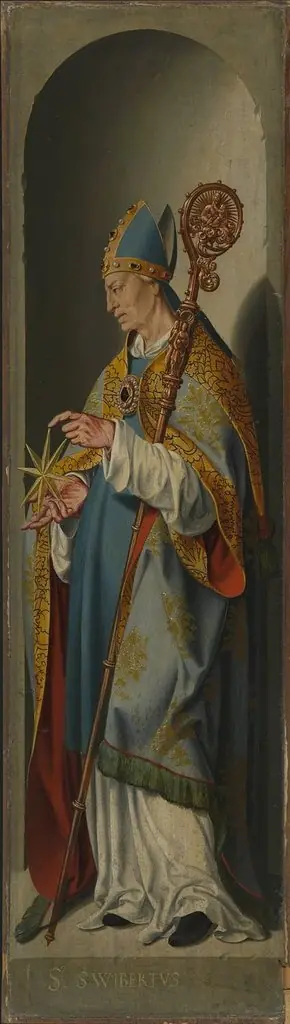 Beweinungsaltar, Flügelaußenseite: Hl. Suitbert
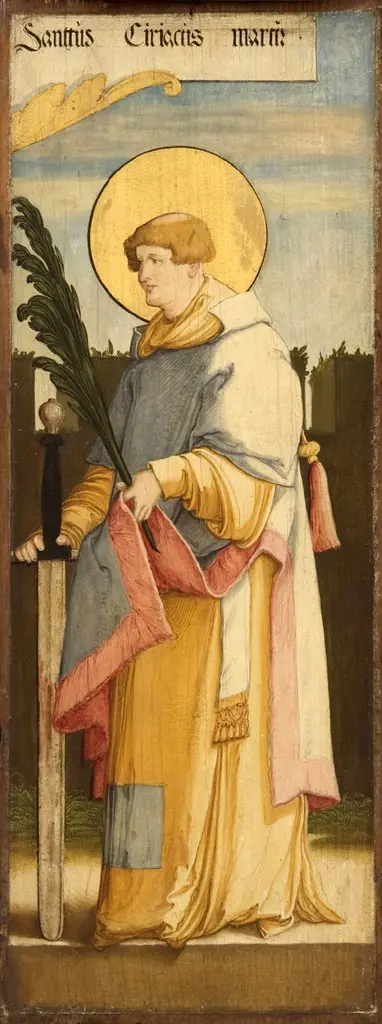 Saint Ciriacus
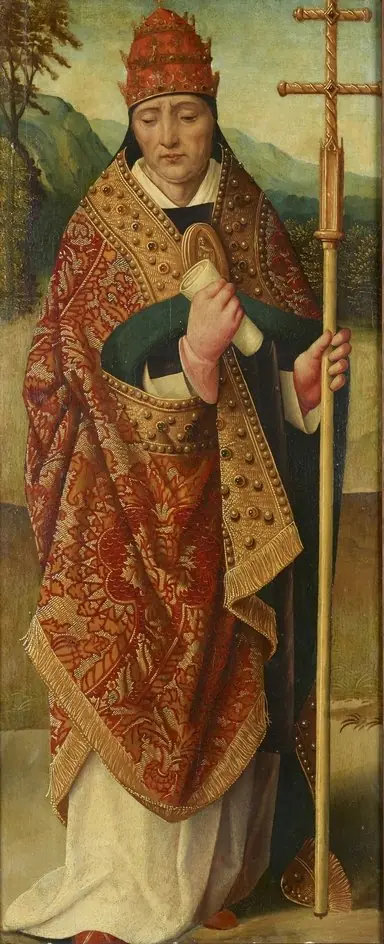 A papal Saint
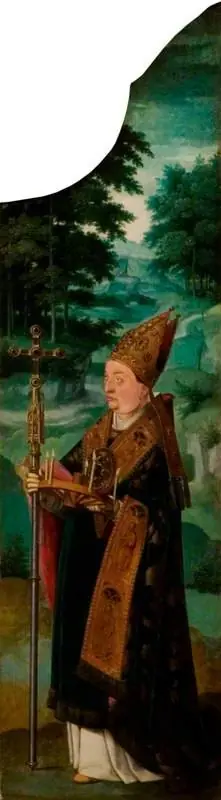 Saint Donatien (triptych, right wing)
![The Saint Anne Altarpiece: Saint Nicholas [left panel], by Gerard David](https://artifactworldgallery.com/img/gerard-david--the-saint-anne-altarpiece-saint-nicholas-left-panel--46b600bff8ce44bb-w320.webp) The Saint Anne Altarpiece: Saint Nicholas [left panel]
The Saint Anne Altarpiece: Saint Nicholas [left panel]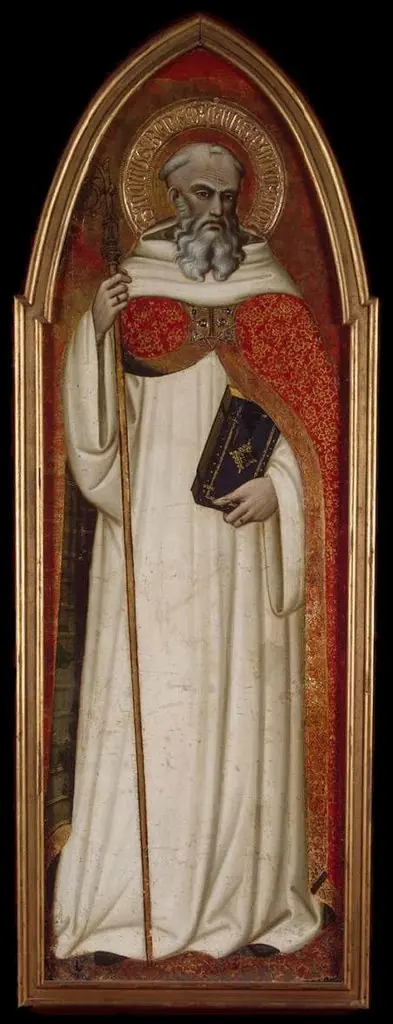 St Benedict (wing of a polyptych)
 Der heilige Hieronymus