Artwork
Votivtafel des Johann von Ehingen-Neuneck
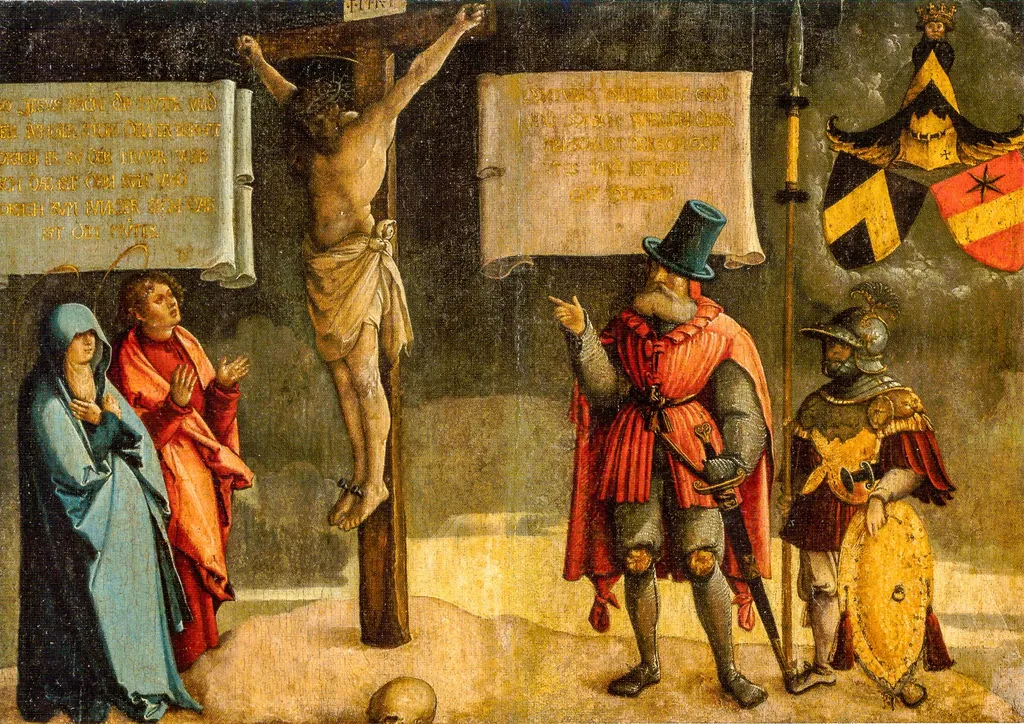
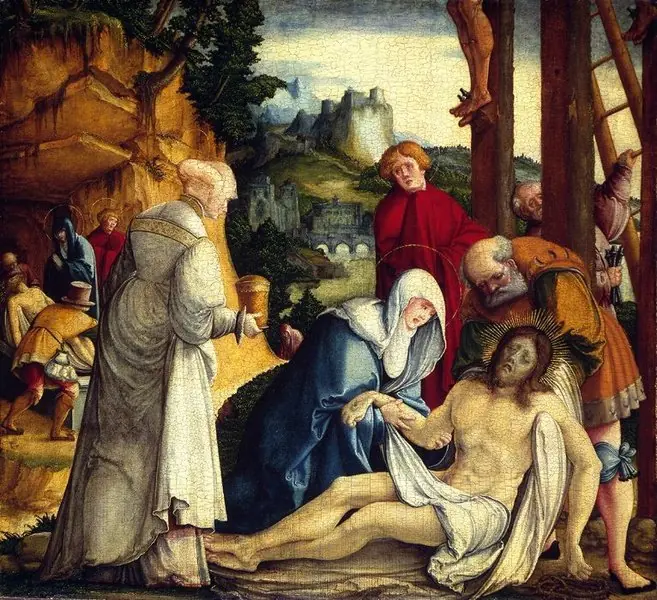
Votivtafel des Johann von Ehingen-Neuneck is an unspecified painting by the Early Baroque Italian artist Master of Messkirch. It dates from 1560 and is held in the collection of the Pushkin Museum of Fine Arts.
About this work
Overview
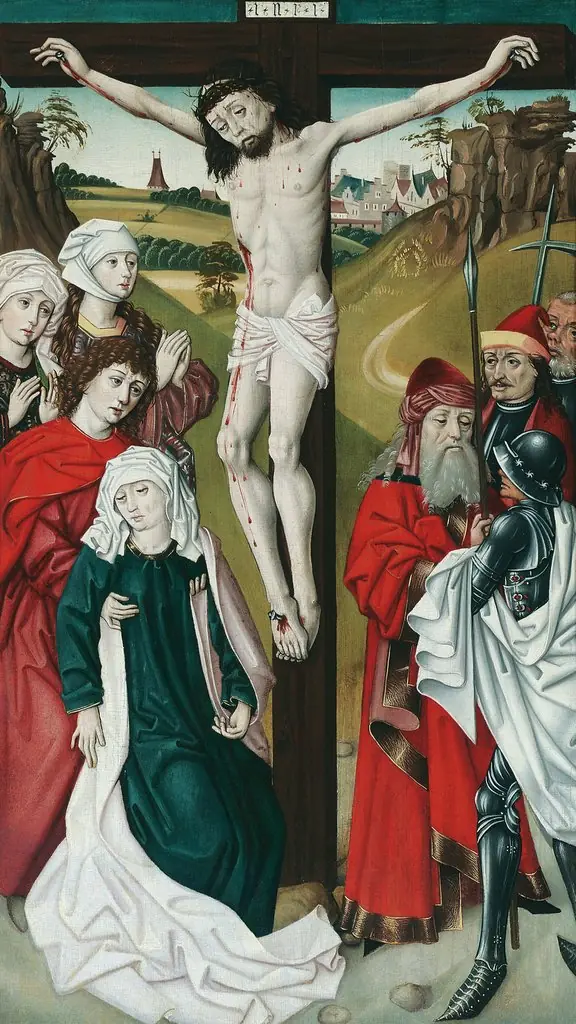
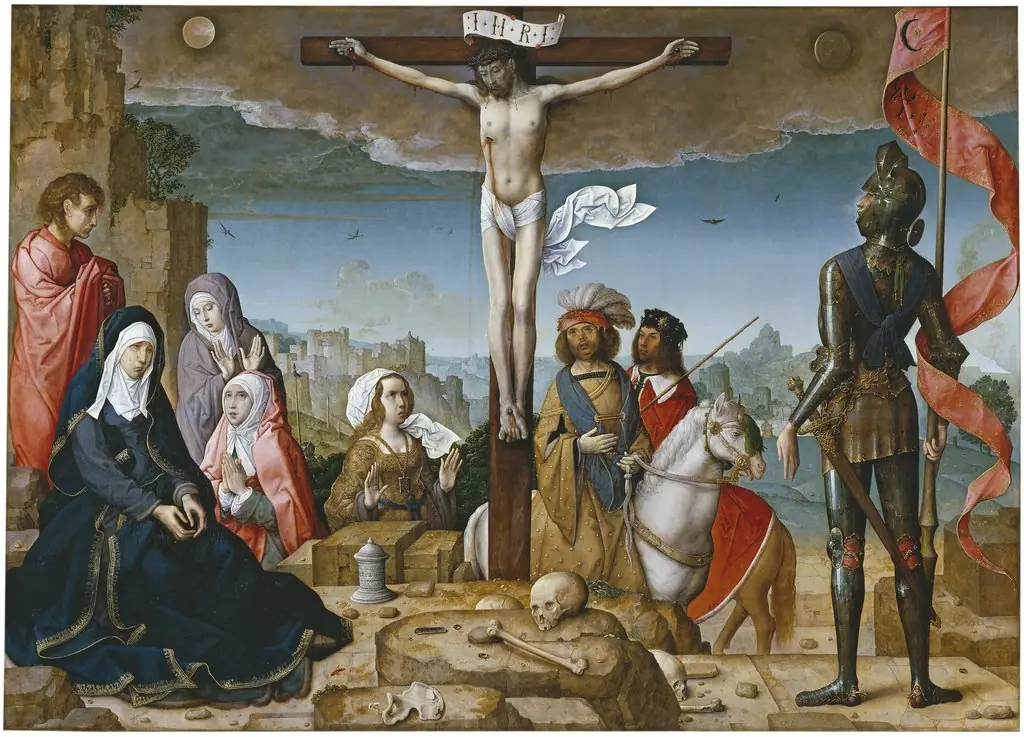
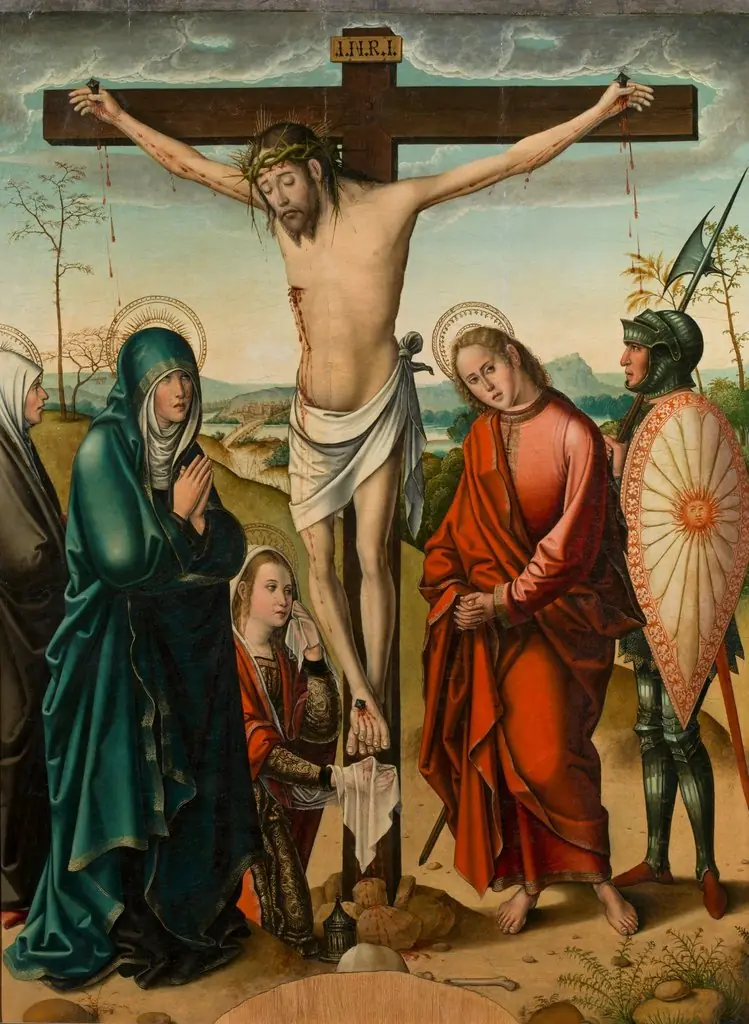
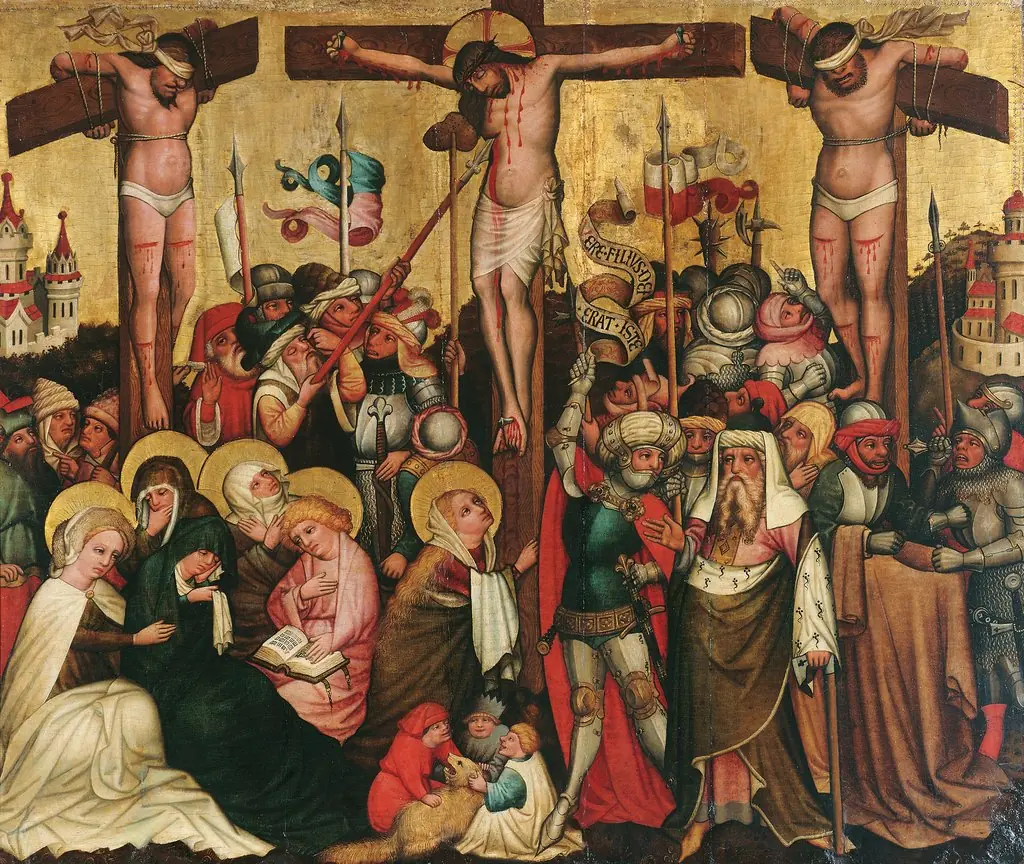
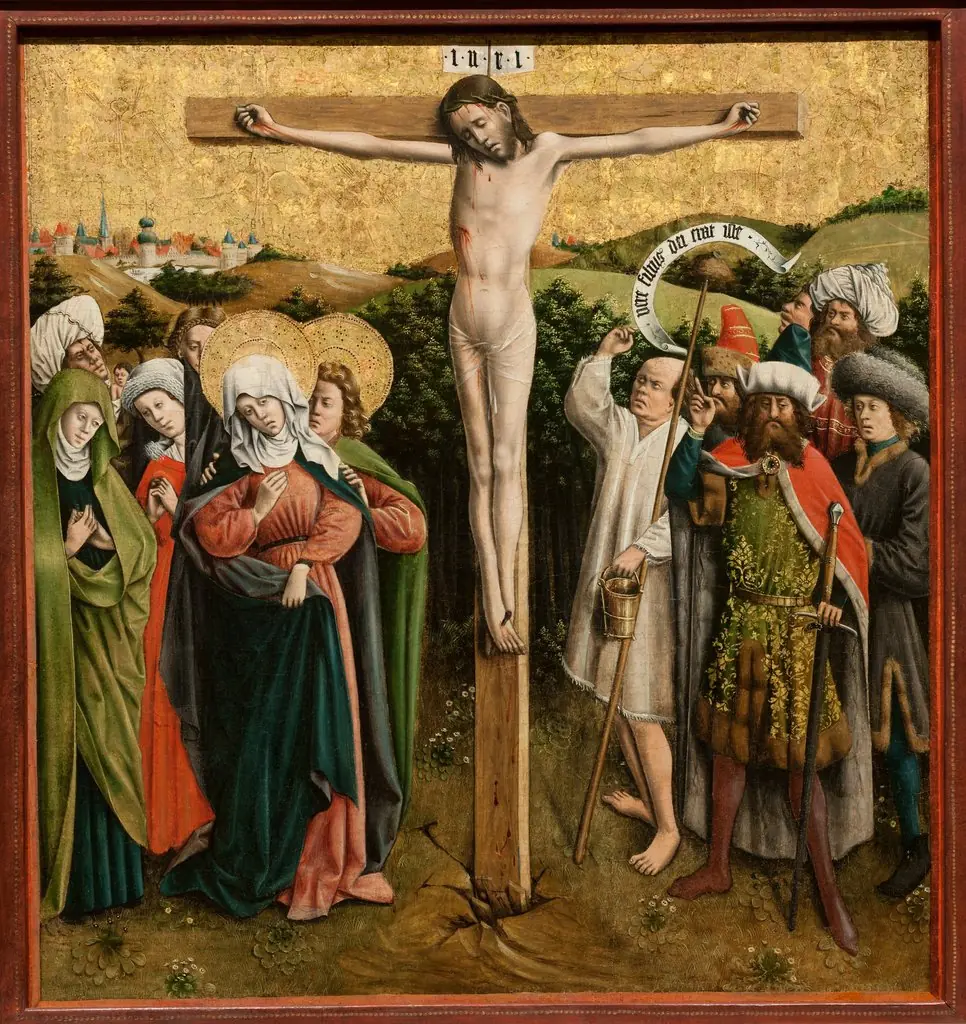
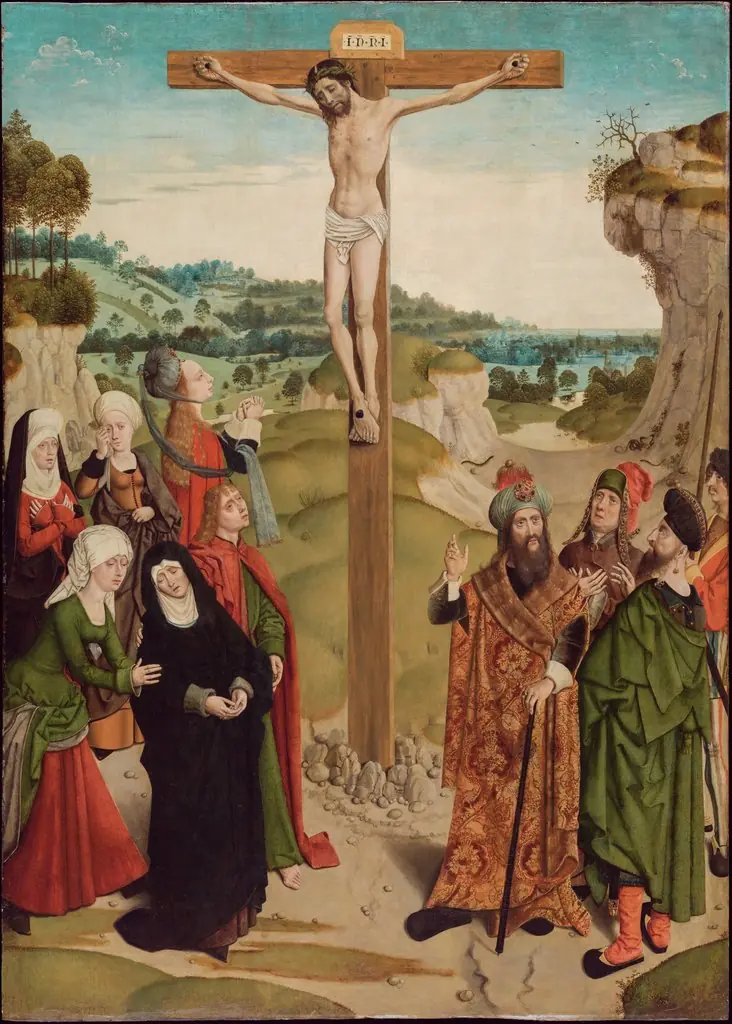
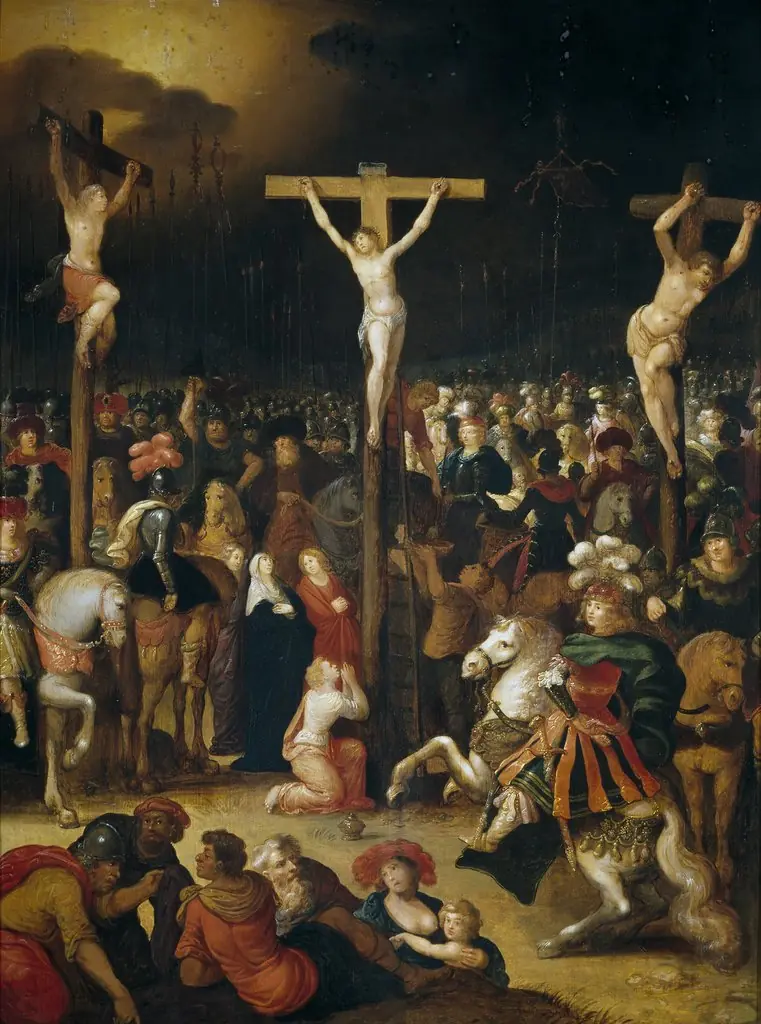
Created around 1560, this panel painting is attributed to the anonymous Master of Messkirch. Executed in a religious genre, it portrays a crucifixion tableau now part of the Tretyakov Gallery’s collection in Moscow. The work measures roughly a typical devotional panel and was likely intended for a church setting or a private chapel.
Subject & Meaning
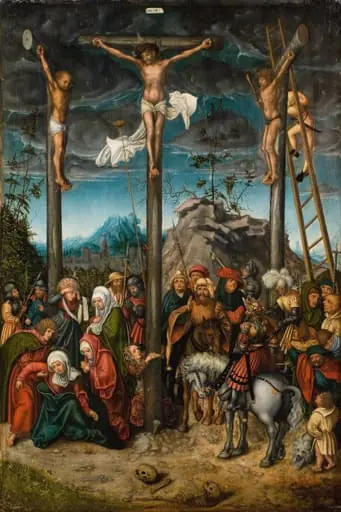
At the composition’s centre, Christ hangs on the cross beneath an empty inscription board, flanked by the apostle John and the Virgin Mary, both shown in a posture of mourning. To the right, two armored figures in vivid red and black robes confront the scene, one gesturing upward, suggesting a theological emphasis on sacrifice and redemption.
Technique & Style
The painter employs a clear chiaroscuro, contrasting illuminated figures against a darker background to heighten drama. Fine detailing appears in the elaborate headgear and the heraldic device rendered in the rear plane, indicating the artist’s skill in rendering texture and material, from fabric folds to metallic armor.
History & Provenance
The panel entered the Tretyakov Gallery in the early twentieth century, after passing through private collections that valued its devotional function and the prestige of its patronage symbols. Its attribution to the Master of Messkirch rests on stylistic parallels with other mid‑sixteenth‑century works from the Upper Rhine region.
Context
The inclusion of a coat of arms and Latin inscriptions points to a commission by a wealthy patron, possibly a local noble or ecclesiastical authority. Such visual elements were common in mid‑Renaissance Germanic art, serving both as markers of status and as didactic tools for an educated audience.
Own this work as a print
Artist & collection