Artwork
Portrait of Ludovico Portinari
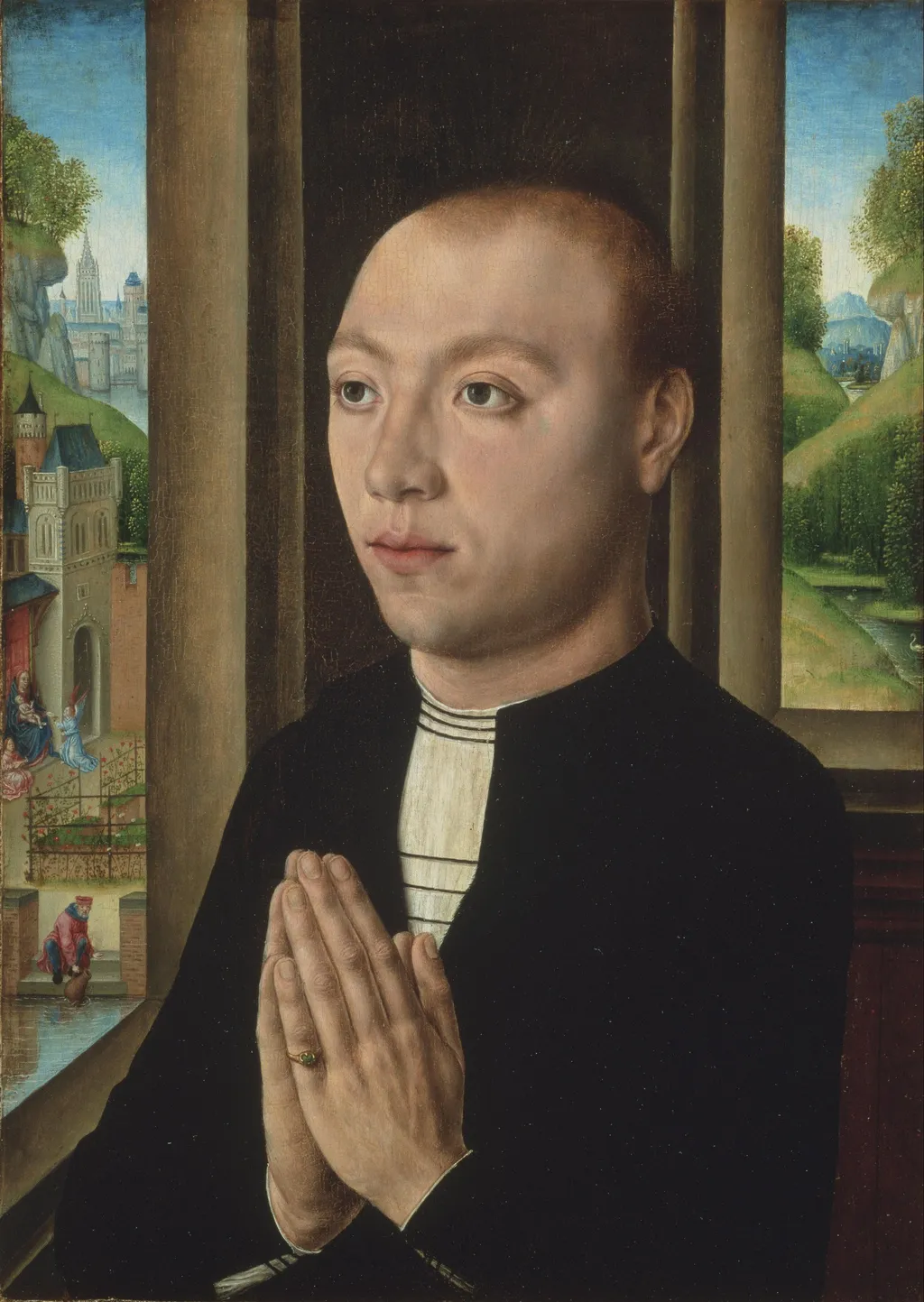
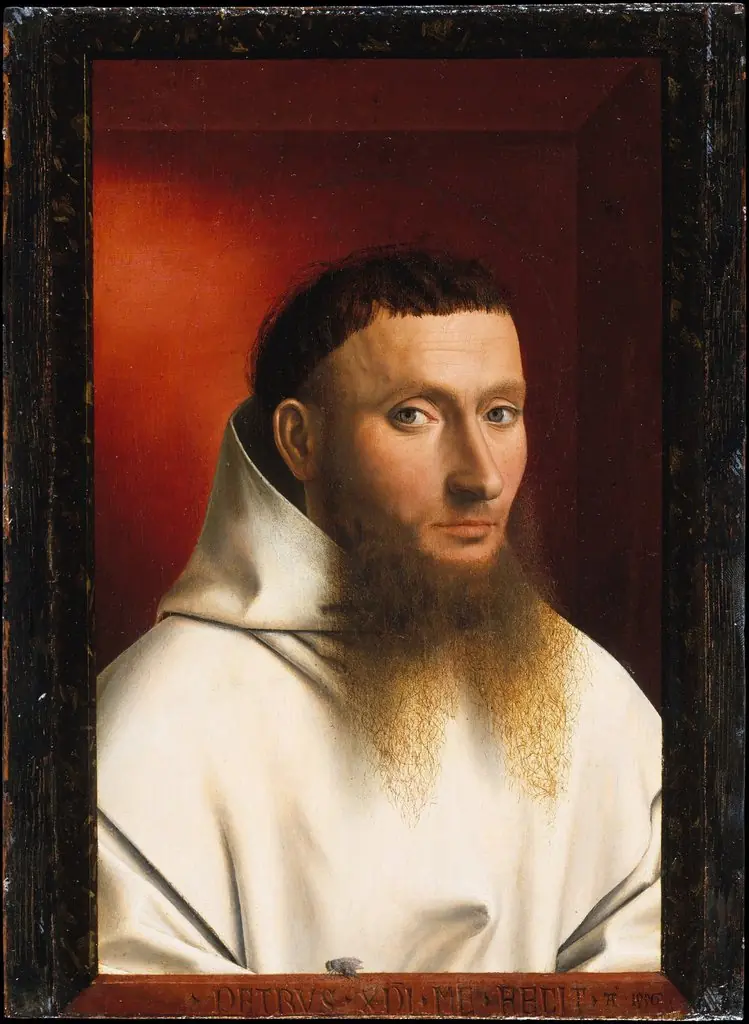
Portrait of Ludovico Portinari is an oil painting by the Northern Renaissance artist Master of the Bruges Legend of St. Ursula. It dates from 1494 and is held in the collection of the Philadelphia Museum of Art.
About this work
The artist's use of oil paint and attention to detail are evident in the subject's clothing and the background scenery.
The painting depicts a man with a shaved head, wearing a black jacket over a white shirt with thin black stripes. He is shown from the waist up, with his hands clasped together in front of him. The background features a window with a view of a landscape, including trees, hills, and a body of water.
The man's attire and the style of the painting suggest a formal portrait from the 15th century. The artist's use of oil paint and attention to detail are evident in the subject's clothing and the background scenery.
If you're interested in learning more about the artist's technique, look up glazing.
Overview
Painted in 1494, the Portrait of Ludovico Portinari is an oil-on-panel work attributed to the Master of the Bruges Legend of St. Ursula, an anonymous Flemish artist named after a series of panels depicting the saint’s life. The painting captures a male figure in formal attire, rendered with the precision and atmospheric depth characteristic of Northern Renaissance portraiture. It resides in the Philadelphia Museum of Art’s collection, where it stands as a quiet example of mid-15th-century secular portraiture.
Subject & Meaning
Ludovico Portinari, likely a member of the influential Italian Portinari family based in Bruges, is depicted with restrained dignity. His shaved head and somber clothing suggest a devotional or professional demeanor, common among merchant-class patrons of the time. The clasped hands imply contemplation or prayer, aligning the portrait with the era’s blend of secular status and spiritual modesty. The inclusion of a distant landscape behind him may reflect his connection to broader trade networks or personal identity beyond commerce.
Technique & Style
The artist employed oil glazing to build subtle layers of color and light, enhancing the texture of the black jacket, the sheen of the white shirt, and the soft gradations of the landscape beyond the window. Fine brushwork defines the thin black stripes on the shirt and the individual leaves in the distant trees. The lighting is naturalistic, casting gentle shadows that model the face and hands with quiet realism. These techniques reflect the Northern Renaissance’s emphasis on material truth and optical precision.
History & Provenance
The painting’s early history is undocumented, but its style and subject suggest it was commissioned in Bruges during the late 15th century, possibly by or for the Portinari family, who were prominent in the city’s banking circles. It entered the Philadelphia Museum of Art’s collection in the 20th century, though the exact path from Bruges to Philadelphia remains unclear. Its survival without significant alteration speaks to its careful preservation over centuries.
Context
In late 15th-century Bruges, wealthy Italian merchants like the Portinari family commissioned portraits to assert their status within Flemish society. Artists in the region, often anonymous, specialized in intimate, highly detailed works that combined personal identity with symbolic elements. This portrait fits within a broader trend of secular portraiture emerging alongside religious commissions, reflecting the growing cultural influence of the merchant class in Northern Europe.
Legacy
Though the artist’s identity remains unknown, the portrait exemplifies the quiet sophistication of anonymous Northern Renaissance painters who prioritized observation over grandeur. Its restrained composition and technical refinement influenced later generations of portraitists in the Low Countries. Today, it serves as a tangible link to the daily lives and visual culture of early modern European merchants, preserved not through fame but through meticulous craft.
Artist & collection
Artist
Master of the Bruges Legend of St. Ursula
The Master of the Legend of St. Ursula (1436–1505) was a Flemish painter active in the fifteenth century. His name is derived from a polyptych depicting scenes from the life of Saint Ursula painted for the convent of…

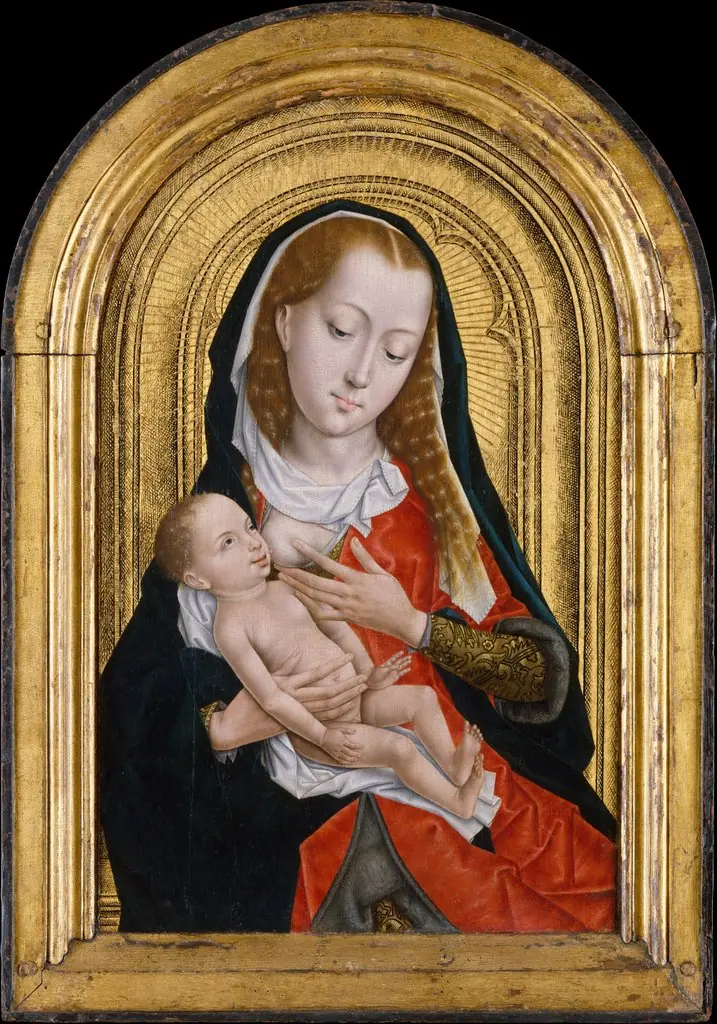 Virgin and Child
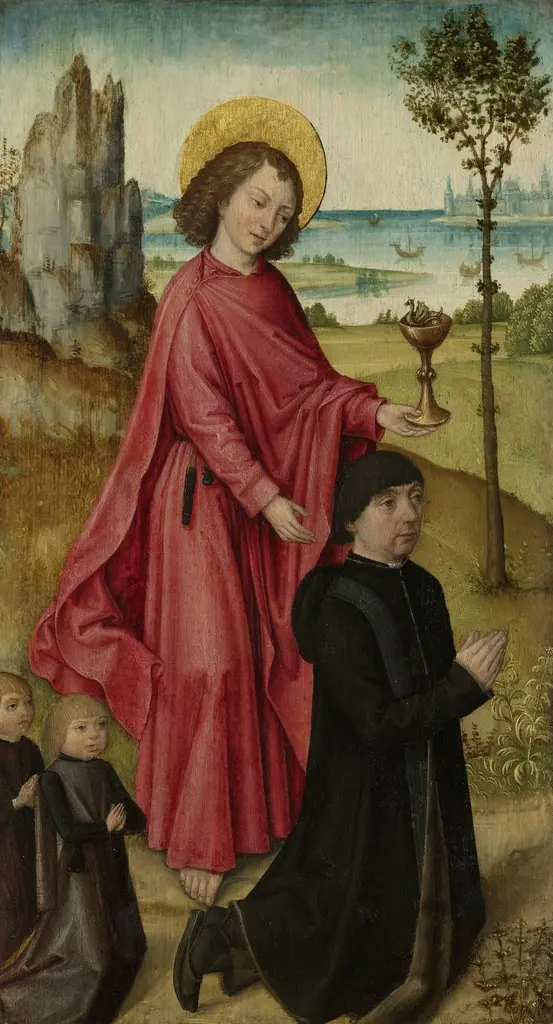 Inner left wing of a triptych with the donor, his two sons and St John the Evangelist
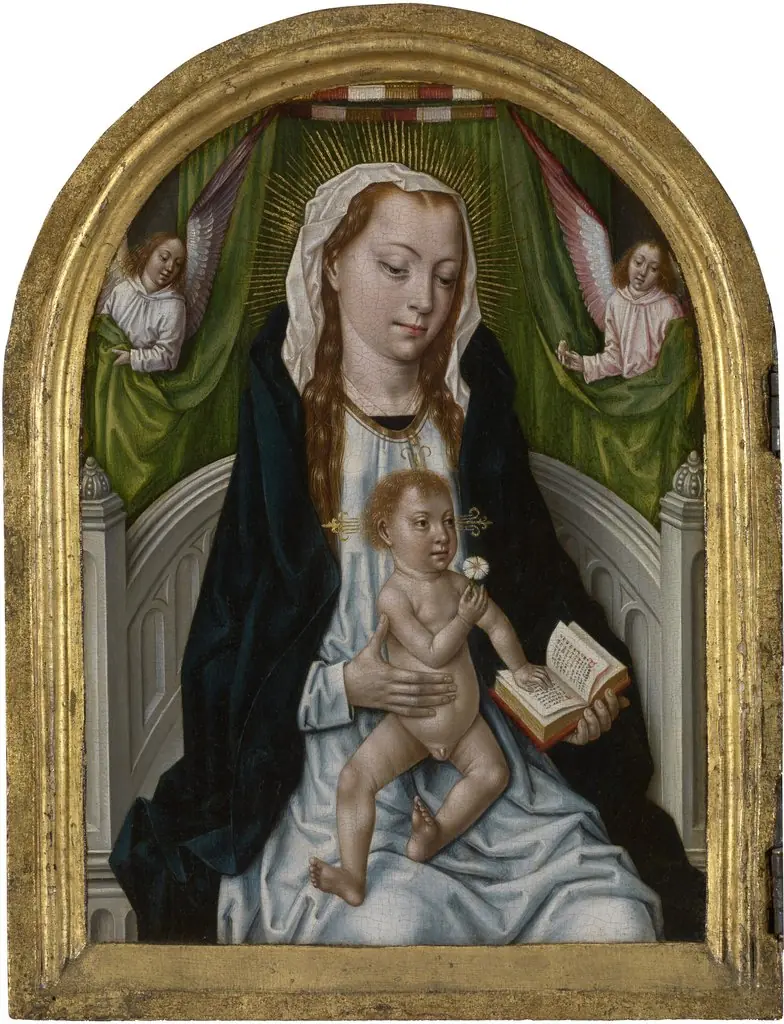 Virgin and Child with Angels
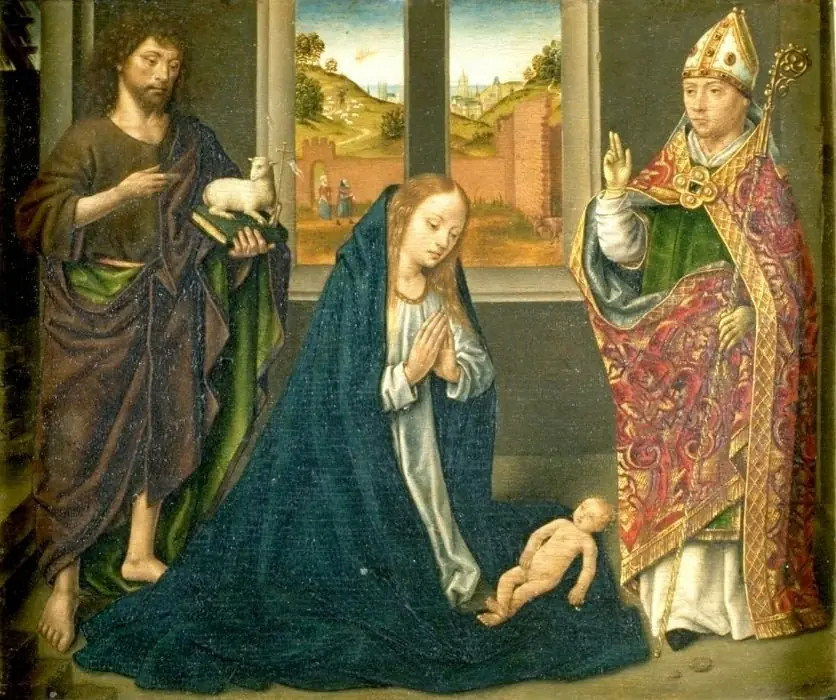 The adoration of the Christ-child and Saints John the Baptist and Donatius
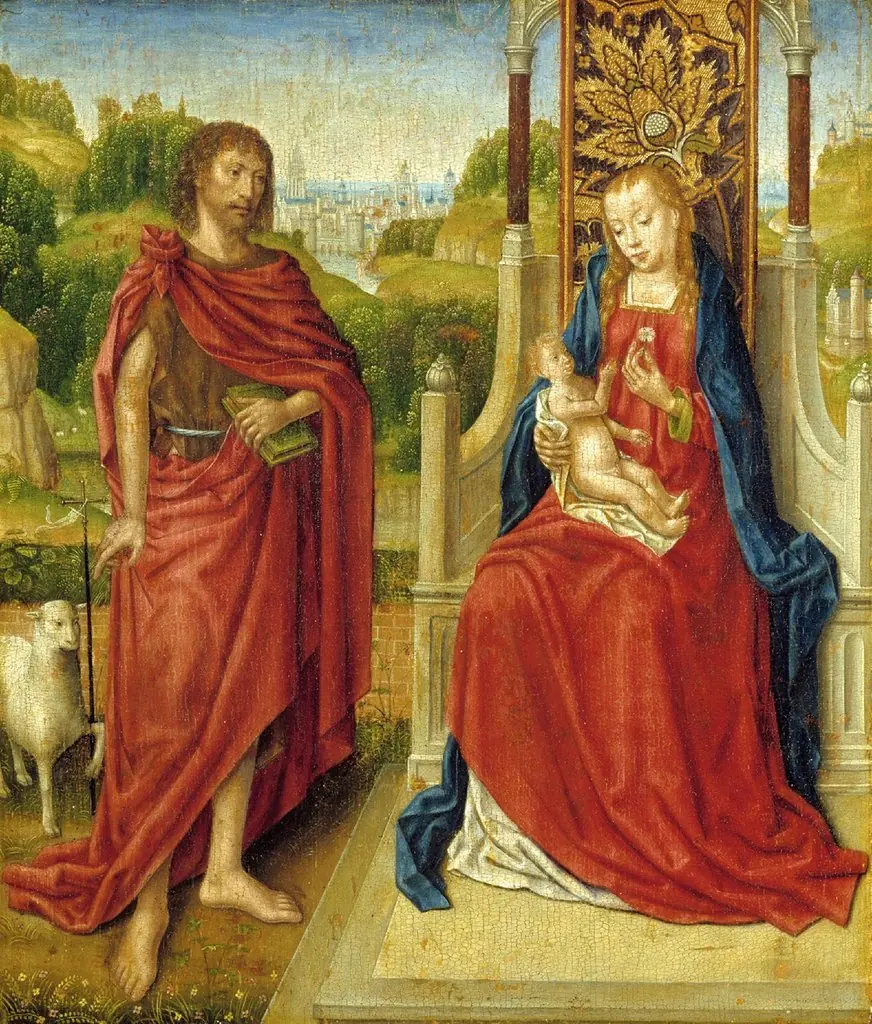 Virgin and Child and Saint John the Baptist
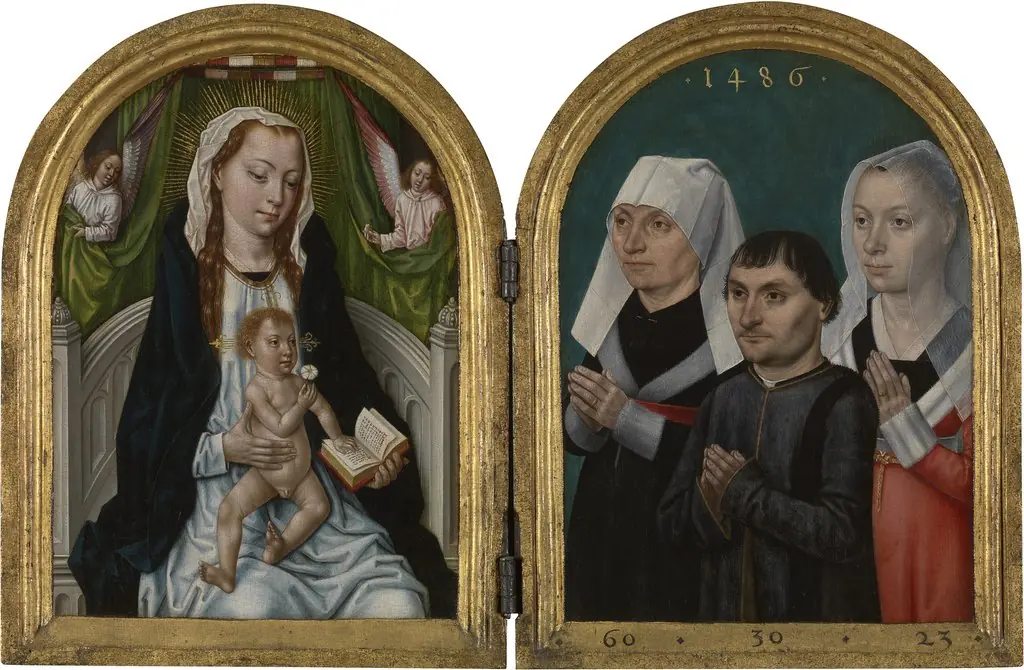 Diptych with the Virgin and Child and Three Donors
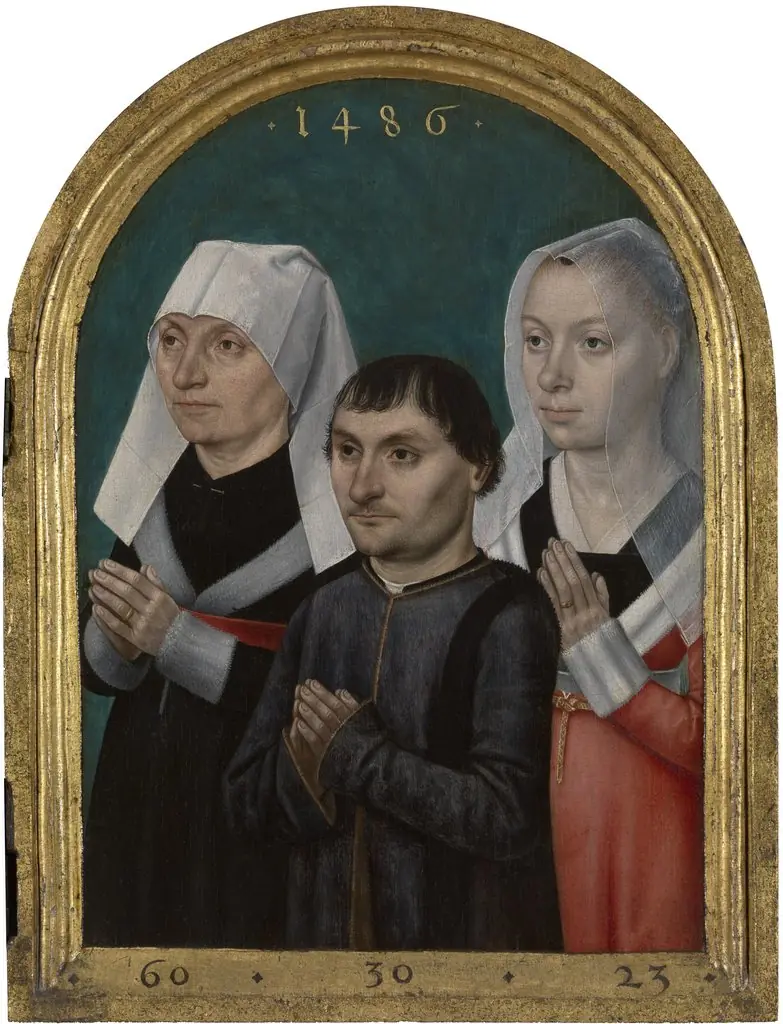 Three Donors
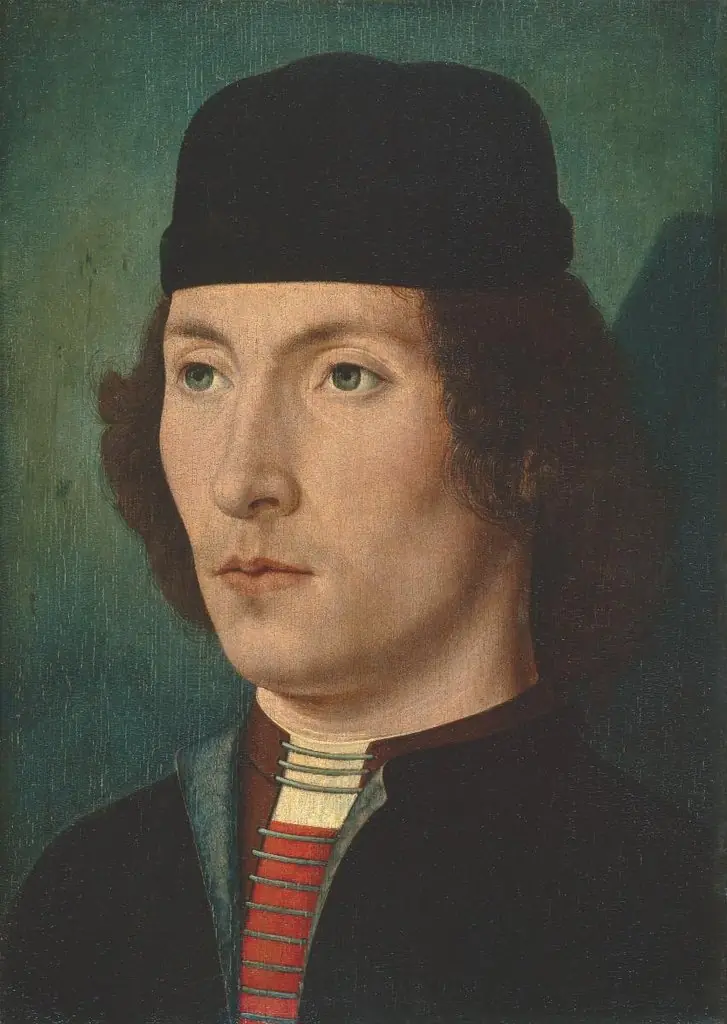 Portrait of a young man
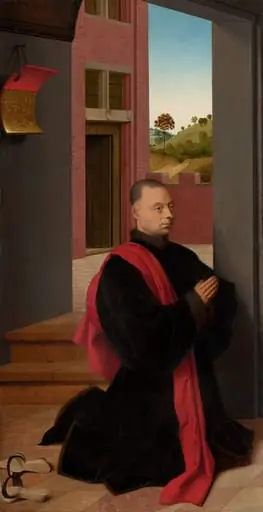 Portrait of a Male Donor
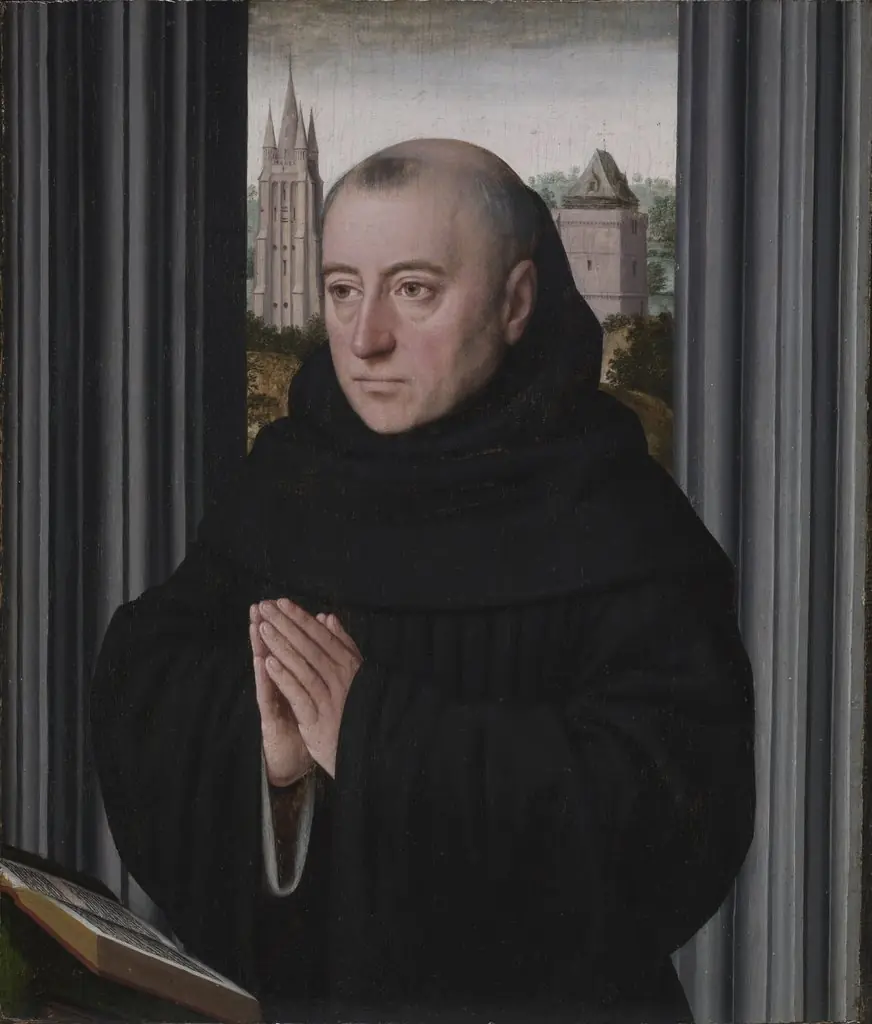 Portrait of a Monk
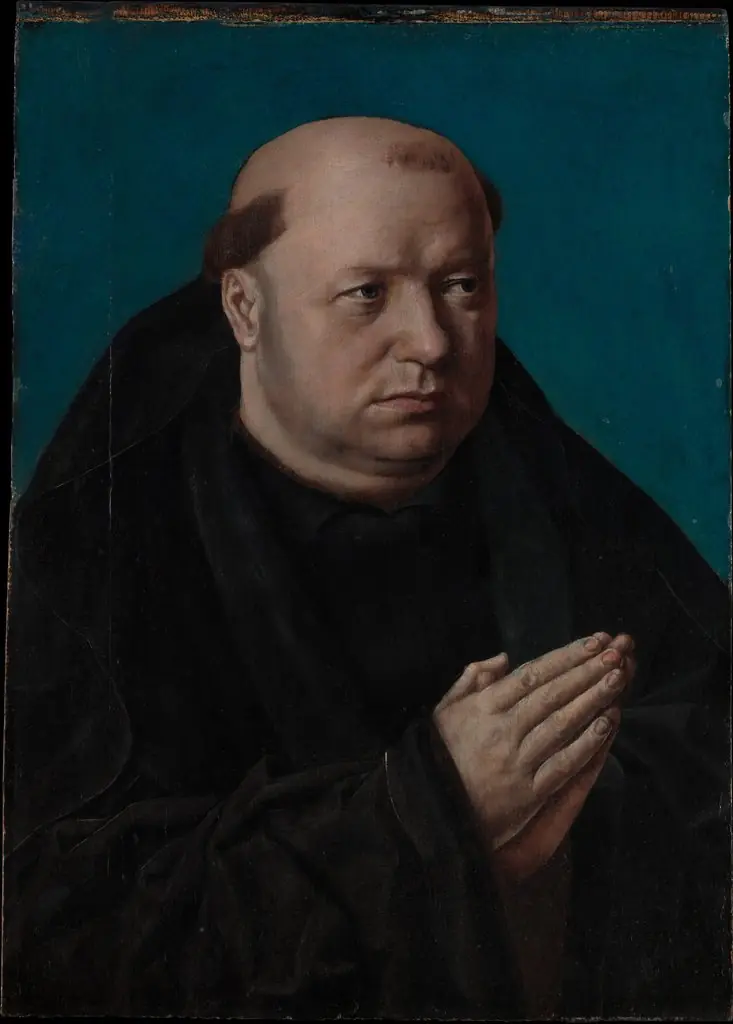 Portrait of a Monk in Prayer
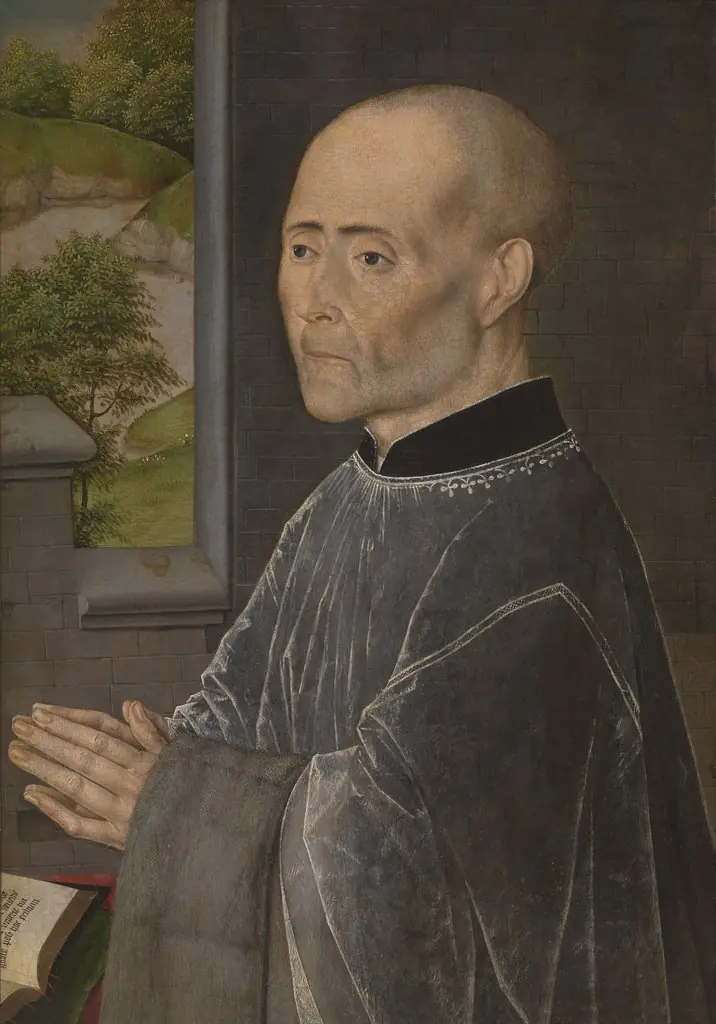 Portrait of a Canon
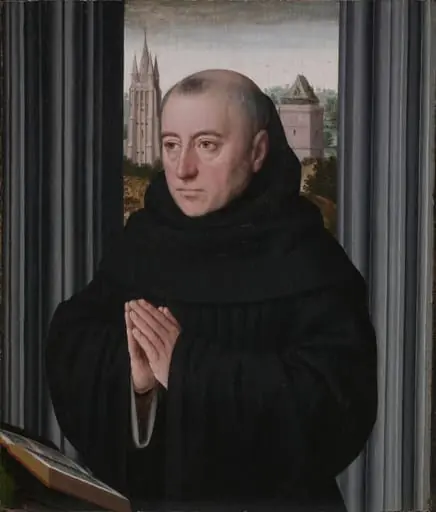 Portrait of a Monk
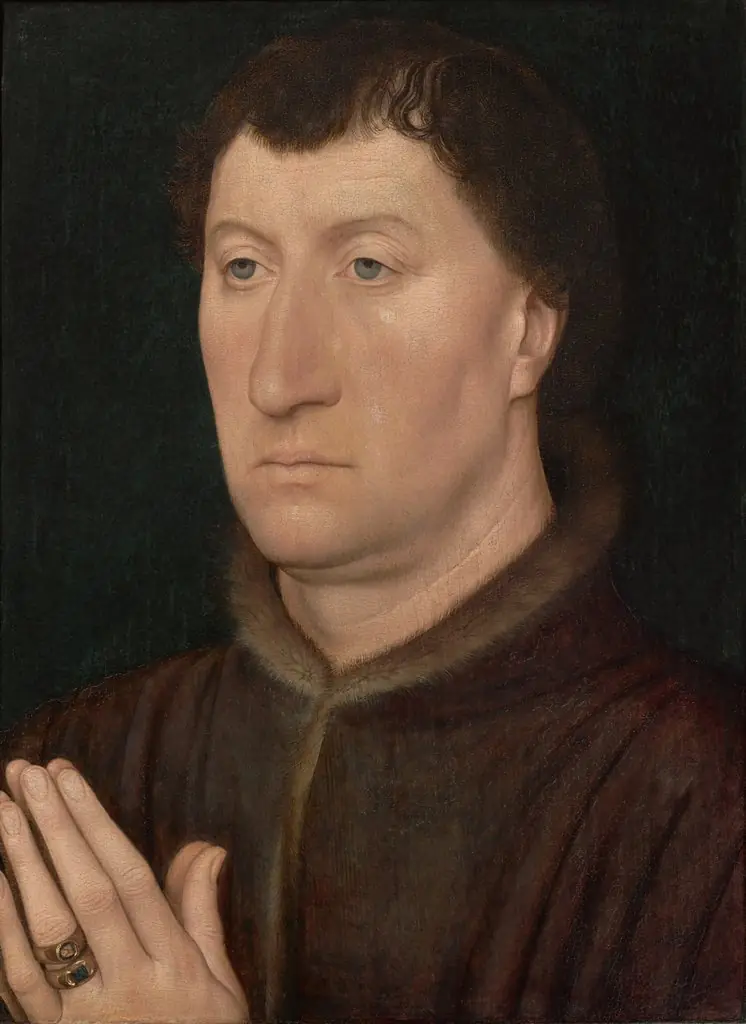 The Canon Gilles Joye
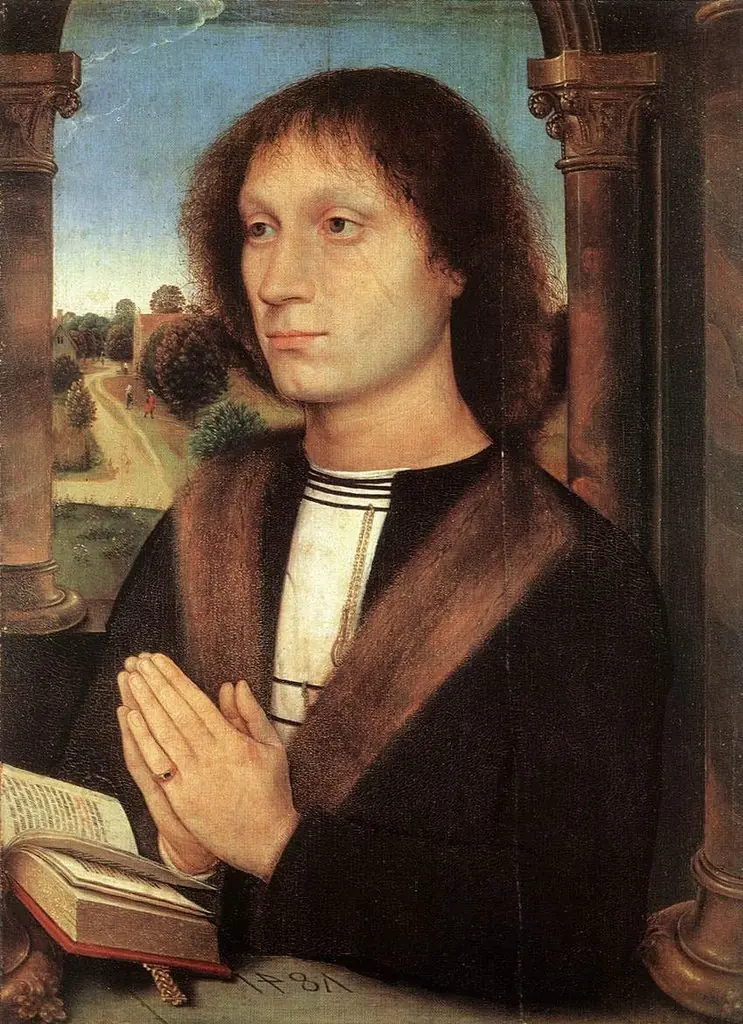 Benedetto Portinari triptych: Right wing, Portrait of a Praying Man
 Portrait of Jacob Jansz van der Meer (?)
 Abbot Johann Ingenray
 Portrait of a Fat Man
 Portrait of Lodewijk van Gruuthuse
 Portrait of a Carthusian