Artwork
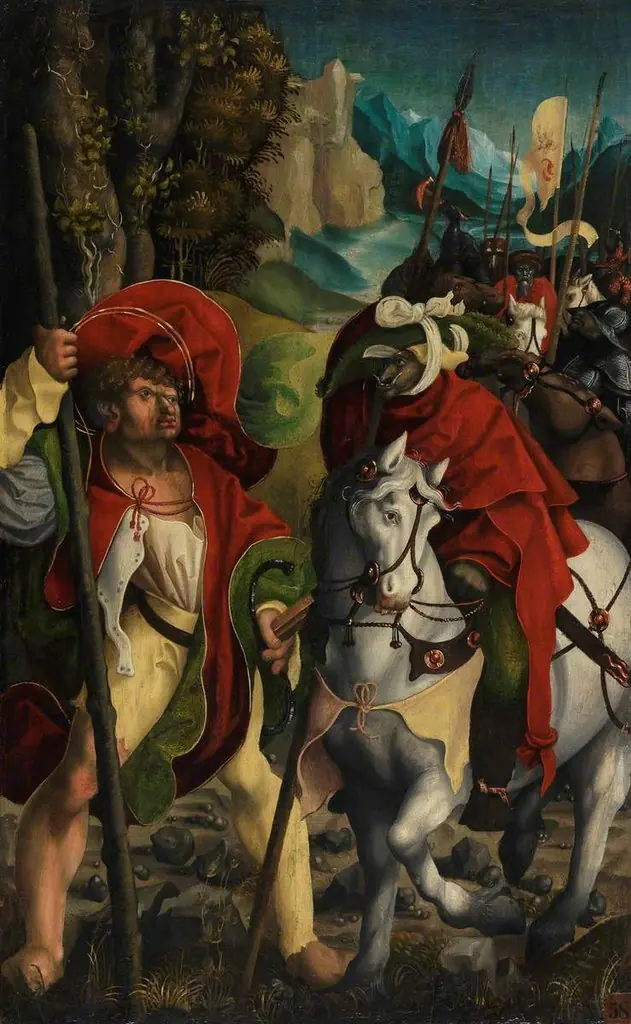
Hll. Achatius, Christophorus und Leonhard
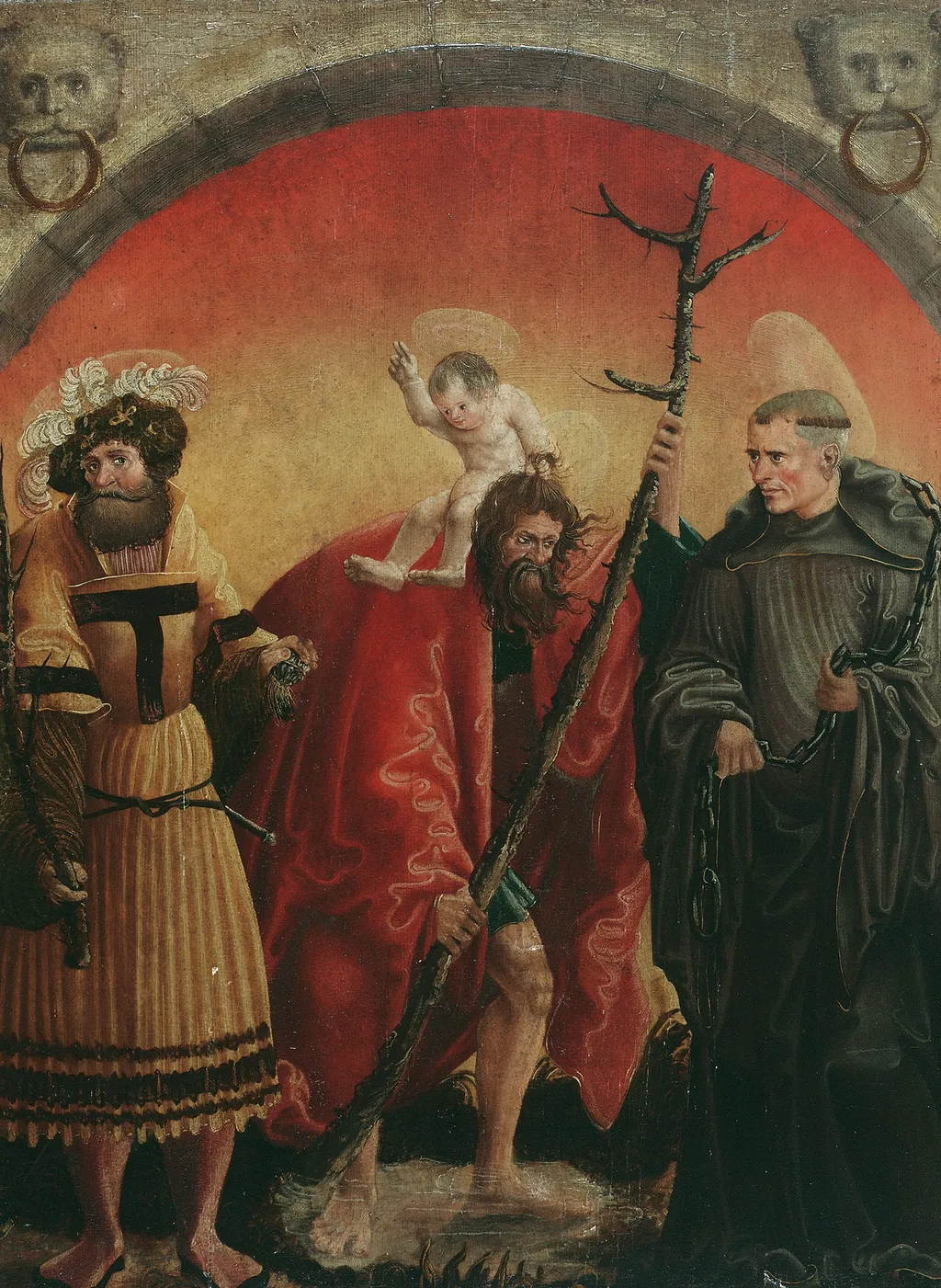
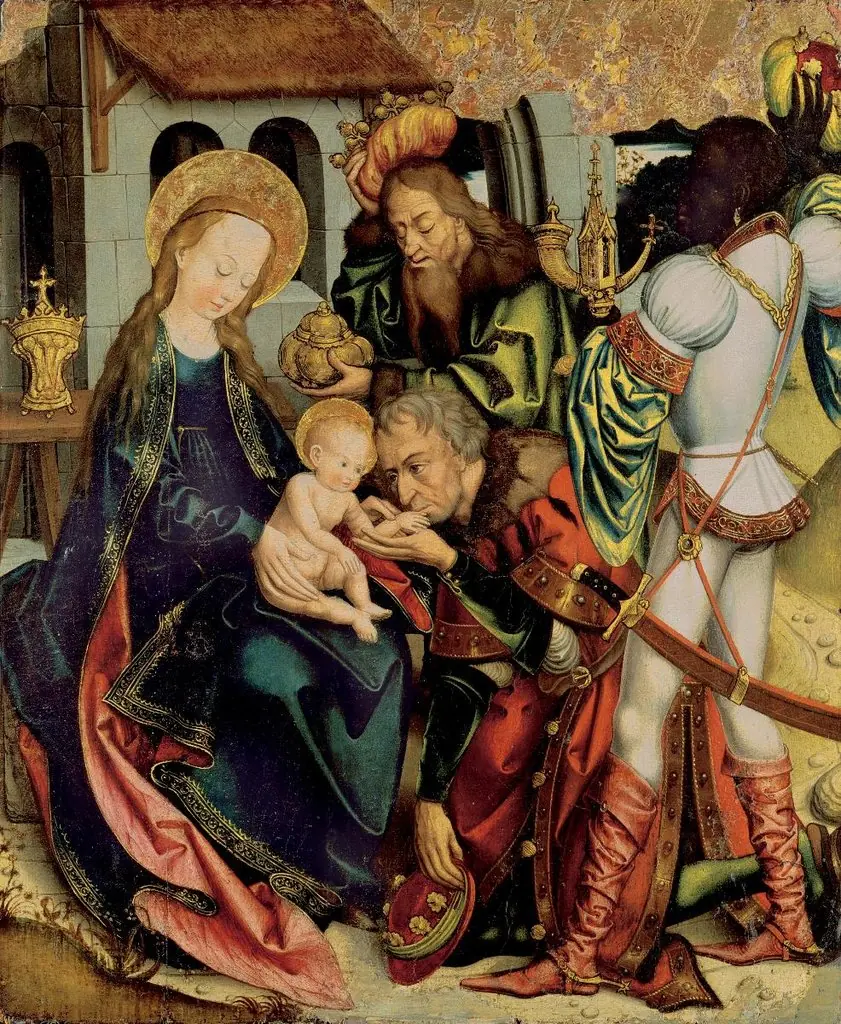
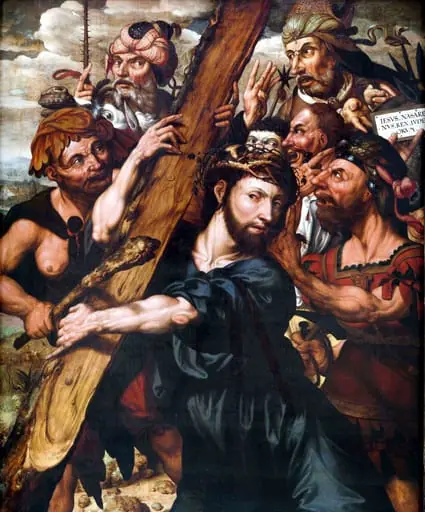
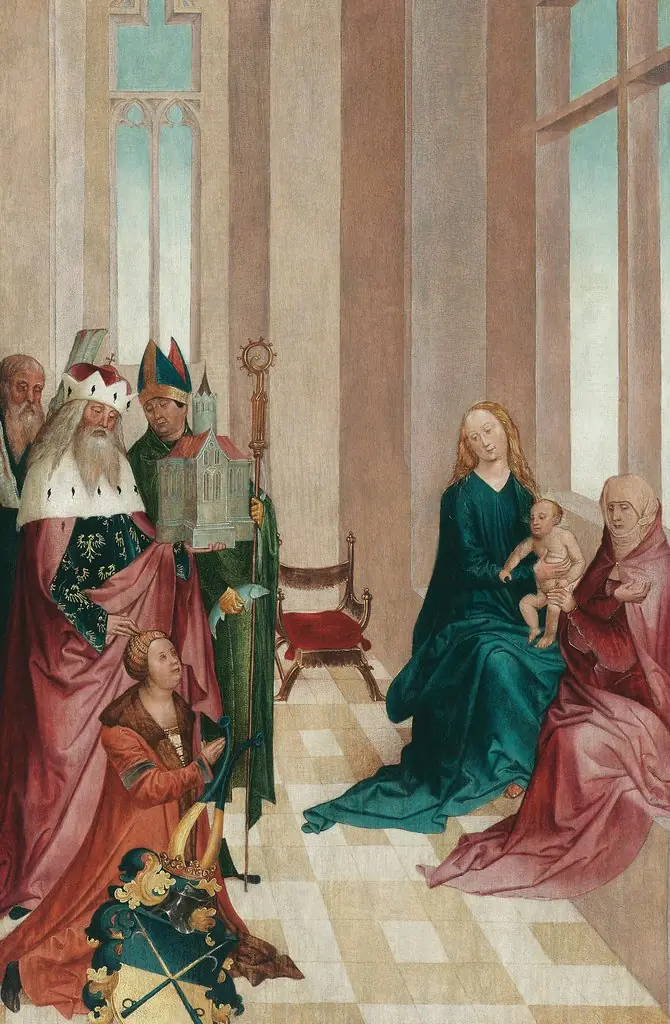
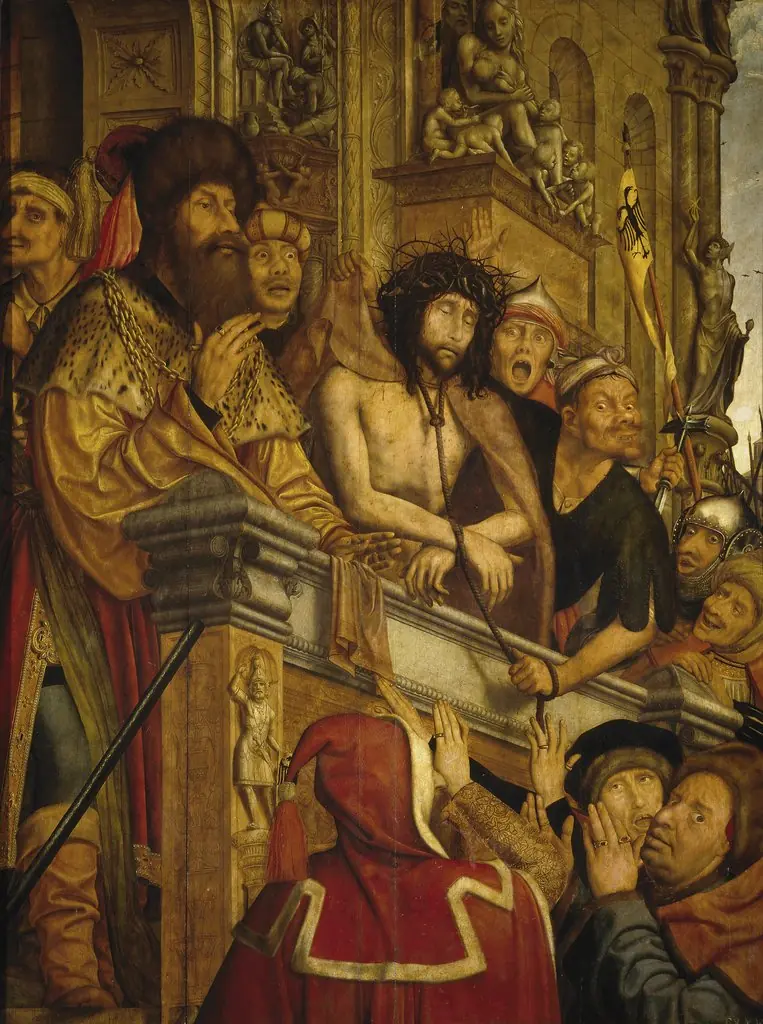
Hll. Achatius, Christophorus und Leonhard is an unspecified painting by the Northern Renaissance artist Master of the Crispin Legend. It dates from 1520 and is held in the collection of the Kunsthistorisches Museum.
About this work
Overview
This late medieval panel painting, dated to around 1520, is attributed to the anonymous artist known as the Master of the Crispin Legend.
This late medieval panel painting, dated to around 1520, is attributed to the anonymous artist known as the Master of the Crispin Legend. It depicts a group of saints and a divine child in a compact, vertically oriented composition. The work is part of the collection at the Kunsthistorisches Museum in Vienna, where it remains one of the few surviving examples of regional devotional art from the early 16th century.
Subject & Meaning
The figures represent Saint Achatius, Saint Christopher, and Saint Leonard, along with the Christ Child. Achatius, crowned and holding a scroll, signifies royal patronage and ecclesiastical authority. Christopher, restrained by a hooded figure, and Leonard, bearing a cross, evoke martyrdom and suffering. The hovering child, haloed and serene, symbolizes divine presence, reinforcing the saints’ sacred roles and their intercessory power in Christian devotion.
Technique & Style
Executed in tempera on wood, the painting employs flat, stylized forms and limited spatial depth typical of late Gothic traditions. Rich pigments, especially the crimson robes and gold leaf accents, emphasize hierarchy and holiness. Facial expressions are restrained, and drapery folds are schematic, reflecting a focus on symbolic representation over naturalism. The composition is tightly packed, directing attention to the central group and the floating child.
History & Provenance
The painting entered the Kunsthistorisches Museum’s collection in the 19th century, likely from a monastic or noble ecclesiastical source in the German-speaking regions. Its attribution to the Master of the Crispin Legend stems from stylistic parallels with other works linked to that anonymous workshop, active in the early 1500s. No documentation of its original commission survives, but its subject matter suggests a devotional function in a private or chapel setting.
Context
Created during the early Reformation, the painting reflects enduring Catholic devotional practices despite growing religious upheaval. The veneration of specific saints—particularly those associated with protection, martyrdom, and children—remained widespread in southern Germany and Austria. This work aligns with regional altarpieces and panel paintings intended to foster personal piety and spiritual intercession.
Legacy
Though not widely known outside scholarly circles, the painting exemplifies the persistence of late medieval iconography into the Reformation era. It contributes to understanding how local workshops sustained traditional religious imagery amid changing theological landscapes. Its preservation in Vienna allows continued study of regional artistic responses to religious identity in early 16th-century Central Europe.
Artist & collection
Artist