Artwork
Gideon and the Fleece, with the Selection of Gideon's Army
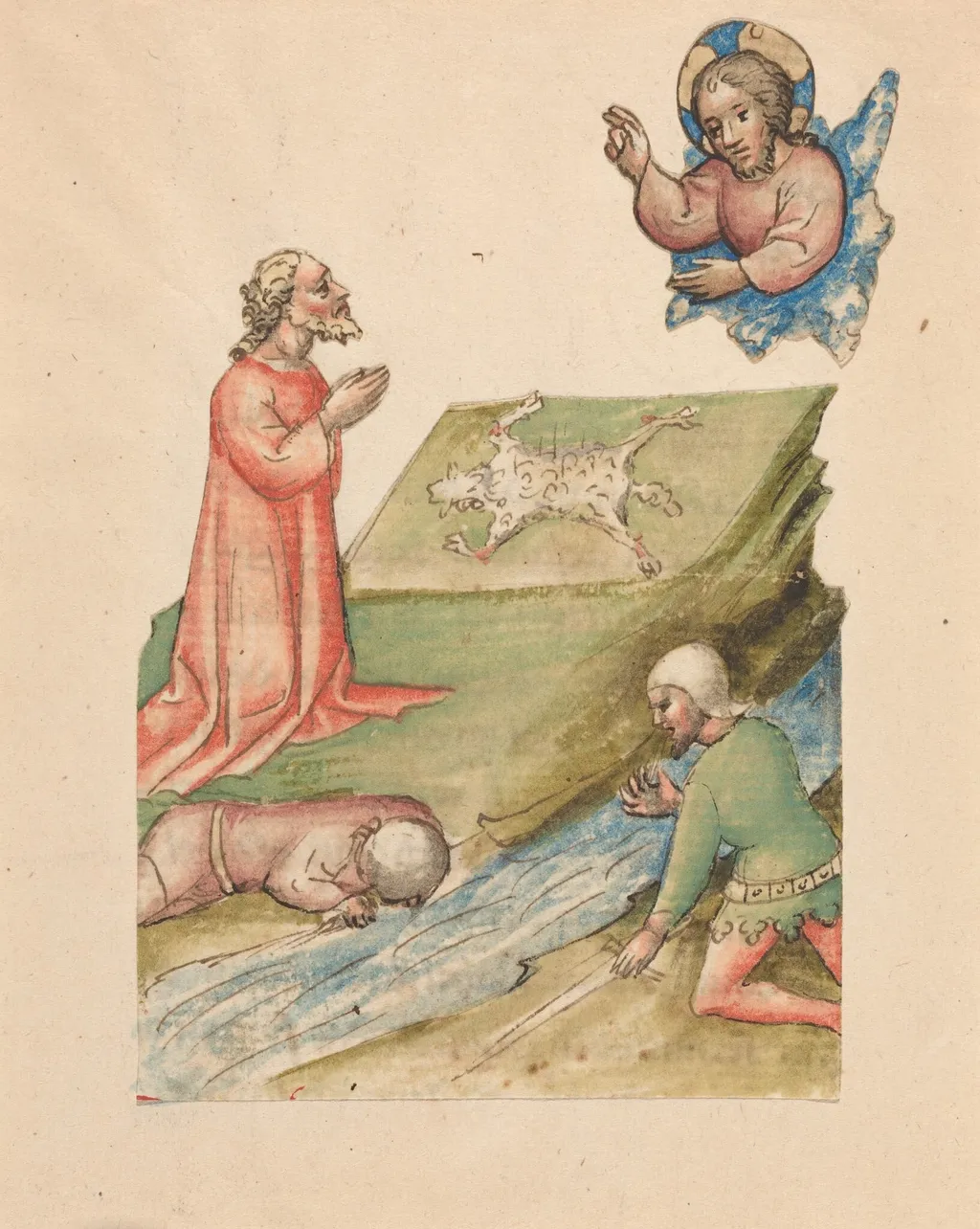
Gideon and the Fleece, with the Selection of Gideon's Army is an ink drawing by the Renaissance artist Austrian 15th Century. It dates from 1425 and is held in the collection of the National Gallery of Art. The work depicts the biblical episode of Gideon testing the fleece and the subsequent selection of his troops.
About this work
The artist used pen, ink, and watercolor to create it, which was a common technique during the Renaissance.
This painting is called Gideon and the Fleece, with the Selection of Gideon's Army.
It was made around 1420/1430.
The artist used pen, ink, and watercolor to create it, which was a common technique during the Renaissance.
The painting is a fragment from a bible manuscript with German text on the back.
This tells us the painting was likely part of a larger religious work.
You can learn more about this style at the National Gallery of Art, Washington.
Overview
The work depicts the biblical episode of Gideon testing the fleece and the subsequent selection of his troops. Executed in pen, ink and watercolor, it survives as a fragment of a larger illuminated manuscript. The image dates to the early fifteenth century, roughly between 1420 and 1430, and is accompanied on the verso by German biblical text, indicating its original function within a devotional book.
Subject & Meaning
The scene illustrates two moments from Judges 6–7: first, Gideon places a fleece on the ground to seek divine confirmation, and second, he gathers a reduced band of soldiers for battle. The juxtaposition underscores themes of faith, divine guidance, and the virtue of humility in leadership, central concerns of medieval religious instruction.
Technique & Style
The artist employed fine pen lines to define figures and architectural elements, while washes of watercolor provide modest tonal modeling and atmospheric depth. This combination of linear precision and subtle color reflects the transitional aesthetic of the late Gothic moving toward early Renaissance sensibilities, typical of manuscript illumination in northern Europe during the period.
History & Provenance
Originally part of a German-language Bible manuscript, the fragment was later detached and entered the art market as a standalone drawing. Its precise origin within a specific codex remains unidentified, but the presence of German text suggests production in a German-speaking workshop, likely linked to a monastic or cathedral scriptorium of the early 1400s.
Artist & collection

Artist
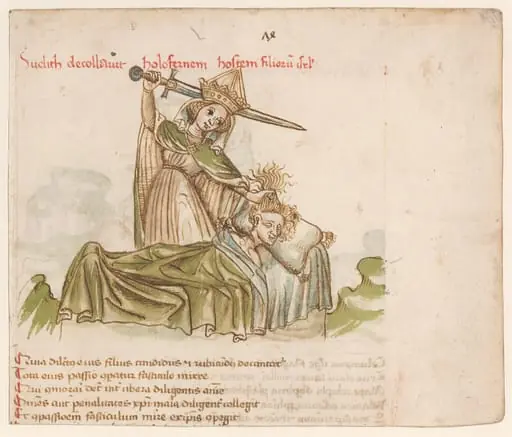
This artist left only fragments, but they’re sharp little daggers: vivid pen strokes, inked blood on stone, Judith’s blade flash-frozen mid-swipe.

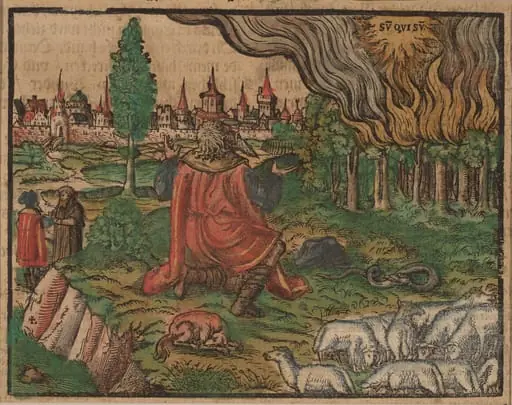 Moses and the Burning Bush
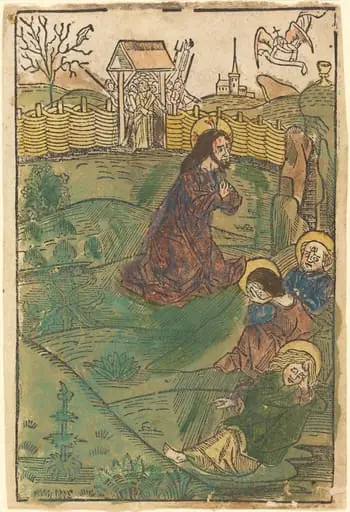 Christ on the Mount of Olives
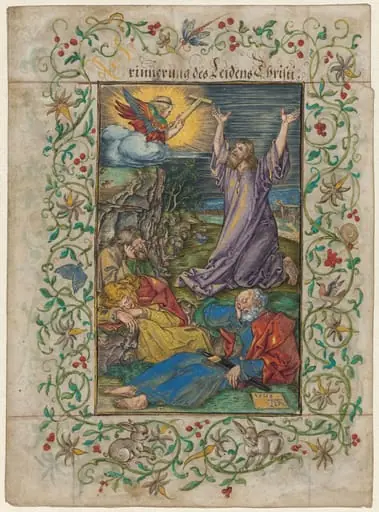 Christ on the Mount of Olives
![The Calumny of Apelles [fol. 6 recto], by French early 16th Century](https://artifactworldgallery.com/img/french-early-16th-century--the-calumny-of-apelles-fol-6-recto--037fde9ac8dbd27b-w320.webp) The Calumny of Apelles [fol. 6 recto]
The Calumny of Apelles [fol. 6 recto]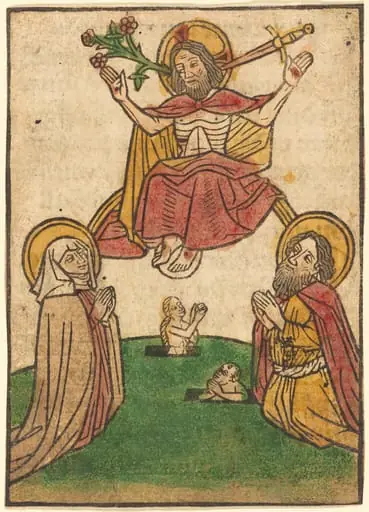 The Last Judgment
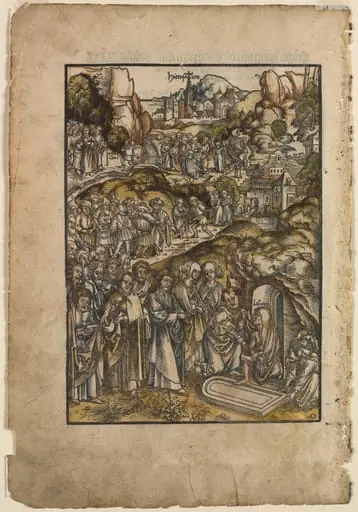 The Passion: The Raising of Lazarus
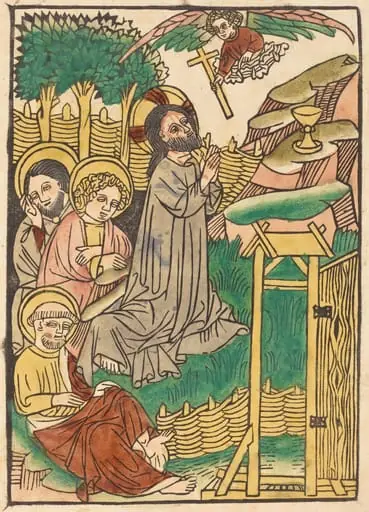 Christ on the Mount of Olives
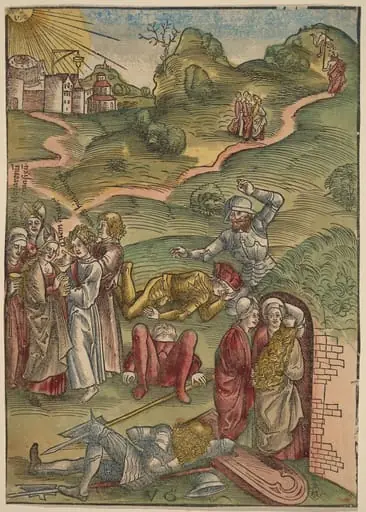 Three Marys at the Tomb
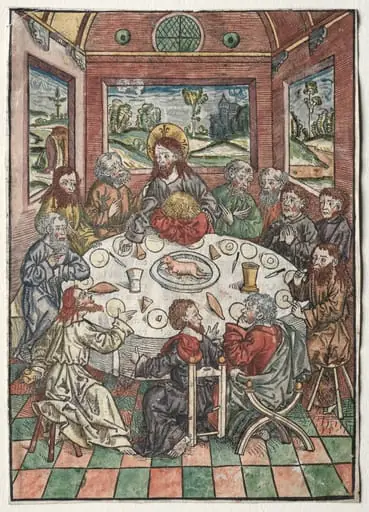 Der Schatzbehalter: The Last Supper
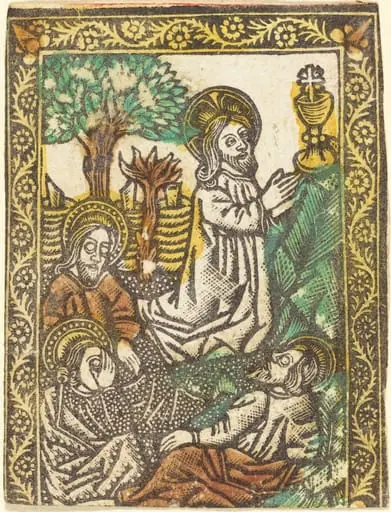 Christ on the Mount of Olives
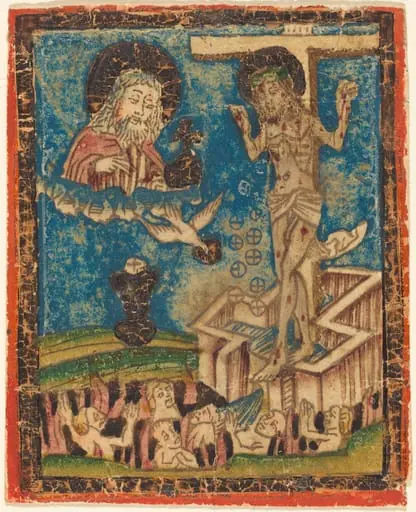 Allegory of the Eucharist
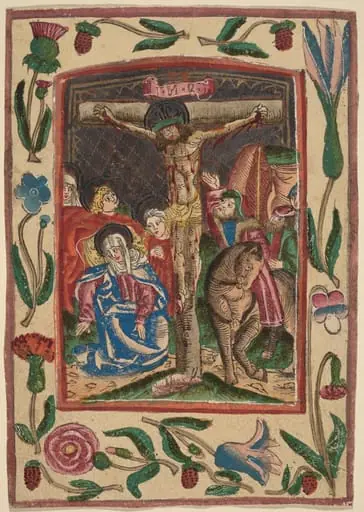 The Crucifixion