Artwork
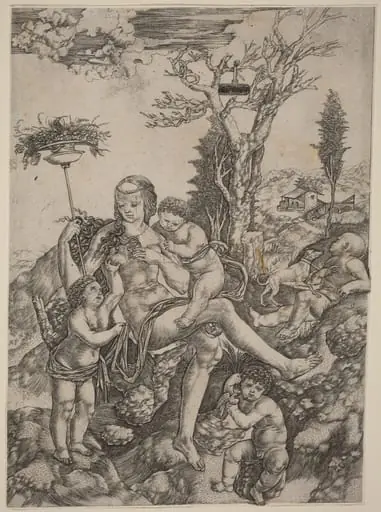
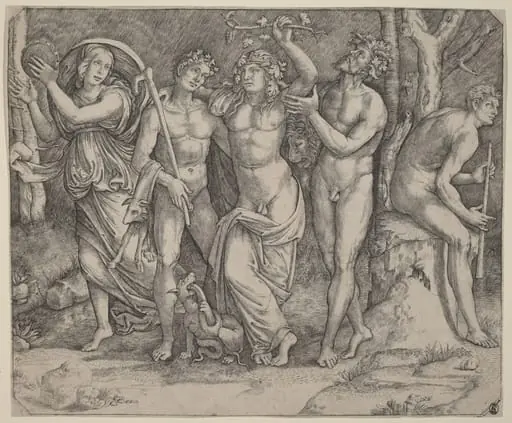
Allegory of Carnal Love
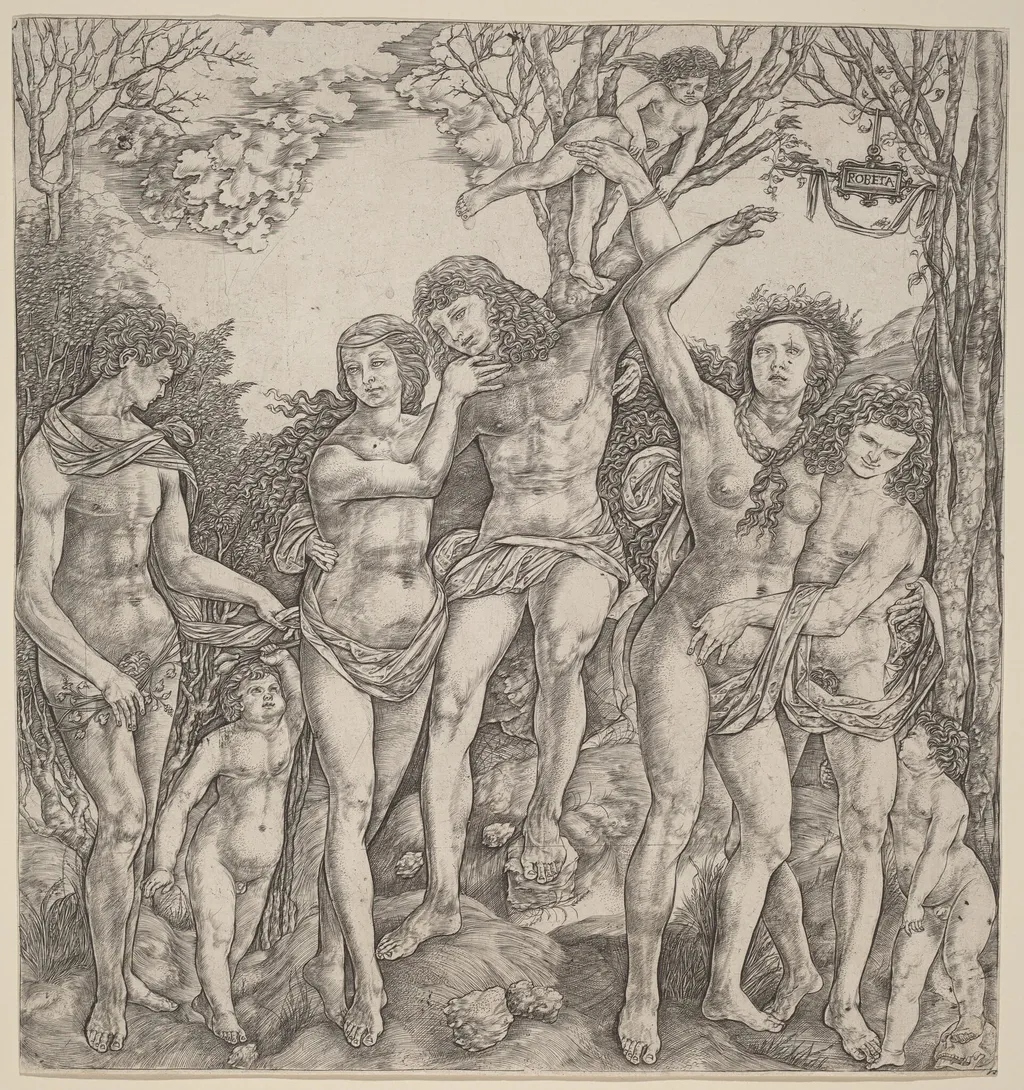
Allegory of Carnal Love is an ink print by the Renaissance artist Cristofano Robetta. It dates from 1498 and is held in the collection of the National Gallery of Art.
About this work
Overview
Cristofano Robetta, a Florentine goldsmith and printmaker active around 1498, produced this engraving as part of a broader engagement with allegorical themes.
Cristofano Robetta, a Florentine goldsmith and printmaker active around 1498, produced this engraving as part of a broader engagement with allegorical themes. His work often translated painted compositions into detailed printed form, serving as a means of preservation and dissemination. This piece exemplifies his technical precision and interest in mythological subjects, rendered through fine-line etching on metal. The print survives in major collections, including those of the Cleveland and Metropolitan Museums.
Subject & Meaning
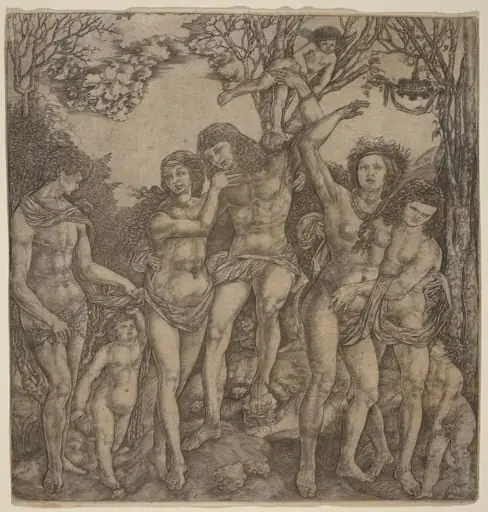
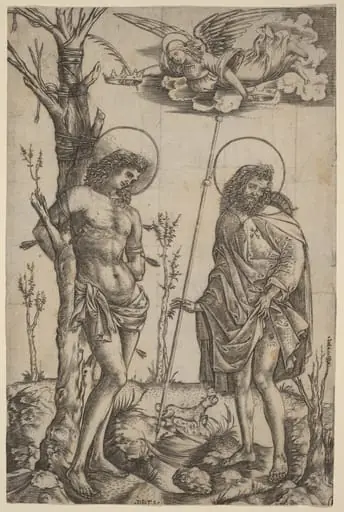
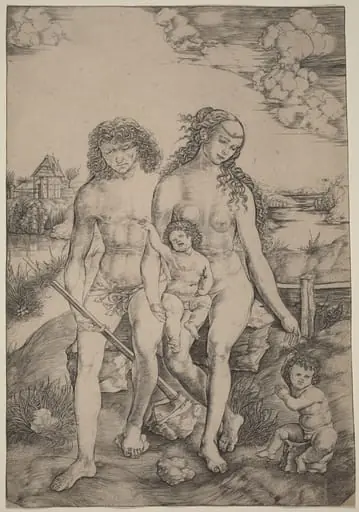
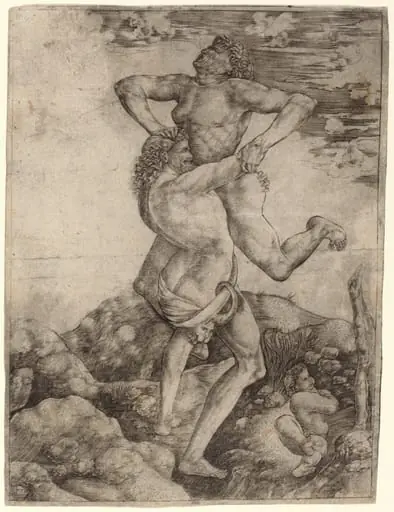
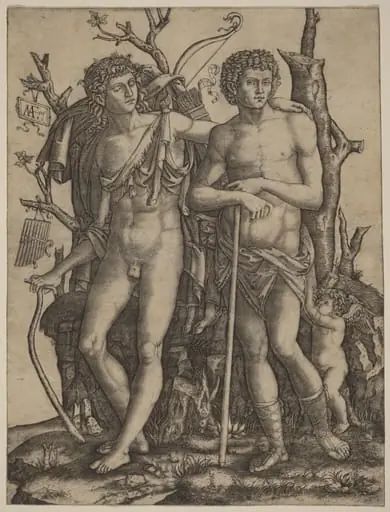
The scene depicts five nude figures in a wooded setting, interpreted as an allegory of carnal desire. Two central men appear in states of physical tension—one with arms raised, the other still—while three women surround them, each holding symbolic objects: a wreath, a branch, and a reaching hand. Small cherubs in the upper corners suggest divine or supernatural observation. The composition evokes a moment suspended between temptation and consequence, common in Renaissance moral allegories.
Technique & Style
Robetta employed fine, controlled engraving lines to model form and express emotion, mimicking the sculptural quality of relief. The figures are rendered with delicate shading, their musculature and gestures defined by intersecting strokes that create depth without color. The background, filled with sparse trees and drifting clouds, remains minimal, directing focus to the central group. The technique reflects the precision of metalwork traditions, translating painterly ideas into the disciplined medium of print.
History & Provenance
Created in 1498, the engraving emerged during a period when Florentine artists increasingly turned to printmaking to circulate compositions beyond original paintings. Robetta’s works were widely collected, and this piece entered institutional holdings early, likely through European private collections. Its presence in the Cleveland and Metropolitan Museums confirms its early recognition and enduring scholarly interest within the history of Renaissance prints.
Context
In late 15th-century Italy, allegorical imagery drawn from classical mythology was used to explore human virtues and vices. Robetta’s print aligns with broader trends in humanist culture, where visual symbolism conveyed moral lessons. While many such paintings have been lost, engravings like this one preserved their iconography. His role as a reproducer of lost works highlights printmaking’s function as a documentary medium in an era before photography.
Legacy
Robetta’s engraving contributed to the dissemination of allegorical imagery across Europe, influencing later printmakers who adopted similar compositional strategies. Though not widely known today, his technical skill and fidelity to lost originals secured his place in the history of Renaissance print culture. The work remains a reference point for understanding how visual allegory was translated and preserved through the medium of engraving.
Own this work as a print
Artist & collection

Artist
Cristofano Robetta (1462 – 1535) was an Italian artist, goldsmith, and engraver. Robetta was a Florentine "who made some rich, intricate engravings in the fine manner". He often made engravings which replicated…