Artwork
Calliope (from the Tarocchi series D: Apollo and the Muses, #11)
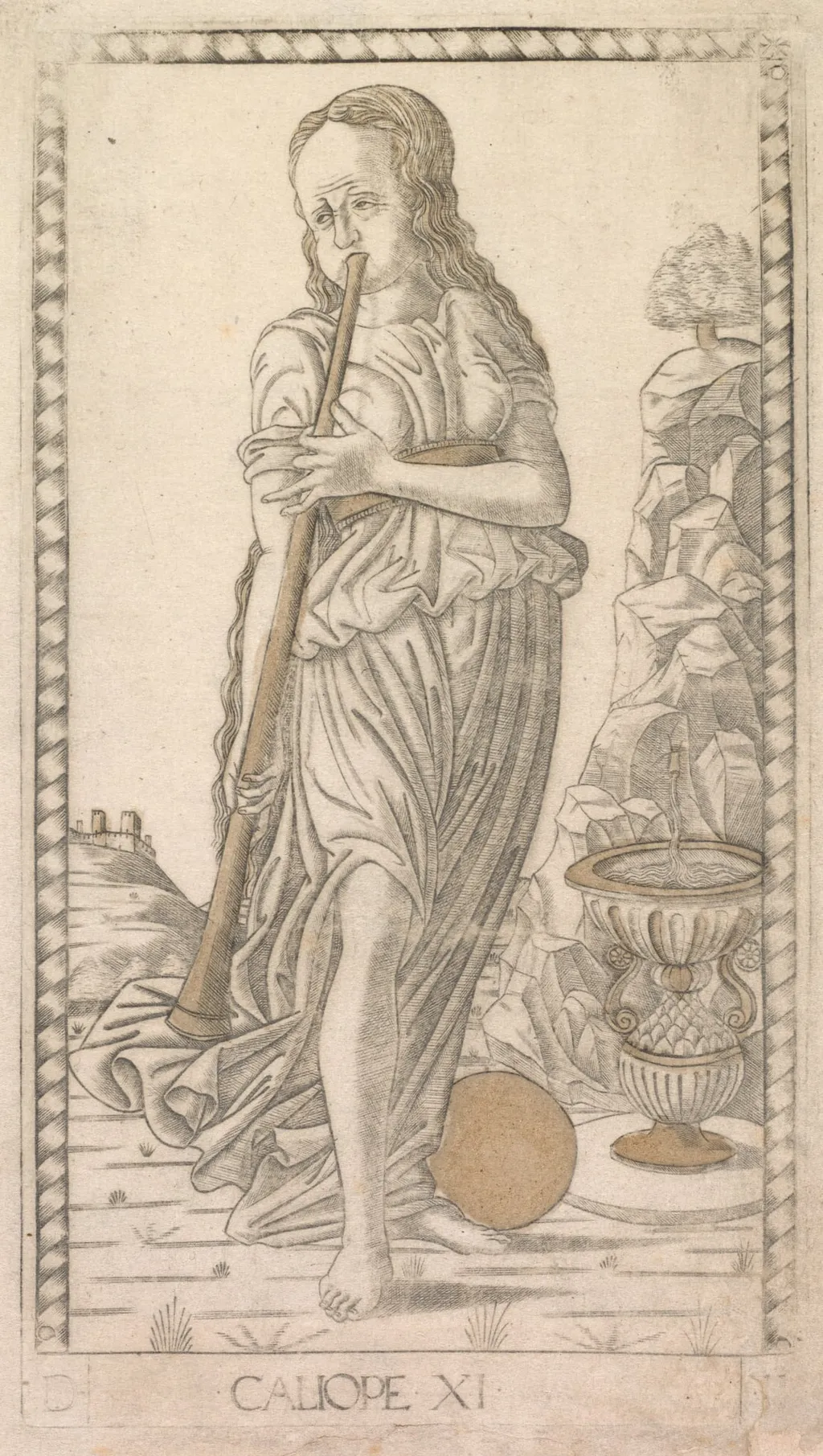
Calliope (from the Tarocchi series D: Apollo and the Muses, #11) is a print by the Renaissance artist Master of the E-Series Tarocchi. It dates from 1467 and is held in the collection of the Cleveland Museum of Art.
About this work
Overview
This engraving belongs to the Tarocchi collection identified by the letter “D,” a series that pairs the god Apollo with each of the nine Muses. The print portrays Calliope, the chief Muse, in a solitary setting, accompanied by symbols that reference her role as the patron of epic poetry.
Subject & Meaning
Calliope is shown as a full‑length female figure, holding a long horn and a book‑like scroll, while a small fountain rests nearby. The fountain alludes to the Castalian spring on Mount Parnassus, traditionally regarded as a source of poetic inspiration. As the eldest Muse, she embodies the authority over epic verse and the broader realm of literary creation.
Technique & Style
Executed as an engraving, the image relies on precise, sharply defined lines that render the figure and surrounding drapery with clarity. The contrast between the dark incised areas and the lighter paper background creates a crisp visual hierarchy, typical of the Tarocchi prints’ didactic aesthetic.
History & Provenance
The work forms part of a larger set titled “Apollo and the Muses,” in which each print pairs the deity with a specific artistic discipline. The series was produced by an anonymous hand often referred to as the Master of the E‑Series Tarocchi, active in the late 15th century, and circulated among collectors of emblematic and instructional prints.
Artist & collection
Artist
Master of the E-Series Tarocchi
Master of the E-Series Tarocchi (b. 1400) was an Italian artist.

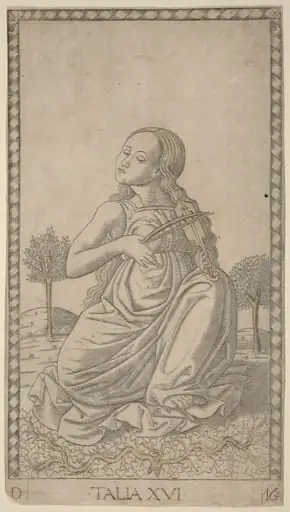
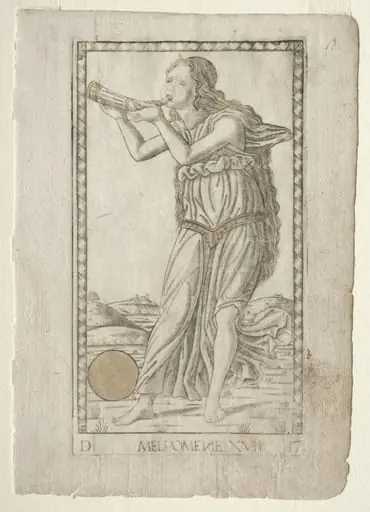 Melpomene (tragedy) (from the Tarocchi series D: Apollo and the Muses, #17)
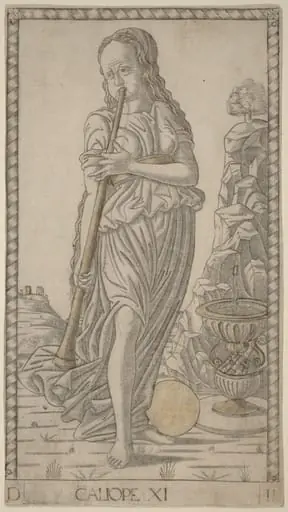 Caliope (Calliope)
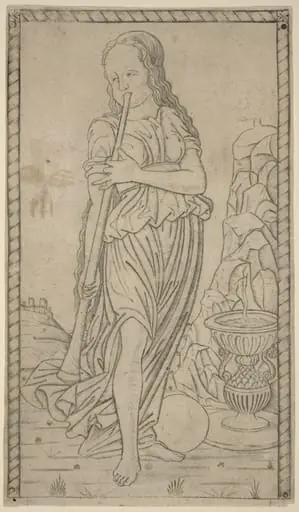 Caliope (Calliope)
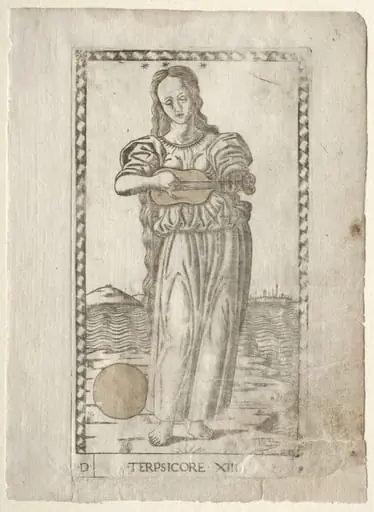 Terpsichore (dancing and song) (from the Tarocchi series D: Apollo and the Muses, #13)
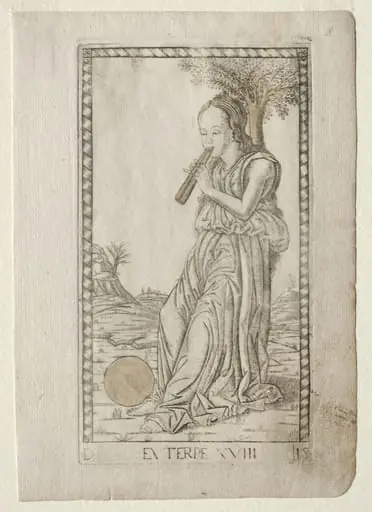 Euterpe (music, lyric poetry) (from the Tarocchi series D: Apollo and the Muses, #18)
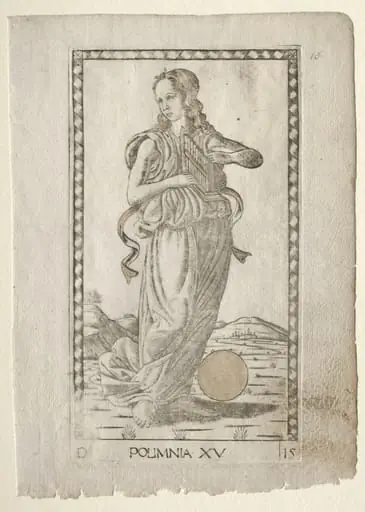 Polyhymnia (heroic hymns) (from the Tarocchi series D: Apollo and the Muses, #15)
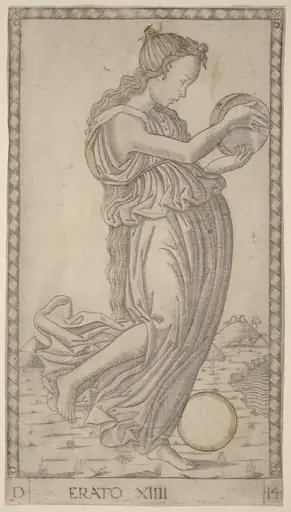
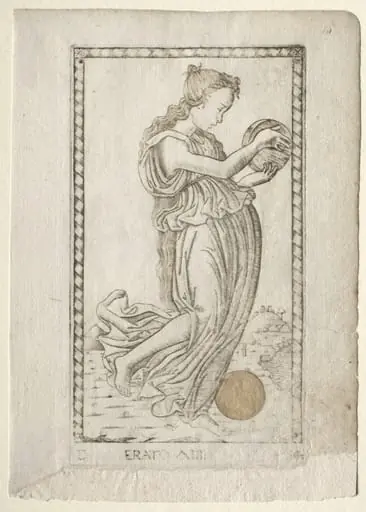 Erato (lyric and love poetry) (from the Tarocchi series D: Apollo and the Muses, #14)