Artwork
Imperator (Emperor)
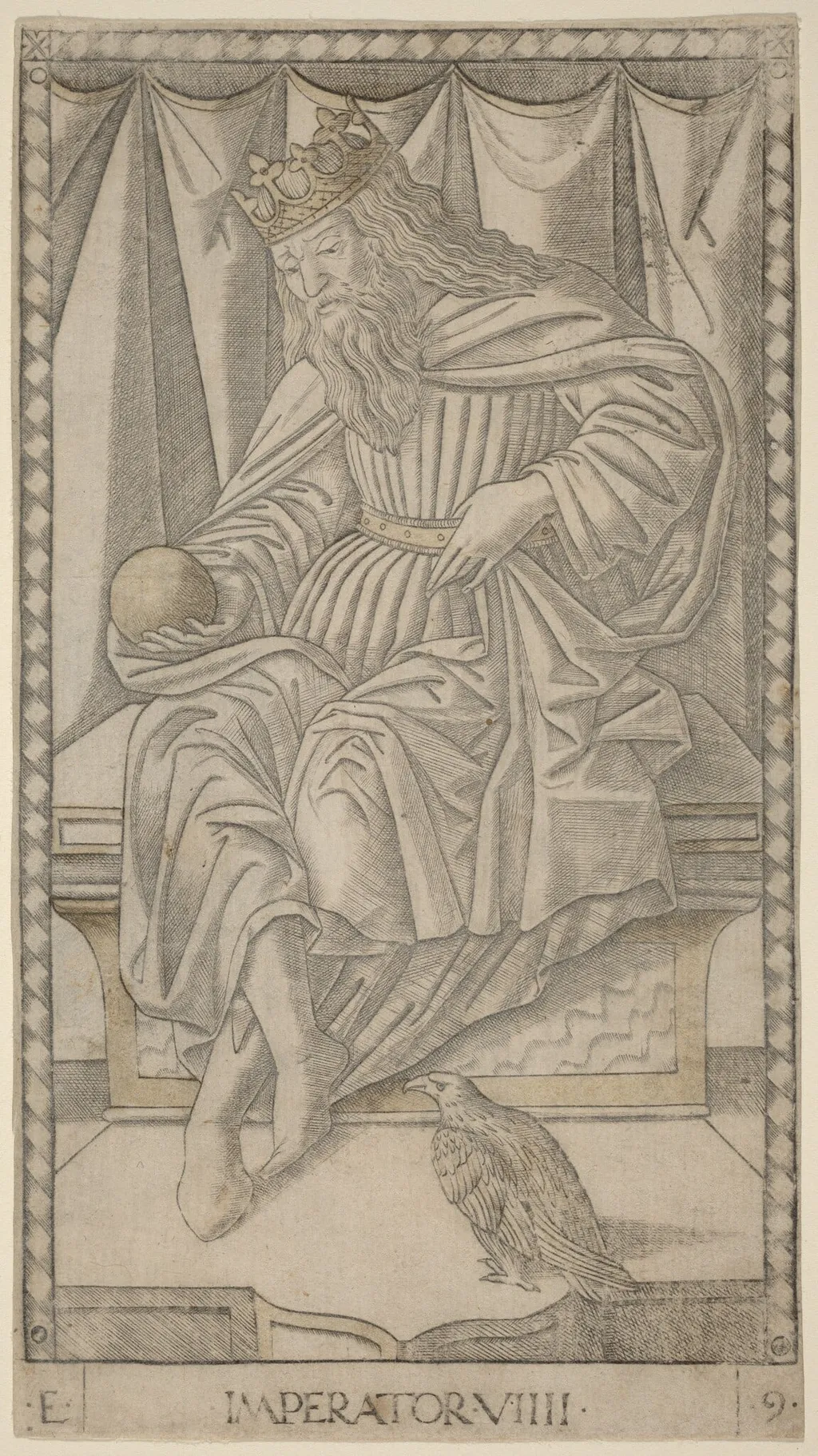
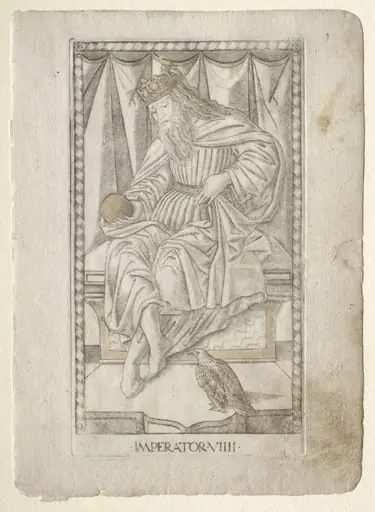
Imperator (Emperor) is an ink print by the Renaissance artist Master of the E-Series Tarocchi. It dates from 1465 and is held in the collection of the National Gallery of Art.
About this work
Overview
Imperator, an engraved print enhanced with gilding, dates to around 1465 and is attributed to the anonymous workshop known as the Master of the E‑Series Tarocchi. The image presents a solitary figure styled as a Roman emperor, complete with a jeweled crown and a ceremonial scepter, rendered in the fine linear language of early Renaissance printmaking.
Subject & Meaning
The central figure embodies the archetype of imperial authority, drawing on classical iconography to convey power and legitimacy. By portraying the ruler in traditional Roman dress, the work links contemporary notions of governance to the revered legacy of antiquity, suggesting a continuity of sovereign ideals.
Technique & Style
The print relies on densely incised lines to model clothing, armor, and facial features, creating a sense of texture and volumetric depth. Gilded highlights accentuate the intricate patterns on the emperor’s robes, catching light and emphasizing the luxurious status of the subject. Such line work and selective gilding were characteristic of mid‑15th‑century engraving practices.
History & Provenance
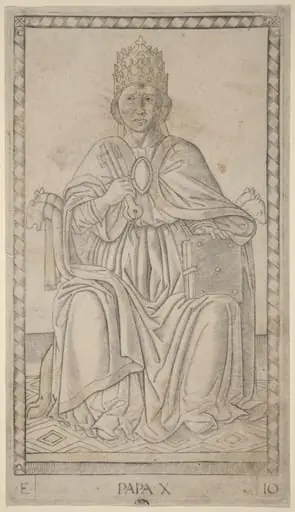
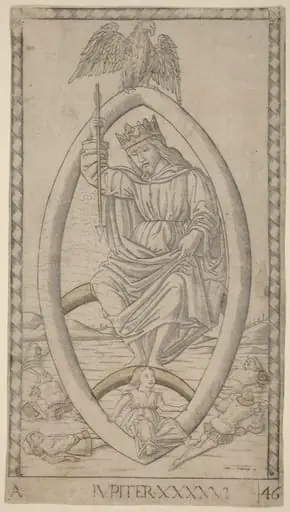
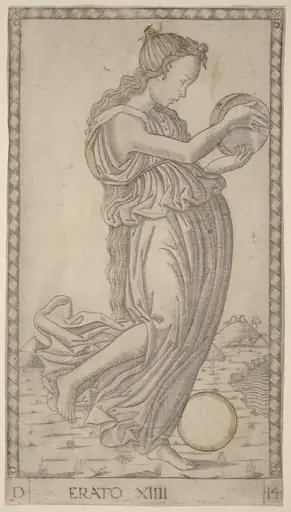
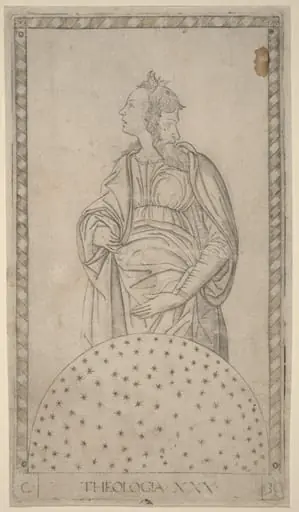
Created in the mid‑1400s, the engraving belongs to a series of allegorical and tarot‑related images produced by the Master of the E‑Series Tarocchi, a workshop active in northern Italy. The work has circulated among private collections before entering museum holdings, where it is catalogued as a representative example of early printed portraiture.
Context
During the period, prints served both decorative and didactic purposes, disseminating classical motifs to a broader audience. The depiction of an emperor aligns with contemporary humanist interests in antiquity, while the use of gilding reflects the desire to emulate the opulence of manuscript illumination within a reproducible medium.
Legacy
Imperator illustrates the transitional phase between manuscript illumination and the burgeoning print culture of the Renaissance. Its combination of fine engraving and metallic embellishment influenced later printmakers who sought to merge the tactile richness of gold leaf with the reproducibility of intaglio techniques.
Artist & collection
Artist
Master of the E-Series Tarocchi
Master of the E-Series Tarocchi (b. 1400) was an Italian artist.