Artwork
Aritmetricha (Arithmetic)
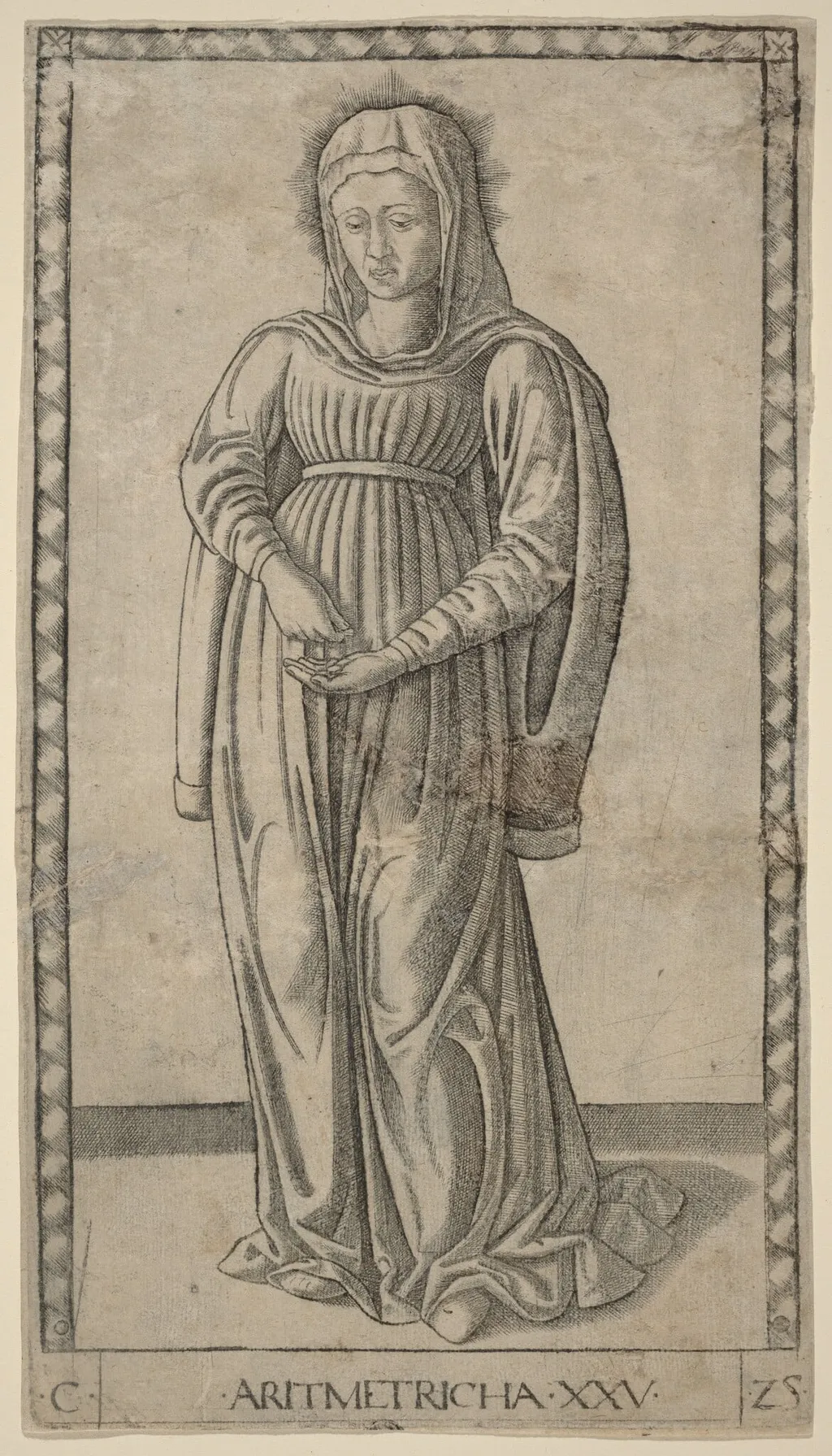
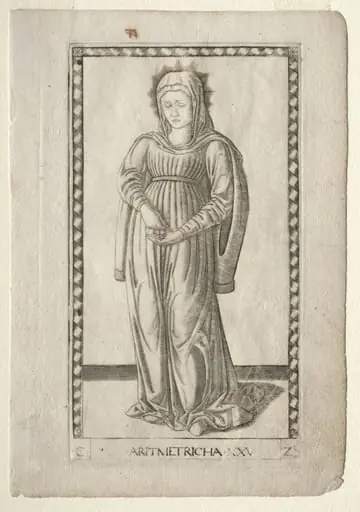
Aritmetricha (Arithmetic) is an ink print by the Renaissance artist Master of the E-Series Tarocchi. It dates from 1465 and is held in the collection of the National Gallery of Art.
About this work
Overview
It belongs to a small group of prints associated with early tarot-like imagery, though this piece focuses on an allegorical figure rather than a card.
Aritmetricha (Arithmetic) is a black-and-white engraving produced around 1465 by an anonymous artist known as the Master of the E-Series Tarocchi. It belongs to a small group of prints associated with early tarot-like imagery, though this piece focuses on an allegorical figure rather than a card. The work is one of the earliest known engravings to personify an academic discipline, reflecting the growing cultural interest in the liberal arts during the Renaissance.
Subject & Meaning
The central figure is a woman clad in a long, precisely rendered robe, standing with hands clasped and gaze lowered, suggesting contemplation. She holds a scroll in her left hand, a traditional symbol of knowledge and scholarly authority. The inscription 'ARITMETRICHA' beneath her identifies her as the embodiment of arithmetic, one of the seven liberal arts. Her stillness and formal posture convey the discipline’s abstract, intellectual nature rather than its practical use.
Technique & Style
The image is executed in fine-line engraving, with sharp contours defining the figure’s form and intricate cross-hatching used to model texture in the robe and background. The metal plate was incised with a burin, allowing for consistent, repeatable impressions. The composition is tightly framed, with minimal background detail, directing focus to the figure. The style is methodical and restrained, characteristic of early Northern European printmaking before the rise of more expressive techniques.
History & Provenance
The print is attributed to a group of works linked to the E-Series Tarocchi, a set of engravings likely produced in northern Italy or southern Germany during the mid-15th century. No original plate survives, and only a handful of impressions are known today, held in museum collections. Its survival is rare, as early engravings were often printed in small numbers and rarely preserved. The attribution to the Master of the E-Series Tarocchi is based on stylistic comparisons with related prints.
Context
Created during a period when the liberal arts were being revived in humanist education, Aritmetricha reflects the intellectual currents of the early Renaissance. Arithmetic, once a practical skill, was increasingly elevated as a philosophical discipline tied to cosmic order. Similar allegorical figures appear in manuscript illuminations and decorative cycles, but this engraving is among the earliest to treat such themes in a standalone, reproducible format, signaling a shift toward printed visual culture.
Legacy
Though not widely circulated in its time, Aritmetricha contributes to the foundation of allegorical printmaking in Europe. It demonstrates how abstract concepts could be rendered visually for a literate, non-elite audience through the emerging medium of engraving. Its formal clarity and symbolic economy influenced later iconographic traditions in educational and moral prints, helping to establish the visual language of personified virtues and sciences in the centuries that followed.
Artist & collection
Artist
Master of the E-Series Tarocchi
Master of the E-Series Tarocchi (b. 1400) was an Italian artist.

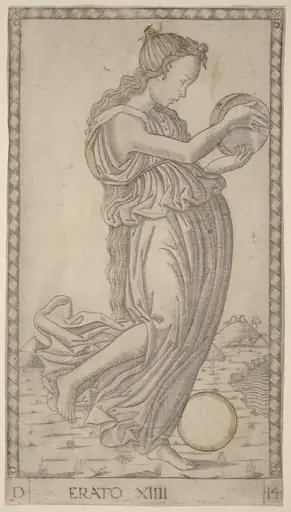
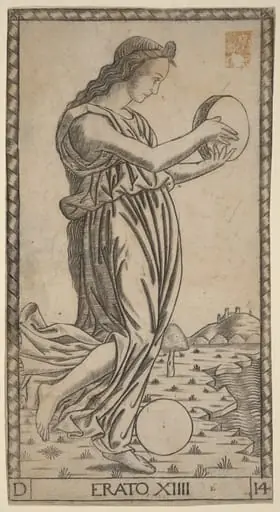 Erato
Erato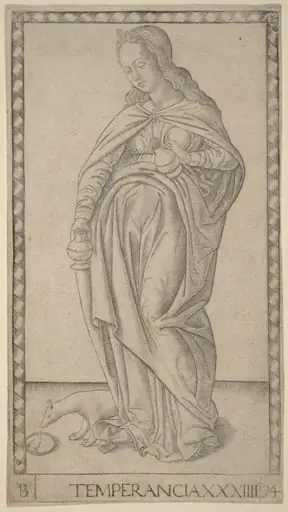 Temperancia (Temperance)
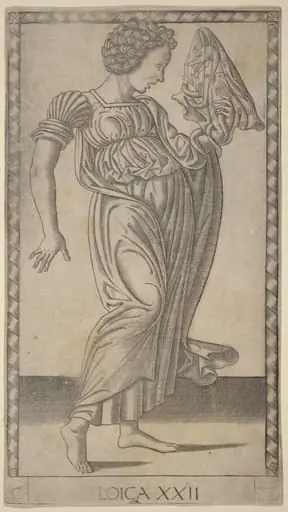 Loica (Logic)
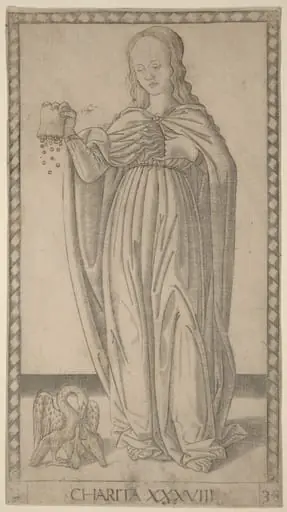 Charita (Charity)
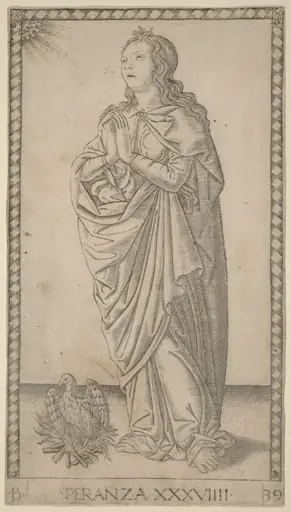 Speranza (Hope)
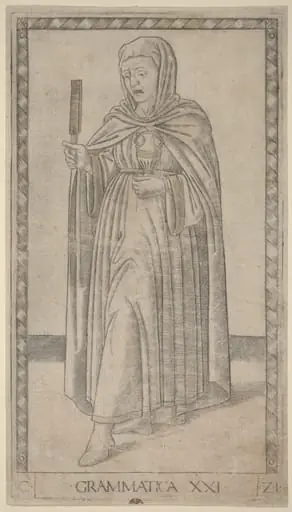 Grammatica (Grammar)
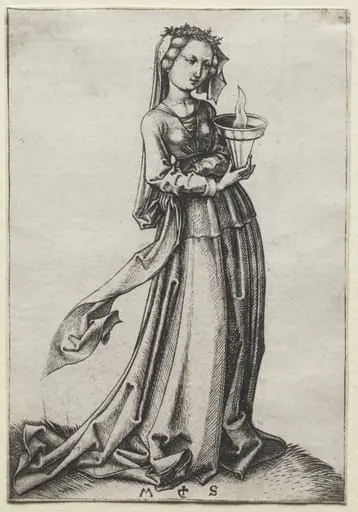 The Fourth Wise Virgin
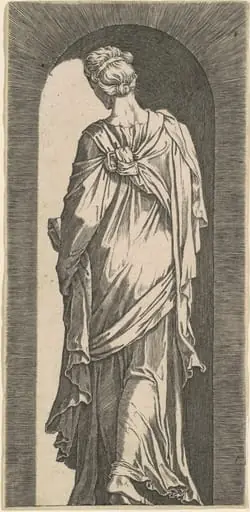 Sibyl Seen from the Back, Looking Downward to the Left
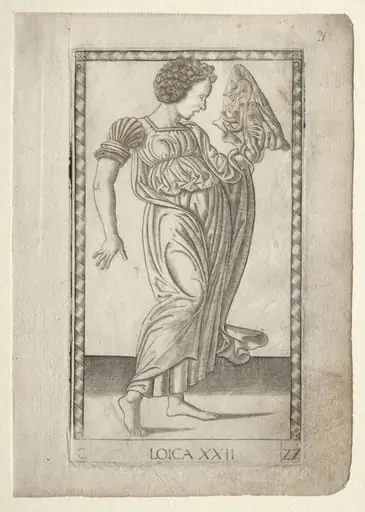 Logic (from the Tarocchi, series C: Liberal Arts, #22)
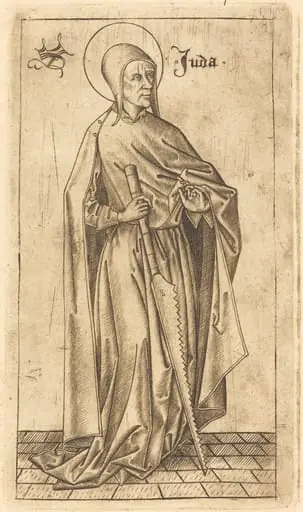 Saint Simon Zelotes (?) or Saint Judas Thaddeus (?)
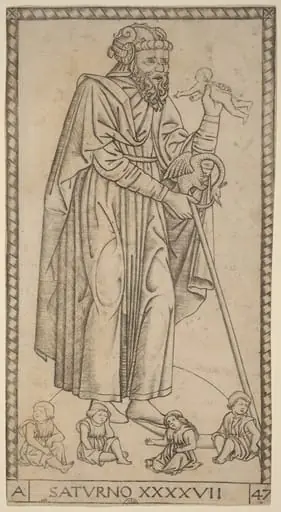 Saturno (Saturn)
 Arithmetic (from the Tarocchi, series C: Liberal Arts, #25)