Artwork
Venus
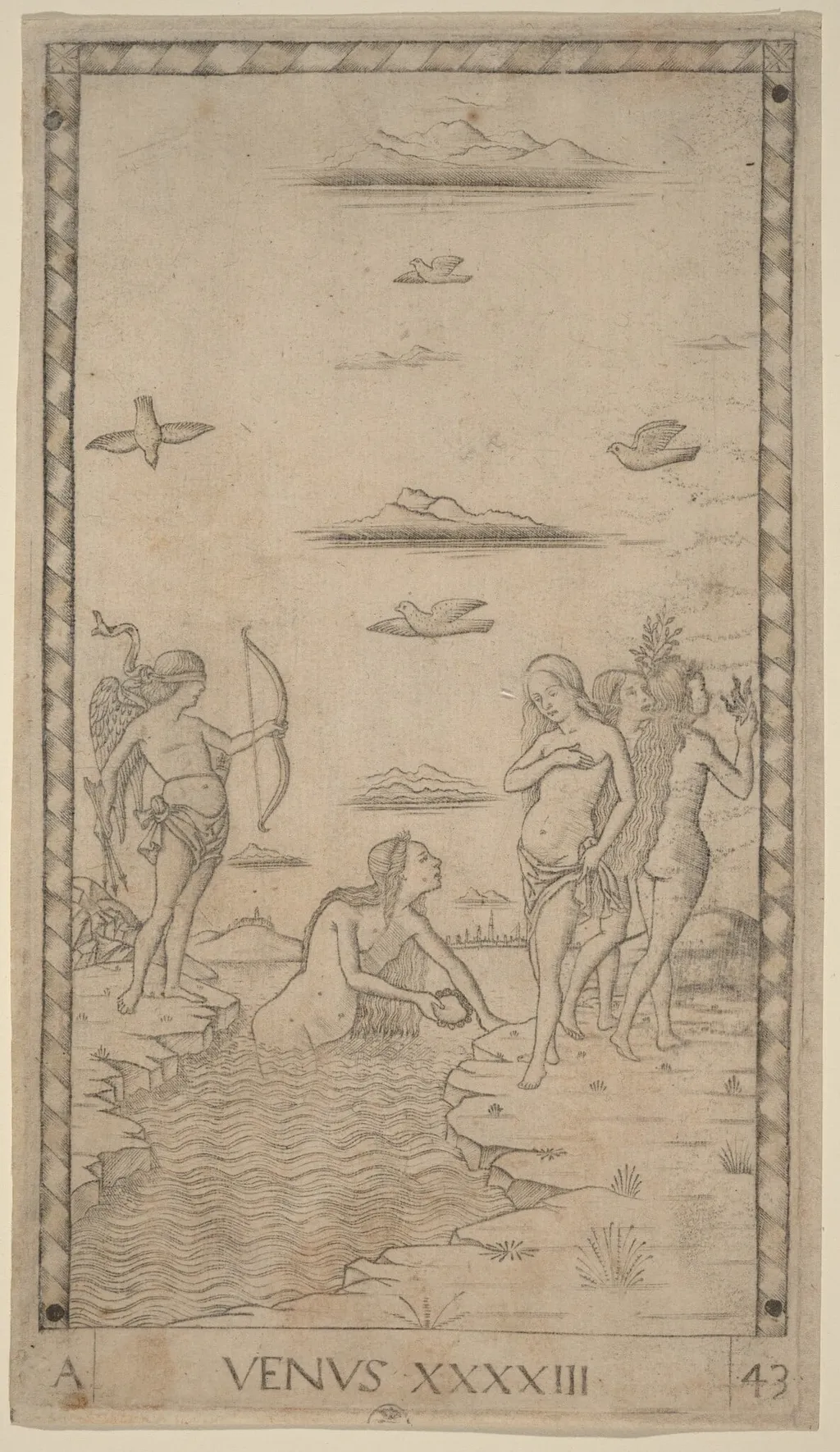
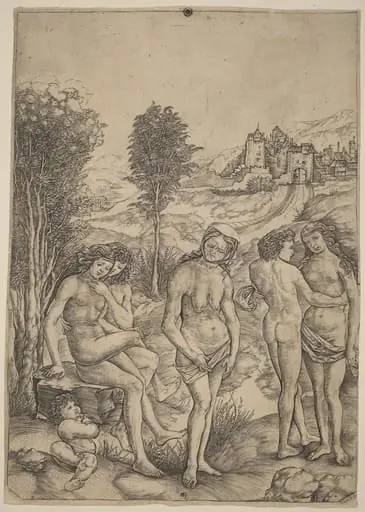
Venus is an ink print by the Renaissance artist Master of the E-Series Tarocchi. It dates from 1465 and is held in the collection of the National Gallery of Art.
About this work
Overview
This engraving, dated around 1465, is attributed to the Master of the E-Series Tarocchi, an anonymous artist active in northern Italy.
This engraving, dated around 1465, is attributed to the Master of the E-Series Tarocchi, an anonymous artist active in northern Italy. It depicts a mythological scene with four female figures arranged in a naturalistic landscape. Executed in fine linear technique, the work belongs to a series of prints that blend classical themes with contemporary Renaissance sensibilities, reflecting the period’s renewed interest in antiquity.
Subject & Meaning
The central figure is identified as Venus, goddess of love, distinguished by her association with the shell—a symbol of her birth from the sea. Another figure holds a bow and arrow, likely representing Cupid or a nymph linked to love’s power. The surrounding women may symbolize virtues or attendants, while the natural elements—water, plants, birds—evoke a mythic realm. The composition suggests an idealized vision of divine presence within nature, consistent with humanist ideals of the era.
Technique & Style
The image is rendered in meticulous engraving, using fine cross-hatching to model form and suggest depth. Textures in fabric, hair, and foliage are carefully articulated through controlled line work. The landscape, though compact, includes layered elements—rock formations, distant mountains, and drifting clouds—that create spatial recession. The precision of the lines reflects the technical sophistication of early Renaissance printmaking, prioritizing clarity and detail over color.
History & Provenance
The engraving is part of a small group of prints known as the E-Series Tarocchi, likely produced for elite collectors in the mid-15th century. These works were not intended as playing cards but as artistic objects, possibly used for intellectual amusement or private devotion. Its survival in limited numbers suggests it was valued, though its exact early ownership remains undocumented. The attribution to the Master of the E-Series Tarocchi is based on stylistic consistency across the series.
Context
Created during the early Italian Renaissance, the print reflects the period’s fascination with classical mythology and the revival of ancient symbolism. Artists and patrons increasingly drew from literary sources like Ovid, integrating myth into visual culture. This work aligns with other contemporary prints and panel paintings that reimagined pagan themes through a Christian-era aesthetic, blending spiritual and secular ideals in a single image.
Legacy
Though the artist’s identity remains unknown, the engraving contributes to the broader understanding of early printmaking’s role in disseminating classical imagery. Its detailed execution influenced later Northern and Italian engravers who adopted similar techniques for mythological subjects. As one of the earliest printed depictions of Venus in a natural setting, it stands as a quiet precursor to the more elaborate mythological scenes of the High Renaissance.
Artist & collection
Artist
Master of the E-Series Tarocchi
Master of the E-Series Tarocchi (b. 1400) was an Italian artist.

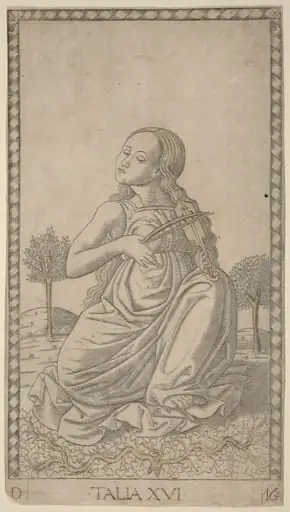
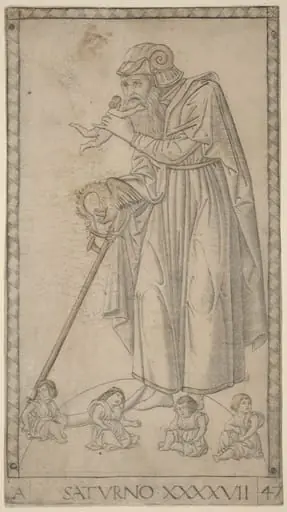
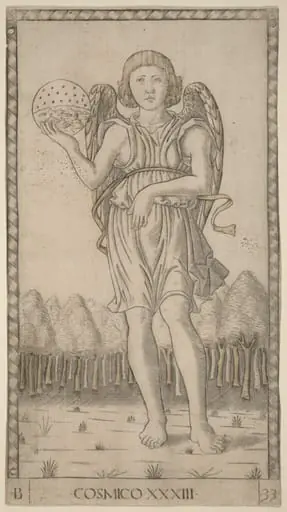
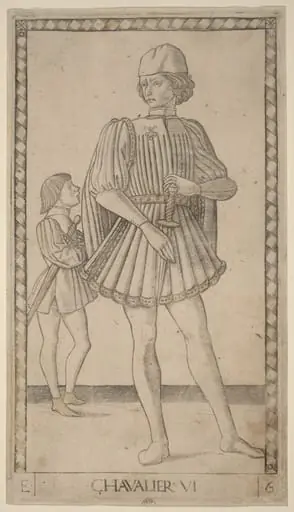
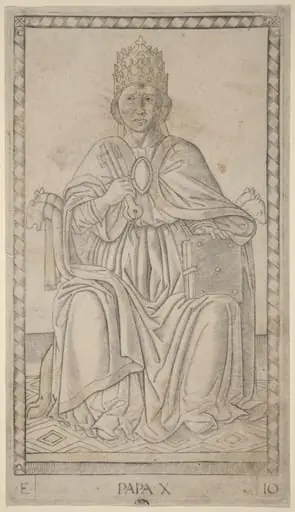
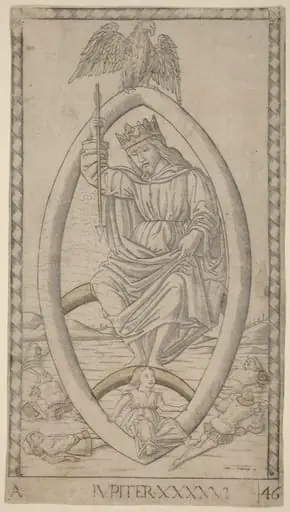
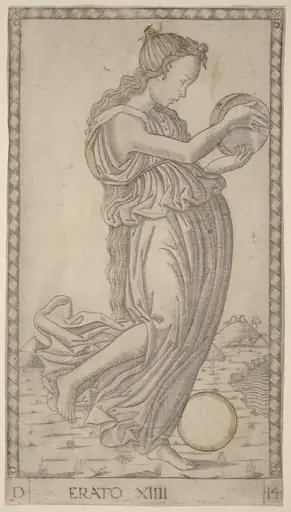
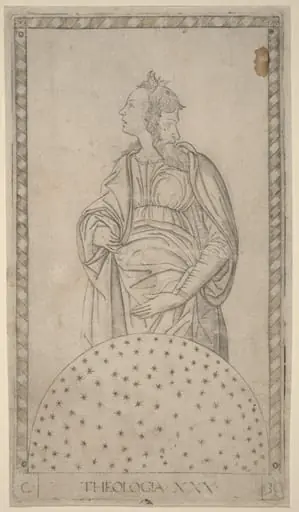
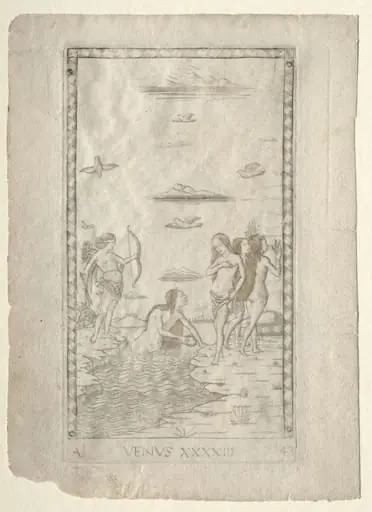 Venus (from the Tarocchi, series A: Firmaments of the Universe, #43)
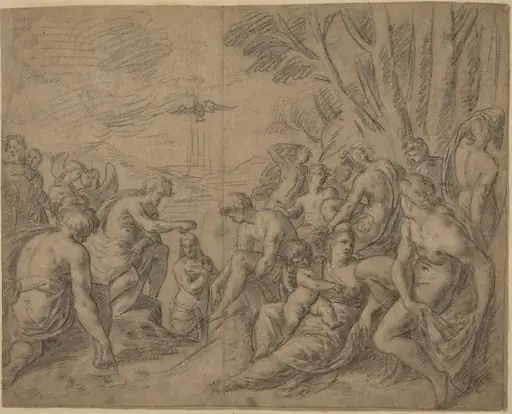 The Baptism of Christ
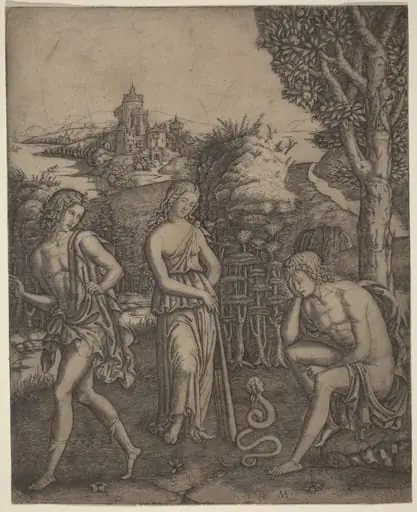 Serpent Speaking to a Young Man
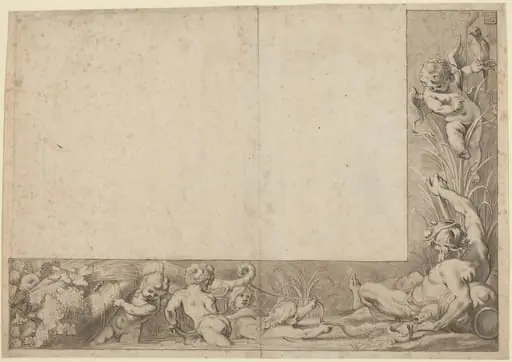 River God with Putti
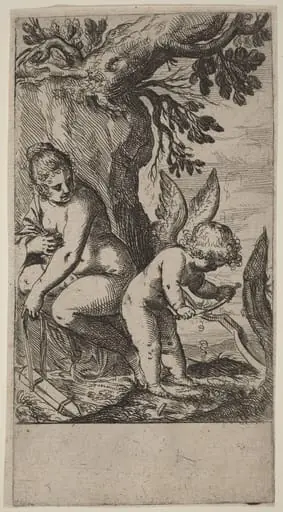 Venus with Cupid Whittling His Bow
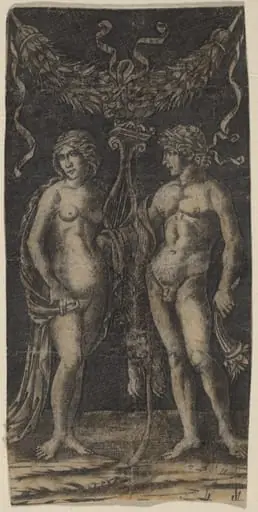 Hercules and Deianira
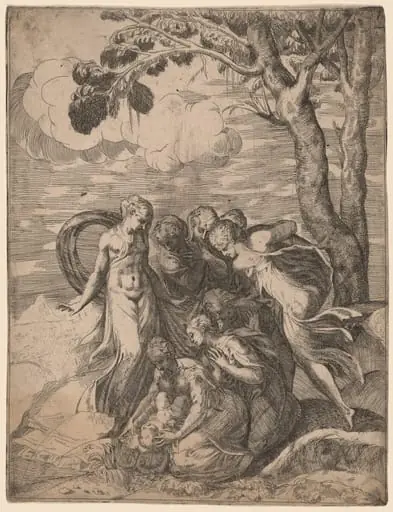 The Finding of Moses
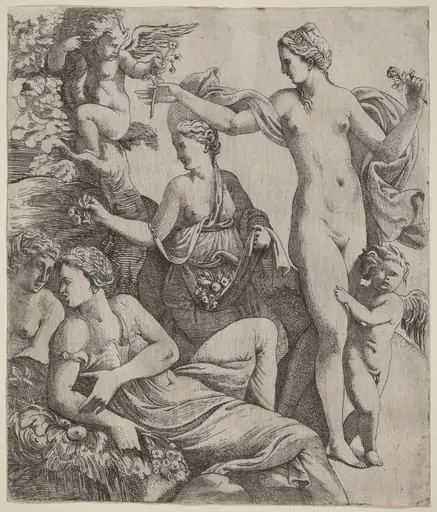 Venus with the Graces and Putti
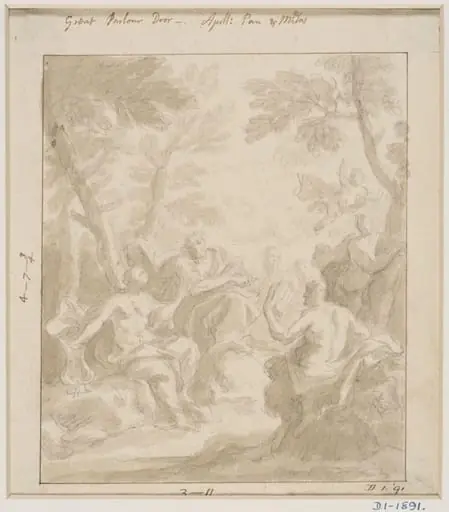 Design for an overdoor painting depicting Apollo, Pan and Midas
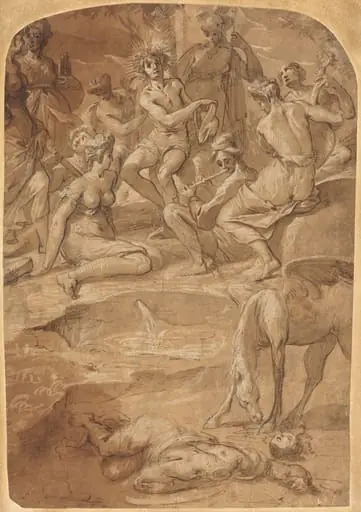 Apollo and the Muses on Mount Parnassus
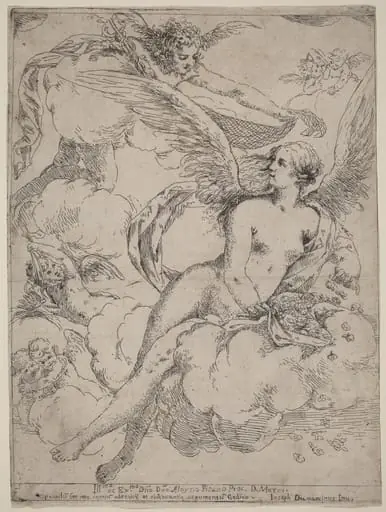 Flora and Mercury
 Allegory of Envy