Artwork
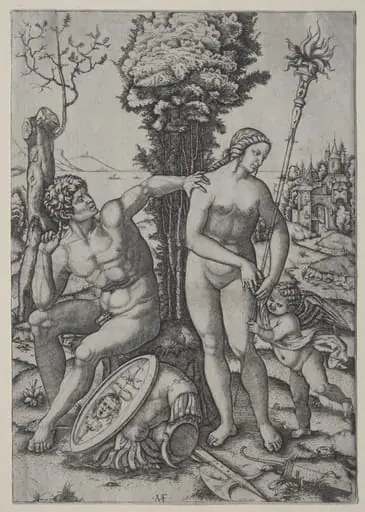
Serpent Speaking to a Young Man
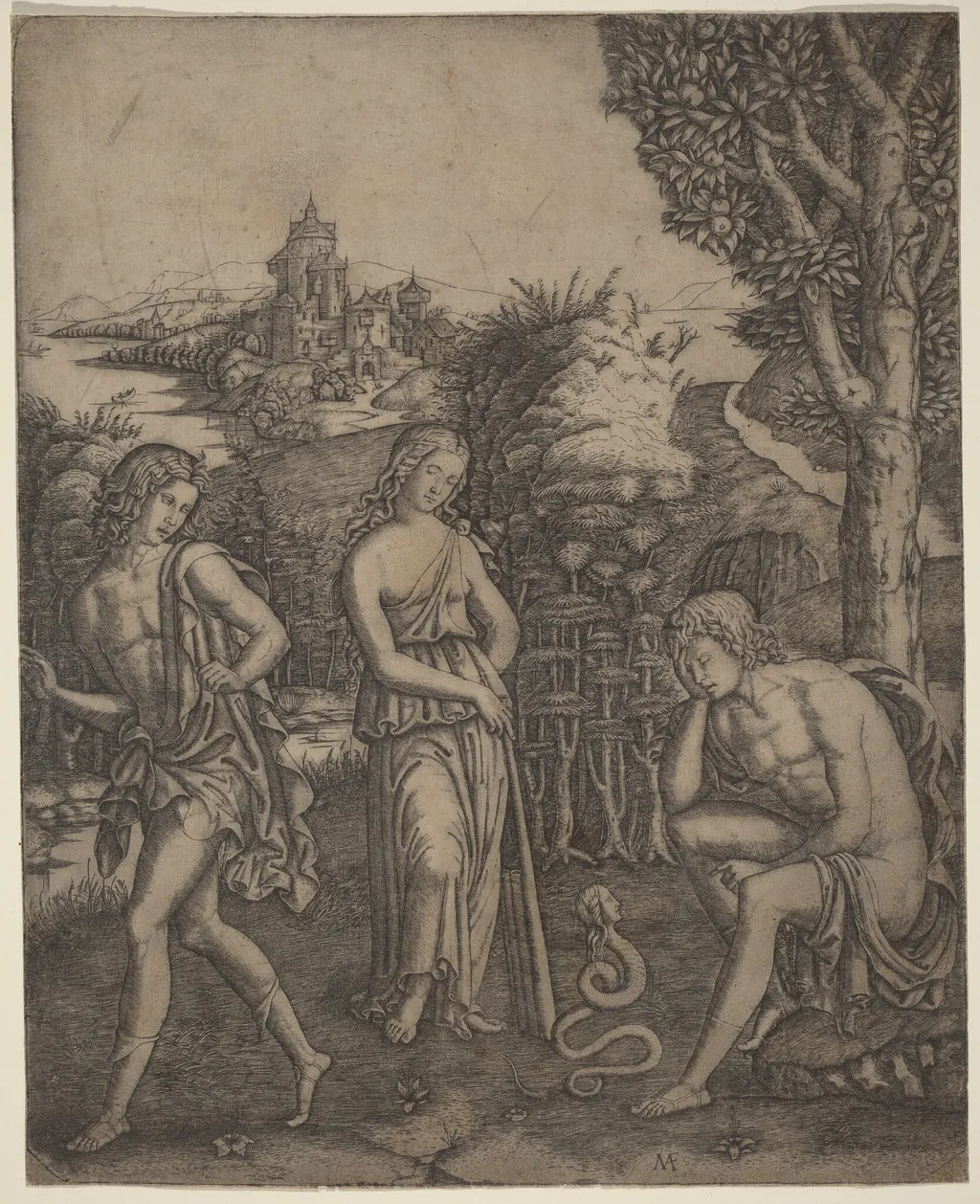
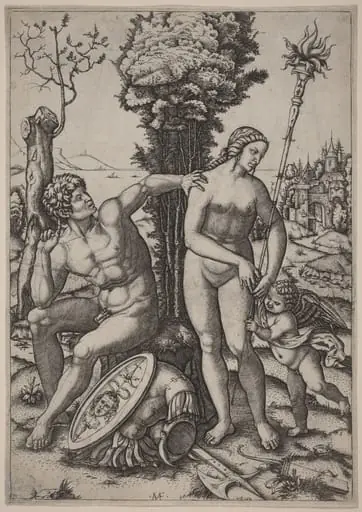
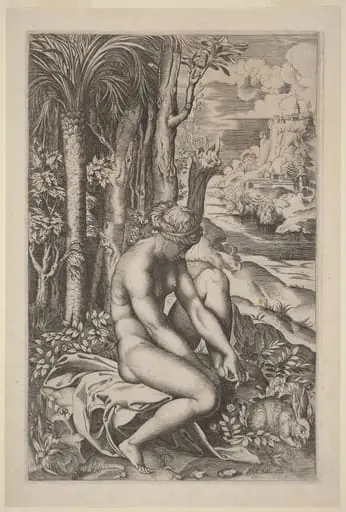
Serpent Speaking to a Young Man is an ink print by the Renaissance artist Marcantonio Raimondi. It dates from 1507 and is held in the collection of the National Gallery of Art.
About this work
Overview
Raimondi, an Italian printmaker, was instrumental in adapting painted compositions into detailed engravings, enabling wider circulation of Renaissance imagery.
Created in 1507 by Marcantonio Raimondi, this engraving is part of a series illustrating biblical narratives through printed images. Raimondi, an Italian printmaker, was instrumental in adapting painted compositions into detailed engravings, enabling wider circulation of Renaissance imagery. This work exemplifies his methodical approach to line and form, capturing a moment from the Garden of Eden with quiet precision.
Subject & Meaning
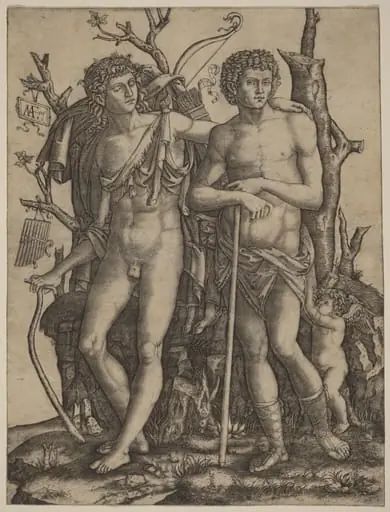
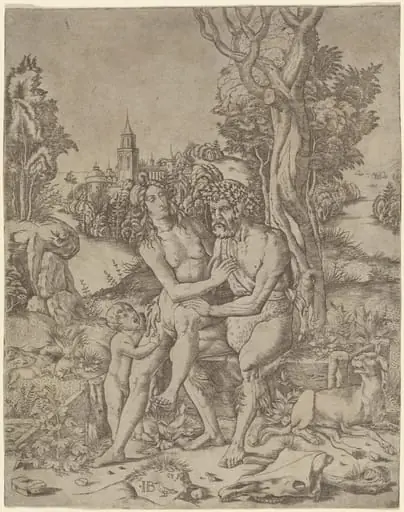
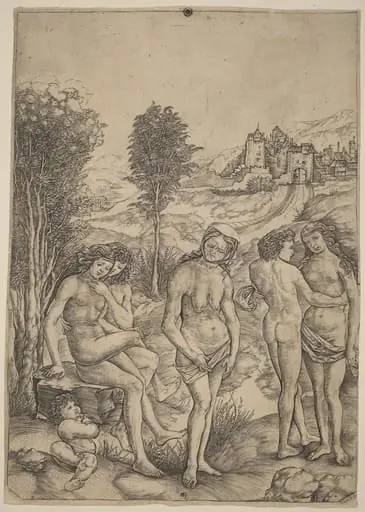
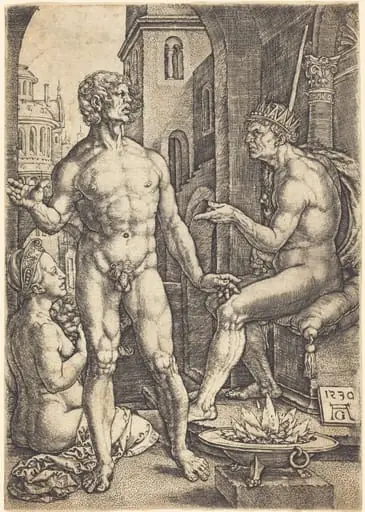
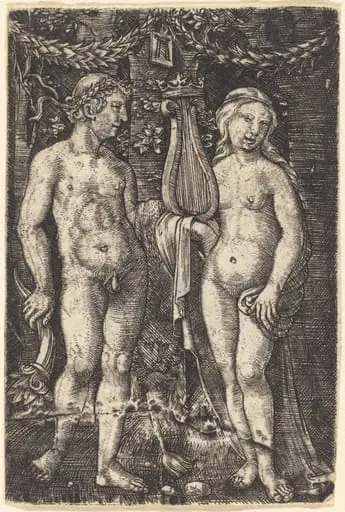
The scene depicts the temptation of Adam, as described in Genesis, with the serpent coiled around the young man’s leg while he gazes thoughtfully downward. A woman, likely Eve, stands nearby with one hand on her hip, and a man, possibly Adam, holds a staff and observes. The composition suggests internal conflict rather than dramatic confrontation, emphasizing psychological tension over narrative spectacle.
Technique & Style
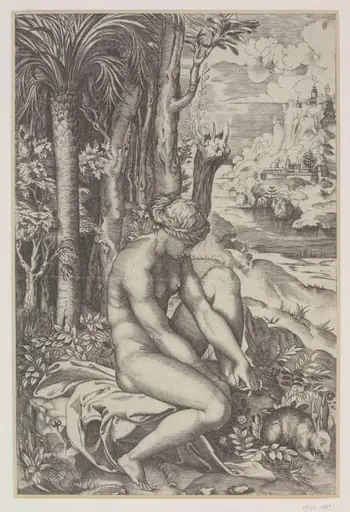
Raimondi employed fine, controlled engraving lines to render textures: the folds of fabric, the scales of the serpent, and the distant landscape. His technique relied on cross-hatching and delicate contouring to suggest volume and depth without color. The figures are arranged in a calm, triangular grouping, drawing attention to their subtle gestures and the quiet intimacy of the moment.
History & Provenance
The print was produced during Raimondi’s time in Rome, where he worked closely with artists like Raphael, translating their designs into prints. This engraving likely originated from a lost painting or cartoon, consistent with his role as a reproductive printmaker. Its survival reflects the demand for such images among collectors and scholars across Europe in the early 16th century.
Context
In early 16th-century Italy, engraving emerged as a key medium for disseminating artistic ideas beyond elite circles. Raimondi’s work aligned with broader humanist interests in biblical themes and classical form. The inclusion of architectural details like the distant castle and winding path reflects contemporary interest in perspective and landscape as narrative elements.
Legacy
Raimondi’s technical rigor influenced generations of Northern and Italian printmakers. His ability to translate painterly compositions into engraved form helped standardize visual language across regions. This engraving, though not widely known today, contributes to the understanding of how Renaissance imagery traveled and evolved through the medium of print.
Own this work as a print
Artist & collection

Artist
Marcantonio Raimondi, often called simply Marcantonio (c. 1470/82 – c. 1534), was an Italian engraver, known for being the first important printmaker whose body of work consists largely of prints copying paintings. He…