Artwork
Saint Catherine of Alexandria, with the Defeated Emperor
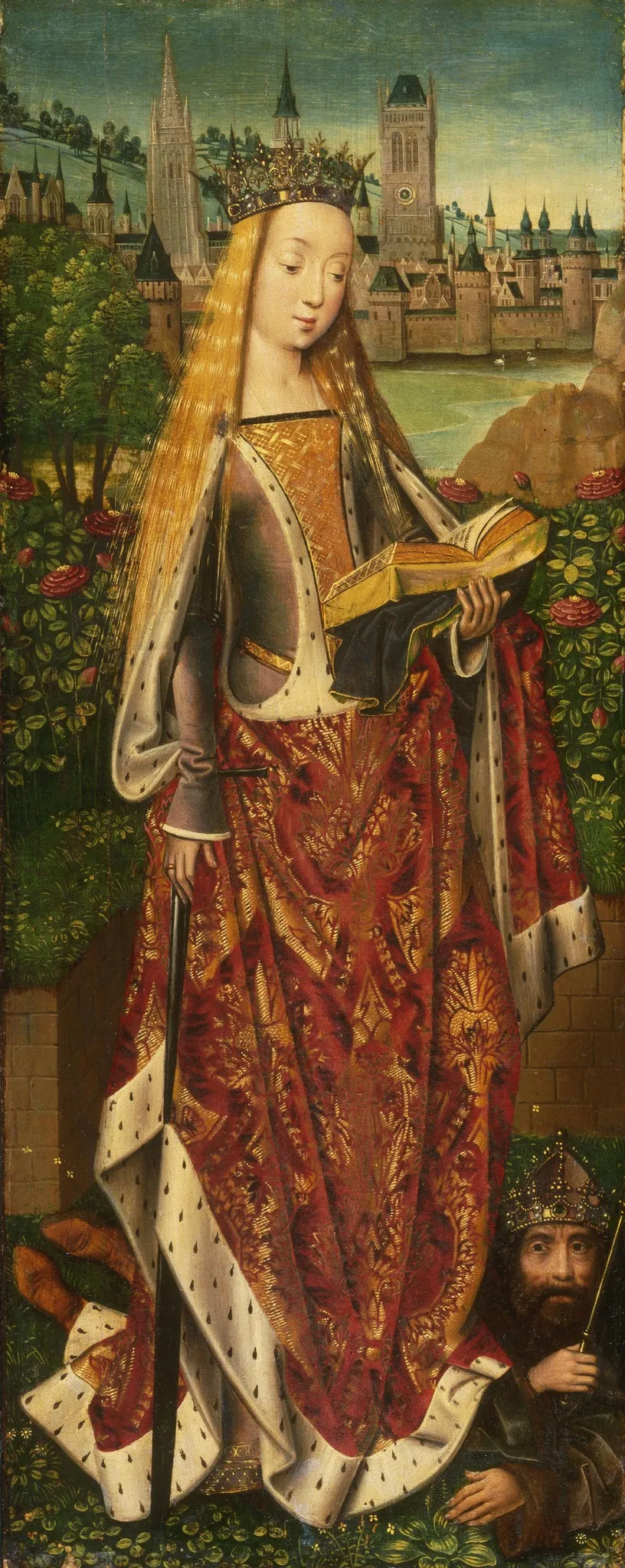
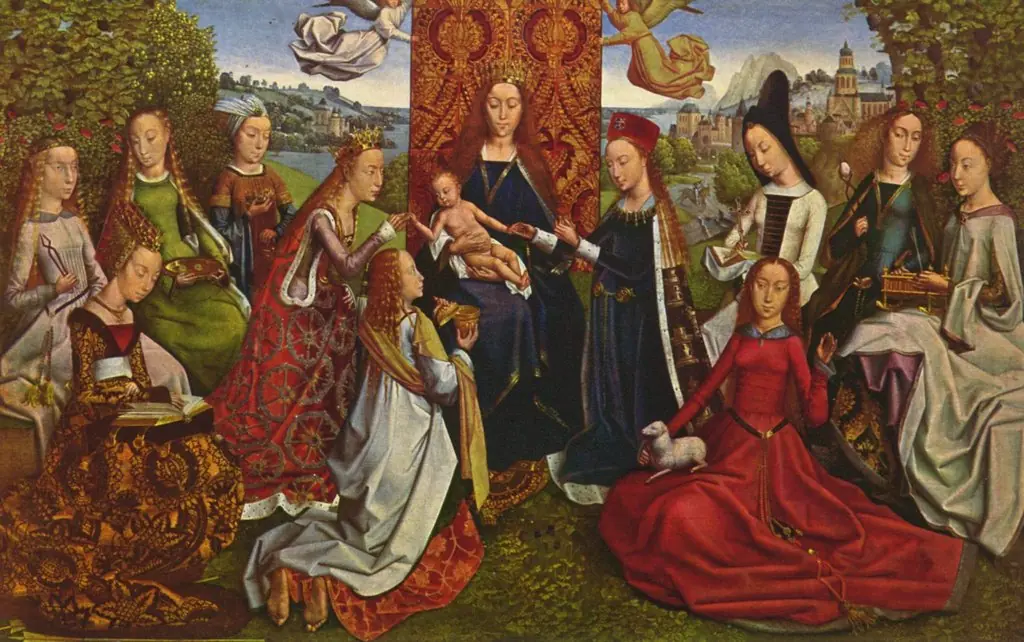
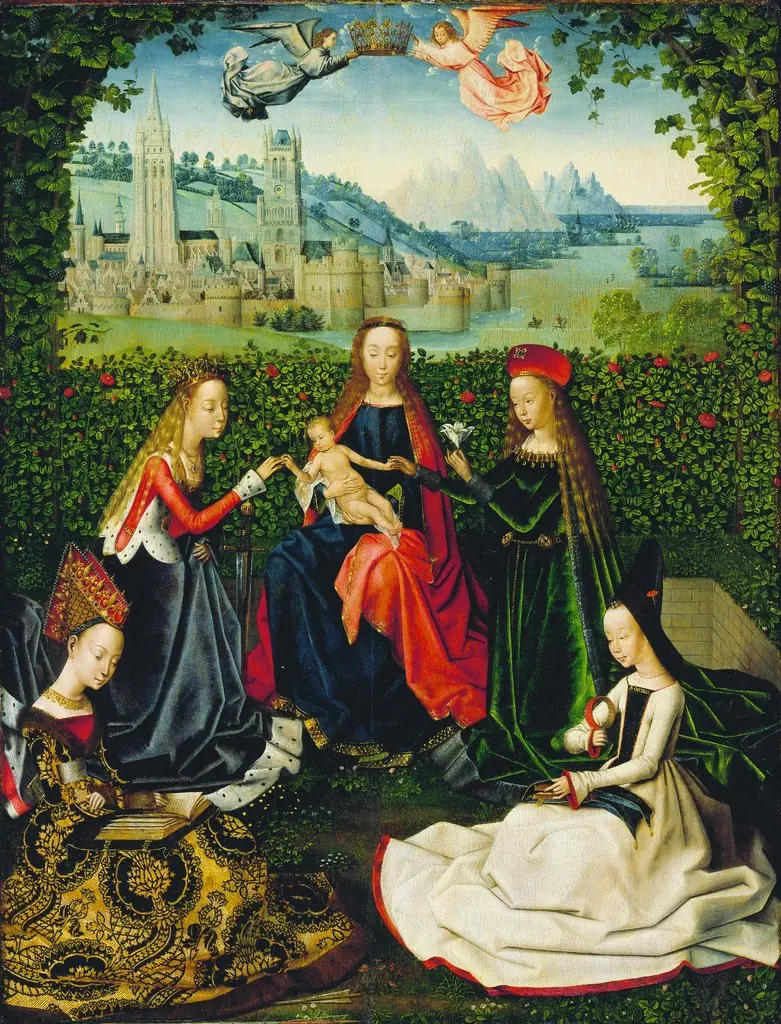
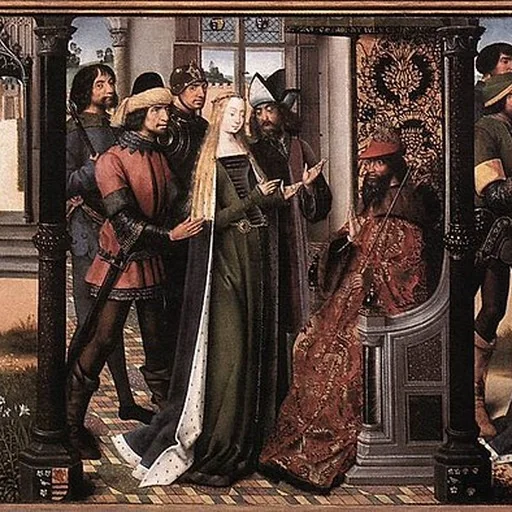
Saint Catherine of Alexandria, with the Defeated Emperor is an oil painting by the Northern Renaissance artist Master of the Legend of Saint Lucy. It dates from 1492 and is held in the collection of the Philadelphia Museum of Art. Created in 1492, this oil-on-panel work depicts Saint Catherine of Alexandria confronting the defeated Emperor Maximian.
About this work
Overview
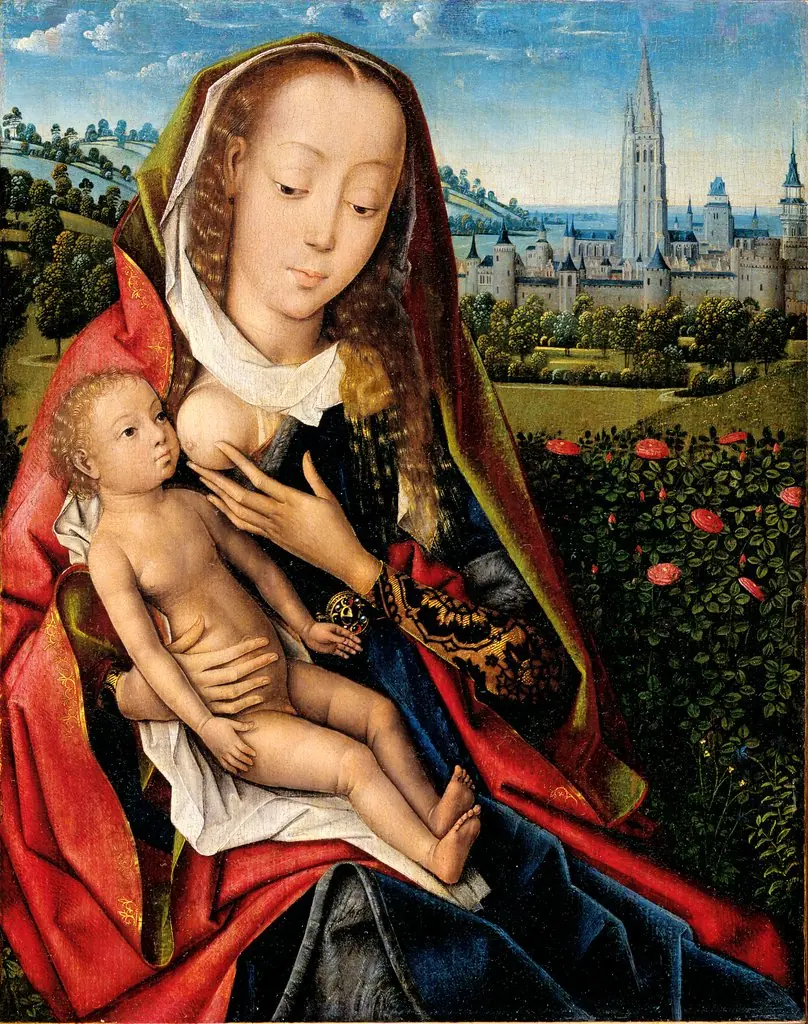
Created in 1492, this oil-on-panel work depicts Saint Catherine of Alexandria confronting the defeated Emperor Maximian. Executed by the anonymous Master of the Legend of Saint Lucy, an Early Netherlandish painter active in Bruges from the late 1480s to the early 1510s, the composition combines a devotional scene with a detailed cityscape in the background.
Subject & Meaning
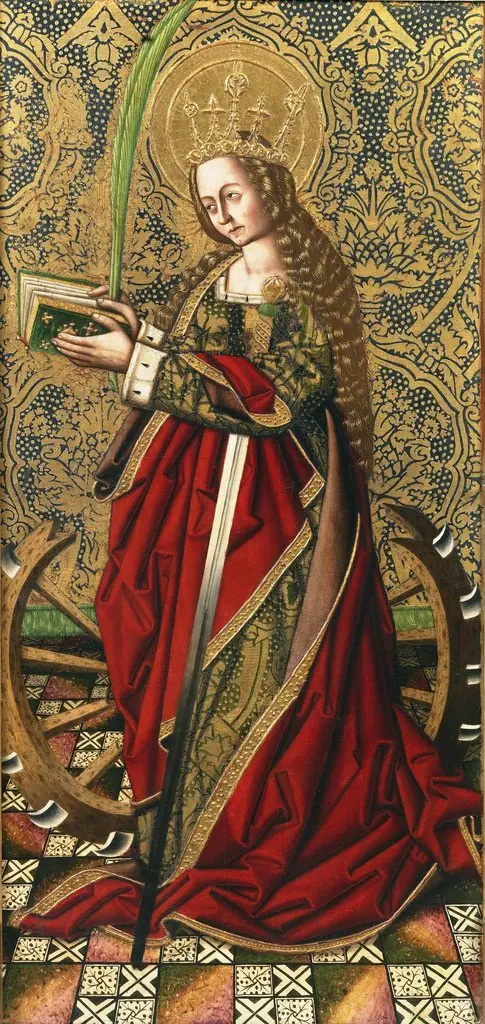
The central figure, Saint Catherine, is shown in a richly draped red‑and‑gold gown, crowned and holding a book and a rose—symbols of her learned martyrdom and purity. At her feet kneels a crowned male figure, identified as the vanquished emperor, clutching a broken sword, underscoring the saint’s triumph over pagan authority.
Technique & Style
Employing the Northern Renaissance practice of glazing, the artist built up luminous tones through successive translucent layers, achieving depth in the fabrics and the distant architecture. Fine gold leaf‑like patterns adorn Catherine’s dress, while the cityscape is rendered with the precise observation characteristic of Bruges painters of the period.
History & Provenance
The Master of the Legend of Saint Lucy is thought to have trained under Dieric Bouts and to have run a workshop that attracted Spanish apprentices. His habit of inserting recognizable Bruges landmarks into his narratives aids scholars in dating his oeuvre, as the depicted towers and river correspond to the city’s late‑15th‑century skyline.
Context
The painting belongs to a broader tradition of devotional images that celebrate saints’ victories over earthly powers, a theme popular in the devotional practices of late medieval Flanders. By juxtaposing a holy figure with a secular ruler, the work reflects contemporary concerns about the authority of the Church versus imperial power.
Artist & collection
Artist
Master of the Legend of Saint Lucy
The Master of the Legend of Saint Lucy (fl. 1480–1510) was an unidentified Early Netherlandish painter from Bruges. His name comes from an altarpiece in the church of Saint James in Bruges, dated 1480, depicting three…