Artwork
Saint Vincent, Patron Saint of Lisbon
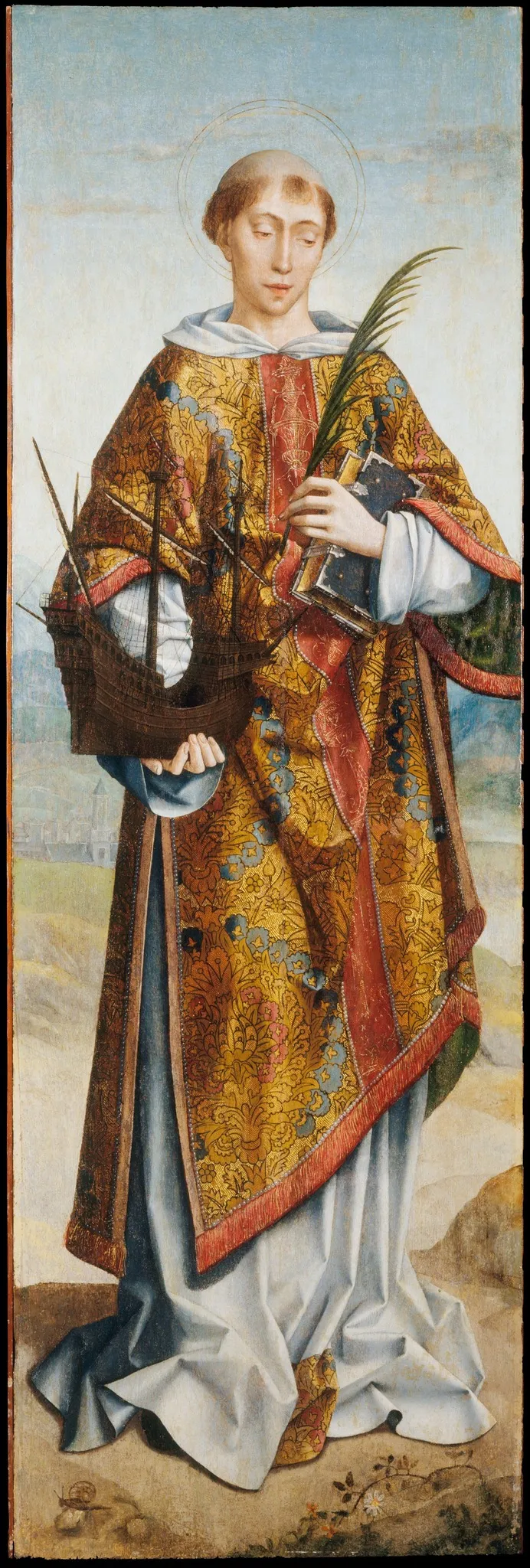
Saint Vincent, Patron Saint of Lisbon is an oil painting by the Early Baroque Italian artist Frei Carlos. It dates from 1520 and is held in the collection of the Metropolitan Museum of Art.
About this work
Overview
The composition centers on Saint Vincent dressed in a golden cope with red and blue accents over a white alb, holding a book and a martyr's palm frond.
Painted circa 1520 by the Portuguese monk-painter Frei Carlos, Saint Vincent, Patron Saint of Lisbon is a devotional panel depicting the city's patron saint in a full-length standing pose. The composition centers on Saint Vincent dressed in a golden cope with red and blue accents over a white alb, holding a book and a martyr's palm frond. He stands upon a rocky shoreline, a setting that alludes to the legend of his relics being transported to Lisbon by angels. Behind the figure, a three-masted ship adorned with flags navigates the water, while a distant cityscape representing Lisbon rises on the horizon. Executed in oil paint, the work reflects the stylistic conventions of the Portuguese Renaissance, blending religious iconography with contemporary maritime elements. As one of the few surviving works attributed to Frei Carlos, this panel serves as a significant example of early 16th-century Portuguese religious art, illustrating the deep connection between the saint, the city, and the nation's emerging naval identity.
Subject & Meaning
The central figure is Saint Vincent of Saragossa, identifiable by his long, richly decorated robe, a book, and a palm frond—traditional attributes of martyrdom and wisdom. He stands on a craggy shore, linking the saint’s spiritual authority with Lisbon’s seafaring identity, while the distant city and ship suggest his protective role over the capital’s sailors and merchants.
Technique & Style
Executed in oil on canvas, the composition employs chiaroscuro, contrasting illuminated areas of the saint’s golden and red‑blue robe with darker shadows on the rocky foreground. This handling of light creates a three‑dimensional presence, while the detailed rendering of the three‑masted vessel and the city skyline demonstrates a careful observation of contemporary architecture.
History & Provenance
The painting has remained in Portugal since its creation, eventually entering the National Museum of Ancient Art’s holdings. Its attribution to Frei Carlos is based on stylistic analysis and archival references linking the artist to early 16th‑century religious commissions for Lisbon’s churches.
Context
Produced during the early Portuguese Renaissance, the work reflects the period’s blend of Gothic devotional imagery and emerging naturalistic techniques. Saint Vincent’s depiction aligns with the city’s growing maritime power, as Lisbon was expanding its trade routes and asserting its status as a hub of exploration.
Artist & collection


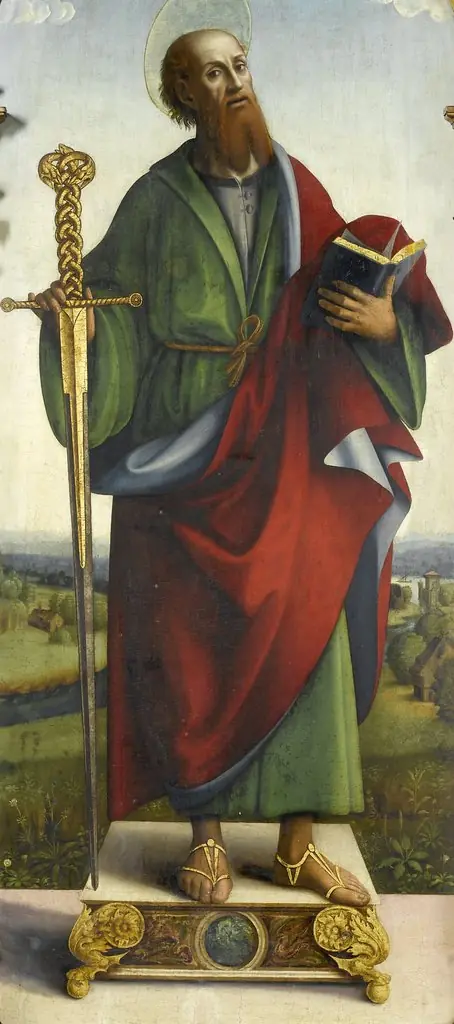 Saint Paul
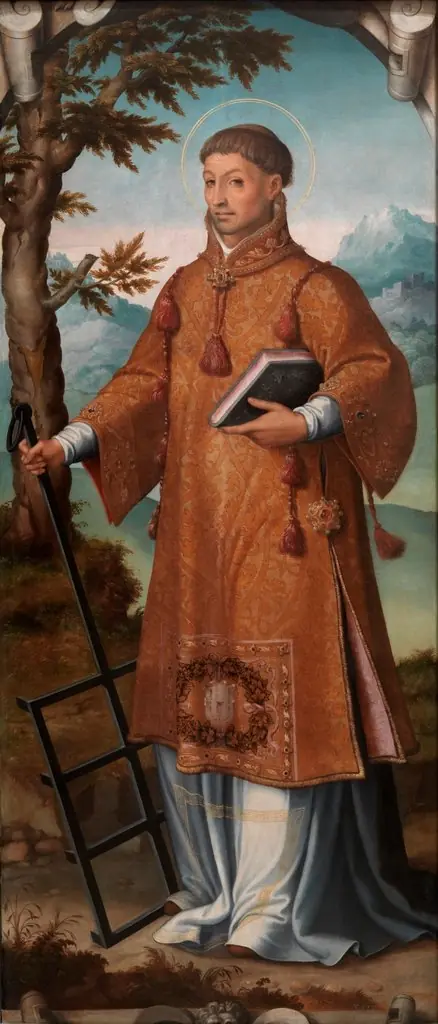 Saint Lawrence
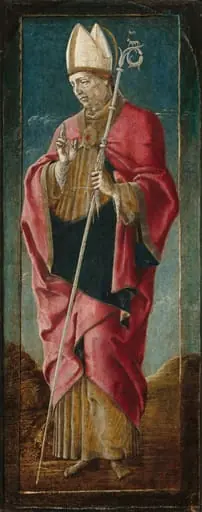 Saint Louis of Toulouse
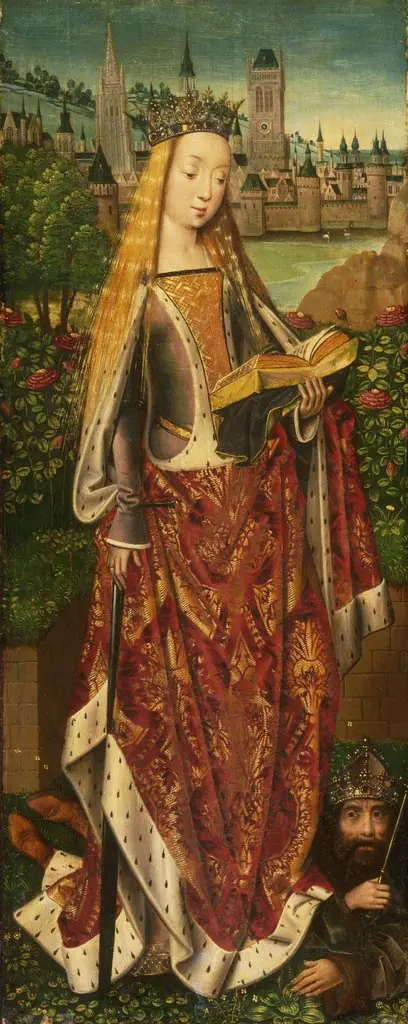 Saint Catherine of Alexandria, with the Defeated Emperor
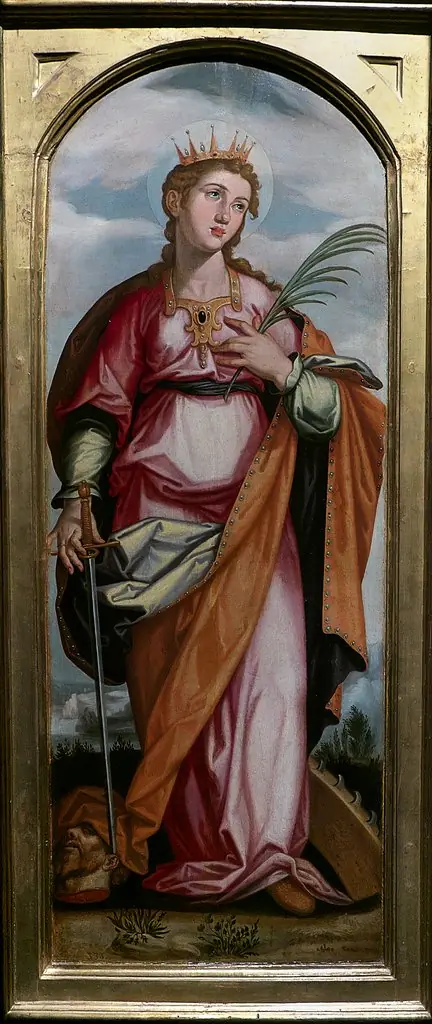 Santa Catalina
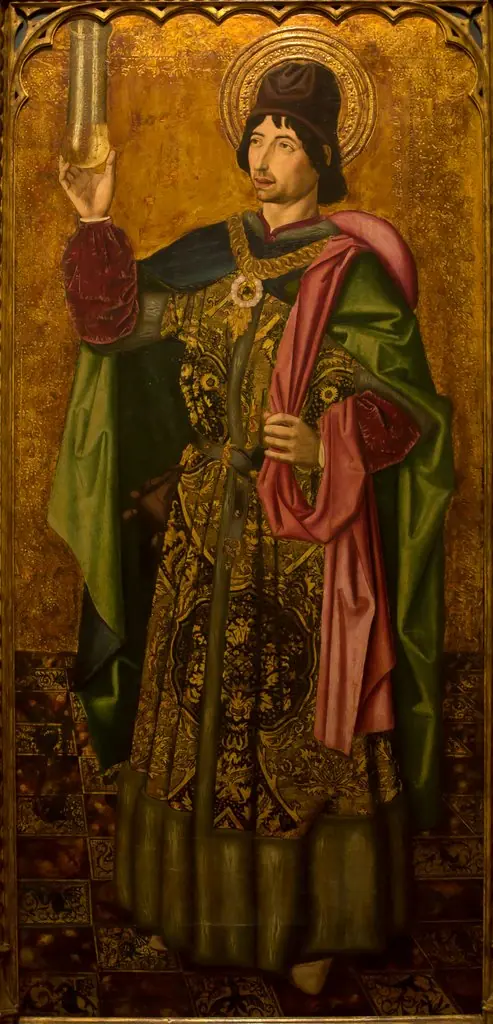 Saint Damian
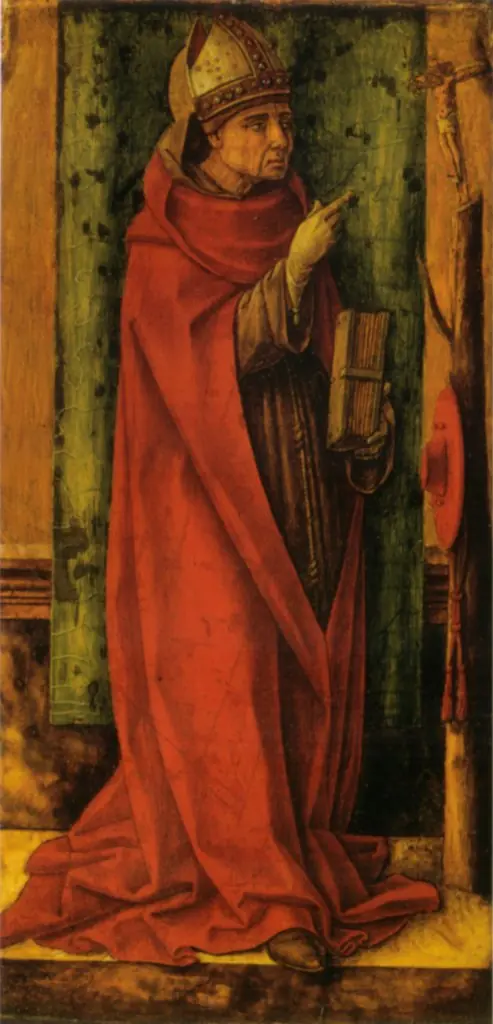 Bonaventure
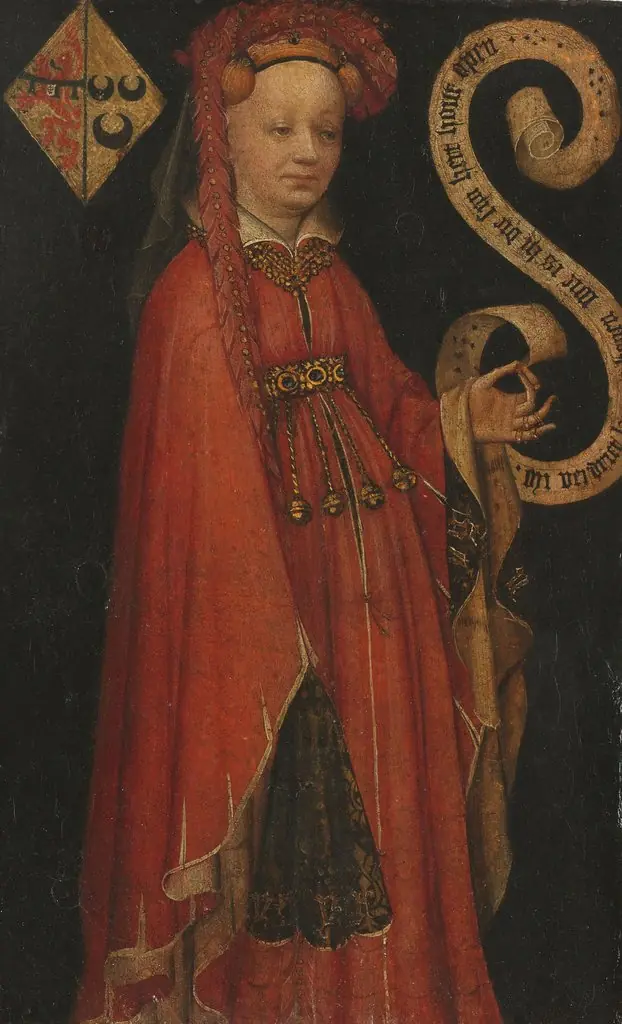 Portrait of Lysbeth van Duvenvoorde
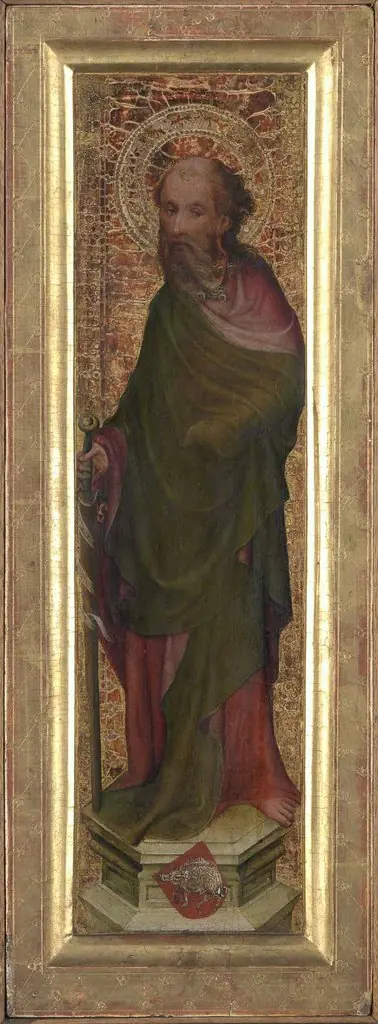 Hl. Paulus Rückseite: Hl. Reinoldus
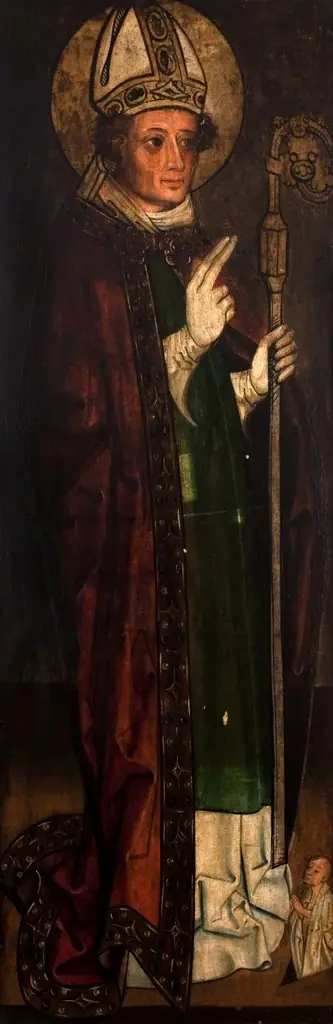 St Stanislaus (obverse); Archangel Gabriel from the Scene of the Annunciation (reverse). Wing of the altar retable from Snoza
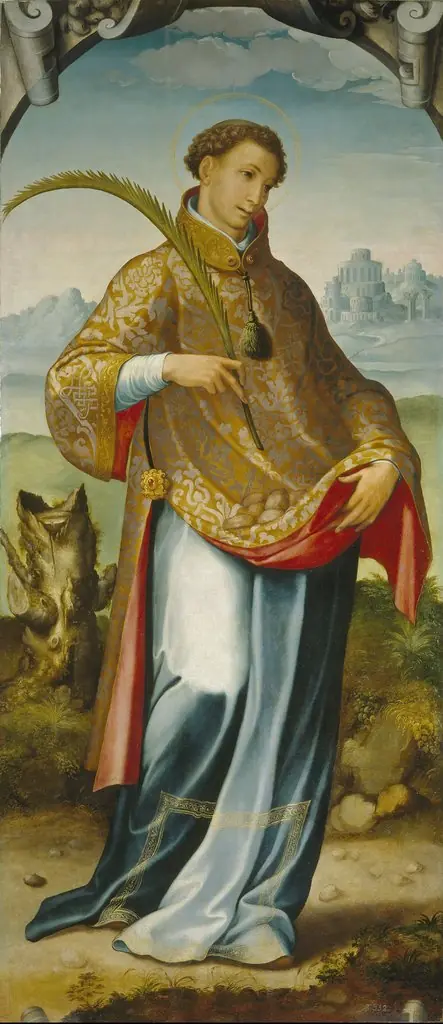 Saint Stephen
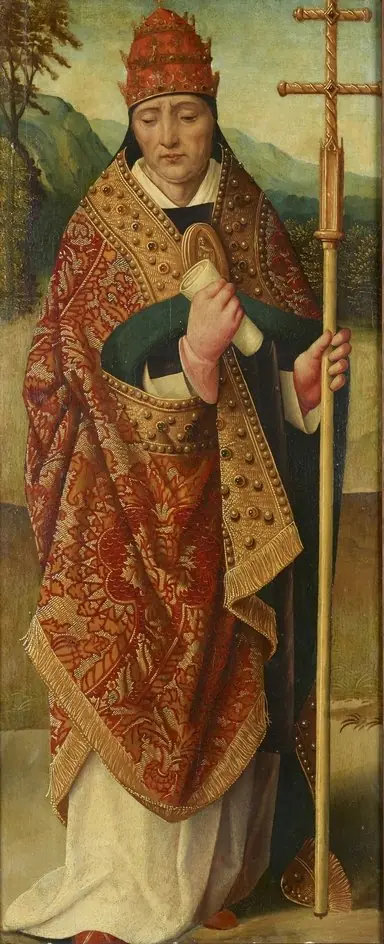 A papal Saint