Artwork
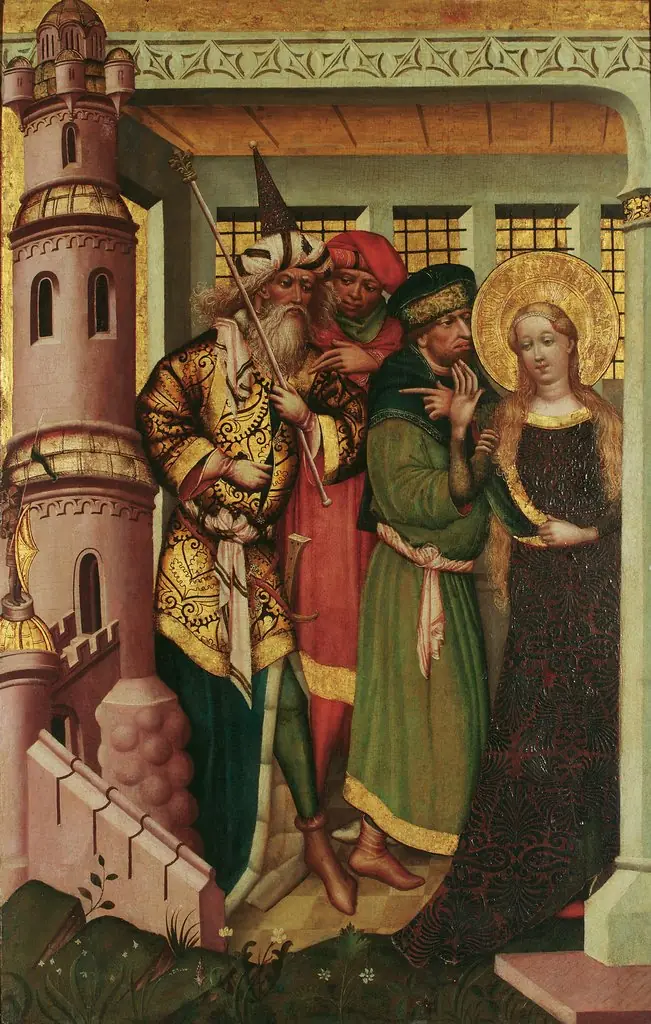
Der hl. Veit entsagt den Freuden der Welt
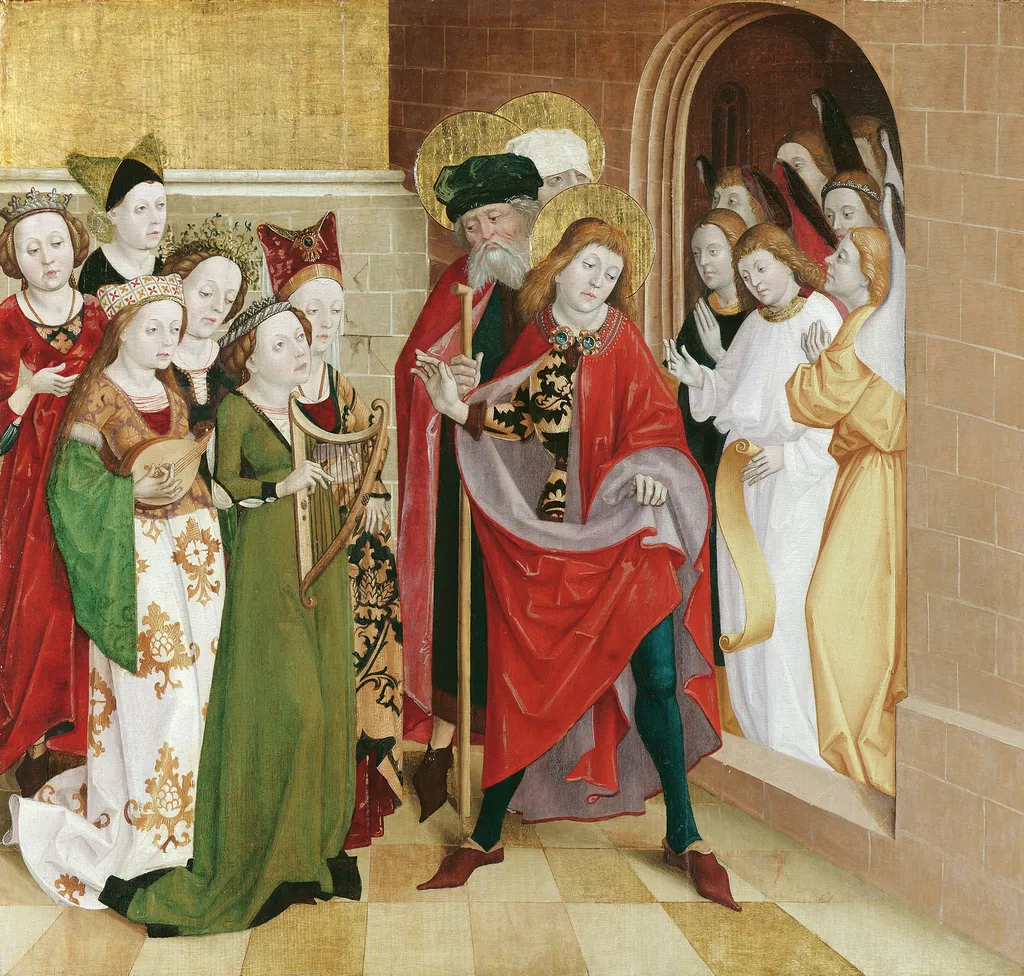
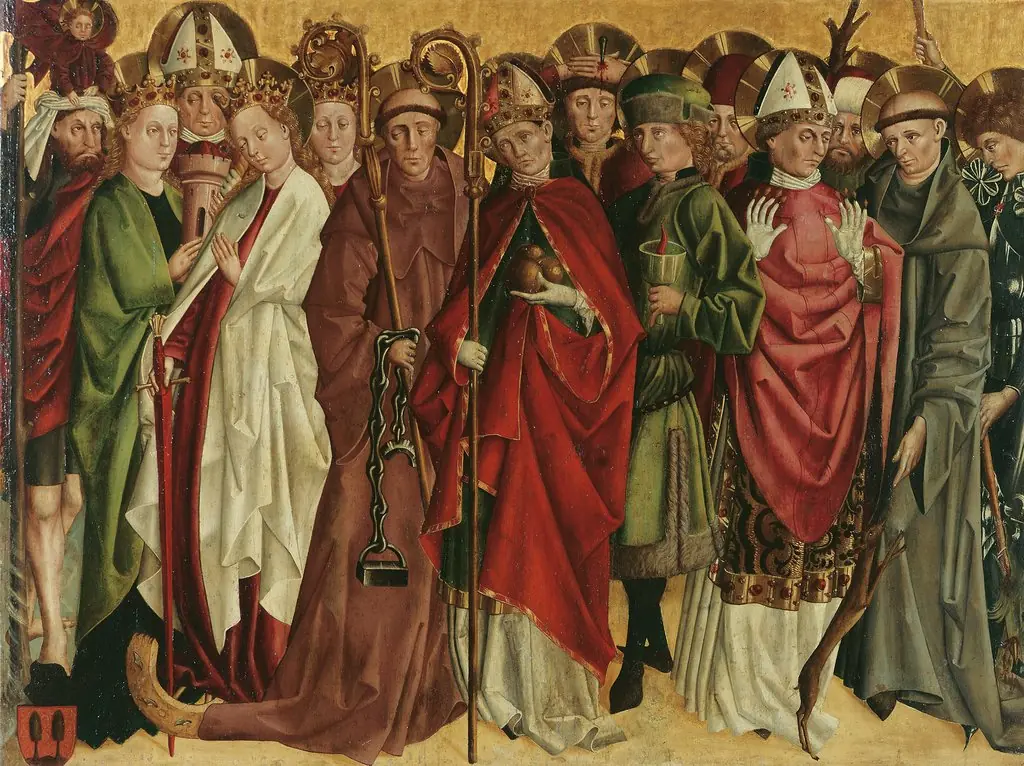
Der hl. Veit entsagt den Freuden der Welt is an unspecified painting by the Northern Renaissance artist Master of the Legend of St. Vitus. It dates from 1475 and is held in the collection of the Kunsthistorisches Museum. Painted around 1475, this work by the Master of the Legend of St.
About this work
Overview
Painted around 1475, this work by the Master of the Legend of St. Vitus depicts Saint Vitus renouncing worldly pleasures. Executed in tempera on panel, it is part of a devotional tradition common in late medieval Central Europe. The painting resides in the Kunsthistorisches Museum in Vienna, where it is displayed among other works from the same artistic circle.
Subject & Meaning
The calm demeanor of the central figure and the attentive postures of others emphasize contemplation over action, reinforcing the theme of renunciation.
The scene illustrates Saint Vitus, identified by his halo and scroll, turning away from material life to embrace spiritual devotion. Flanked by clergy and female figures—possibly martyrs or devout followers—the composition conveys a moment of sacred transition. The calm demeanor of the central figure and the attentive postures of others emphasize contemplation over action, reinforcing the theme of renunciation.
Technique & Style
The artist employs bright pigments—crimson robes, emerald accents, and gold leaf—to highlight sacred figures against a muted stone backdrop. Fine brushwork defines textures in fabric and hair, while the figures are arranged in a static, hieratic composition typical of late Gothic panel painting. Facial expressions are restrained, prioritizing symbolic presence over individual emotion.
History & Provenance
The painting entered the Kunsthistorisches Museum’s collection in the 19th century, likely from a monastic or ecclesiastical source in the Austrian lands. Its attribution to the Master of the Legend of St. Vitus, an anonymous painter active in the late 15th century, is based on stylistic parallels with other works from the same workshop. No earlier documentation of its commission survives.
Context
Created during a period of heightened religious devotion in the Holy Roman Empire, the painting reflects the popularity of hagiographic imagery in private and institutional worship. Similar scenes of saints rejecting worldly power were common in altarpieces and devotional panels, serving both instructional and meditative purposes for viewers.
Legacy
Though the artist remains unidentified, this work exemplifies the regional style of late Gothic panel painting in Austria and southern Germany. It contributes to the understanding of how saintly narratives were visually codified for lay audiences, preserving a visual language that persisted into the early Renaissance before being supplanted by more naturalistic approaches.
Artist & collection

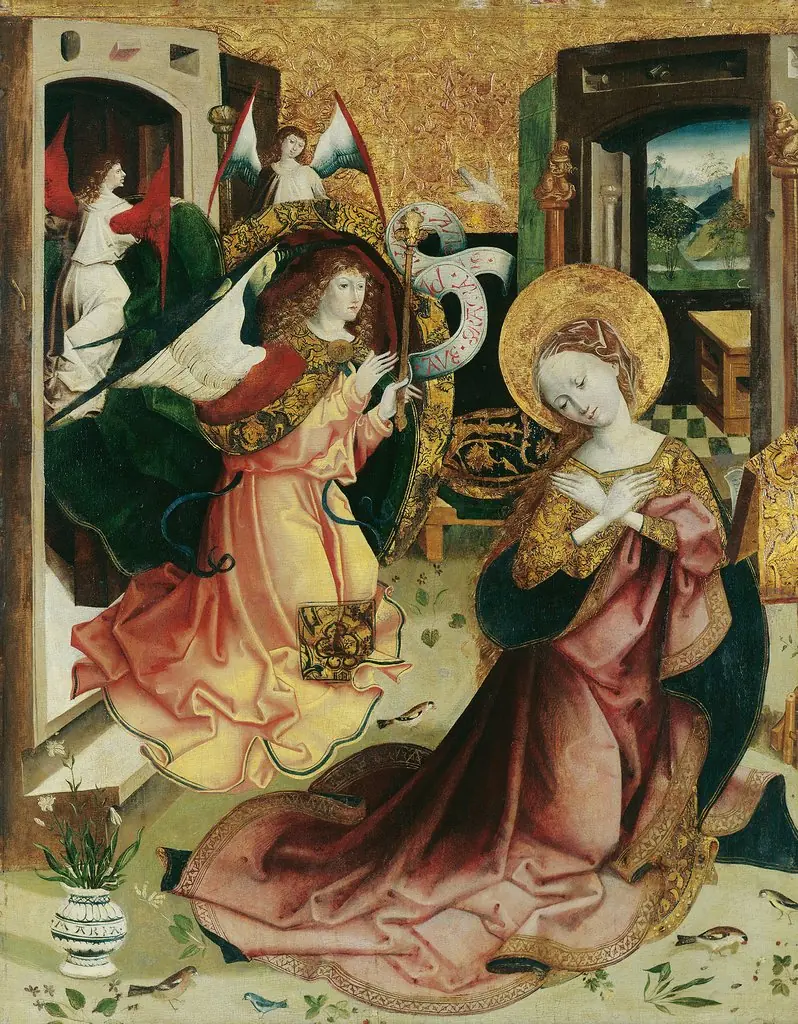 Verkündigung an Maria
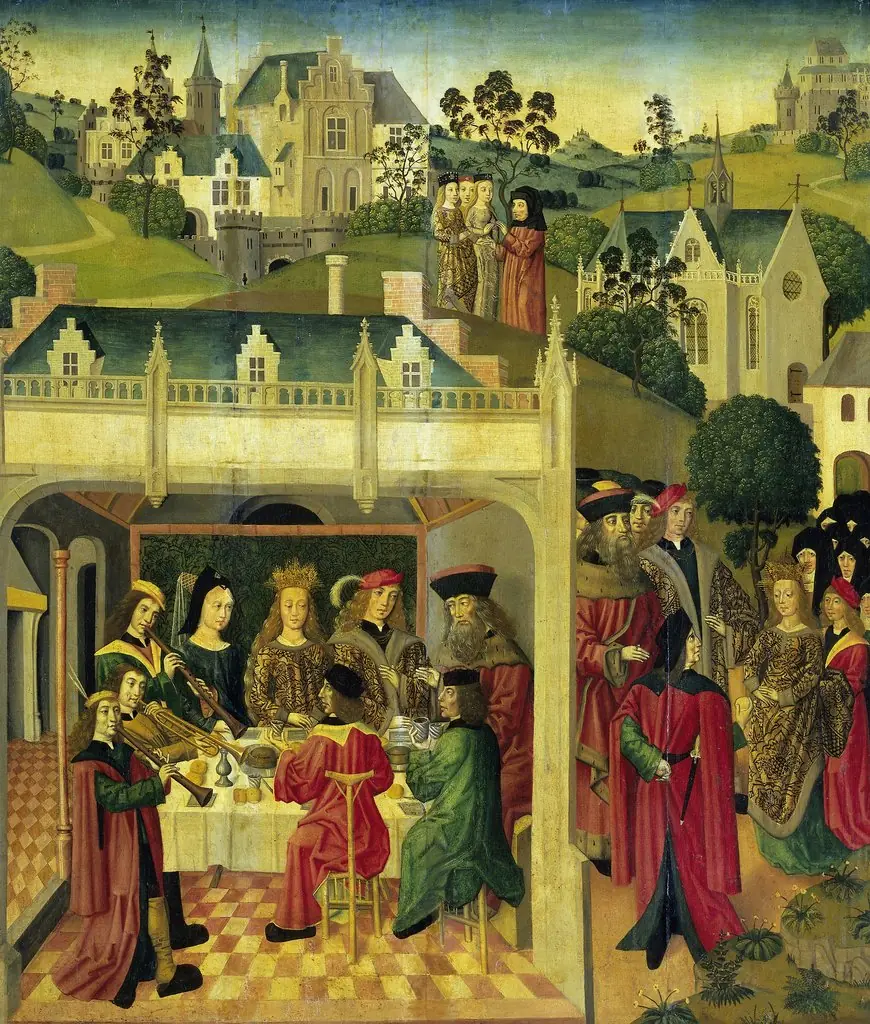 Inner left wing of an altarpiece with the wedding feast of St Elizabeth and Louis of Thuringia in the Wartburg
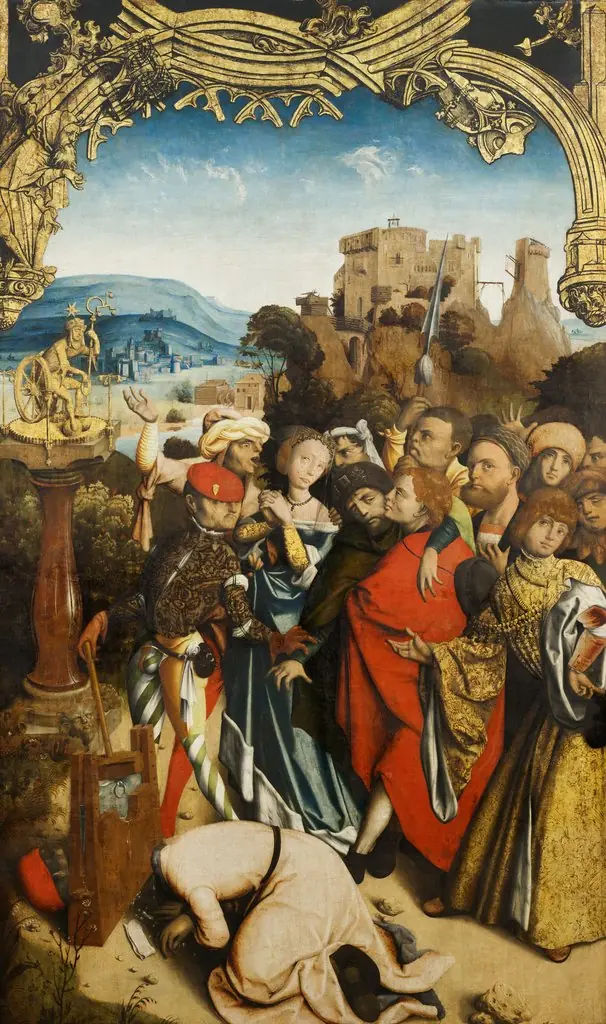
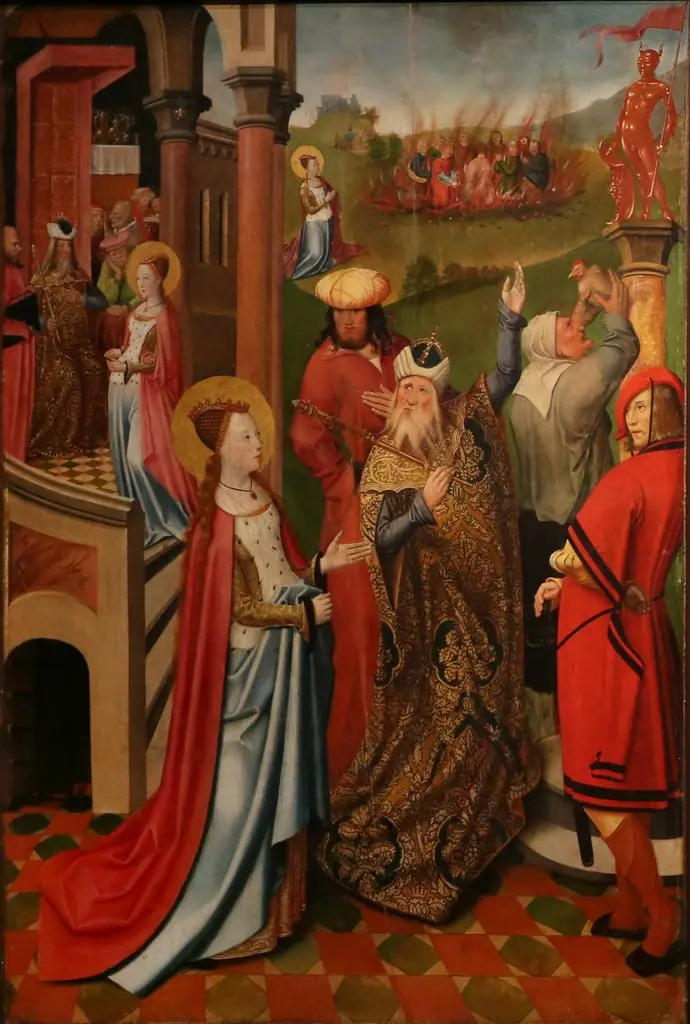 Saint Catherine refuses idolatry
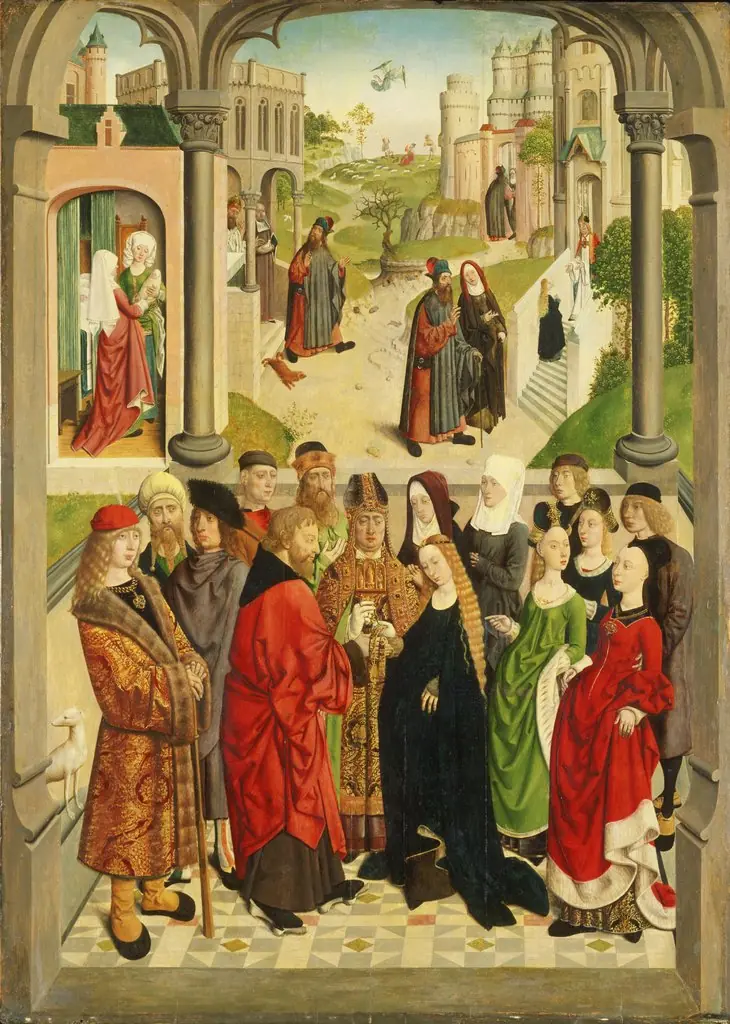 The Marriage of the Virgin, with the Expulsion of Saint Joachim from the Temple, the Angel Appearing to Saint Joachim, the Meeting at the Golden Gate, the Birth of the Virgin, and the Presentation of the Virgin
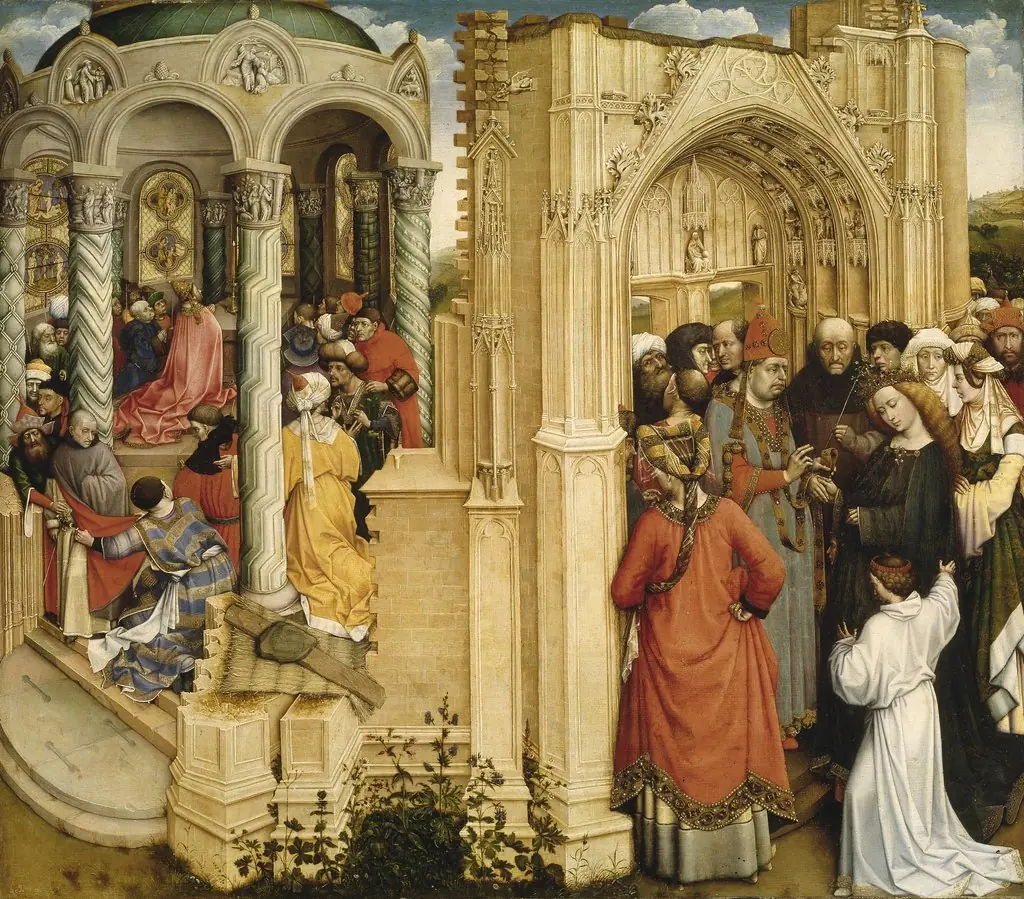 Marriage of the Virgin
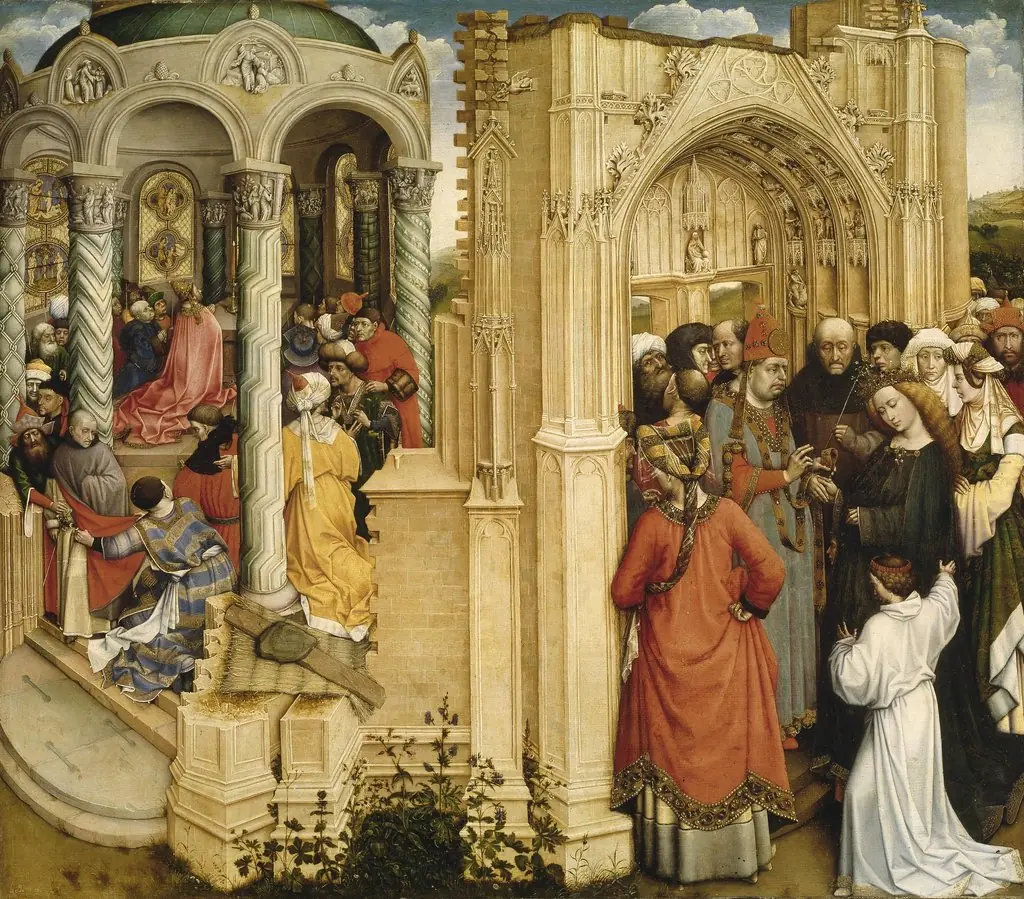 The miracle of the flowering rod (left); the marriage of Mary and Joseph (right)
 St. Barbara is led into the tower