Artwork
Khunig Ludwig ...
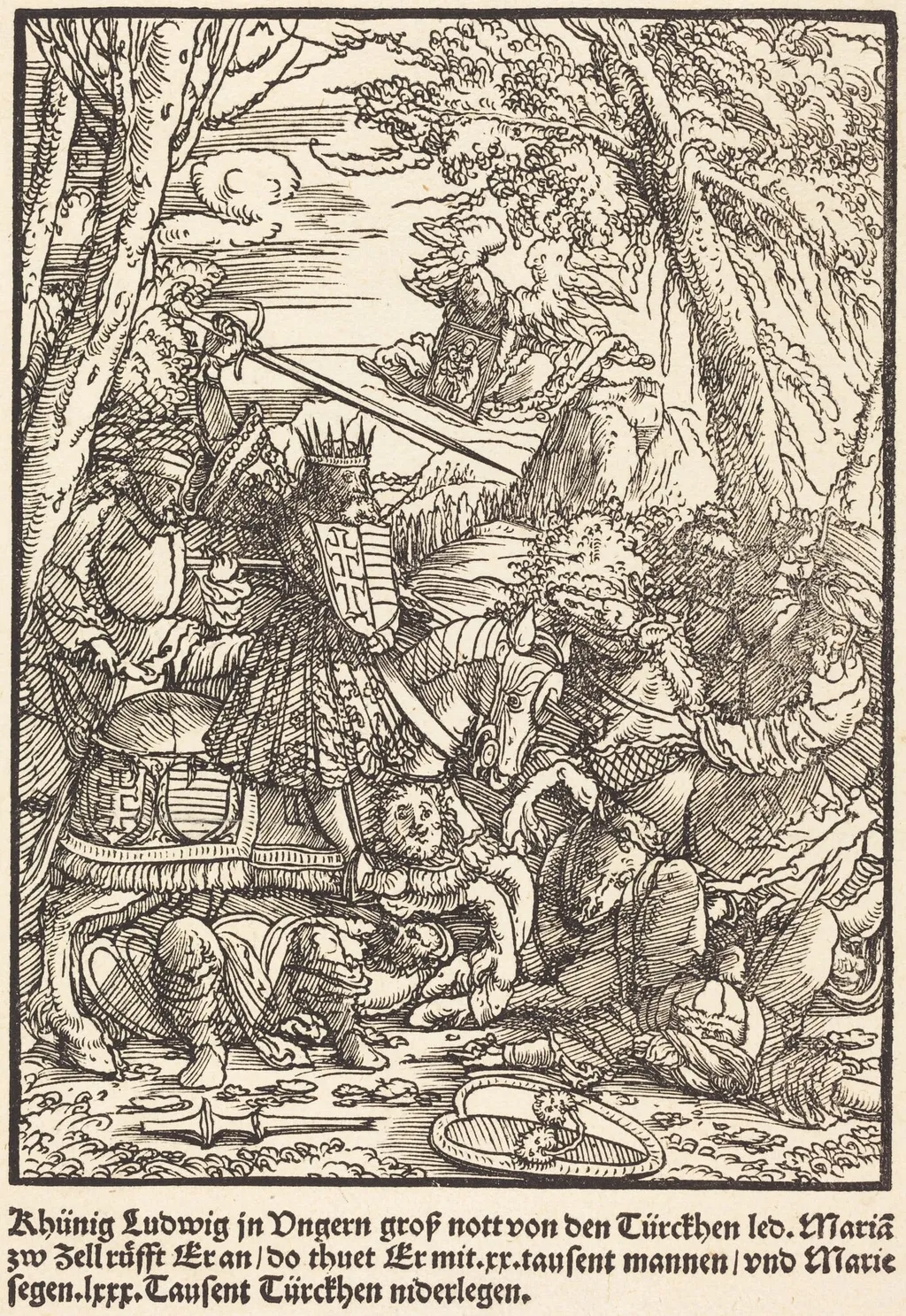
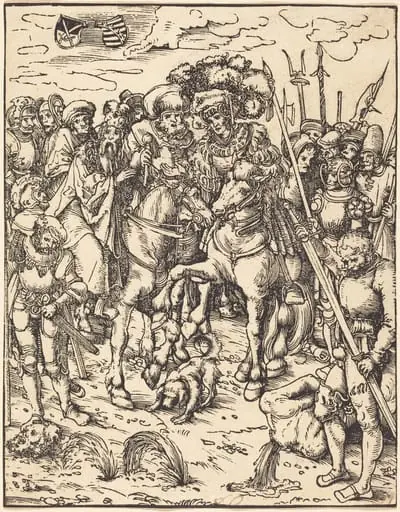
Khunig Ludwig ... is an ink print by the Renaissance artist Master of the Miracles of Mariazell. It dates from 1503 and is held in the collection of the National Gallery of Art.
About this work
Overview
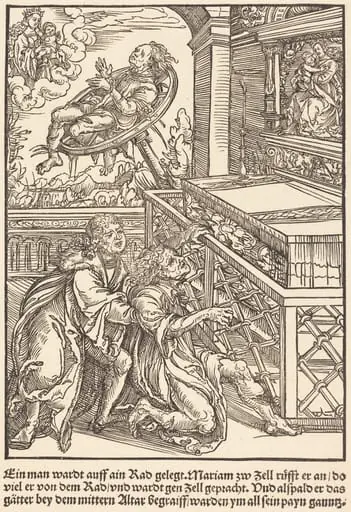
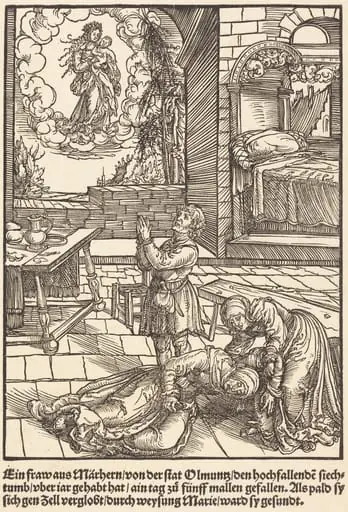
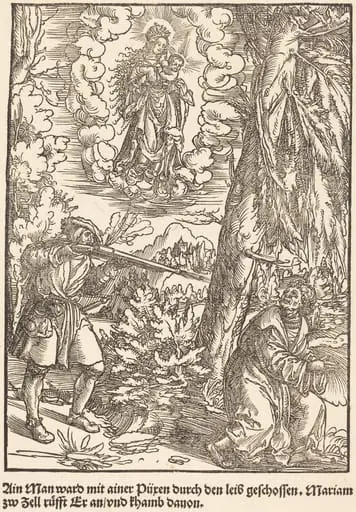
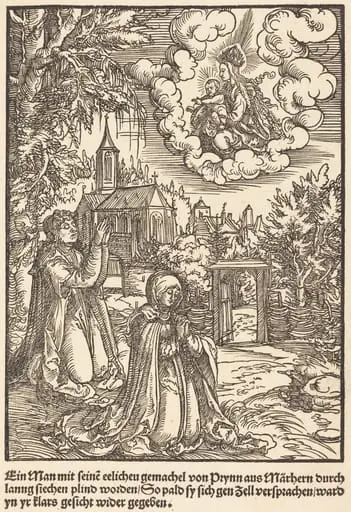
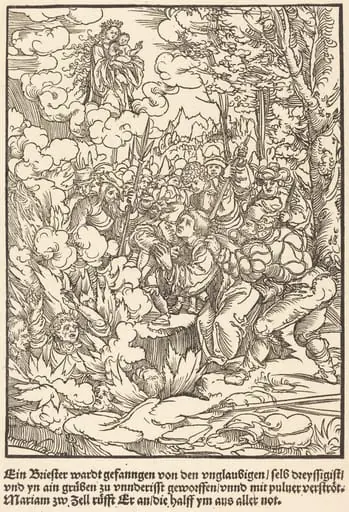
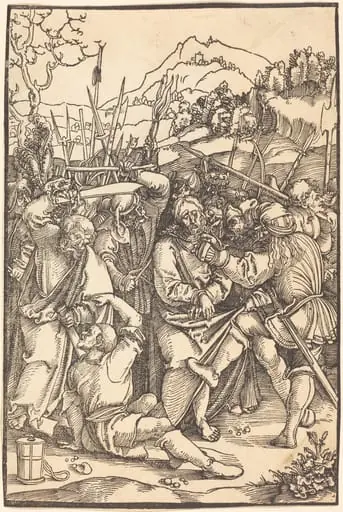
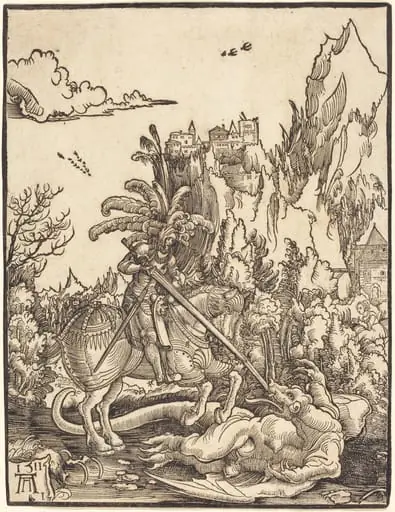
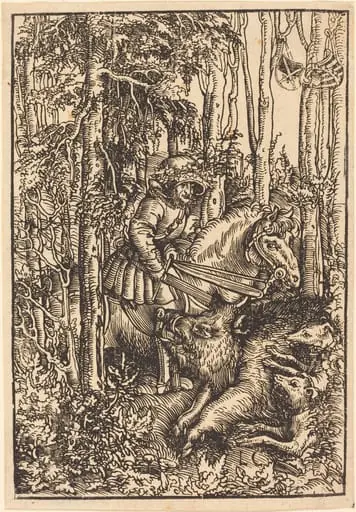
Created around 1503, this woodcut on laid paper is attributed to the anonymous Master of the Miracles of Mariazell. Executed as a print, the work presents a densely populated black‑and‑white tableau that captures a moment of intense military activity.
Subject & Meaning
The composition depicts a fortified castle perched on a hill, surrounded by swarms of soldiers and civilians in motion. A turbulent sky looms above, while a line of archaic German text at the bottom references a clash between King Ludwig and Turkish forces, suggesting a narrative of conflict and upheaval.
Technique & Style
The artist employed the woodcut method, carving intricate details into a wooden block to produce fine lines and stark contrasts. The crowded arrangement of miniature figures and the dramatic chiaroscuro effect are characteristic of early 16th‑century Northern European printmaking.
History & Provenance
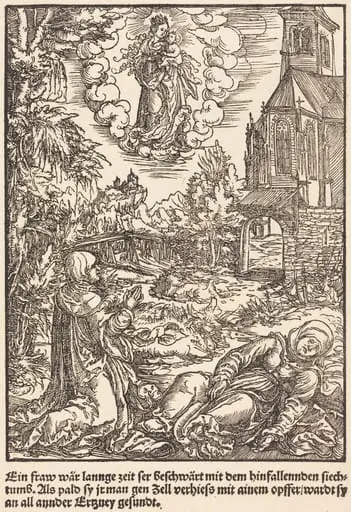
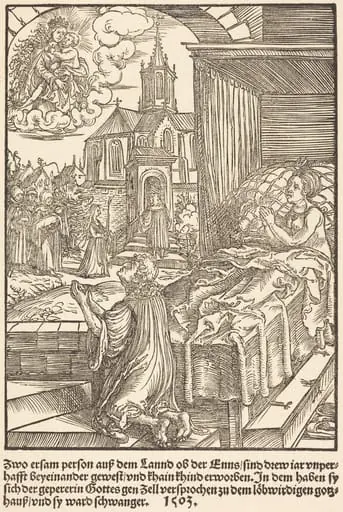
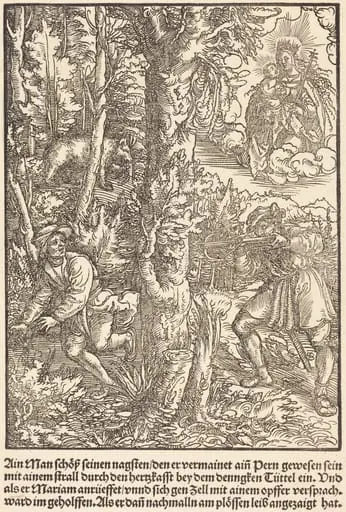
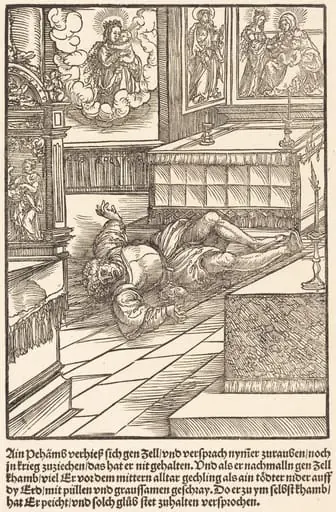
Attributed to the Master of the Miracles of Mariazell, an anonymous workshop active in the early 1500s, the print reflects the period’s interest in documenting contemporary battles. Its survival on laid paper indicates it was likely part of a larger series or pamphlet circulated in German‑speaking regions.
Context
The image aligns with a wave of visual propaganda that emerged during the Ottoman incursions into Central Europe. By portraying King Ludwig’s opposition to Turkish armies, the work reinforces a narrative of Christian defense prevalent in early‑modern German art.
Artist & collection

Artist
Master of the Miracles of Mariazell
Master of the Miracles of Mariazell (1500–1503) was an artist.