Artwork
Iupiter (Jupiter)
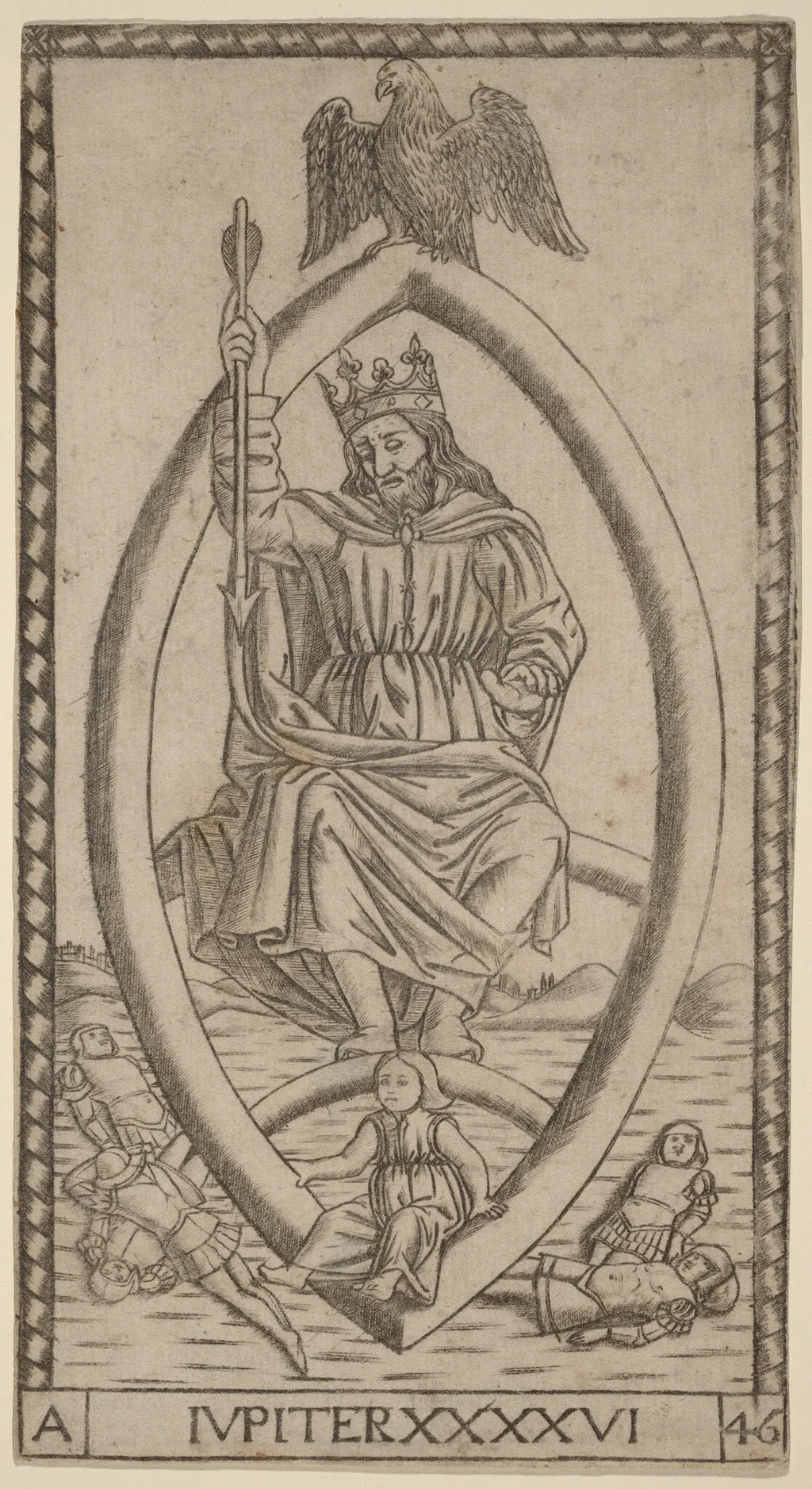
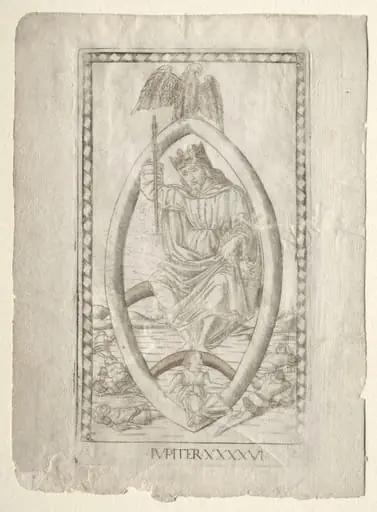
Iupiter (Jupiter) is an ink print by the Renaissance artist Master of the S-Series Tarocchi. It dates from 1470 and is held in the collection of the National Gallery of Art. Created around 1470, this copperplate engraving is attributed to the anonymous Master of the S‑Series Tarocchi.
About this work
Overview
Created around 1470, this copperplate engraving is attributed to the anonymous Master of the S‑Series Tarocchi. It presents a seated, bearded figure crowned and holding a staff, identified as the Roman god Jupiter. The composition is enclosed by a decorative border populated with miniature human and animal motifs.
Subject & Meaning
The central figure’s solemn expression, regal crown, and scepter convey authority, while the soaring eagle above reinforces Jupiter’s role as a sky deity and symbol of power. The three diminutive figures at the god’s feet—two kneeling and one recumbent—suggest subjects or supplicants under his dominion.
Technique & Style
Executed in fine line engraving, the work demonstrates the meticulous incising characteristic of late‑15th‑century Northern European printmaking. The artist achieves depth through cross‑hatching and varied line weight, rendering textures on the throne, drapery, and the intricate border.
History & Provenance
The print is part of the S‑Series Tarocchi group, a series of allegorical images produced by a single workshop in the late medieval period. Its attribution to the Master of the S‑Series Tarocchi rests on stylistic parallels with other plates in the series, though the artist’s identity remains unknown.
Context
During the late Gothic era, allegorical representations of classical deities were common in didactic and decorative art. This engraving reflects the period’s interest in merging medieval symbolism with revived classical themes, serving both instructional and ornamental purposes.
Legacy
The image contributes to the corpus of early European printmaking that disseminated classical iconography beyond elite circles, influencing later Renaissance depictions of mythological subjects.
Artist & collection