Artwork
Saturn
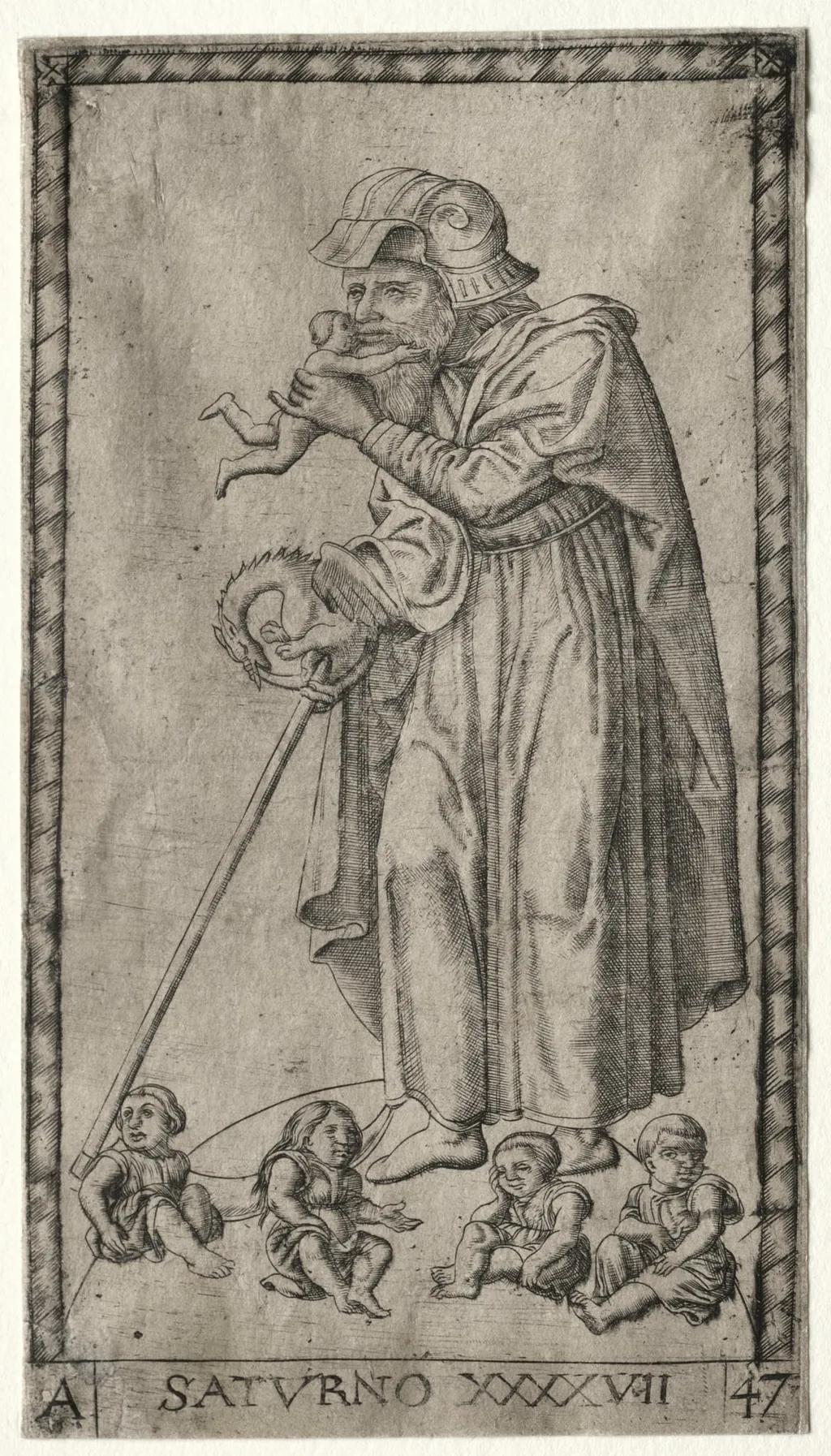
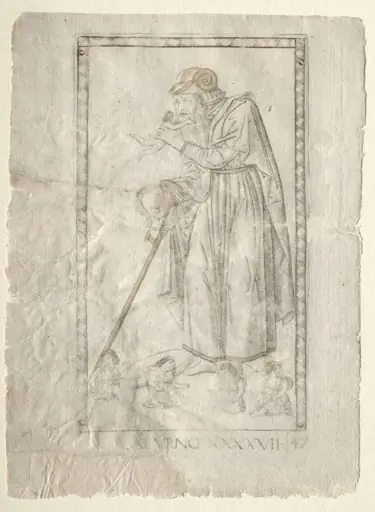
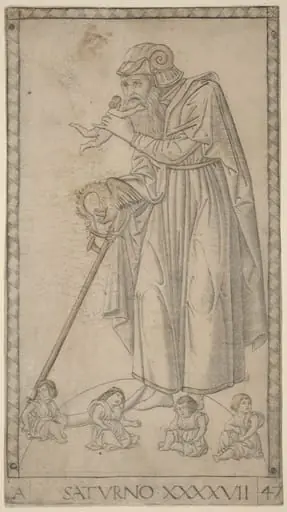
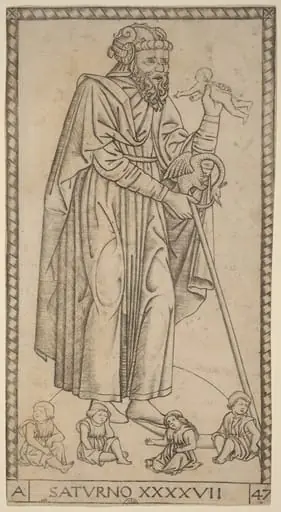
Saturn is a print by the Renaissance artist Johannes Ladenspelder. It dates from 1547 and is held in the collection of the Cleveland Museum of Art.
About this work
Overview
His work emerged during the Northern Renaissance, a time when printmaking flourished and classical mythology was reinterpreted for contemporary audiences.
Johannes Ladenspelder, a German engraver active in the mid-1500s, produced the print *Saturn* in 1547. His work emerged during the Northern Renaissance, a time when printmaking flourished and classical mythology was reinterpreted for contemporary audiences. Ladenspelder is known for his precise line work and engagement with symbolic imagery, often adapting existing iconographic traditions into original compositions.
Subject & Meaning
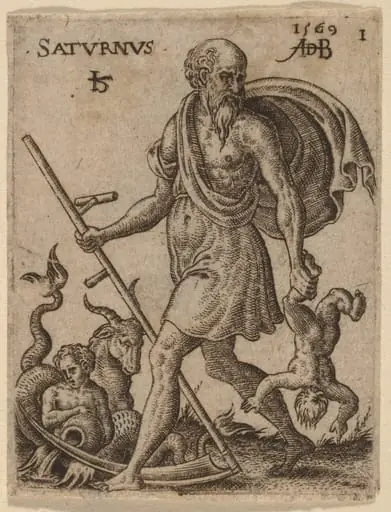
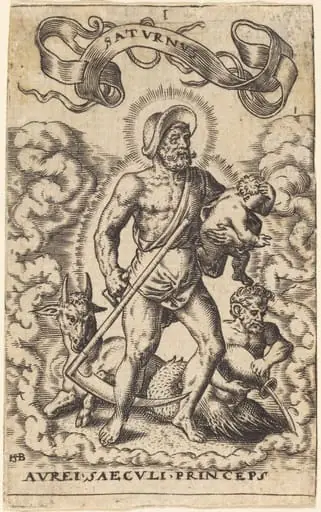
The figure represents Saturn, the Roman god of time and agriculture, depicted here as a solemn, hooded man holding a scythe and a child. The presence of four smaller figures at his feet suggests the passage of generations or the inevitability of fate. The scythe, a tool of harvest and severance, reinforces Saturn’s dual association with fertility and destruction, reflecting Renaissance anxieties about time’s relentless advance.
Technique & Style
Ladenspelder employed fine-line engraving to render texture and volume with remarkable clarity. The heavy folds of Saturn’s robe, the delicate rendering of the children’s postures, and the atmospheric depth of the background demonstrate technical precision. The composition is tightly controlled, with the central figure dominating a shallow, stage-like space, typical of Northern Renaissance printmaking’s emphasis on detail and narrative clarity.
History & Provenance
Created in 1547, the print likely circulated among educated patrons familiar with classical myth and humanist thought. While no early ownership records are widely documented, Ladenspelder’s association with the Mantegna Tarocchi series suggests he worked within networks of printmakers disseminating symbolic imagery across Europe. The print’s survival indicates its continued relevance in private collections and scholarly circles.
Context
During the Northern Renaissance, artists frequently drew from ancient mythology to explore philosophical and moral themes. Saturn’s imagery, rooted in classical tradition, was repurposed to reflect contemporary concerns about mortality, order, and cosmic cycles. Ladenspelder’s print aligns with broader trends in which mythological subjects served as vehicles for intellectual contemplation rather than mere decoration.
Legacy
Though Ladenspelder is not among the most widely recognized printmakers of his era, *Saturn* exemplifies the quiet sophistication of mid-16th-century German engraving. Its enduring presence in museum collections attests to its role as a thoughtful engagement with classical symbolism. The work contributes to the broader understanding of how mythological figures were visually codified during the Renaissance.
Artist & collection
Artist
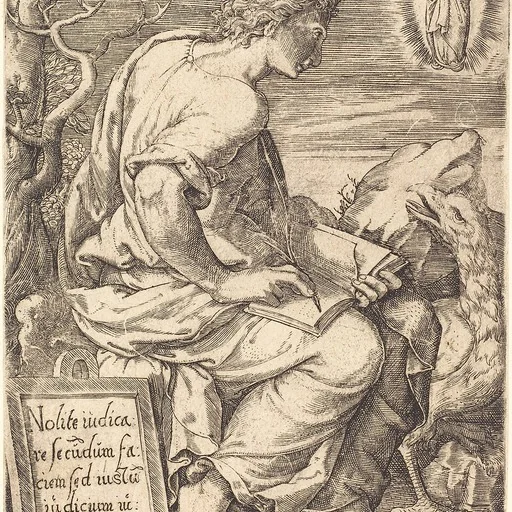
Johann (Hans) Ladenspelder (born Essen, 1512 - died after 1574) (aka Hans of Essen) was a German printmaker and engraver.