Artwork
De HH. Elizabeth van Hongarije, Catharina van Alexandrië en Dorothea
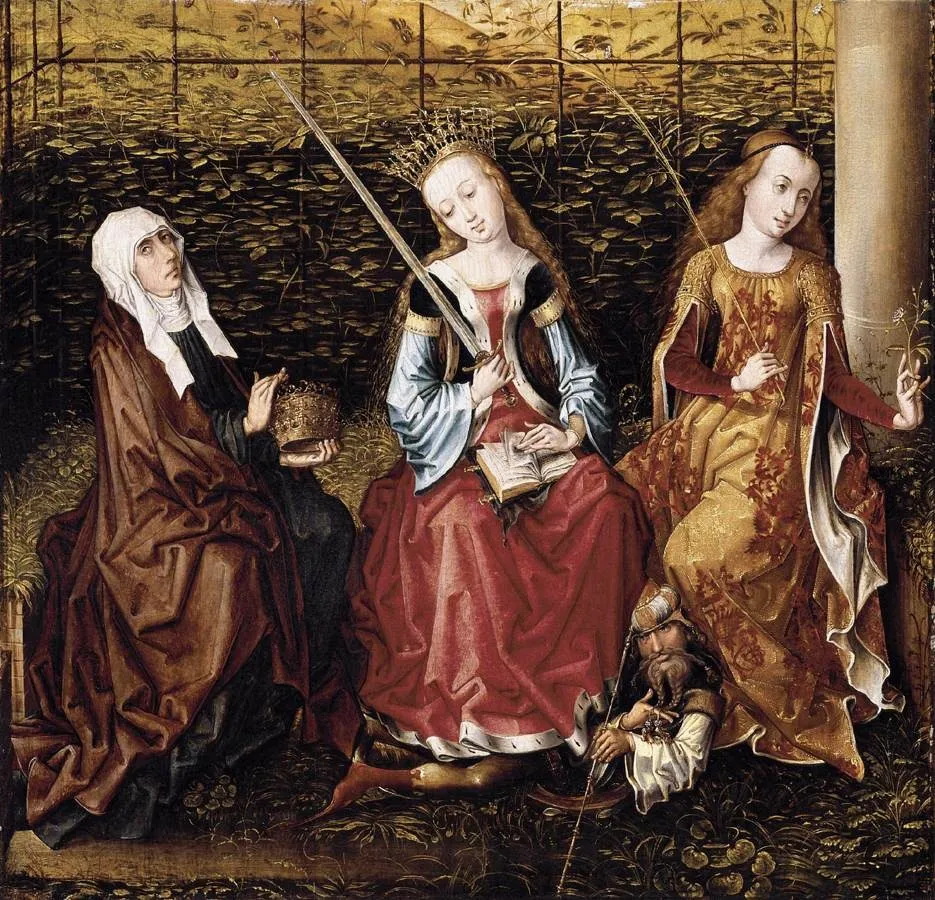
De HH. Elizabeth van Hongarije, Catharina van Alexandrië en Dorothea is an oil painting by the Northern Renaissance artist Master of the View of Saint Gudula. It dates from 1494 and is held in the collection of the Metropolitan Museum of Art.
About this work
Overview
It is part of the collection at The Metropolitan Museum of Art, where it remains a quiet example of late 15th-century religious portraiture.
Painted in 1494, this oil-on-panel work features three Christian saints—Elizabeth of Hungary, Catherine of Alexandria, and Dorothy of Caesarea—alongside a kneeling donor. Attributed to the Master of the View of Saint Gudula, an anonymous artist active in Brussels, the painting reflects the devotional traditions of the Northern Renaissance. It is part of the collection at The Metropolitan Museum of Art, where it remains a quiet example of late 15th-century religious portraiture.
Subject & Meaning
The three saints are identified by their traditional attributes: Elizabeth holds a crown, symbolizing her royal piety; Catherine grips a sword and book, representing her martyrdom and scholarly faith; Dorothy carries a basket of roses, a miracle tied to her legend. The kneeling man, likely the patron who commissioned the piece, presents himself in armor, invoking divine intercession. The composition reinforces the spiritual hierarchy between earthly devotion and heavenly grace.
Technique & Style
Oil paint allows for meticulous detail in fabric textures, foliage, and the metallic sheen of armor. The figures are arranged in a shallow, garden-like space with a trellised background, blending naturalism with symbolic stillness. Facial expressions are restrained, and lighting is even, avoiding dramatic contrast. This approach reflects the Northern Renaissance emphasis on quiet reverence and material precision over emotional intensity.
History & Provenance
The painting’s early history is undocumented, but its style and technique align with Brussels-based workshops of the 1490s. It entered The Metropolitan Museum of Art’s collection in the 20th century, likely through a private acquisition. The artist, known only by the name derived from another work, remains unidentified, a common condition for many Netherlandish painters of the period whose names were lost to time.
Context
In late 15th-century Brussels, devotional triptychs and panel paintings of saints were common in private chapels and civic churches. This work fits within a tradition of donor portraits paired with intercessory saints, reflecting both personal piety and social status. The inclusion of armor suggests the patron was a nobleman or knight, seeking spiritual protection through the saints’ intercession.
Legacy
Though not widely exhibited, the painting contributes to the understanding of anonymous Netherlandish artists who operated within established iconographic frameworks. Its preservation allows scholars to study regional variations in saintly representation and the role of lay patrons in shaping religious imagery. It stands as a modest but significant artifact of late medieval devotional culture.
Artist & collection
Artist
Master of the View of Saint Gudula
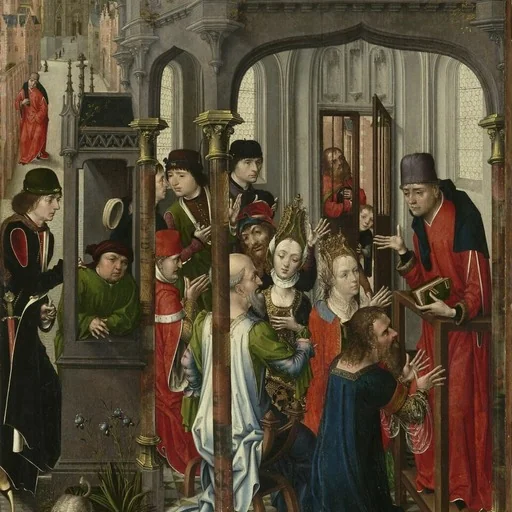
The Master of the View of Saint Gudula (active 1480 – 1499), was an Early Netherlandish painter active in Brussels in the last quarter of the 15th century.

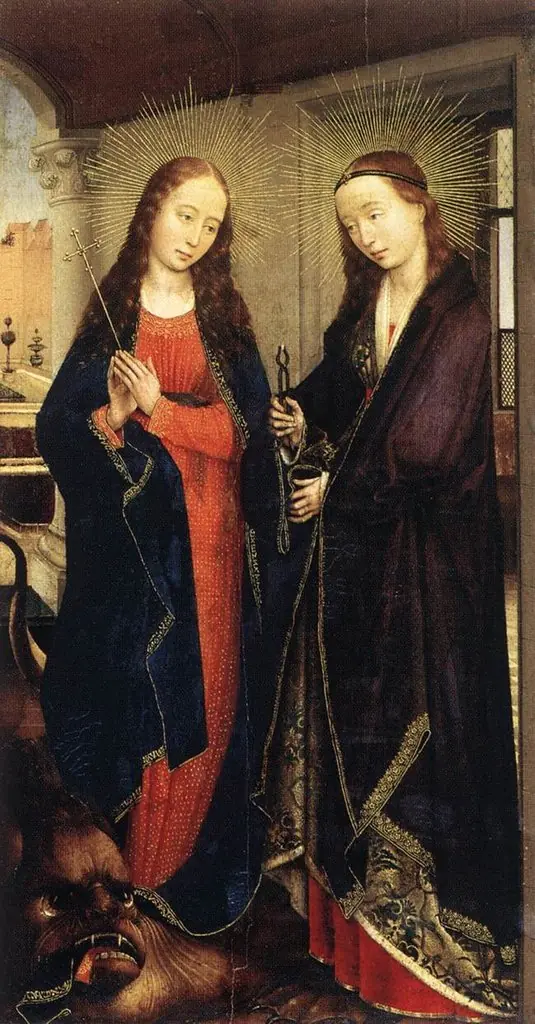 Saint Margaret and Saint Apollonia
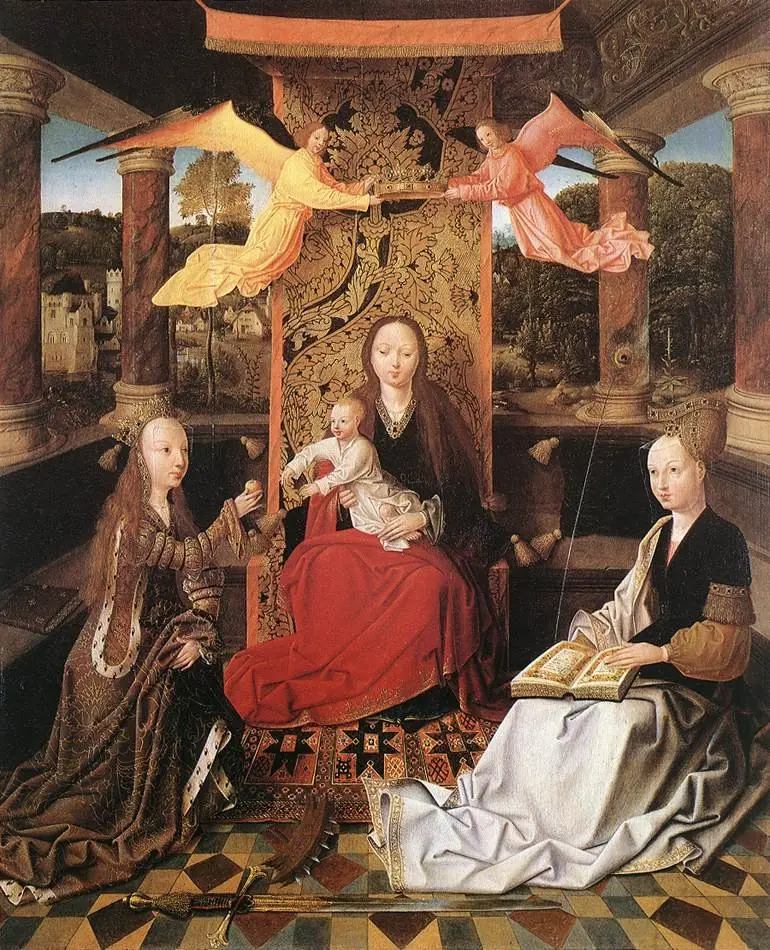 Madonna and Child with Sts Catherine and Barbara
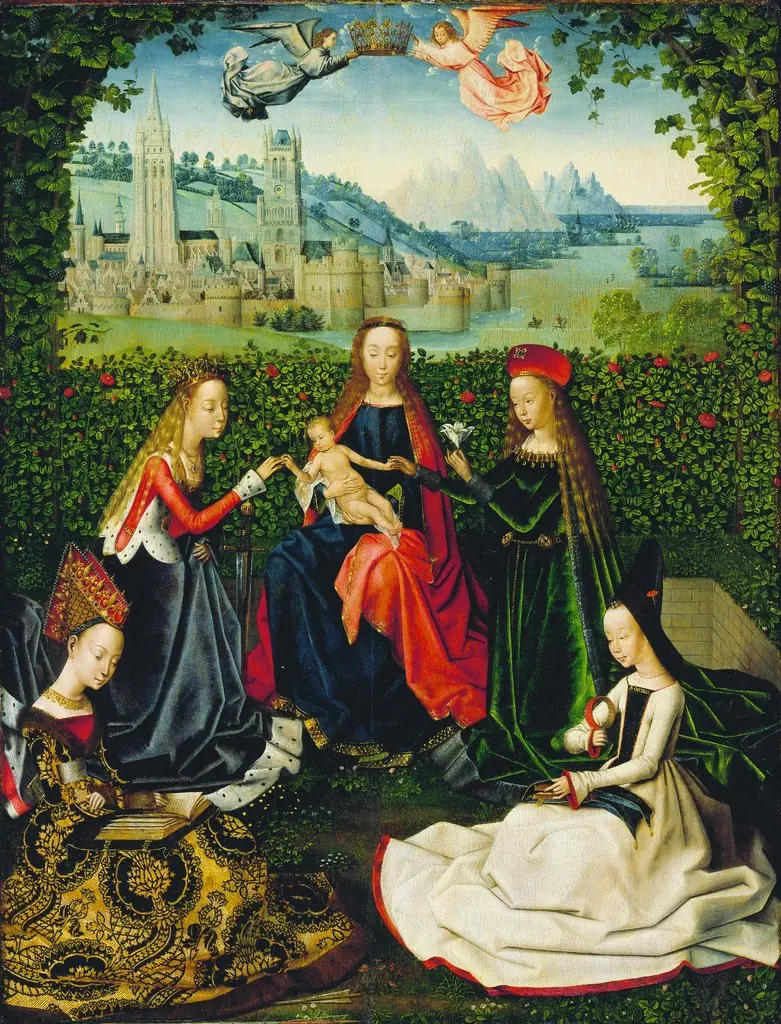 Virgin of the Rose Garden
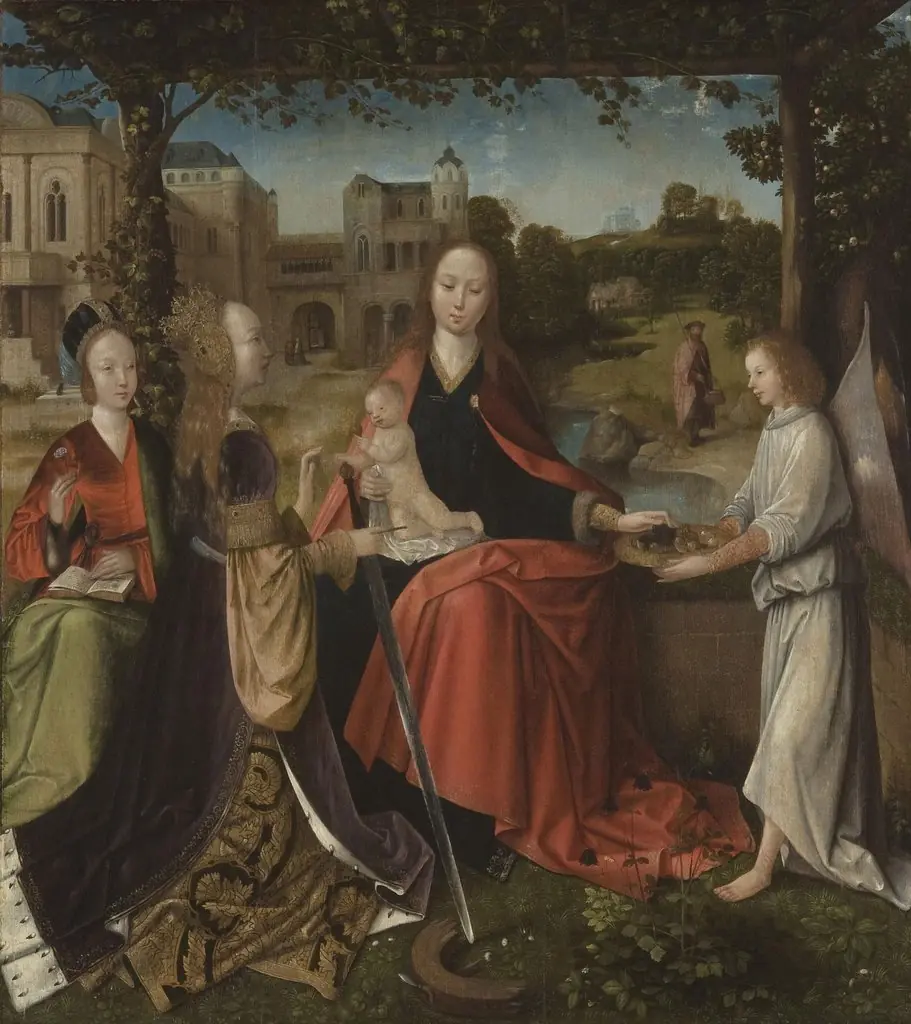 Virgin and Child, with Saint Catherine of Alexandria, a Female Saint, and an Angel
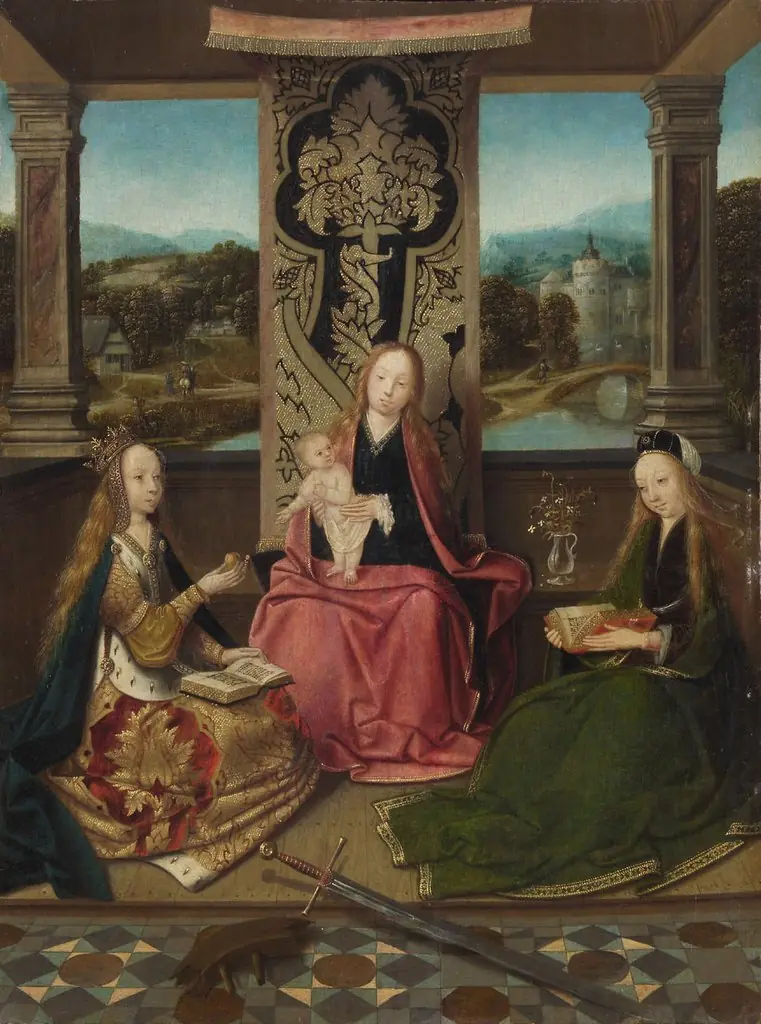 Madonna and Child with Saints Catherine and Barbara
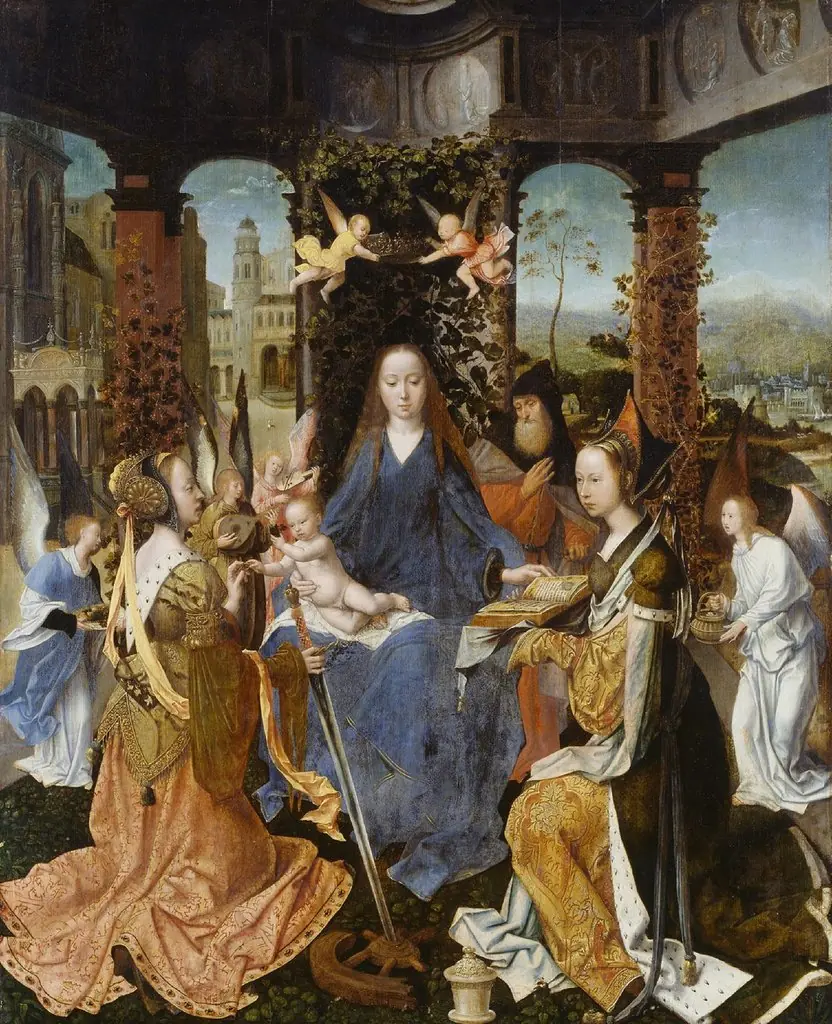 The mystic marriage of Saint Catherine
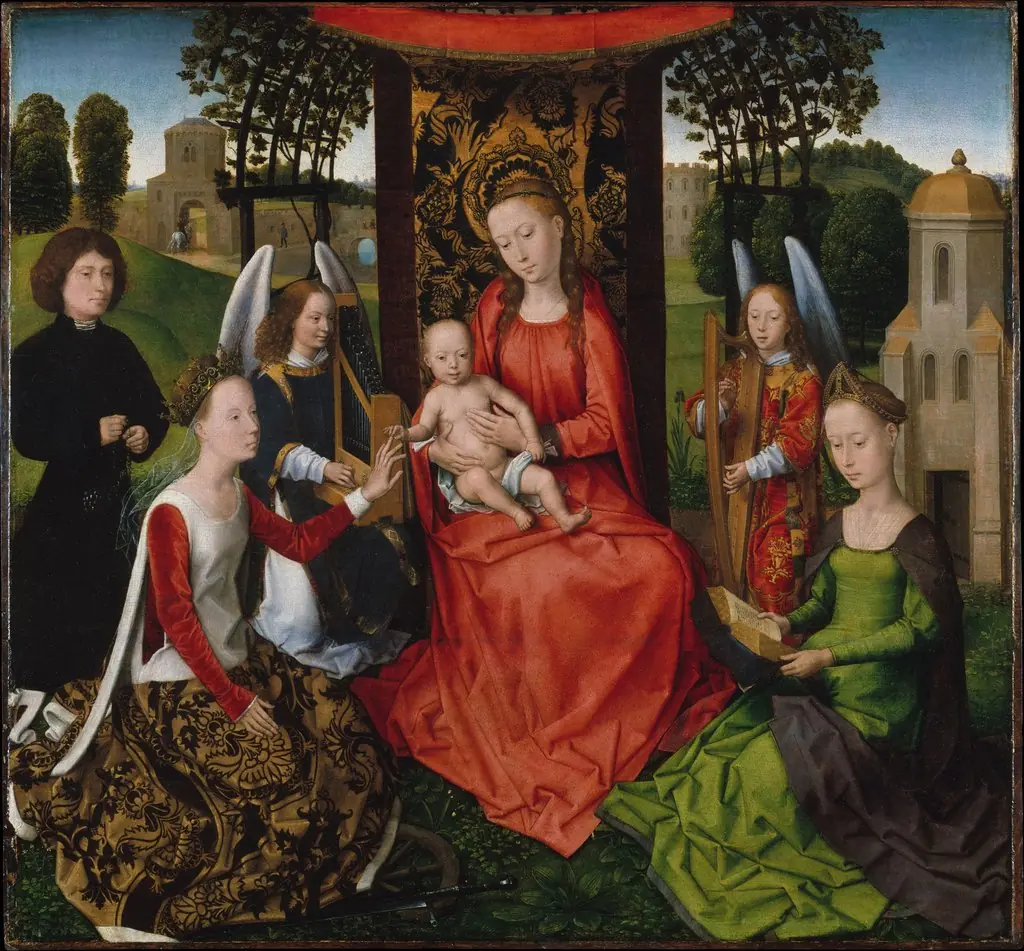 Virgin and Child with Saints Catherine of Alexandria and Barbara
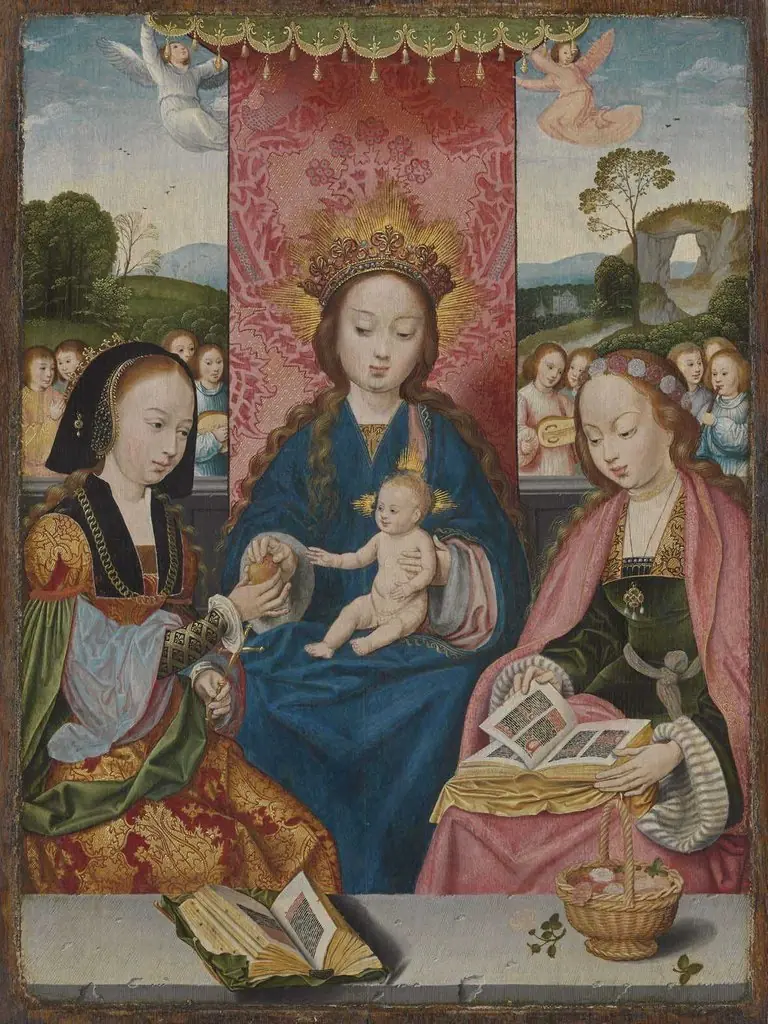 Virgin and Child with Saint Margaret and Dorothy and angels playing music
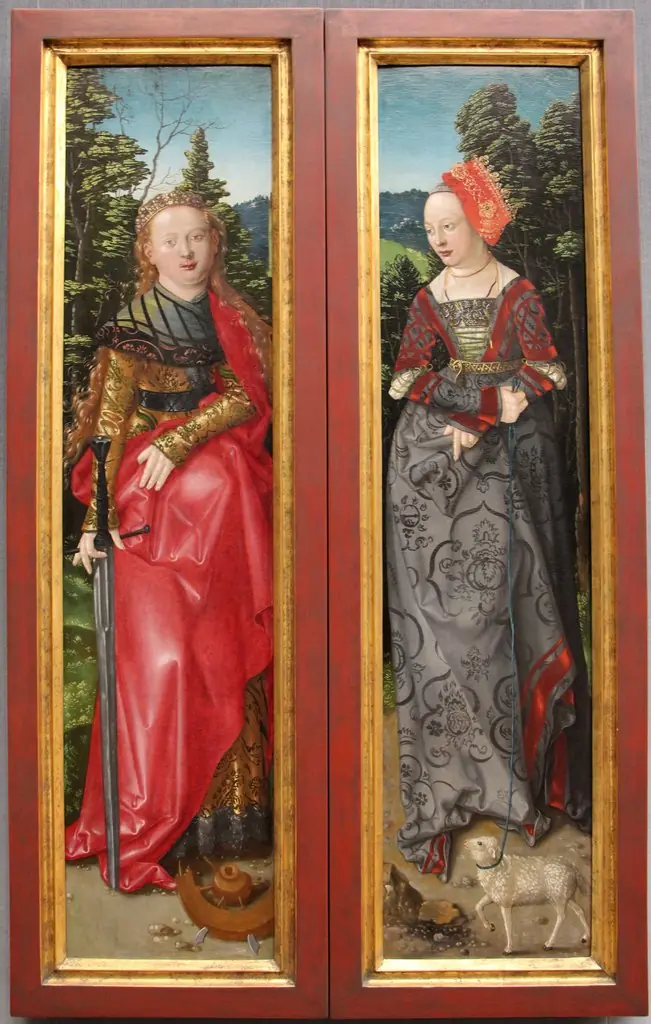 Der Dreikönigsaltar Außentafeln: Die Heiligen Katharina und Agnes
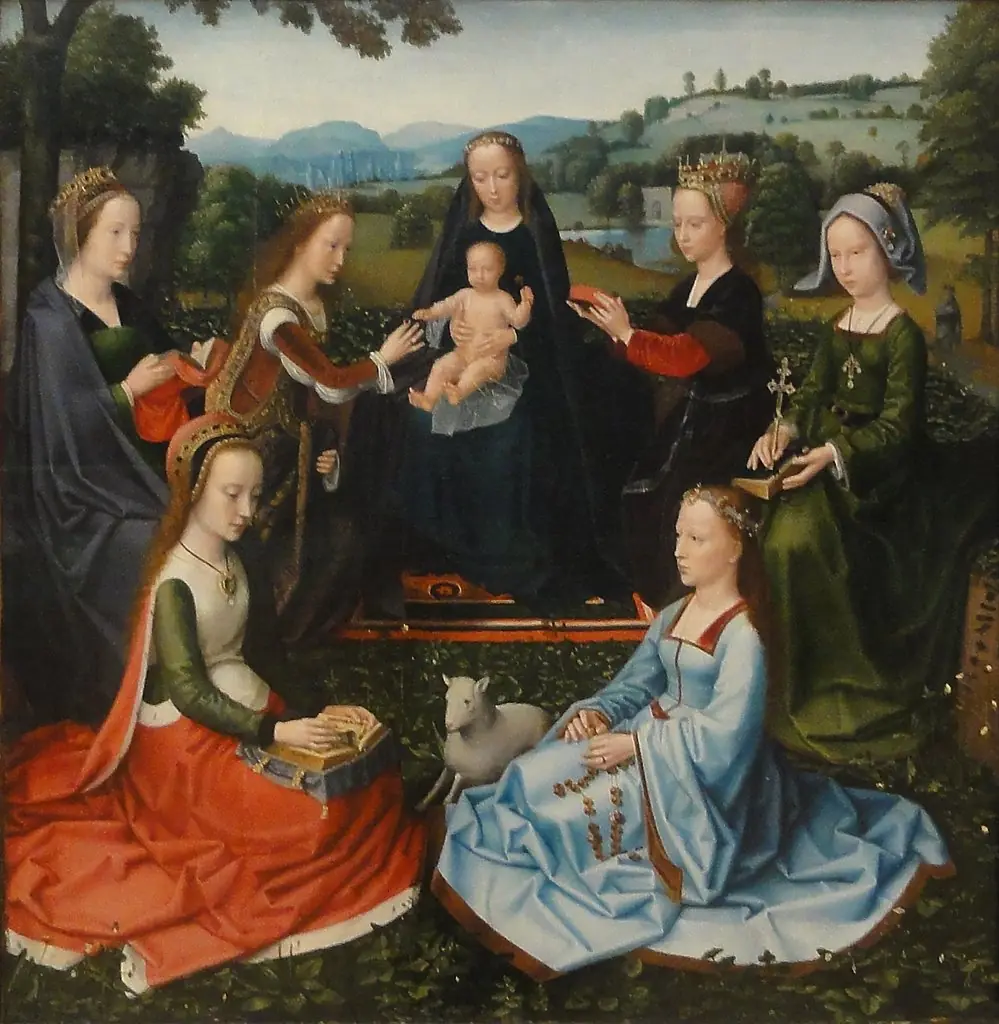 Madonna with Female Saint
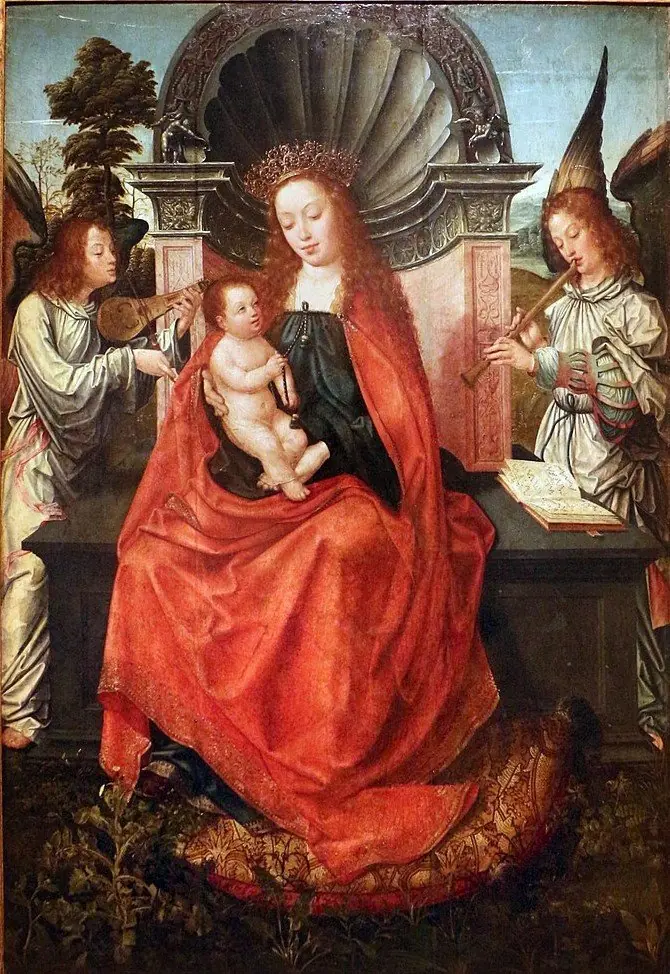 A Virgem Maria e o Menino Jesus com Anjos
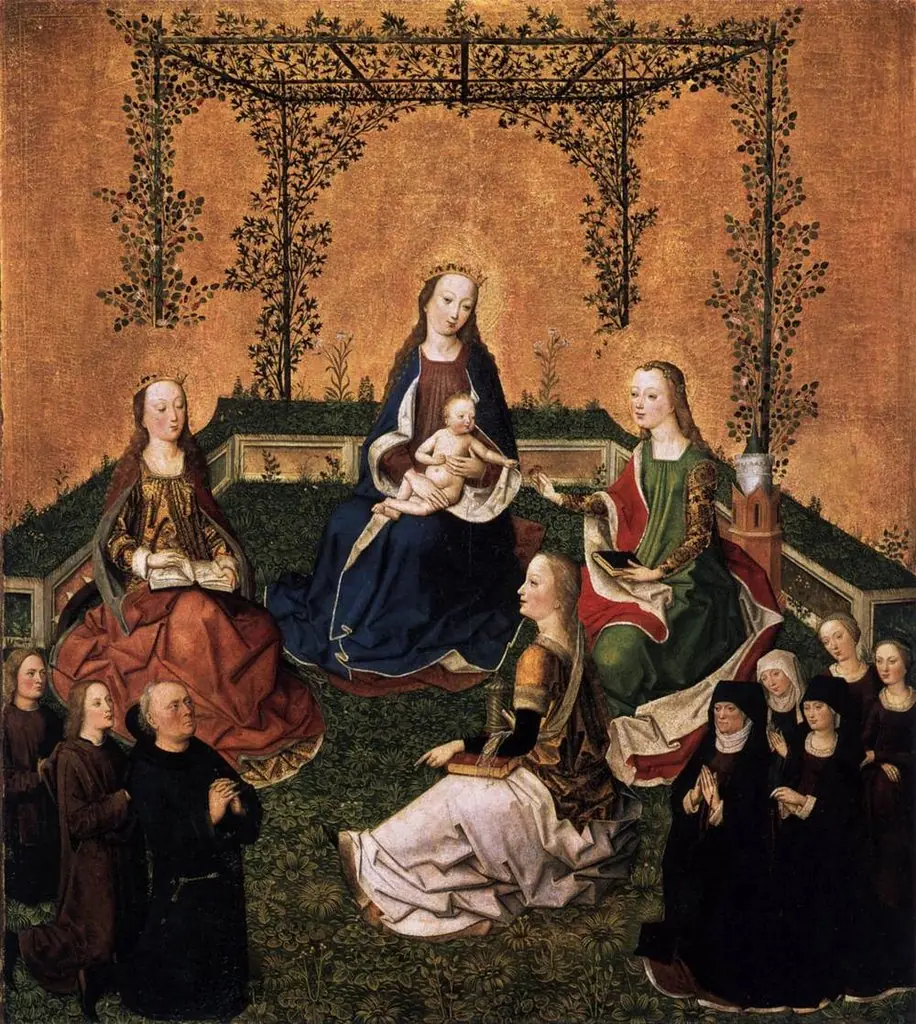 Virgin and Child with Three Saints