Artwork
Hercules and Antaeus
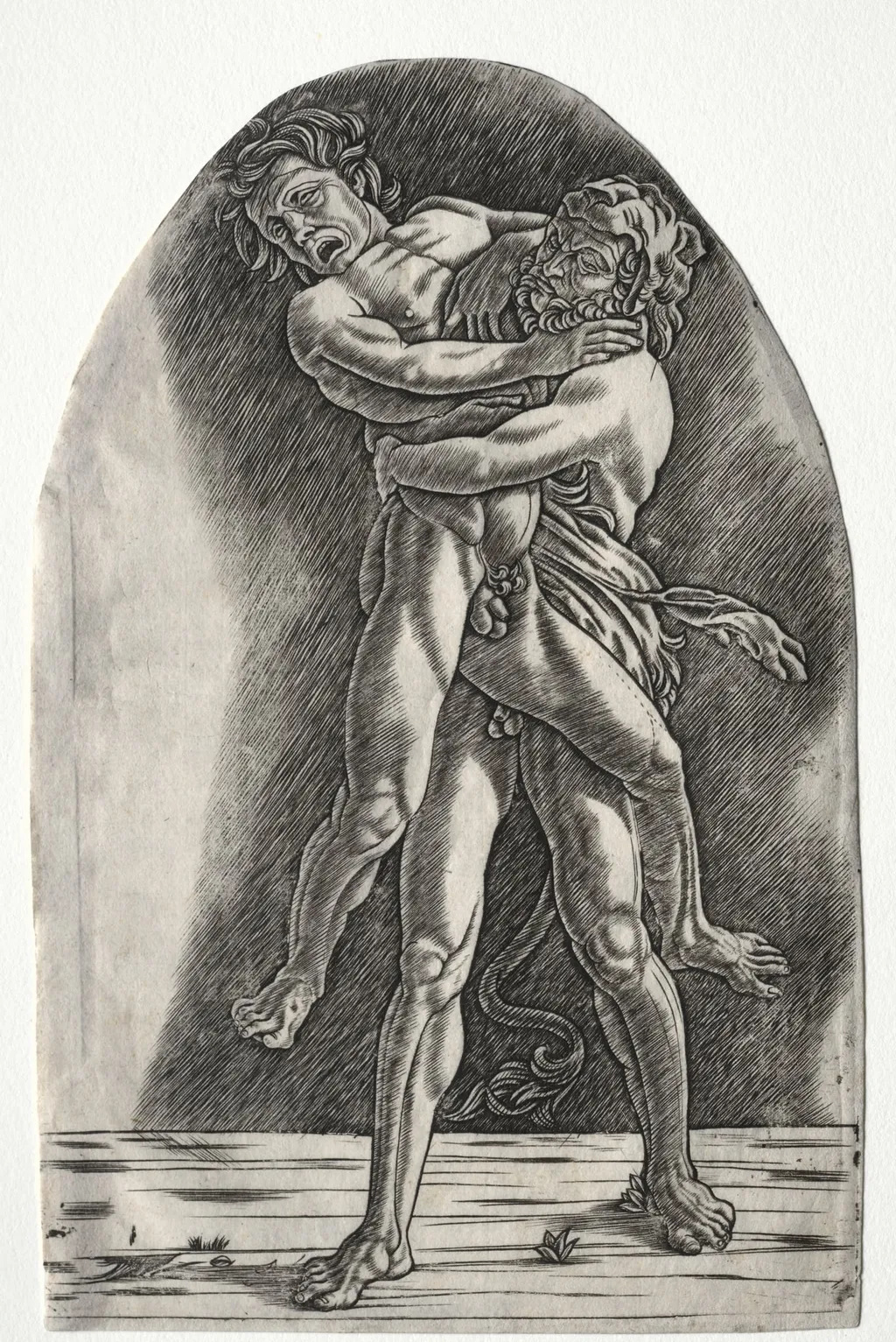
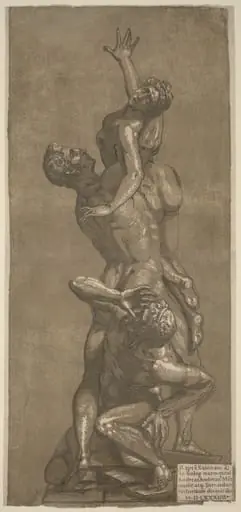
Hercules and Antaeus is a print by the Renaissance artist Master of the Year 1515. It dates from 1510 and is held in the collection of the Cleveland Museum of Art.
About this work
Overview
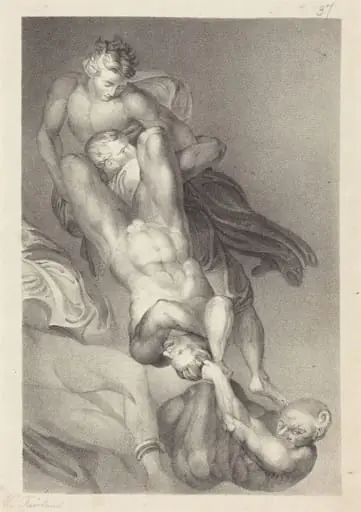
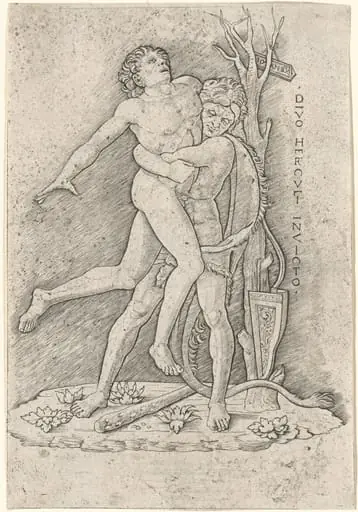
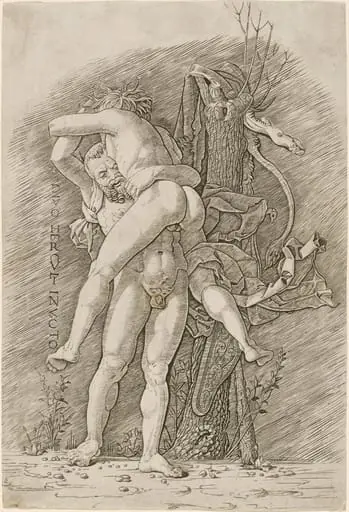
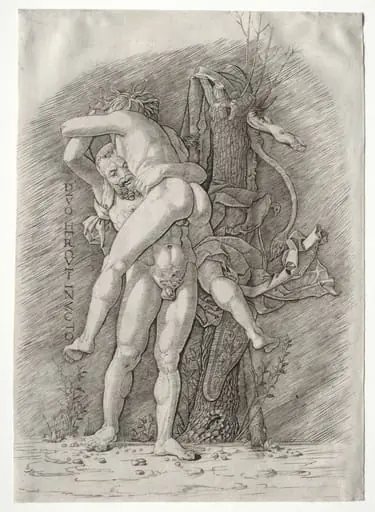
Created around 1510, this woodcut by the artist known as the Master of the Year 1515 depicts a moment from Greek myth: Hercules grappling with Antaeus.
Created around 1510, this woodcut by the artist known as the Master of the Year 1515 depicts a moment from Greek myth: Hercules grappling with Antaeus. The work is held in the collection of The Cleveland Museum of Art. Executed as a printed image, it captures the physical intensity of the struggle through bold contrasts and sculptural forms, reflecting Renaissance interests in classical themes and anatomical precision.
Subject & Meaning
The scene illustrates the myth in which Hercules defeats Antaeus, a giant who drew strength from contact with the earth. By lifting him off the ground, Hercules neutralizes his opponent’s power. The composition emphasizes physical dominance and vulnerability, translating a narrative of cunning over brute force. Both figures are rendered nude, aligning with classical ideals of heroic form and the human body as a vessel of moral and physical struggle.
Technique & Style
The artist employed deep, angular incisions to create strong chiaroscuro effects, enhancing the three-dimensionality of the muscular forms. Shadows are concentrated along limbs and torsos, defining volume without relying on fine detail. This method, common in early 16th-century German and Netherlandish printmaking, prioritizes dramatic contrast over delicate line work, giving the figures a sculptural presence suited to the medium’s limitations and strengths.
History & Provenance
The print is attributed to an anonymous artist active in the early 1500s, known only by the date inscribed on a related work. Its survival in good condition suggests it was carefully preserved, likely by collectors interested in classical subjects and Northern Renaissance prints. It entered the Cleveland Museum of Art’s collection in the 20th century, where it remains a key example of early printmaking’s engagement with mythological themes.
Context
During the early 16th century, Northern European artists increasingly turned to classical mythology as a vehicle for artistic experimentation. Woodcuts like this one circulated widely, serving both as artistic studies and as accessible images for educated audiences. The emphasis on muscular anatomy and dynamic tension reflects broader Renaissance trends, influenced by Italian art and renewed interest in ancient texts and sculpture.
Legacy
This print exemplifies how Northern artists adapted Italian Renaissance ideals to the medium of woodcut. Its bold use of shadow and form influenced later printmakers exploring the expressive potential of the medium. Though the artist’s identity remains obscure, the work stands as a testament to the period’s fascination with the human body as a site of narrative and physical drama.
Artist & collection
Artist
This anonymous Italian painter made dramatic, muscular scenes straight from ancient myths.