Artwork
Hercules and Antaeus
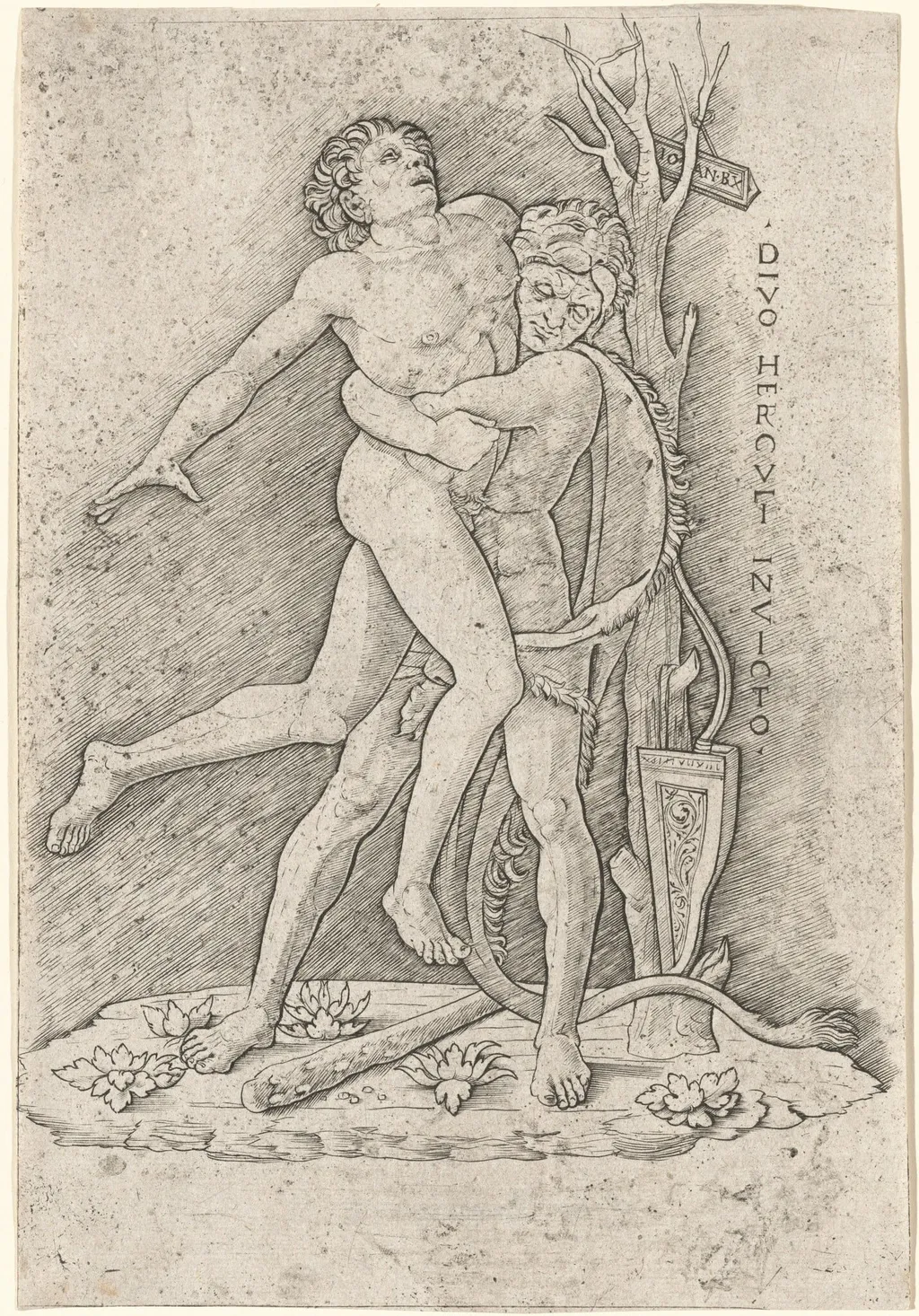
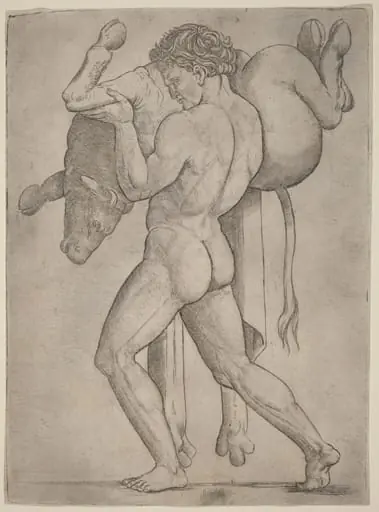
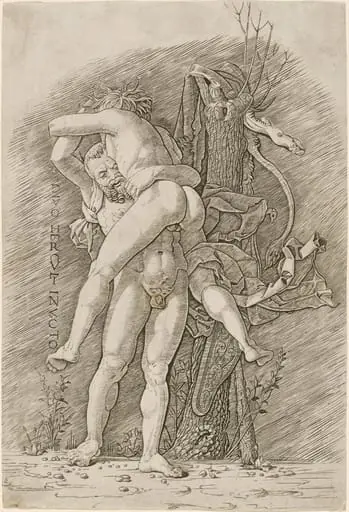
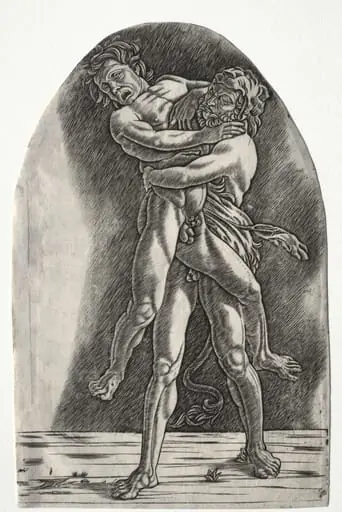
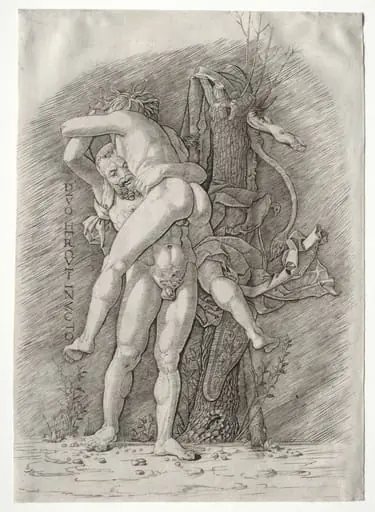
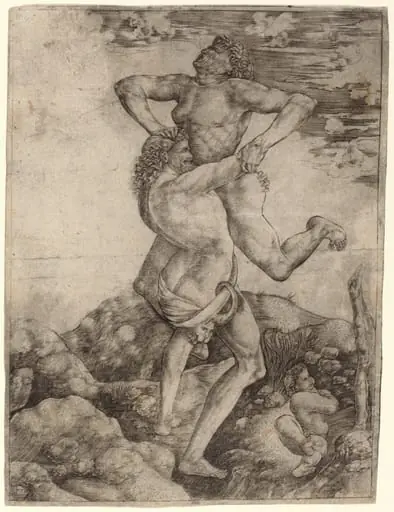
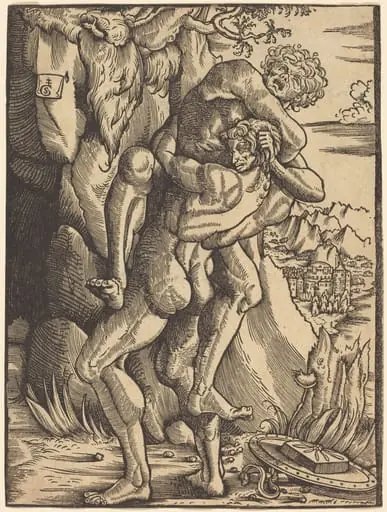
Hercules and Antaeus is an ink print by the Renaissance artist Giovanni Antonio da Brescia. It dates from 1507 and is held in the collection of the National Gallery of Art.
About this work
Overview
Hercules and Antaeus is a 1507 engraving on laid paper by Giovanni Antonio da Brescia, an Italian Renaissance artist. The work captures a dynamic scene from classical mythology, executed in intaglio.
Subject & Meaning
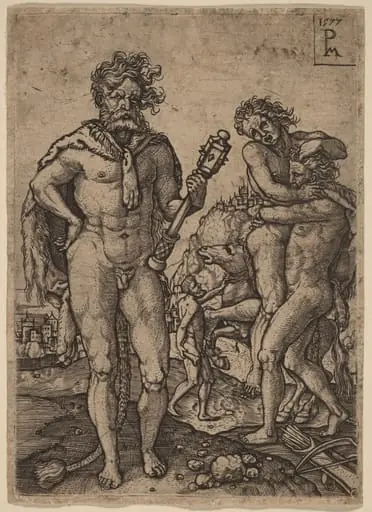
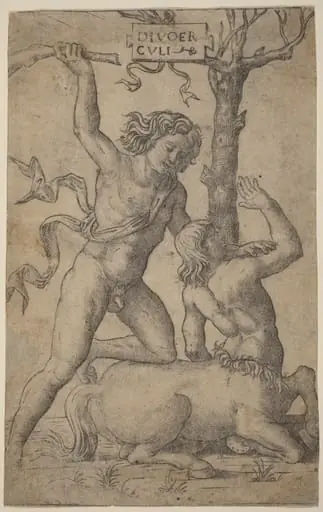
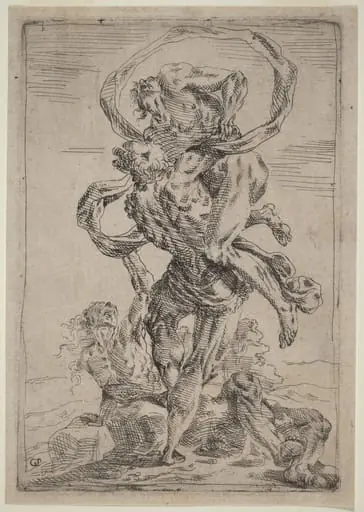
The engraving depicts a mythological struggle between Hercules and Antaeus. Hercules, the upper figure, overpowers Antaeus, who kicks and struggles with dangling feet. The composition highlights physical strength and conflict, with symbolic attributes: a club for Hercules and a shield with enigmatic symbols for Antaeus.
Technique & Style
Giovanni Antonio employed intaglio engraving, characterized by fine lines and cross-hatching to achieve depth and texture. The figures' muscularity and movement are emphasized through meticulous line work, while a subdued background of waves and flowers maintains focus on the central conflict.
History & Provenance
Created in 1507, the engraving is from the early period of Giovanni Antonio da Brescia's career, when he signed works with the initials 'Z.A.' before later adopting more elaborate signatures.
Context
Produced in northern Italy during the Italian Renaissance, Hercules and Antaeus reflects the era's fascination with classical mythology and the development of intaglio techniques in printmaking.
Artist & collection

Artist
Giovanni Antonio da Brescia was an Italian engraver of northern Italy, active in the approximate period 1490–1519, during the Italian Renaissance.