Artwork
Saint Augustine
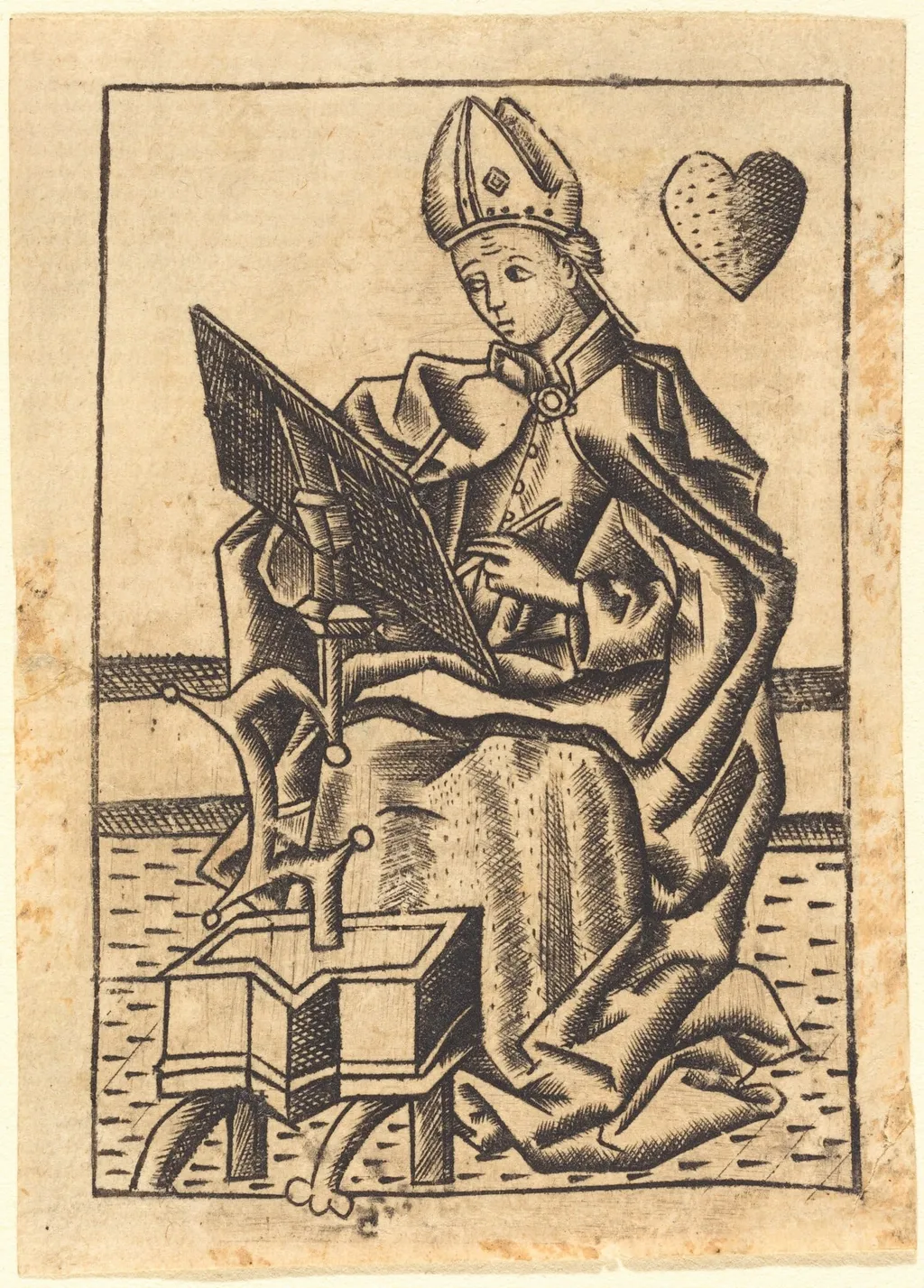
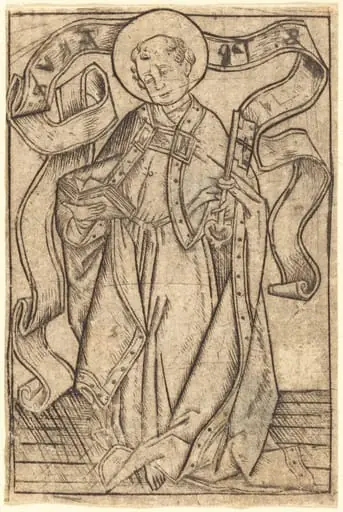
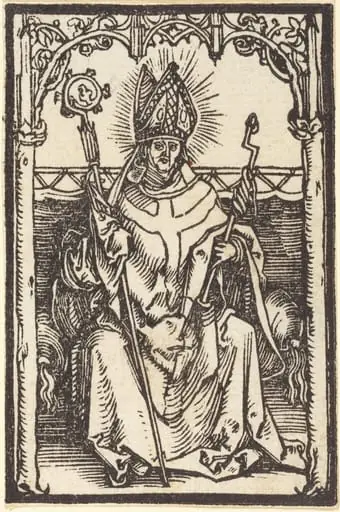
Saint Augustine is an ink print by the Renaissance artist Master with the Banderoles. It dates from 1455 and is held in the collection of the National Gallery of Art.
About this work
Overview
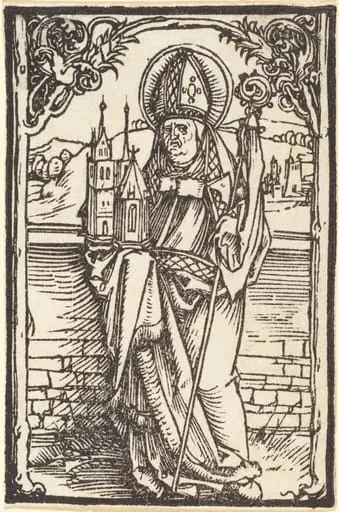
Created around 1455, this early printed engraving depicts Saint Augustine seated upon a throne-like chair. He holds an open book in one hand and a long staff in the other, while a cross‑topped mitre crowns his head and a floating heart hovers above it. The composition is set against a modest architectural backdrop with a low fence, emphasizing the saint’s solemn presence.
Subject & Meaning
The figure represents Augustine of Hippo, a pivotal theologian and bishop. The open book alludes to his extensive writings, and the staff signifies his ecclesiastical authority. The heart, a traditional symbol of devotion, underscores his role as a patron of love and conversion, reinforcing the devotional intent of the image for a medieval audience.
Technique & Style
Executed as an engraving on laid paper, the artist incised fine lines into a metal plate, producing a network of hatching that renders shadows and texture. The linear cross‑hatching gives the heavy robe a woven appearance, a hallmark of early printmaking that sought to simulate the depth of painted surfaces through line alone.
History & Provenance
Attributed to the anonymous “Master with the Banderoles,” the work belongs to a group of mid‑15th‑century prints identified by recurring decorative banners. The engraving’s date, circa 1455, places it among the first wave of European prints produced after the invention of movable type, reflecting the spread of graphic art beyond manuscript illumination.
Context
The image emerges at a time when devotional prints were increasingly used for private contemplation and instruction. By rendering a revered saint in a portable, affordable format, the engraving contributed to the wider dissemination of theological ideas among lay believers in the early Renaissance.
Artist & collection