Artwork
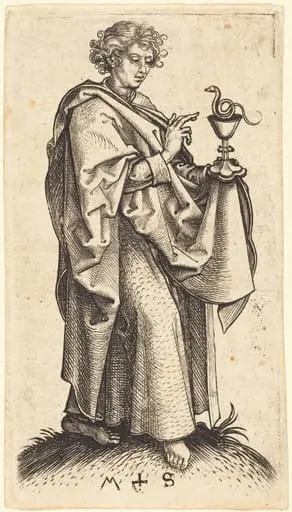
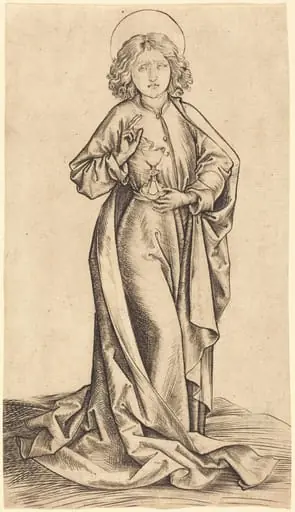
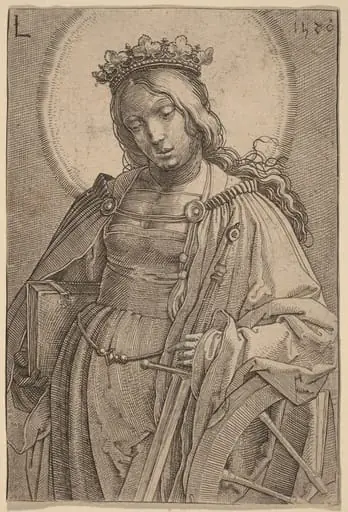
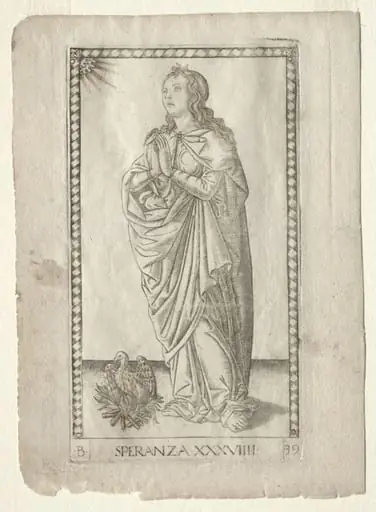
Saint John
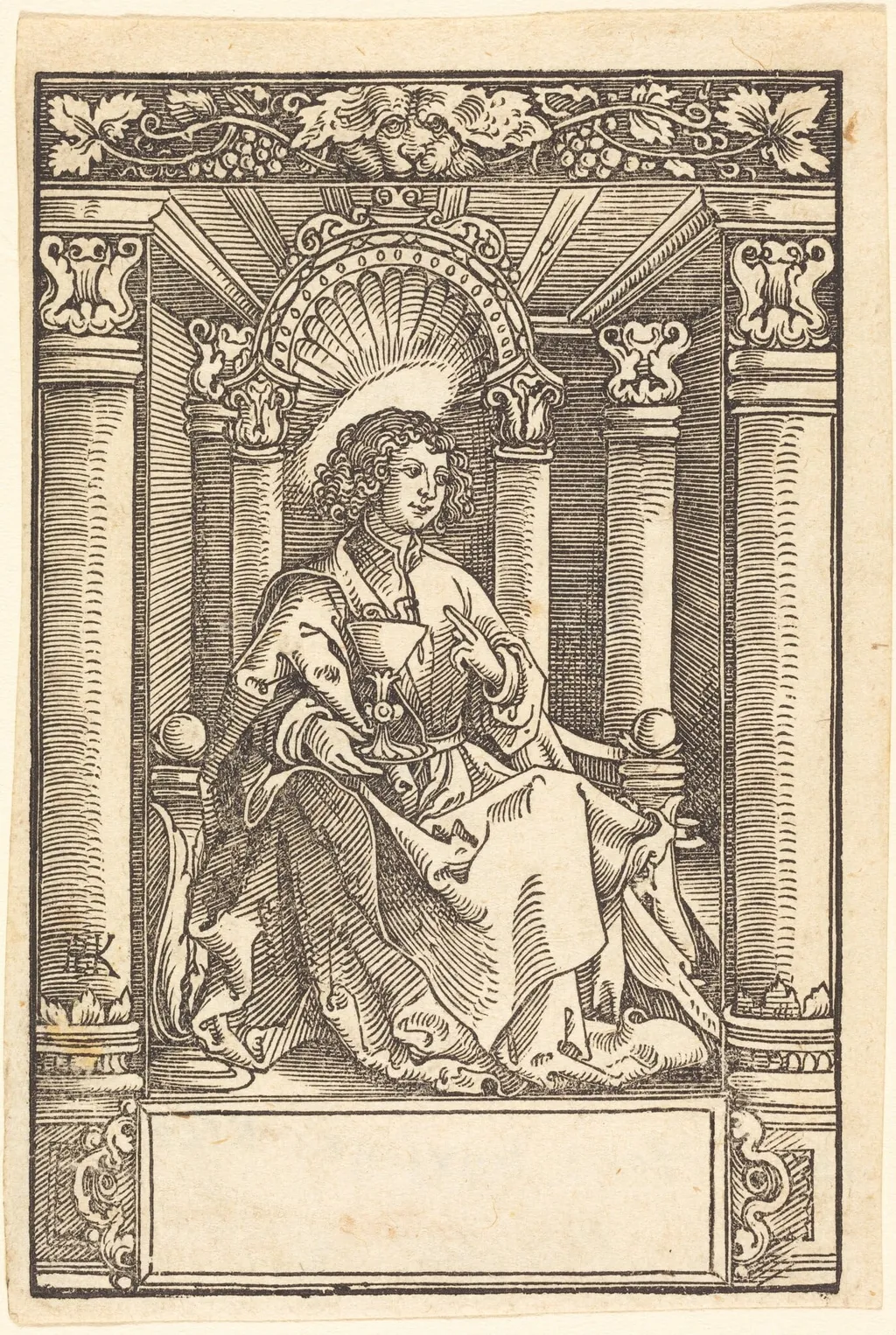
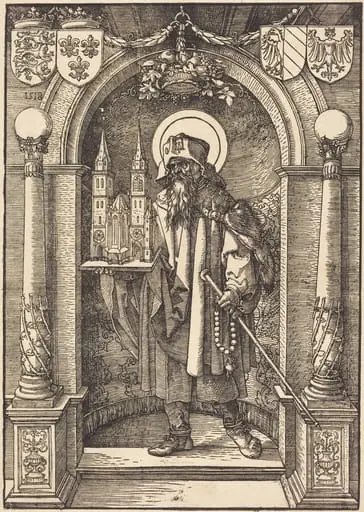
Saint John is an ink print by the Renaissance artist Hans Springinklee. It dates from 1518 and is held in the collection of the National Gallery of Art.
About this work
Overview
Saint John is a 1518 woodcut print created by Hans Springinklee, a Nuremberg-based German artist and pupil of Albrecht Dürer. This religious print exemplifies Springinklee's contribution to the Northern Renaissance through detailed woodcut techniques.
Subject & Meaning
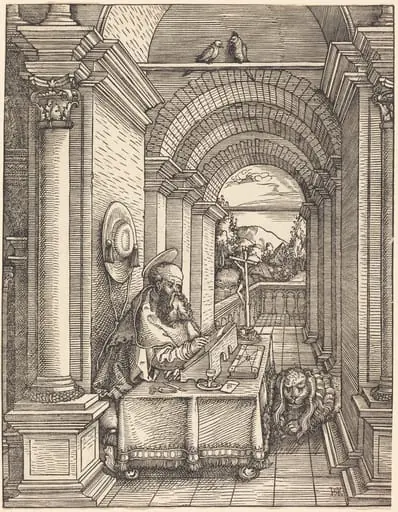
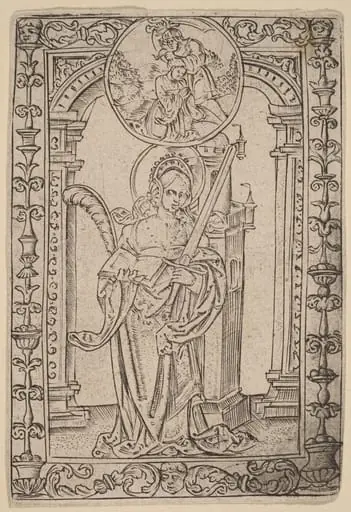
The print depicts a robed figure, identified as Saint John, kneeling on clouds, holding a book, and pointing upward towards a divine presence. Symbolic elements include a glowing halo with sunrays, emphasizing the saint's spiritual significance.
Technique & Style
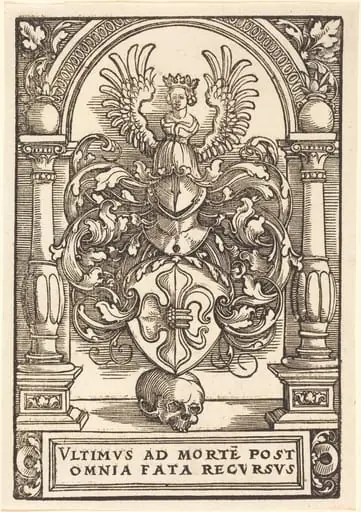
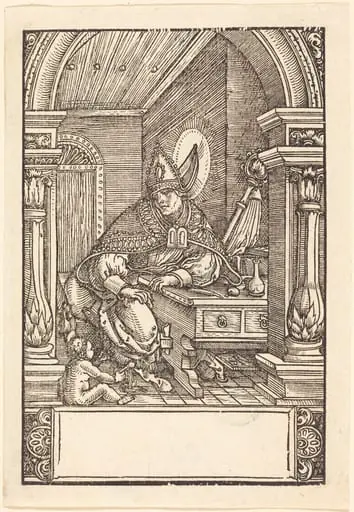
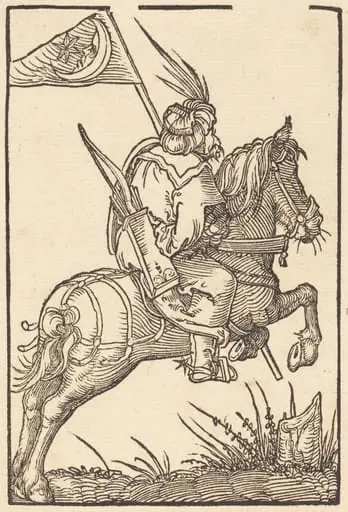
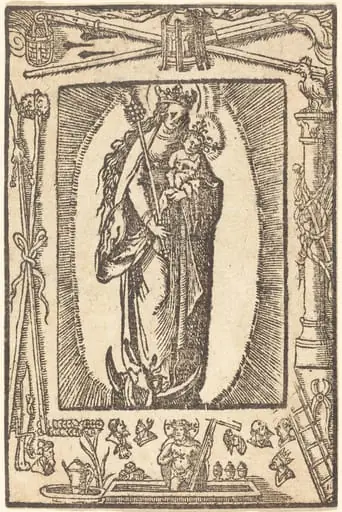
Executed in the woodcut style, the image features sharp lines and heavy black ink. The design was carved into wood, then inked and pressed onto paper. Ornate decorative patterns, including leaves, scrolls, and tiny faces, adorn the edges, showcasing the artist's meticulous craftsmanship.
History & Provenance
Created in 1518 by Hans Springinklee, a direct pupil of Albrecht Dürer, this work reflects the artistic lineage and influences of the time. Specific provenance details are not provided.
Context
Saint John was produced during the Northern Renaissance, a period characterized by intricate woodcut techniques. The piece aligns with the religious themes prevalent in the era's printmaking.
Legacy
While specific legacy details of *Saint John* are not provided, as a work by Springinklee, it contributes to the broader understanding of Northern Renaissance printmaking and the artistic traditions influenced by Dürer.
Artist & collection

Artist
Hans Springinklee (c.1490/c.1495 – c.1540) was a German artist from Nuremberg, best known for his woodcuts. He was a pupil of Albrecht Dürer.