Artwork
Saint Peter
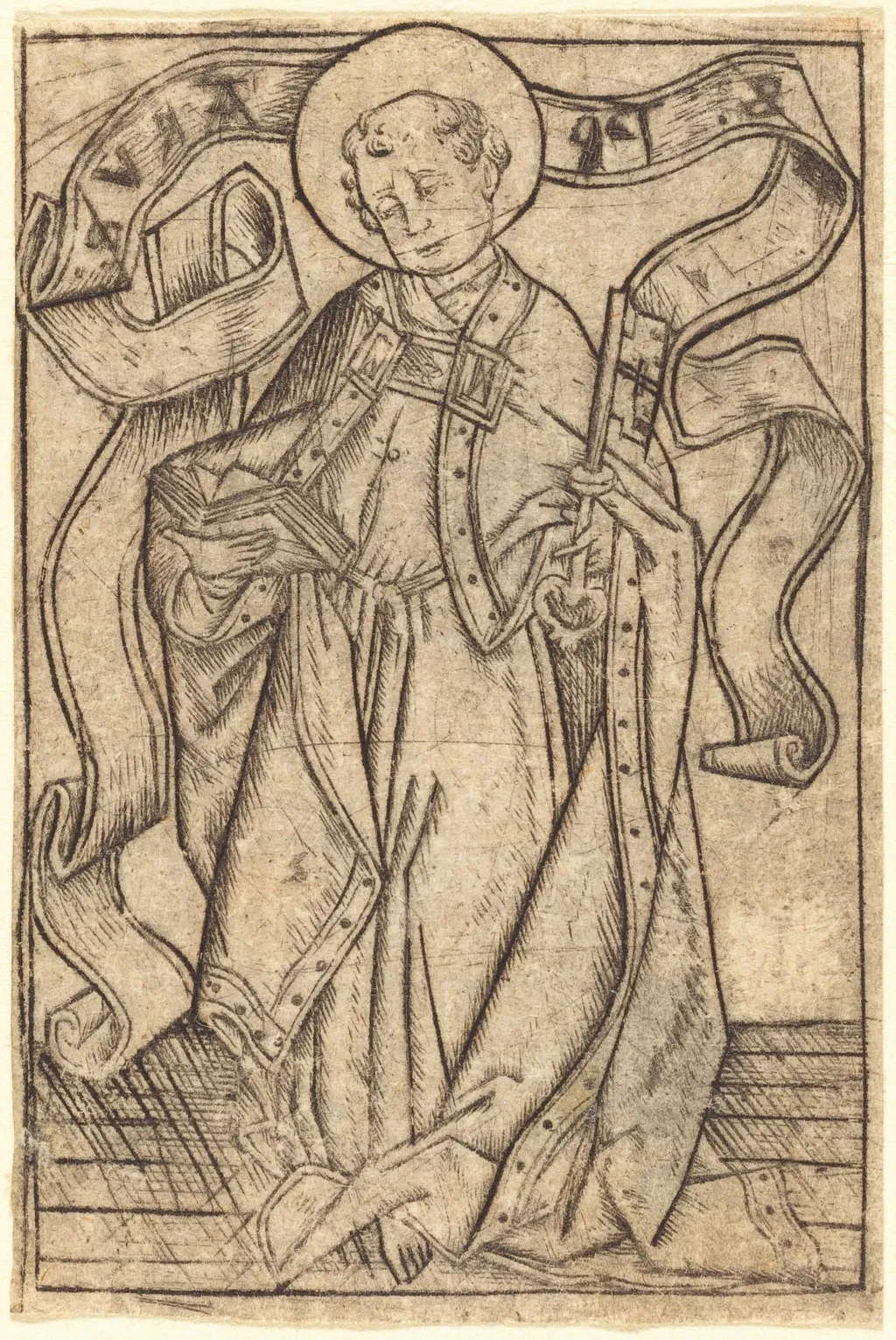
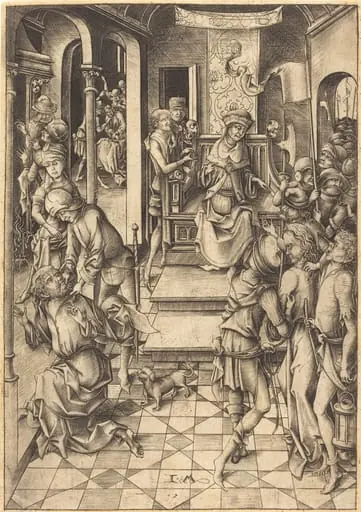
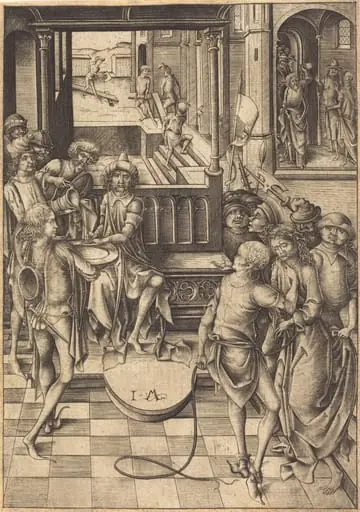
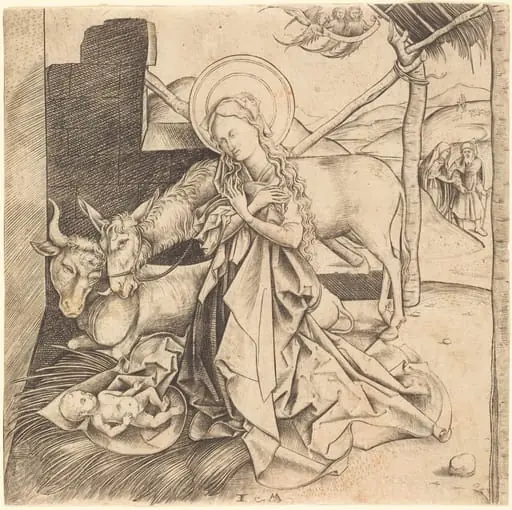
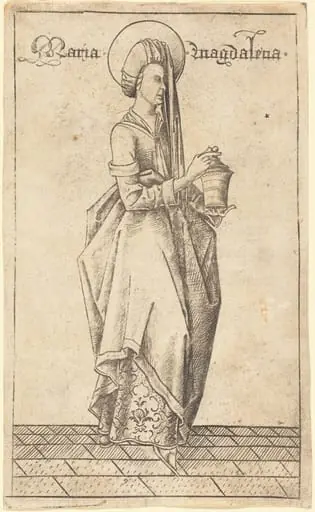
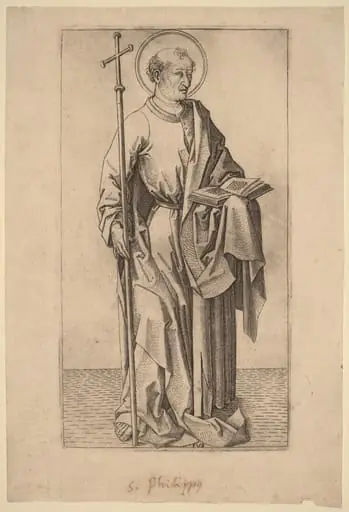
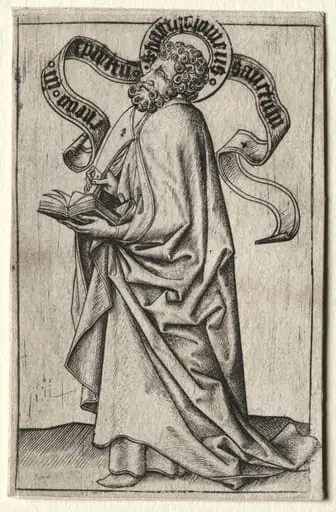
Saint Peter is an ink print by the Renaissance artist Israhel van Meckenem. It dates from 1465 and is held in the collection of the National Gallery of Art.
About this work
Overview
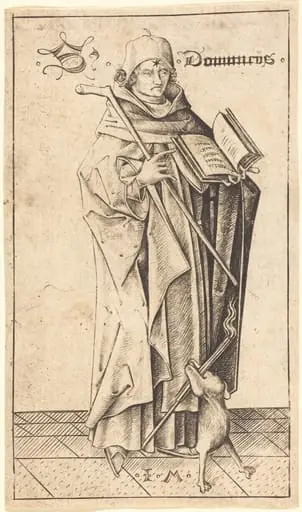
Created circa 1465, the engraving titled *Saint Peter* is a metal‑cut print by Israhel van Meckenem, a German goldsmith and printmaker active between 1465 and 1503. The work exemplifies the devotional imagery typical of the period, portraying the apostle with his traditional attributes against a dramatic, fantastical backdrop.
Subject & Meaning
The central figure is the apostle Peter, identifiable by the keys of heaven he holds in one hand and a staff in the other, both conventional symbols of his authority. A halo crowns his head, emphasizing his sanctity, while his solemn expression underscores the gravity of his role as a foundational church leader.
Technique & Style
Van Meckenem employed fine, intersecting lines to model the folds of the robe, the texture of the creature’s feathers, and the chiaroscuro that gives the scene a shallow relief. The meticulous hatching creates a sense of depth, making the figure and the threatening winged beast appear to project from the plate.
History & Provenance
*Saint Peter* belongs to the prolific output of van Meckenem, who is credited with more than six hundred prints, many of which were reproductions of earlier designs. This particular engraving reflects his practice of adapting popular religious motifs for a growing market of devotional collectors in late‑medieval Germany.
Context
The work emerges from a period when printmaking was expanding as a means of disseminating religious imagery beyond manuscript illumination. Van Meckenem’s dual training as a goldsmith and engraver enabled him to produce detailed, affordable images that could reach a broader audience across the Holy Roman Empire.
Artist & collection
Artist
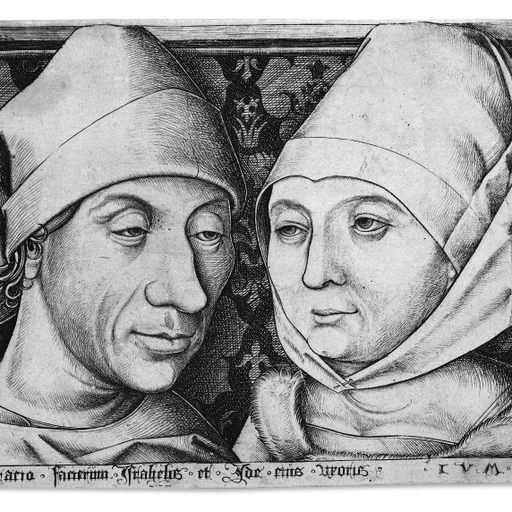
Israhel van Meckenem (c. 1445 – 10 November 1503), also known as Israhel van Meckenem the Younger, was a German printmaker and goldsmith, perhaps of a Dutch family origin. He was the most prolific engraver of the…