Artwork
The Exorcist
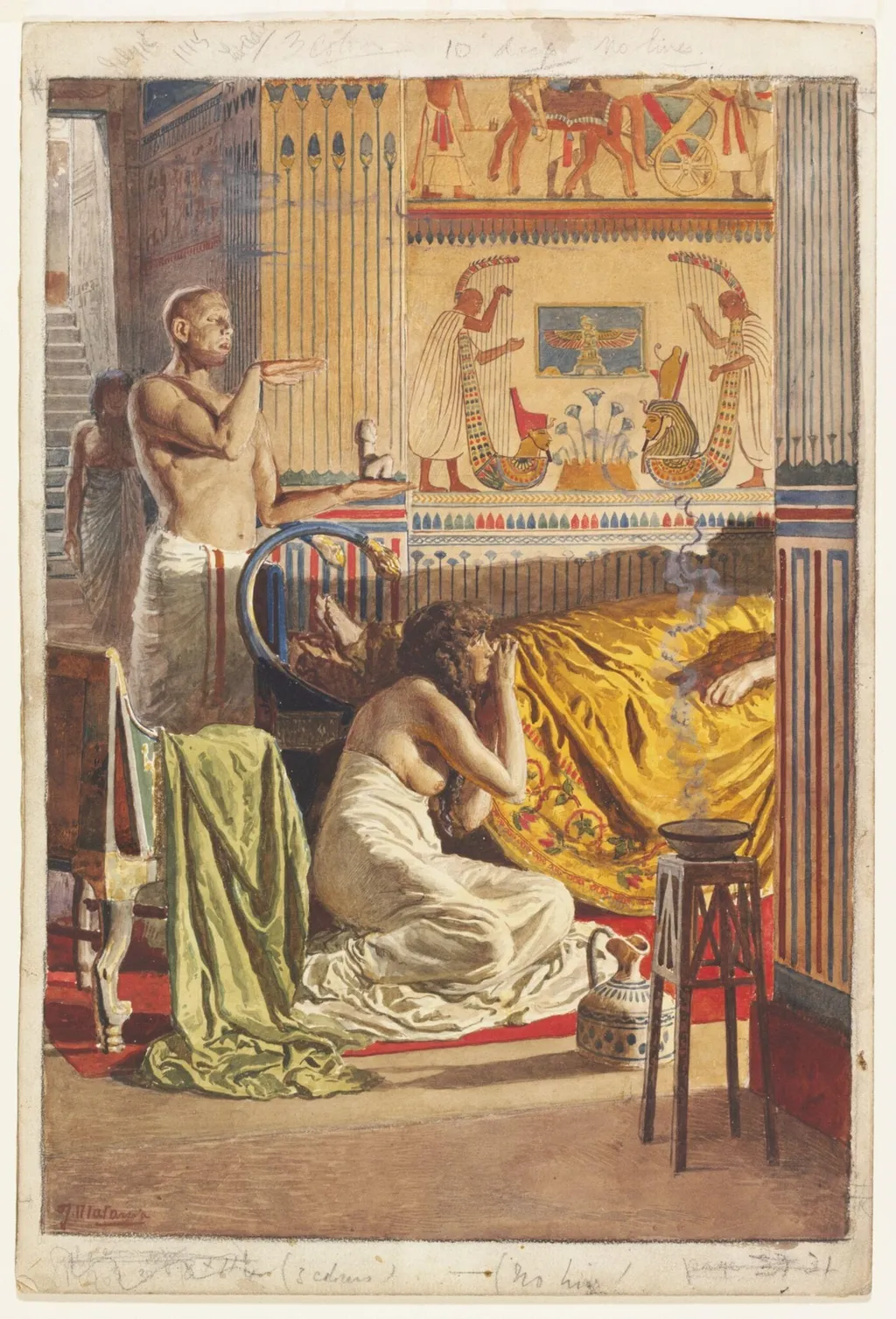
The Exorcist is a watercolor work on paper by the Art Nouveau artist Fortunino Matania. It dates from 1923 and is held in the collection of the Victoria and Albert Museum.
About this work
Overview
This watercolour, titled 'The Exorcist', is part of a series of illustrations created for The Sphere magazine in 1923. It depicts a fantastical scene of an ancient Egyptian pharaoh's final moments, with a necromancer attempting to exorcise an evil spirit.
Subject & Meaning
The scene shows a robed priest performing a ritual over a dying pharaoh, surrounded by grieving servants. The illustration is not based on historical records, but rather the artist's imagination of ancient Egyptian practices, inspired by the recent discovery of Tutankhamun's tomb.
Technique & Style
The watercolour features softened edges, achieved through a technique similar to sfumato, and bright colours, creating a dramatic and attention-grabbing effect. The artist's use of vivid hues and emotive poses adds to the illustration's sense of tension and spectacle.
History & Provenance
The illustration was created by Fortunino Matania, an Italian artist known for his historical paintings and illustrations, for a special Egyptian section in The Sphere magazine on 24 February 1923. Matania was the magazine's Special Artist and worked for various periodicals in Milan, Paris, and London.
Context
The watercolour was produced shortly after the discovery of King Tut's tomb, capitalizing on the public's fascination with ancient Egypt. Although Matania never saw the tomb, his illustration reflects the era's popular imagination and fascination with Egyptian culture.
Artist & collection

Artist
Chevalier Fortunino Matania was an Italian artist noted for his realistic portrayal of World War I trench warfare and of a wide range of historical subjects.

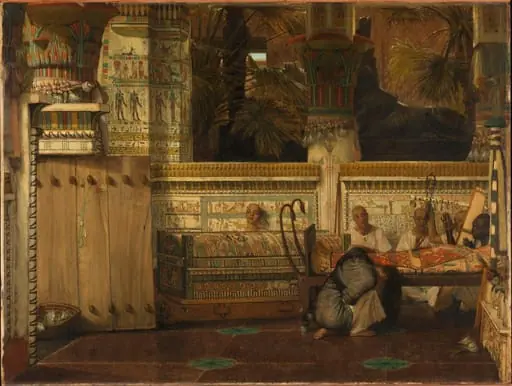 De Egyptische weduwe
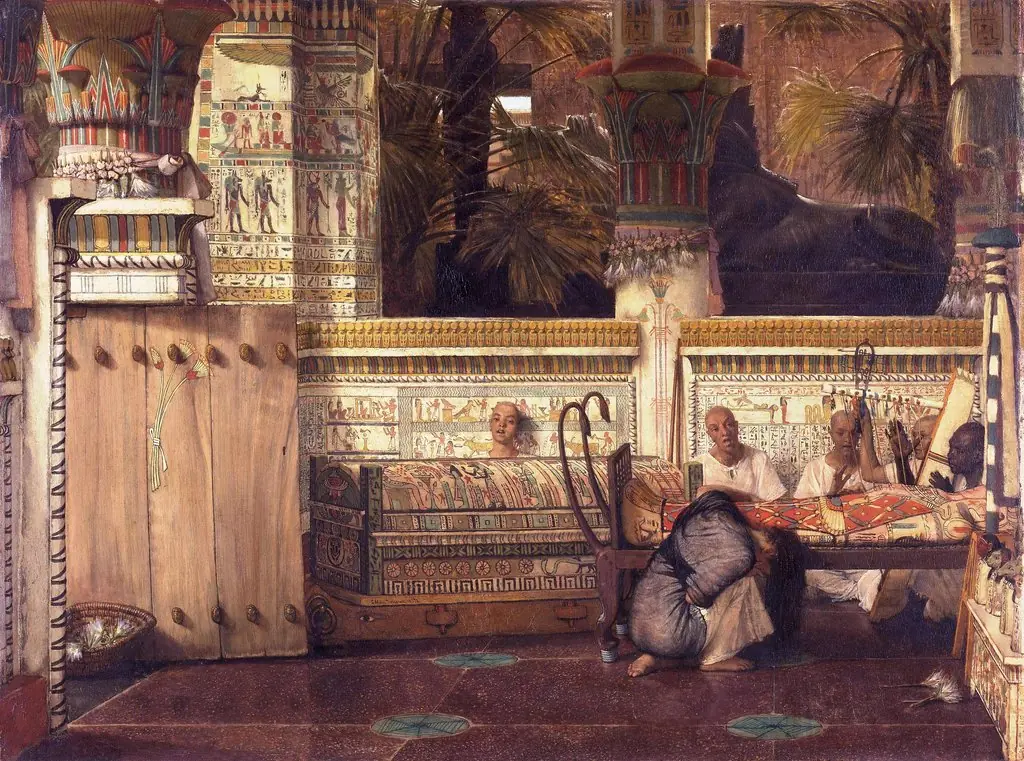 The Egyptian Widow
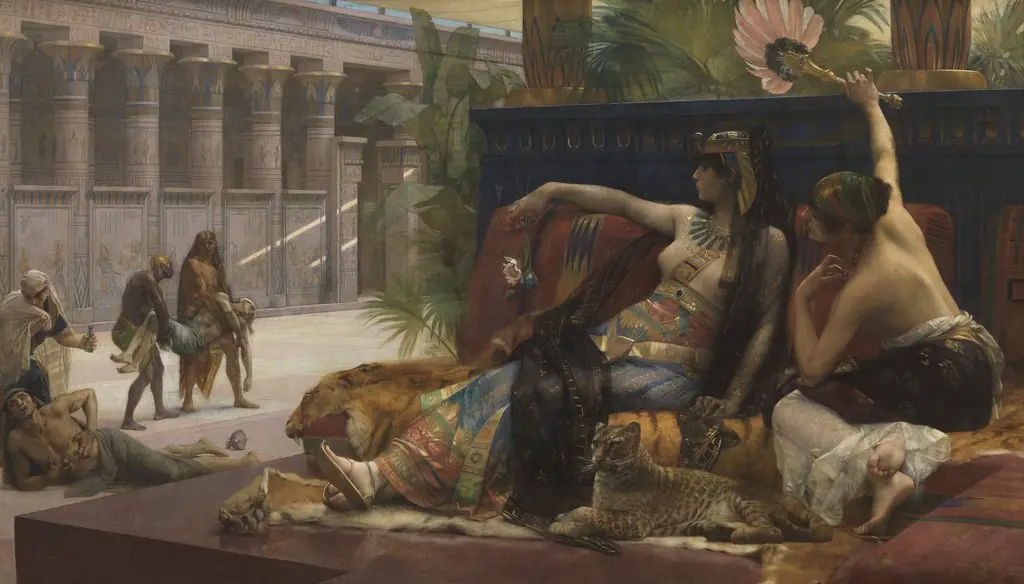 Cleopatra Testing Poisons on Condemned Prisoners
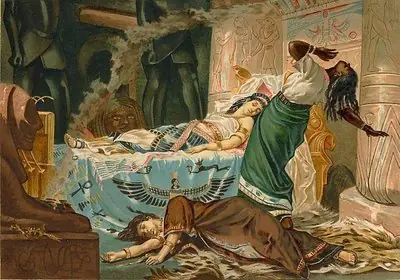 The Death of Cleopatra
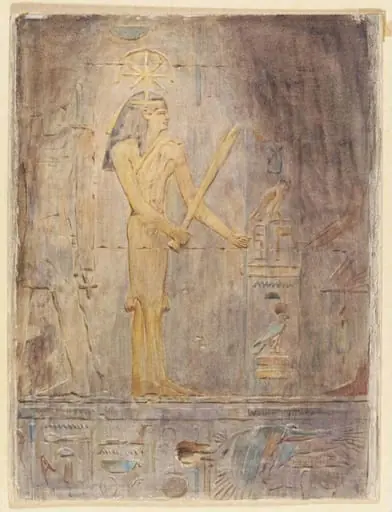 Amada Nubia
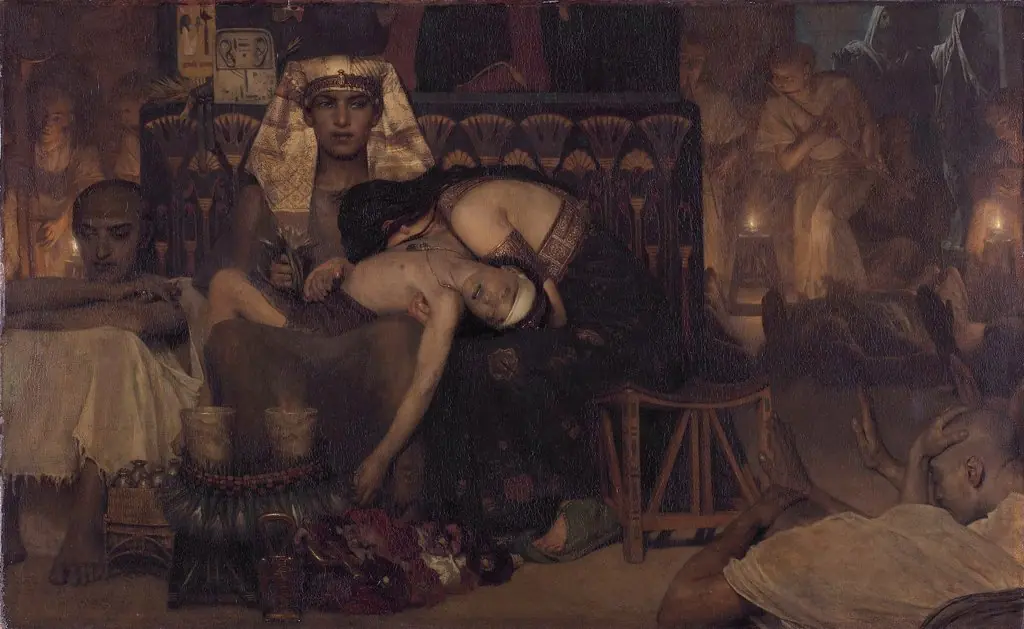 Death of the Pharaoh's Firstborn Son
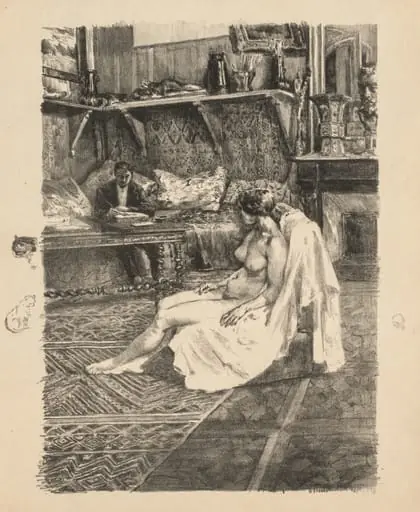 The Model Session (La Séance de modèle)
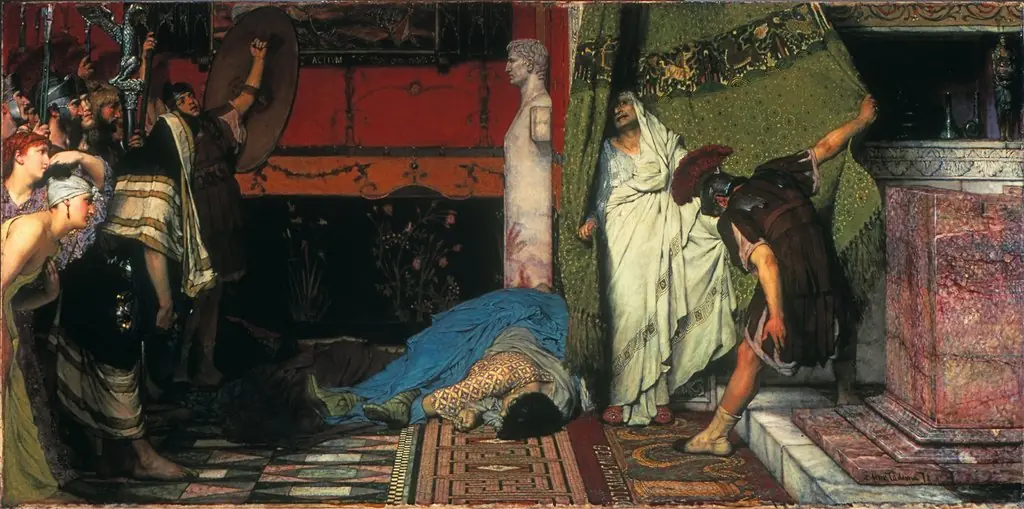 A Roman Emperor (Claudius)
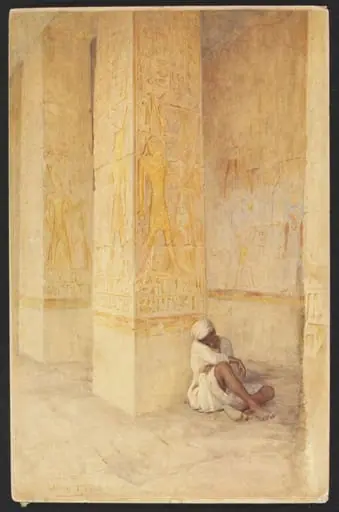 The Temple of Hatshepsoo at Thebes
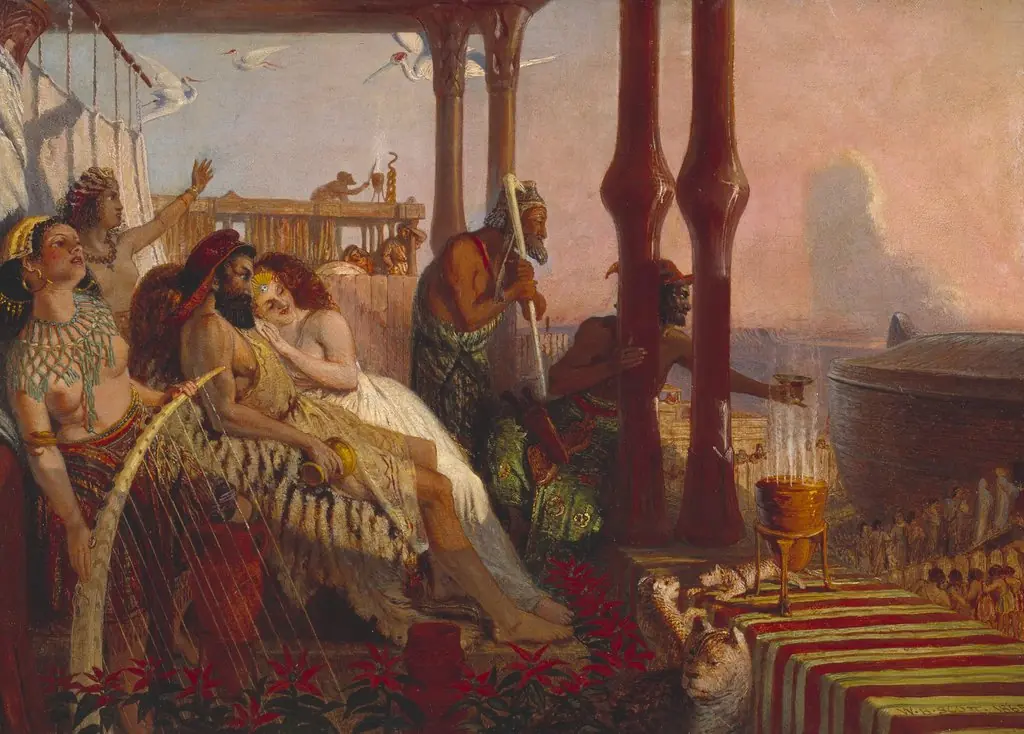 The Eve of the Deluge
 Ramesses III and Prince Amenherkhepeshef before Hathor
 Interior of Crystal Palace, Egyptian Court, columns from the Temple of Karnak