Artwork
The Four Elements
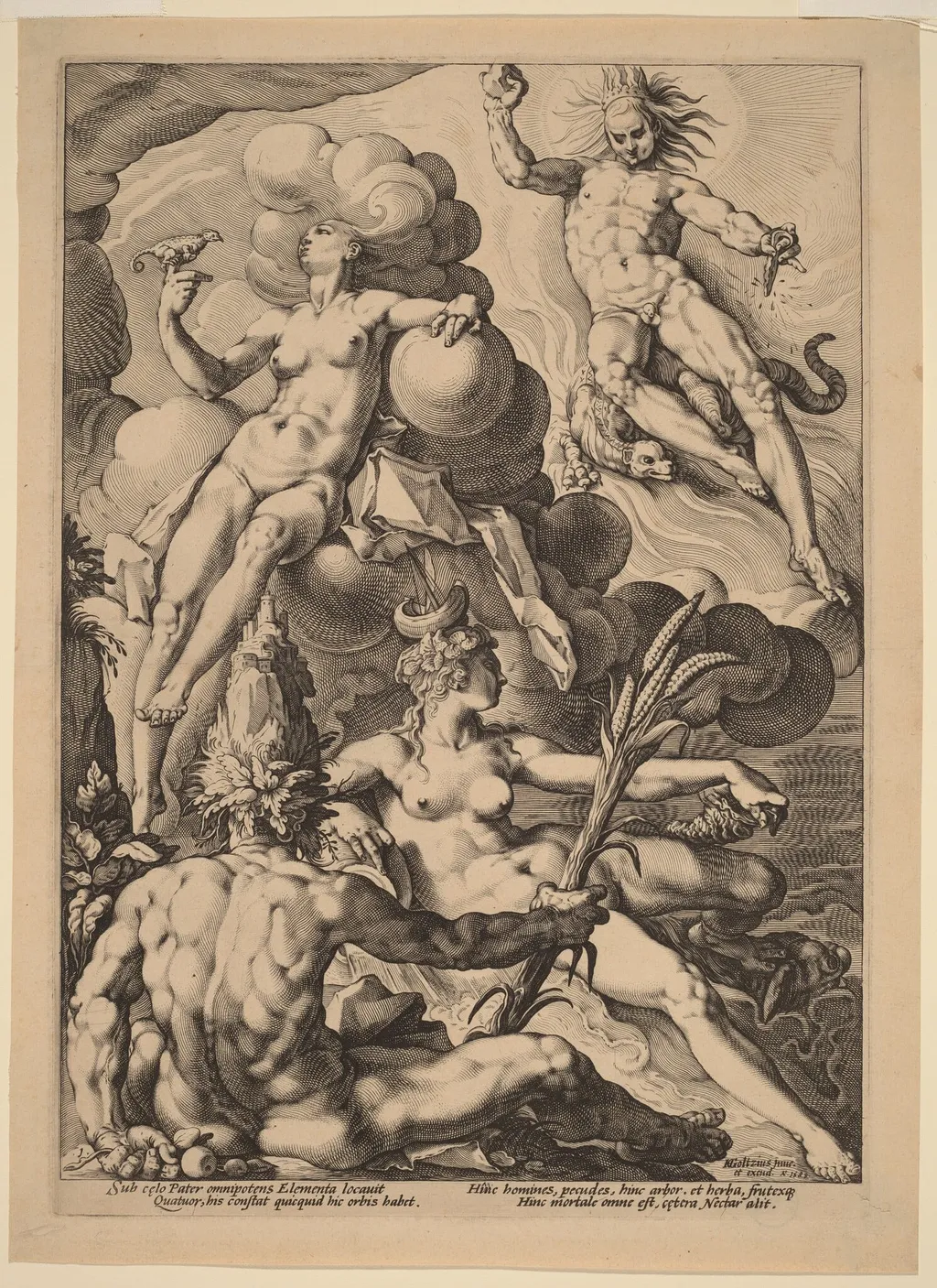
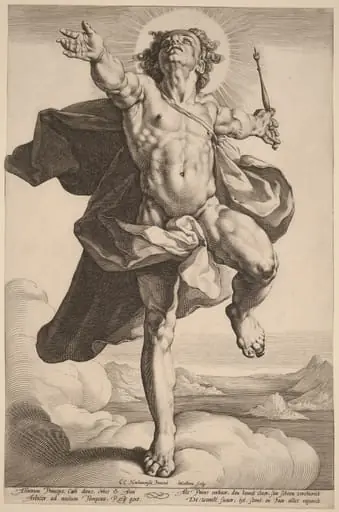
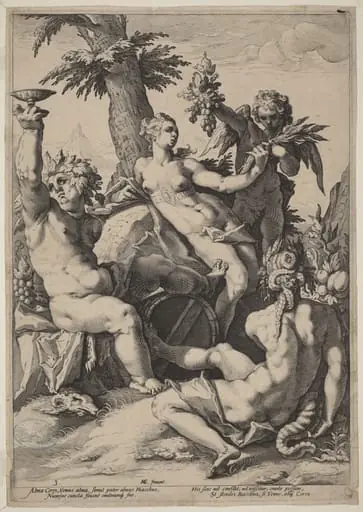
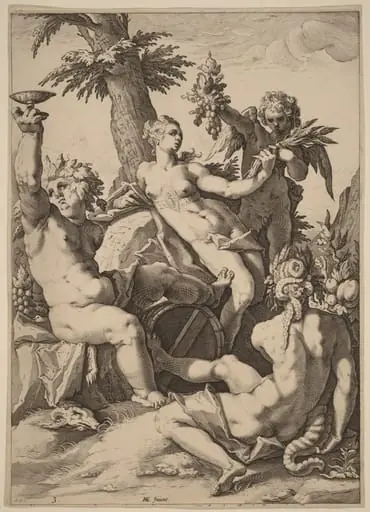
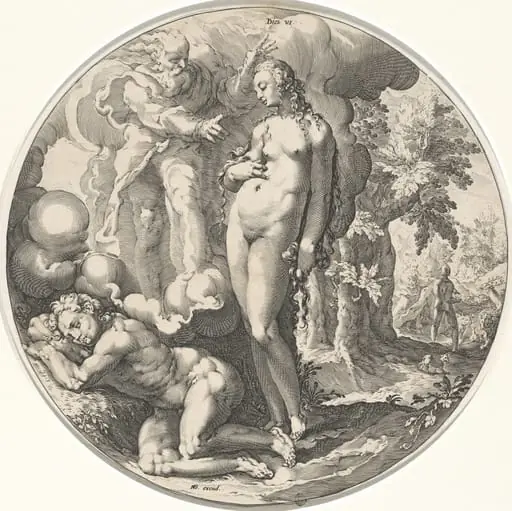
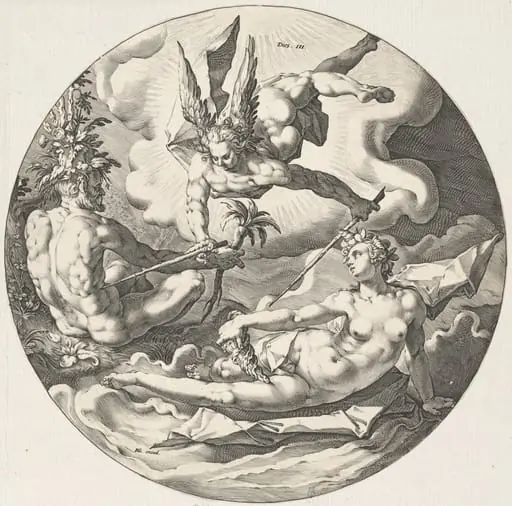
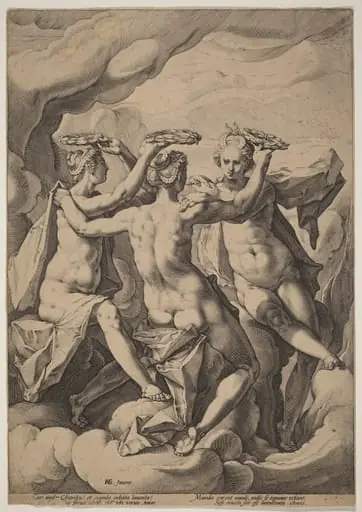
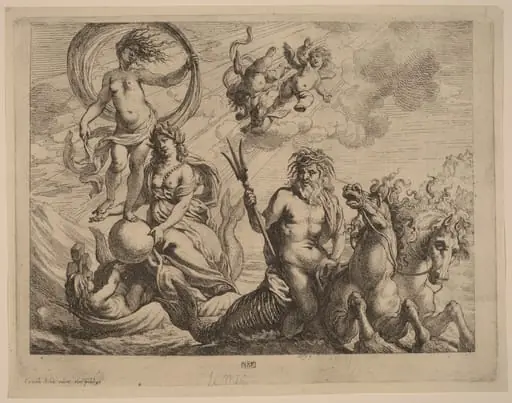
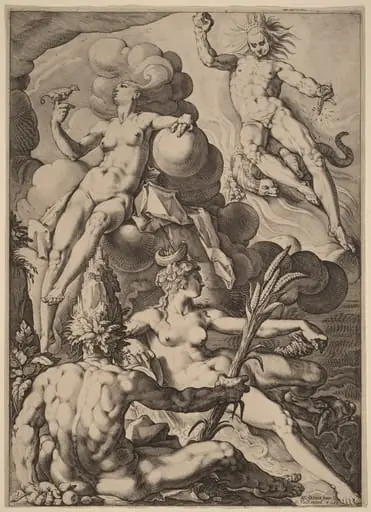
The Four Elements is an ink print by the Renaissance artist Jacob Matham. It dates from 1588 and is held in the collection of the National Gallery of Art.
About this work
Overview
The work is rendered entirely in ink, employing fine line work to generate strong contrasts and a sense of movement.
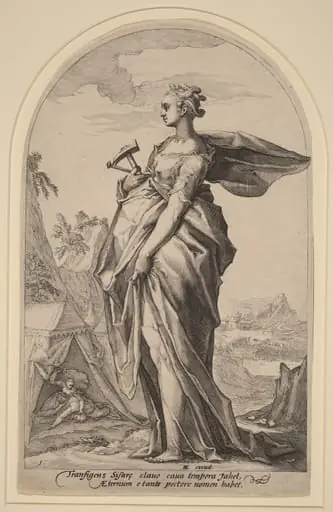
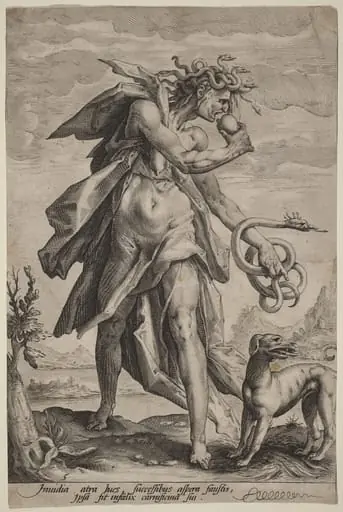
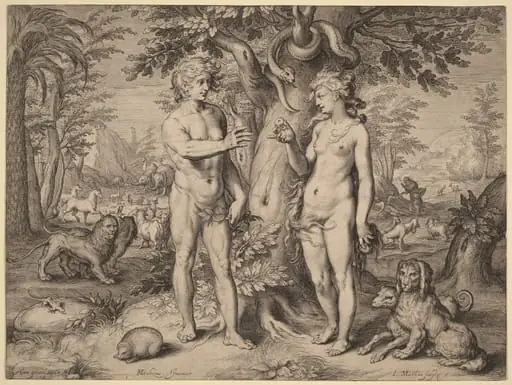
Jacob Matham’s 1588 engraving titled The Four Elements presents a compact, densely packed scene on laid paper. Four robust, intertwined figures dominate the composition, each clutching an emblematic object—a torch, wheat sheaf, stone, and shell—suggesting the classical elements of fire, earth, water, and air. The work is rendered entirely in ink, employing fine line work to generate strong contrasts and a sense of movement.
Subject & Meaning
The four muscular bodies appear locked in a dynamic struggle, their gestures both confrontational and intimate. The objects they bear serve as visual shorthand for natural forces, implying a mythic contest among elemental powers. The tangled drapery and wild hair amplify the tension, while the background’s rough, cloud‑like texture hints at a turbulent environment that frames the elemental conflict.
Technique & Style
Matham achieves depth through layered, sharply incised lines that produce deep shadows and a tactile surface. The engraving’s hatching creates a dense, almost sculptural quality, especially in the folds of cloth and the rugged backdrop. The use of laid paper adds a subtle grain, enhancing the atmospheric effect and reinforcing the dramatic chiaroscuro typical of late‑16th‑century Northern printmaking.
History & Provenance
Created in 1588, The Four Elements belongs to Matham’s early output after his apprenticeship with Hendrik Goltzius. The print circulated among collectors of the Dutch Republic, reflecting the period’s fascination with allegorical and mythological subjects. Surviving copies are held in several European libraries and museums, attesting to its continued scholarly interest.
Context
The engraving emerges from a tradition of emblematic prints that visualized the four classical elements, a popular motif in Renaissance art and natural philosophy. Matham’s treatment aligns with contemporary interests in human anatomy, dynamic composition, and the allegorical representation of nature’s forces, echoing the broader intellectual currents of the late sixteenth century.
Artist & collection