Artwork
Sardis
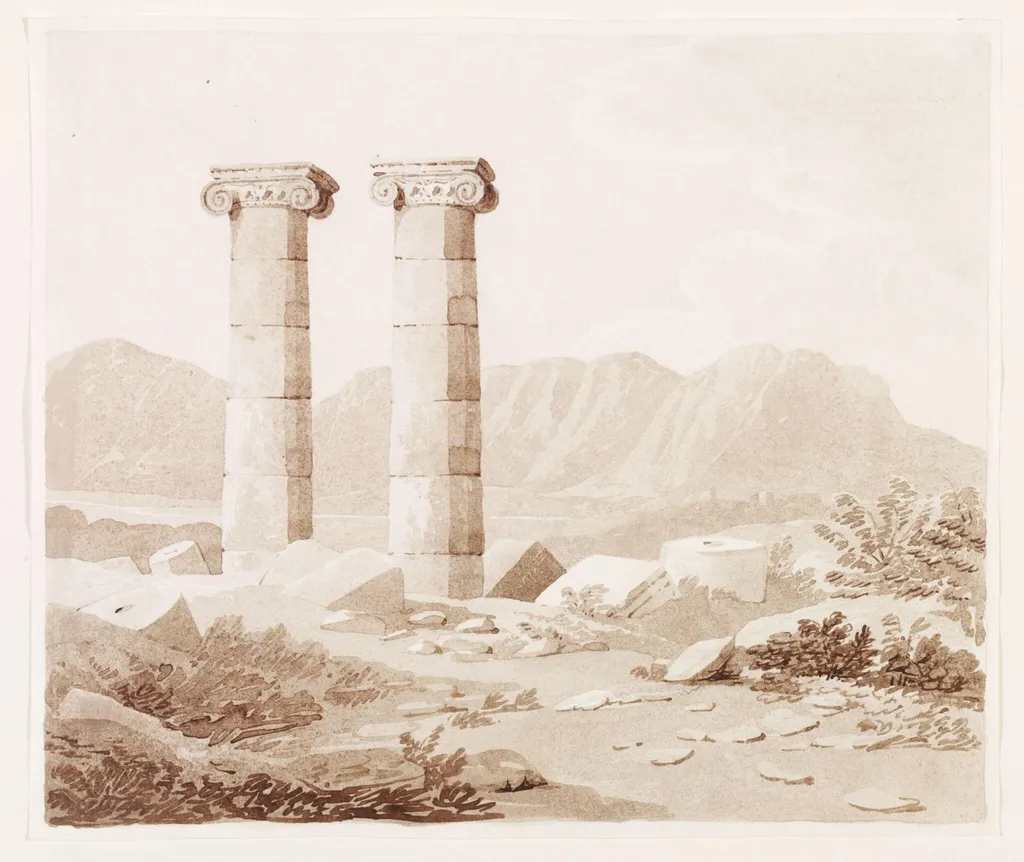
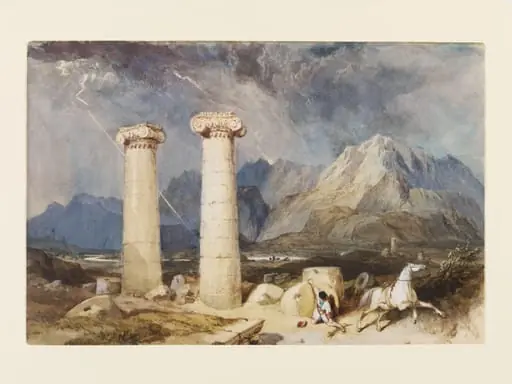
Sardis is a watercolor work on paper by the Romanticist artist Maude. It dates from 1832 and is held in the collection of the Victoria and Albert Museum.
About this work
Overview
This watercolour depicts the remains of the Temple of Artemis near Sardis, Turkey. Created by an unknown artist named Maude, it is a straightforward representation of the site's condition in the 1830s.
Subject & Meaning
The artwork shows two standing columns in a desolate landscape, symbolizing the decline of Sardis, one of the Seven Churches of Asia prophesied to face destruction in the Apocalypse.
Technique & Style
Maude's sketch is characterized by its simplicity and factualness, executed in ink and wash. It lacks dramatic elements, presenting a straightforward view of the ancient ruins.
History & Provenance
The sketch was commissioned for 'Landscape Illustrations Of The Bible' and later reworked by Clarkson Stanfield into a more dramatic watercolour, although his use of it is now disputed.
Artist & collection
Artist
Maude painted delicate watercolours of ancient ruins in the early 1800s. Their small sheet *Sardis* shows crumbling marble columns half-buried in ivy, the light caught just right on stone. Look closely and you’ll see…

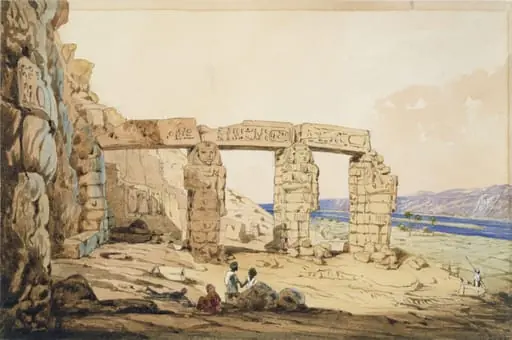 Guerfeh Hassan - Nubia
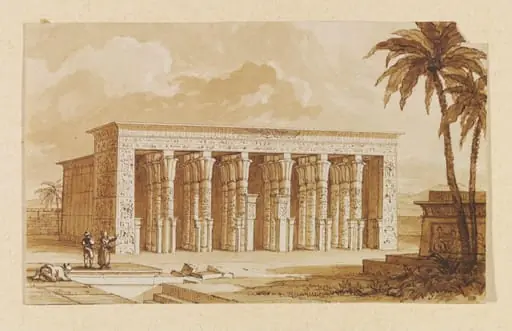 Perspective view of the Temple of Antaeopolis
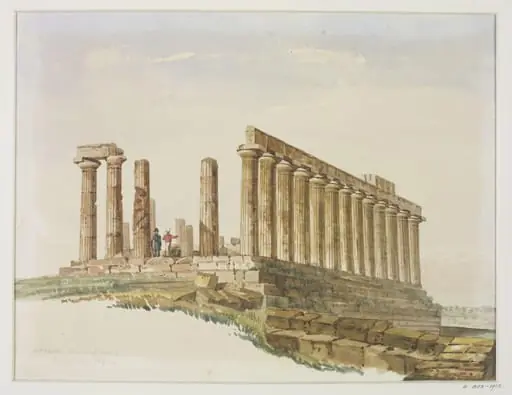 Girgenti. Temple of Juno Lucina.
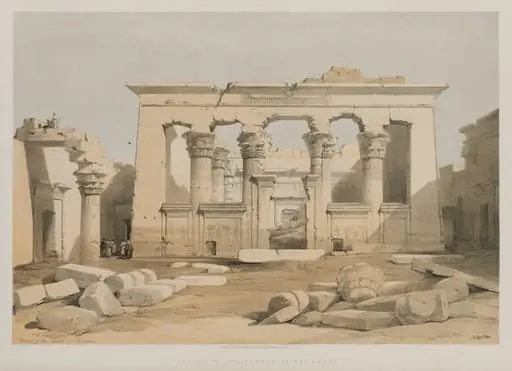 Egypt and Nubia, Volume I: Portico of the Temple of Kalabshe
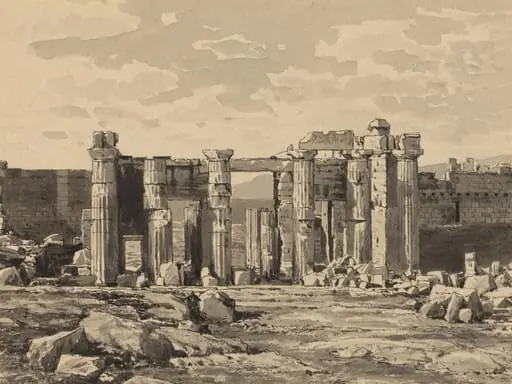 The Propylaeum from the East
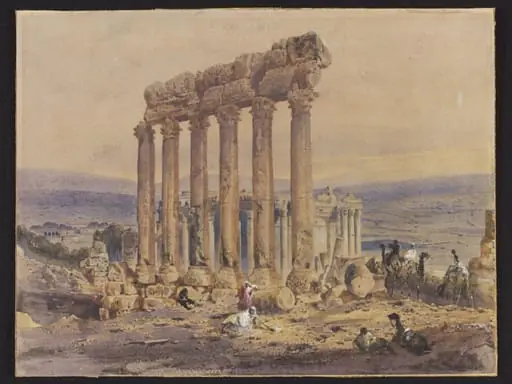 The Temple of Jupiter, Baalbek
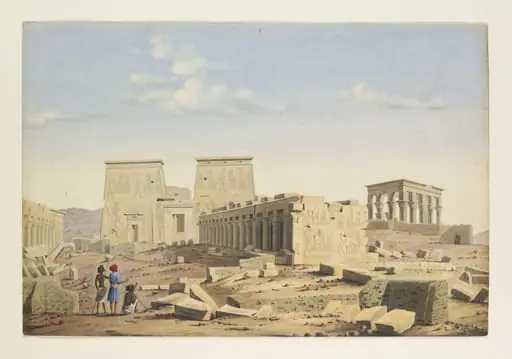 Ile de Philoé
 Ruine la Sigus
 View of the Northern Gate of Dendera or Tentyra
 Temple of Juno, Agrigentum
 Propylaeum
 Sardis, One of the Seven Churches