Artwork
The Propylaeum from the East
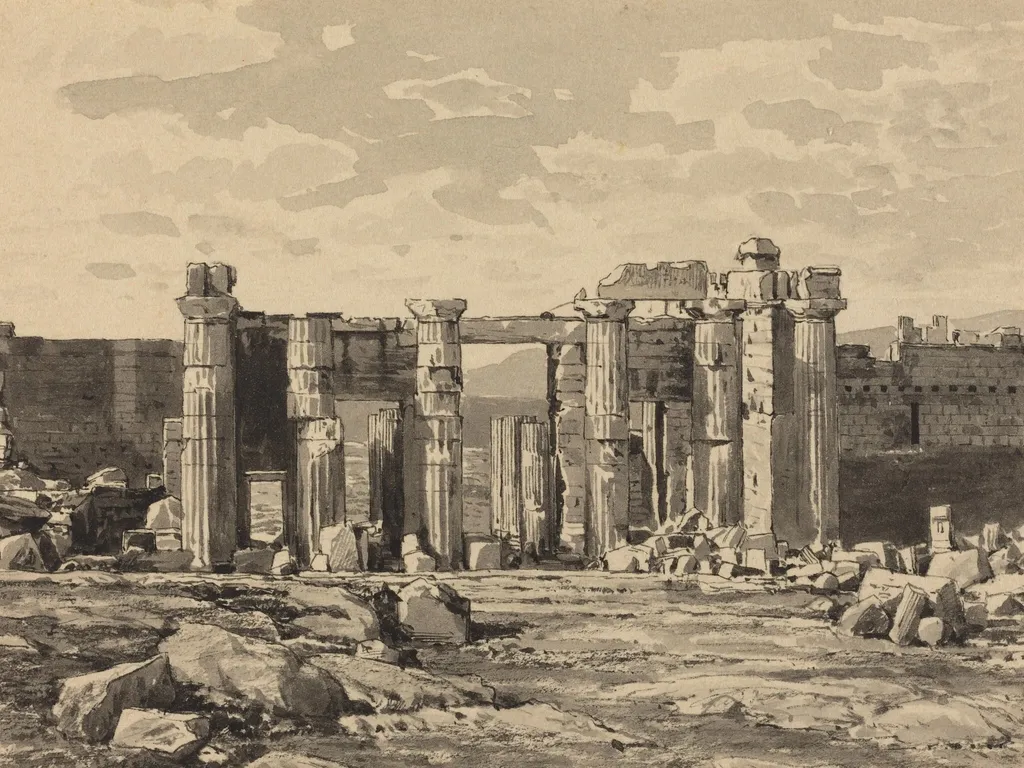
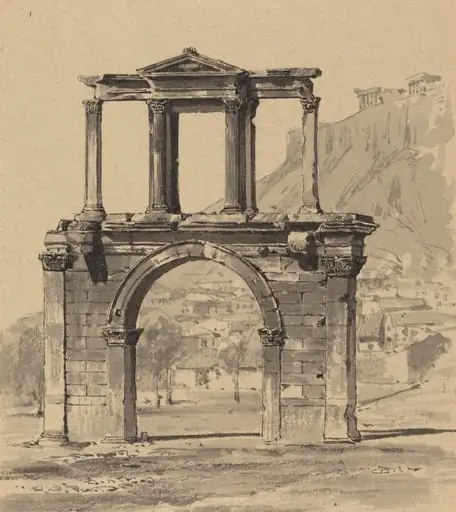
The Propylaeum from the East is an ink drawing by the Impressionist artist Themistocles von Eckenbrecher. It dates from 1890 and is held in the collection of the National Gallery of Art.
About this work
Overview
The Propylaeum from the East is a drawing created by Themistocles von Eckenbrecher in 1890, combining pen and black ink, watercolor, black chalk, and graphite. This work captures an architectural view of the Propylaeum, emphasizing atmospheric detail.
Subject & Meaning
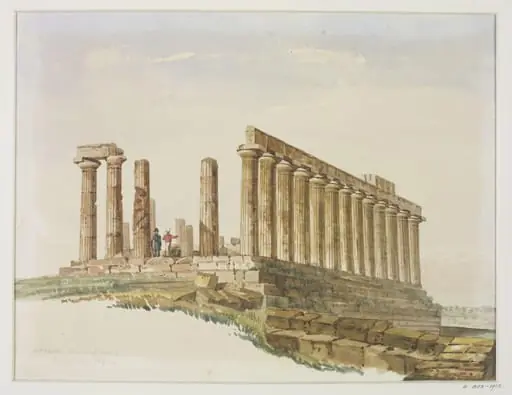
The drawing depicts the Propylaeum in a state of ruin, with standing and deteriorated columns amidst rubble. The scene conveys a sense of decay and the passage of time, reflecting the artist's blend of observational detail and Romantic sentiment.
Technique & Style
Eckenbrecher employed soft lines, light shading, and mixed media to achieve a simple yet textured representation. The use of watercolor over black chalk and ink adds depth, characteristic of the late Romantic style's emphasis on mood and atmosphere.
History & Provenance
Created in 1890 by Themistocles von Eckenbrecher, a German artist of Athenian birth, active in the late 19th century. His work often balanced precise observation with Romantic sensibility, commonly focusing on landscapes and seascapes.
Context
This piece can be contextualized alongside Realist artworks, which similarly emphasized capturing everyday and historical details with precision, albeit often with differing emotional tones compared to Romantic interpretations.
Artist & collection

Artist
Karl Paul Themistokles von Eckenbrecher (17 November 1842, Athens – 4 December 1921, Goslar) was a German landscape and marine painter, in the late Romantic style.

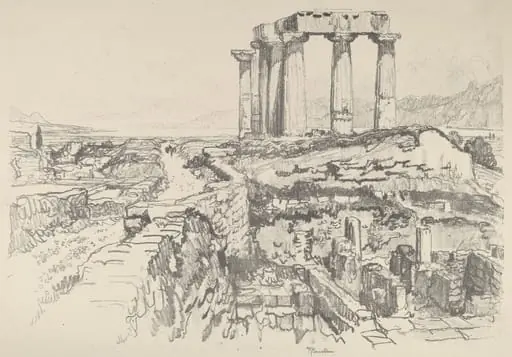 Corinth, towards the Gulf
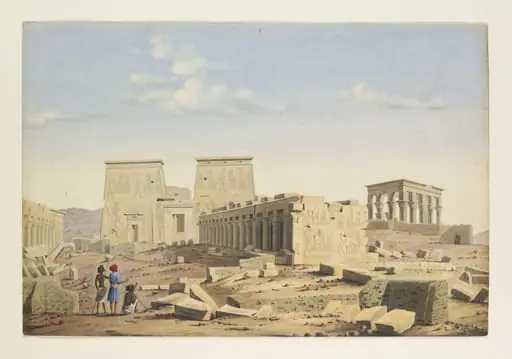 Ile de Philoé
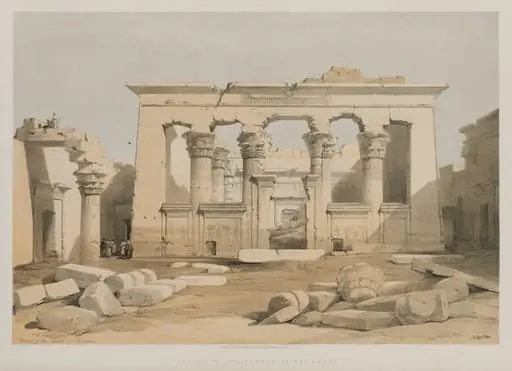 Egypt and Nubia, Volume I: Portico of the Temple of Kalabshe
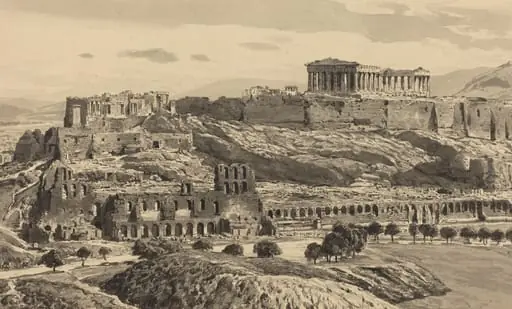 View of the Acropolis
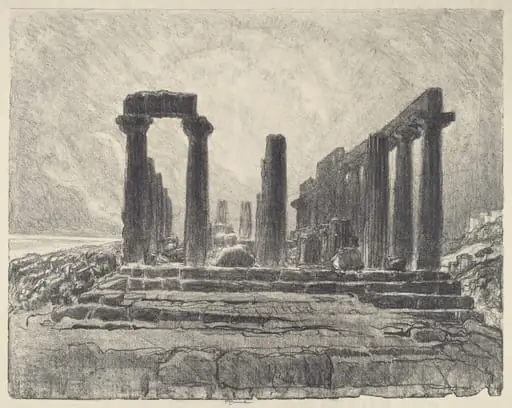 Columns of the Temple of Juno, Girgenti
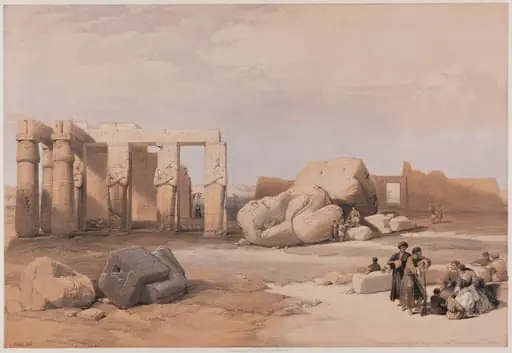 Egypt and Nubia, Volume II: Fragments of the Great Colossi at the Memnonium, Thebes
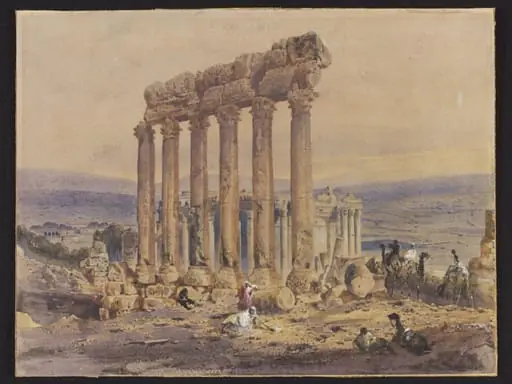 The Temple of Jupiter, Baalbek
 Girgenti. Temple of Juno Lucina.