Artwork
Vom Tode I, (Opus II, 1889) No. 6
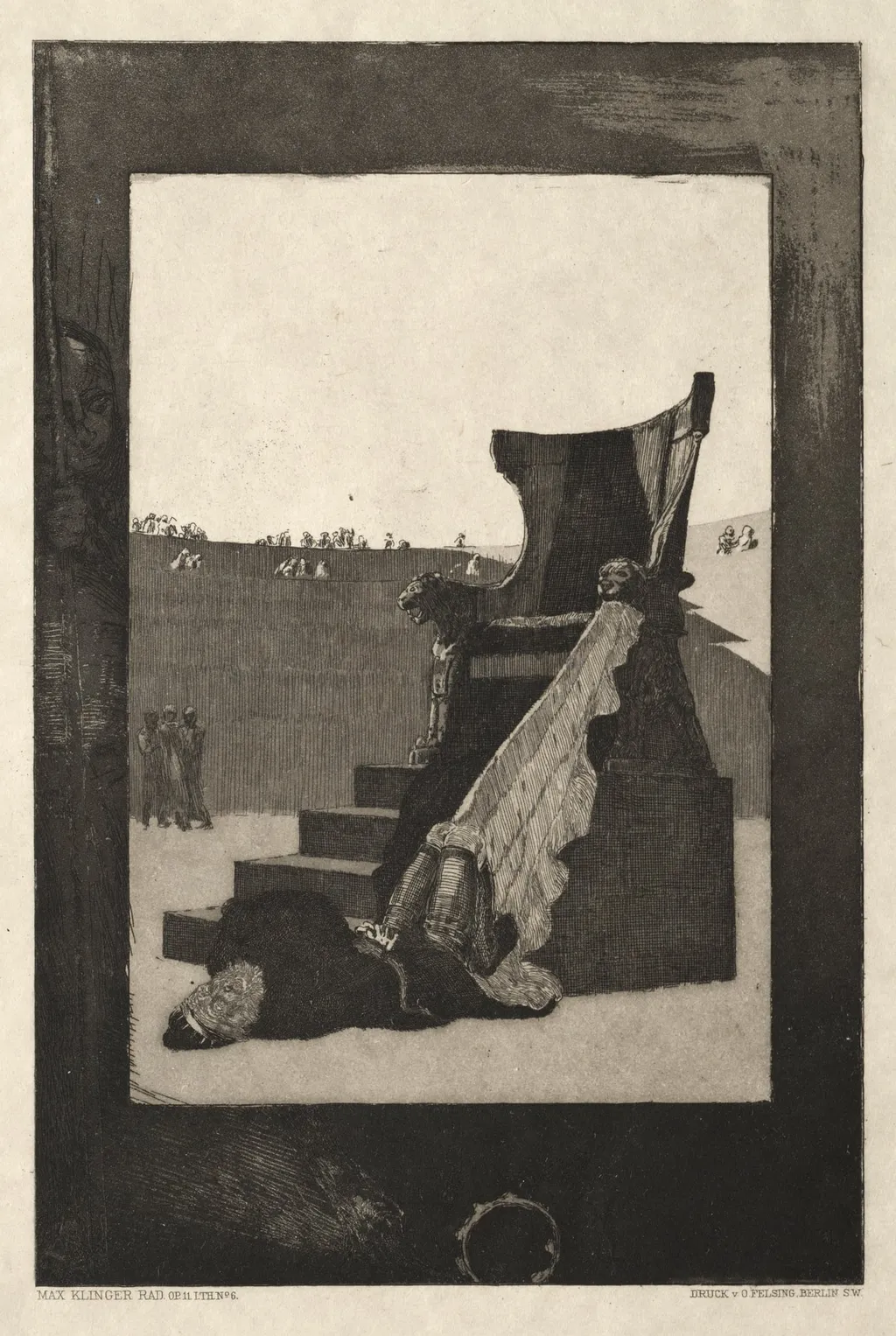
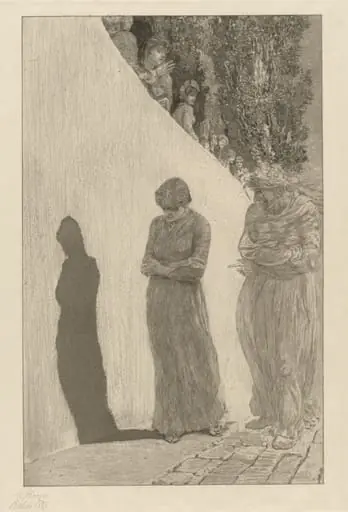
Vom Tode I, (Opus II, 1889) No. 6 is a print by the Impressionist artist Max Klinger. It dates from 1889 and is held in the collection of the Cleveland Museum of Art.
About this work
Overview
The work belongs to a broader body of graphic art that sought to elevate printmaking to the status of fine art through complex allegory and technical precision.
Created in 1889, *Vom Tode I* is the sixth print in Max Klinger’s *Opus II*, a series of etchings exploring themes of mortality and existential reflection. A German artist known for his interdisciplinary approach, Klinger worked across printmaking, sculpture, and writing, aligning his practice with Symbolist and Jugendstil currents. The work belongs to a broader body of graphic art that sought to elevate printmaking to the status of fine art through complex allegory and technical precision.
Subject & Meaning
The figure, robed and seated in stillness, holds a small lion statuette, suggesting dominion over power or the taming of primal forces. His reclined posture and serene expression evoke contemplation rather than distress, framing death not as an end but as a moment of quiet surrender or transcendence. The lion, a traditional symbol of strength and sovereignty, may imply the soul’s mastery over mortality, aligning with Symbolist interests in inner states over literal narrative.
Technique & Style
Klinger employed fine-line etching to render intricate textures in the robe, chair, and background, creating a tactile richness that enhances the work’s meditative tone. Subtle gradations of ink and careful control of line produce depth without overt chiaroscuro, favoring atmospheric quietude over dramatic contrast. The composition’s stillness and attention to surface detail reflect Klinger’s commitment to graphic precision as a vehicle for psychological depth.
History & Provenance
The print was produced as part of Klinger’s *Opus II*, a suite of twelve etchings published in 1889, which expanded his exploration of death and the sublime. It entered the collection of The Cleveland Museum of Art through documented acquisition, reflecting early 20th-century American interest in European Symbolist prints. The work remains a key example of Klinger’s influence on the graphic arts revival of the period.
Context
Klinger’s work emerged amid late 19th-century shifts in European art, where Symbolism rejected naturalism in favor of emotional and metaphysical expression. His prints resonated with Vienna Secessionists and Jugendstil designers who valued decorative complexity and spiritual themes. Unlike Impressionism’s focus on light and movement, Klinger’s imagery turned inward, using mythic symbols to interrogate human condition and existential solitude.
Legacy
Klinger’s *Opus II* influenced later generations of printmakers and artists interested in narrative symbolism and the expressive potential of etching. His theoretical writings on the autonomy of graphic art helped legitimize printmaking as a medium for serious philosophical inquiry. *Vom Tode I* endures as a quiet yet potent example of how technical mastery can serve introspective, non-literal storytelling in visual culture.
Artist & collection
Artist
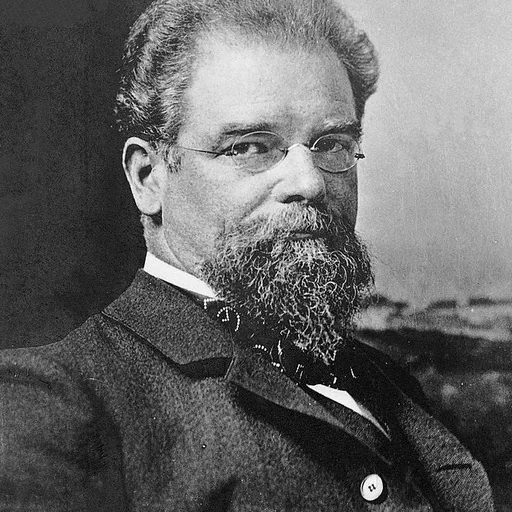
Max Klinger (18 February 1857 – 5 July 1920) was a German artist who produced significant work in painting, sculpture, prints and graphics, as well as writing a treatise articulating his ideas on art and the role of…

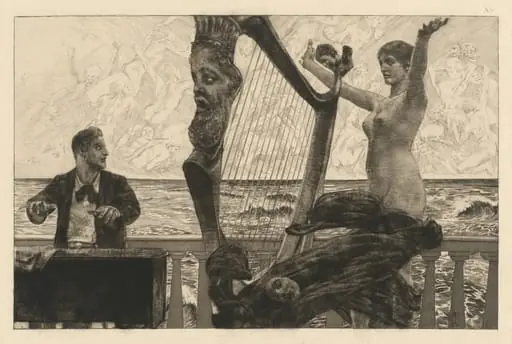
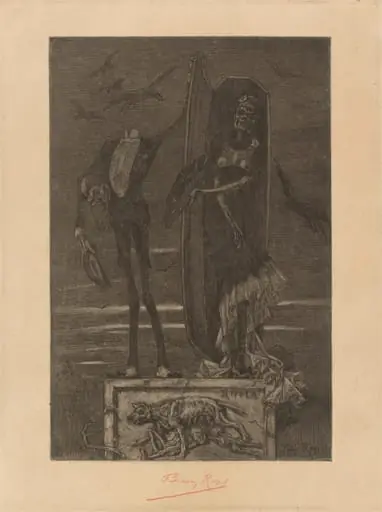 Le Vice suprème: Frontispiece
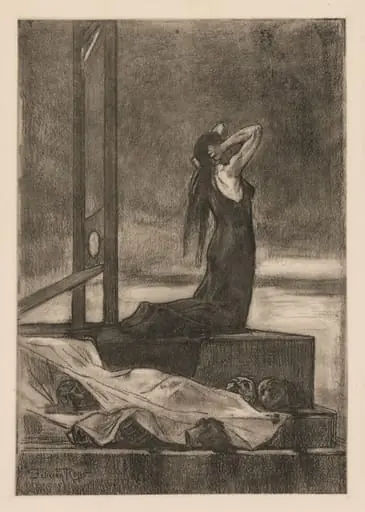 Capital Punishment: The Pain of Death (Todesstrafe: La peine de mort)
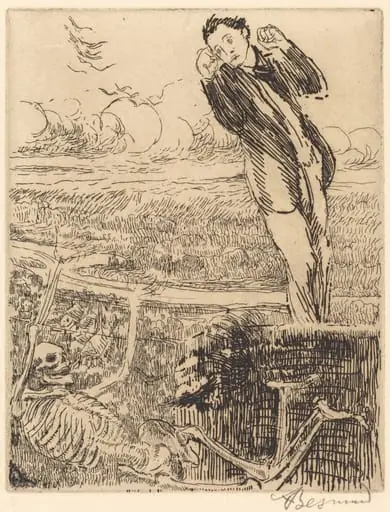 Vertigo (Le vertige)
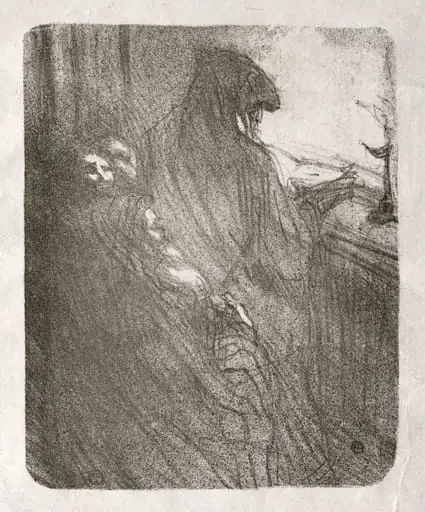 Au pied du Sinaï: La Prière des Juifs Polonais
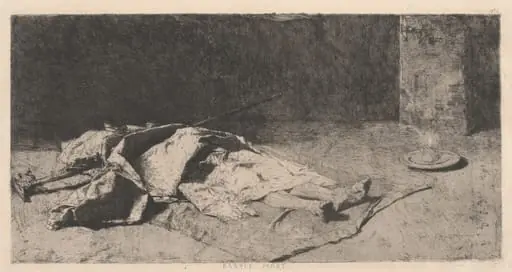 Dead Kabyle (Kabyle mort)
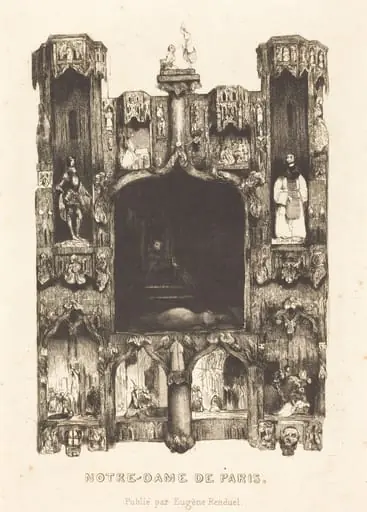 Notre-Dame de Paris
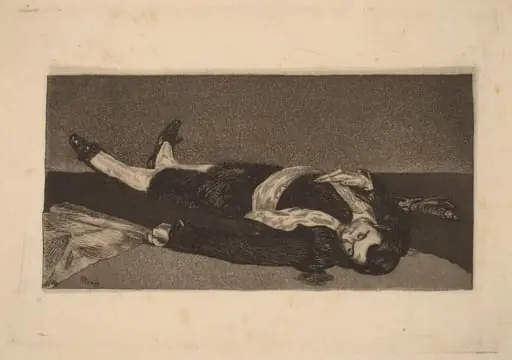 Dead Toreador (Torero mort)
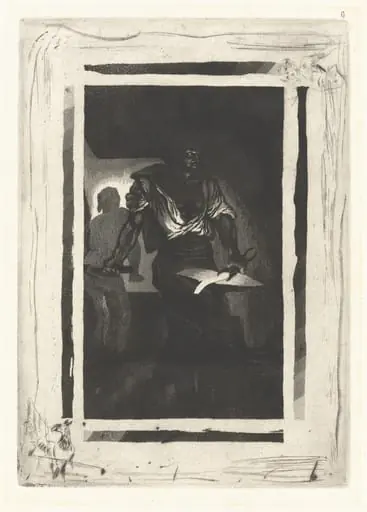 A Blacksmith (Un Forgeron)
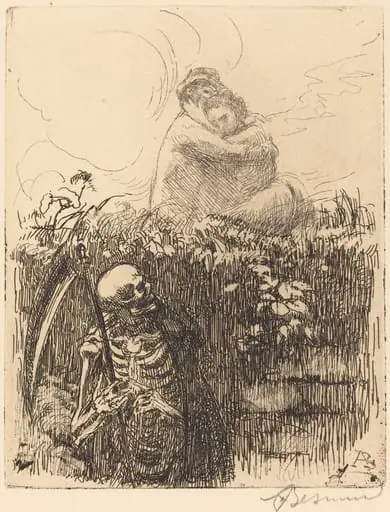 On the Lookout (Aux aguets)
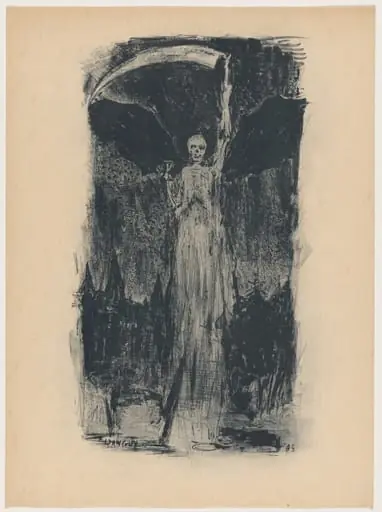 Le château de la mort (The House of the Dead)