Artwork
Untitled
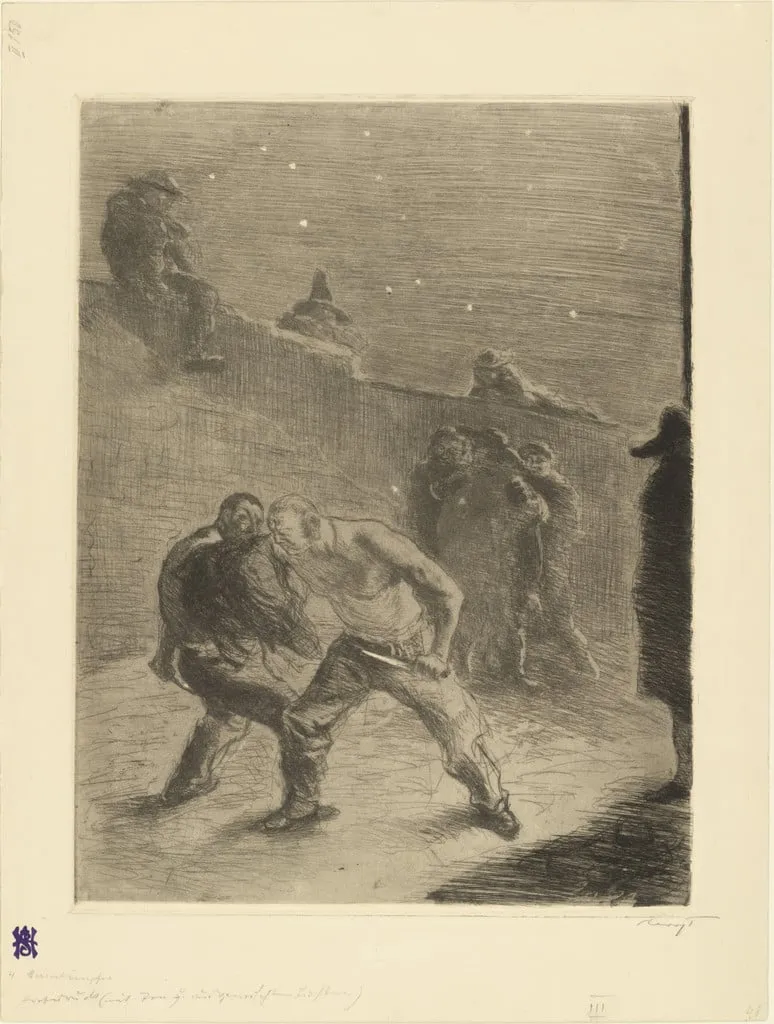
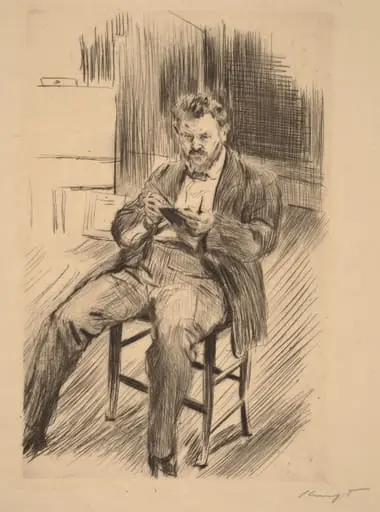
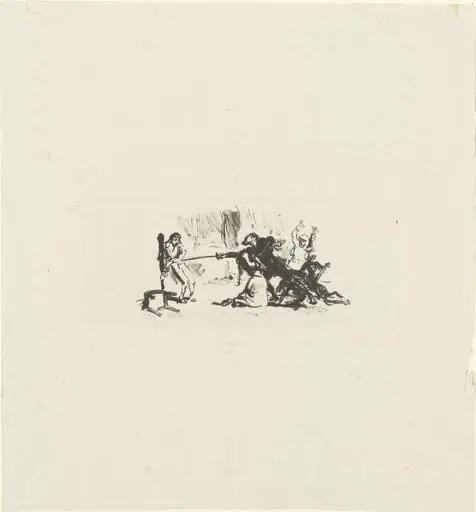
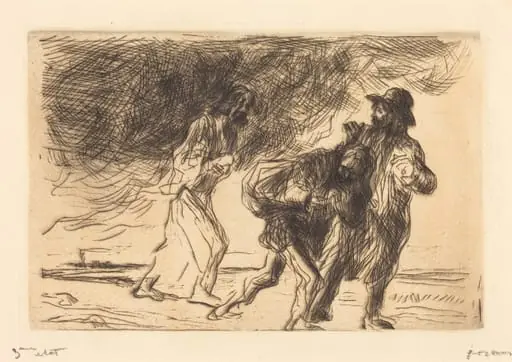
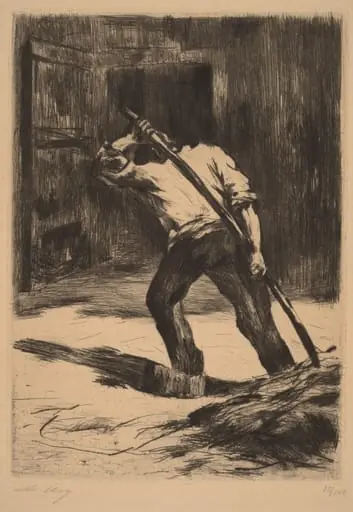
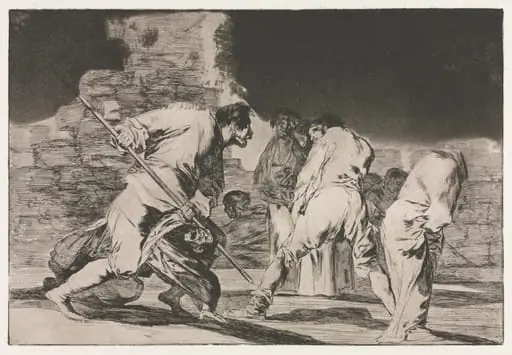
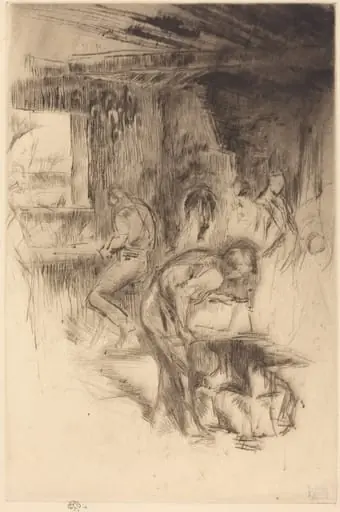
Untitled is an ink print by Max Slevogt. It dates from 1904 and is held in the collection of the Museum of Modern Art.
About this work
Overview
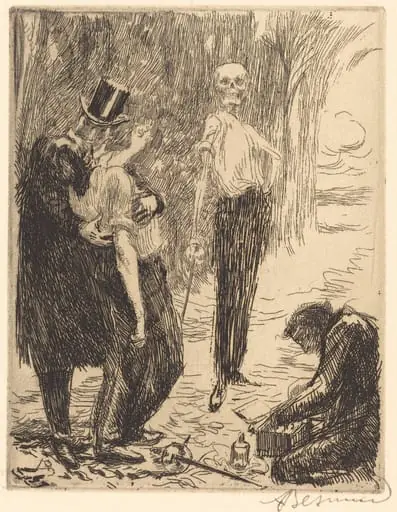
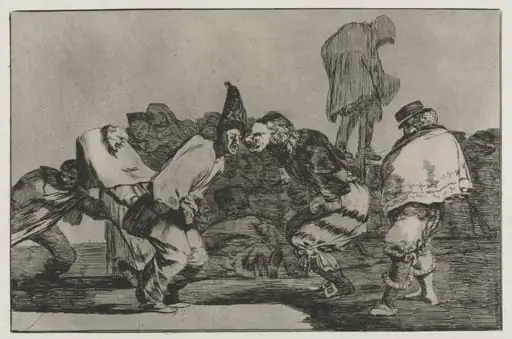
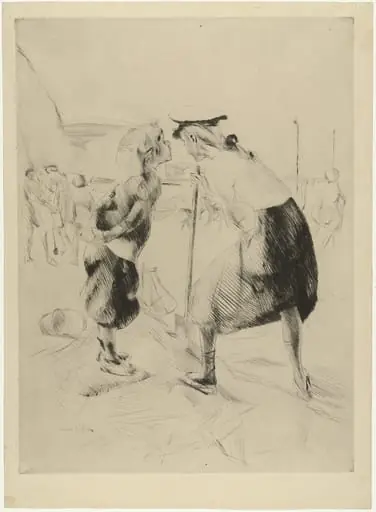
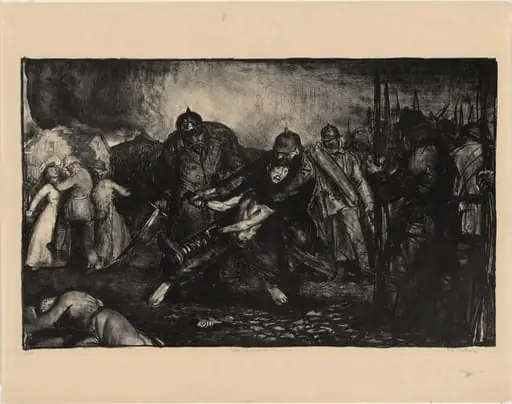
Created in 1904, this etching by Max Slevogt is a nocturnal street scene rendered in sharp, incised lines.
Created in 1904, this etching by Max Slevogt is a nocturnal street scene rendered in sharp, incised lines. As a print, it was produced by scratching an image into a metal plate, then inked and pressed onto paper. The work belongs to the collection of The Museum of Modern Art and reflects Slevogt’s interest in capturing fleeting, unguarded moments of urban life through direct, expressive mark-making.
Subject & Meaning
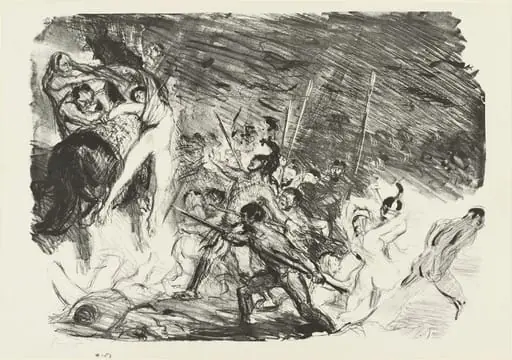
The scene depicts two men in the foreground: one shirtless and bent under strain, the other supporting him. Behind them, indistinct figures gather in darkness, their forms blurred and fragmented. The composition conveys physical exertion and social isolation, suggesting hardship or conflict without narrative clarity. The absence of context invites interpretation, emphasizing mood over story.
Technique & Style
Slevogt employed etching to achieve rapid, angular lines and dense shadows, mimicking the spontaneity of a sketch. The plate’s scratched surface allowed for high contrast between light and dark, enhancing the sense of movement and tension. His brush-like handling of the burin avoided polished finish, favoring raw energy over refinement—a hallmark of his approach to printmaking.
History & Provenance
The work was produced during a period when Slevogt was actively engaged in printmaking alongside his painting. It entered the collection of The Museum of Modern Art in the 20th century, likely as part of broader efforts to document German modernist prints. Its preservation reflects institutional recognition of Slevogt’s role in advancing print as a vehicle for modern expression.
Context
Slevogt was part of a generation of German artists influenced by French Impressionism but focused on gritty, contemporary subjects. Alongside Lovis Corinth and Max Liebermann, he helped shift German art toward direct observation of everyday life. This etching aligns with broader trends in early 20th-century printmaking that valued immediacy and emotional resonance over idealized form.
Legacy
Though less widely known than his paintings, Slevogt’s prints contributed to the legitimacy of etching as a medium for modernist expression in Germany. This work exemplifies how technical precision in printmaking could convey psychological depth and social observation. It remains a reference point for understanding the intersection of technique and urban realism in early modern German art.
Artist & collection
Artist
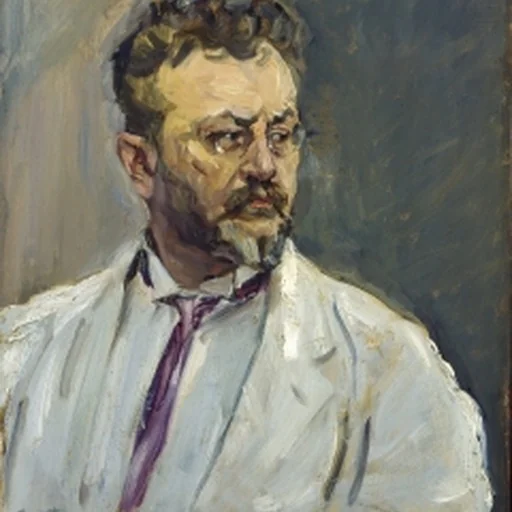
Max Slevogt (8 October 1868 – 20 September 1932) was a German Impressionist painter and illustrator, best known for his landscapes.