Artwork
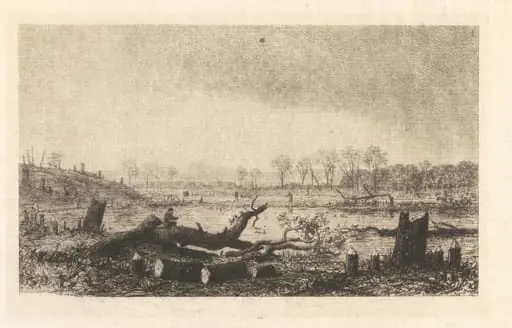
Souvenirs artistiques du Siége du Paris: Avenue de Boulogne, Vue Prise de la porte d'Auteuil, St. Cloud au fond, Dévastation du Bois de Boulogne
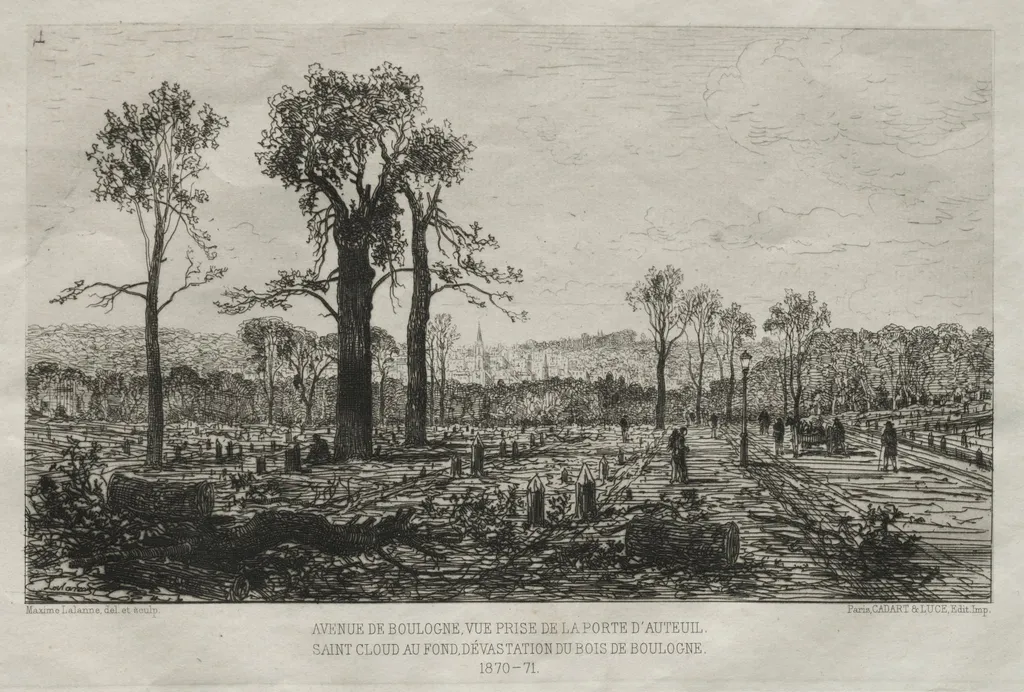
Souvenirs artistiques du Siége du Paris: Avenue de Boulogne, Vue Prise de la porte d'Auteuil, St. Cloud au fond, Dévastation du Bois de Boulogne is a print by the Impressionist artist Maxime Lalanne. It dates from 1880 and is held in the collection of the Cleveland Museum of Art.
About this work
Overview
The image conveys a quiet, somber record of environmental ruin rather than battle, emphasizing the landscape’s transformation rather than human conflict.
Created in 1880 by French printmaker Maxime Lalanne, this etching is part of a series documenting the aftermath of the Siege of Paris. It captures a flooded stretch of the Bois de Boulogne, viewed from the Porte d'Auteuil, with Saint-Cloud visible on the horizon. The image conveys a quiet, somber record of environmental ruin rather than battle, emphasizing the landscape’s transformation rather than human conflict.
Subject & Meaning
The scene portrays a once-lush forest reduced to waterlogged ruins, with skeletal trees rising from flooded ground. The distant silhouette of Saint-Cloud and the lone figures on the path suggest abandonment and slow recovery. By labeling it a 'souvenir,' Lalanne frames the destruction as a personal, memorialized witness—inviting contemplation of loss rather than outrage.
Technique & Style
Lalanne employed fine, precise etching lines to render the textures of submerged foliage, rippling water, and distant architecture. The monochrome palette enhances the melancholy tone, while the meticulous detail in branches and reflections reflects a commitment to observational accuracy. The composition’s depth, achieved through atmospheric perspective, draws the eye toward the distant hilltop.
History & Provenance
The print was produced shortly after the Franco-Prussian War and the Paris Commune, during a period of national reflection. It was likely circulated as part of a documentary series intended to preserve visual memory of wartime damage. Lalanne, known for topographical prints, used his skill to record urban and natural decay with archival intent rather than political agitation.
Context
This work aligns with the Realist movement’s emphasis on unembellished depiction of contemporary life. While many artists focused on urban hardship or labor, Lalanne turned to the natural environment as a witness to conflict. The destruction of the Bois de Boulogne—a symbol of imperial leisure—carried cultural weight, making its ruin a quiet indictment of war’s reach.
Legacy
Lalanne’s etching remains a significant example of 19th-century documentary printmaking. It contributes to a visual archive of wartime environmental damage, influencing later artists who treated landscape as a carrier of historical memory. Its restrained tone and technical precision distinguish it from more dramatic war imagery of the era.
Artist & collection
Artist
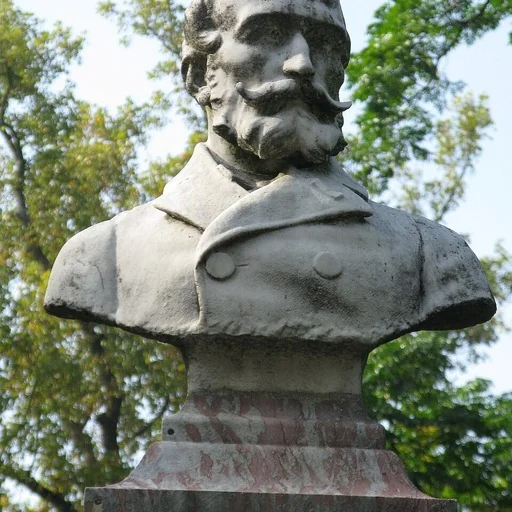
François Antoine Maxime Lalanne (November 27, 1827 – July 29, 1886) was a French artist known for his etchings and charcoal drawings (fusain).

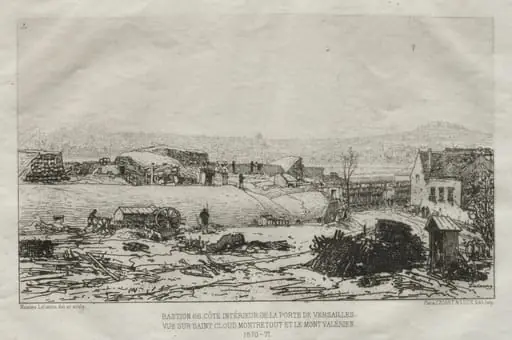 Bastion 66
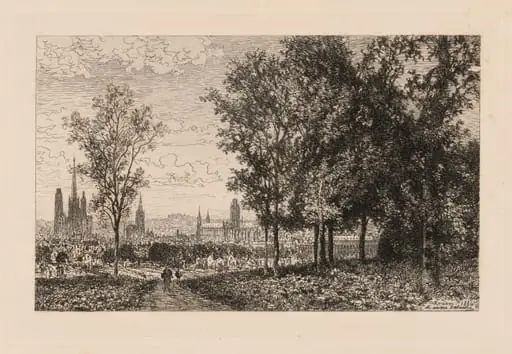 Rouen
Rouen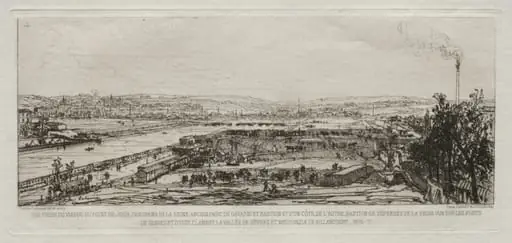 View from the Viaduct at the Pont-du-Jour, Panorama de la Seine
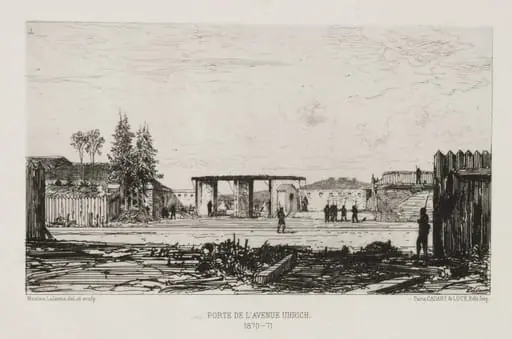 Porte du l'Avenue Uhrich
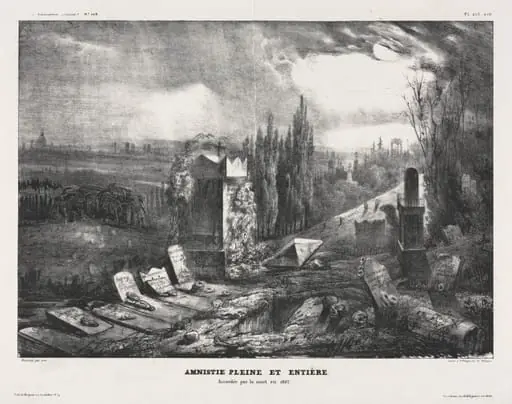 Full and Complete Amnesty
![Un mattino di settembre [A September Morning], by Celestino Turletti](https://artifactworldgallery.com/img/celestino-turletti--un-mattino-di-settembre-a-september-morning--cdd7bafaa96677e1-w320.webp) Un mattino di settembre [A September Morning]
Un mattino di settembre [A September Morning]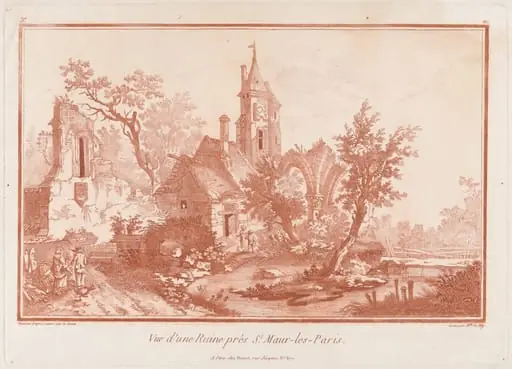 Vue d’une Ruine près St. Maur-les-Paris (View of a Ruin near St. Maur-les-Paris)
 État Actuel de la Mare d’Auteuil
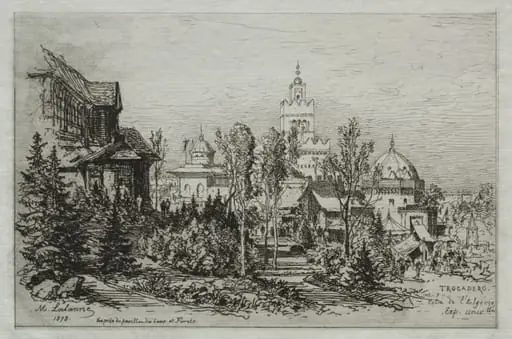 The Algerian Palace at the Trocadero