Artwork
The Buoy (La bouée)
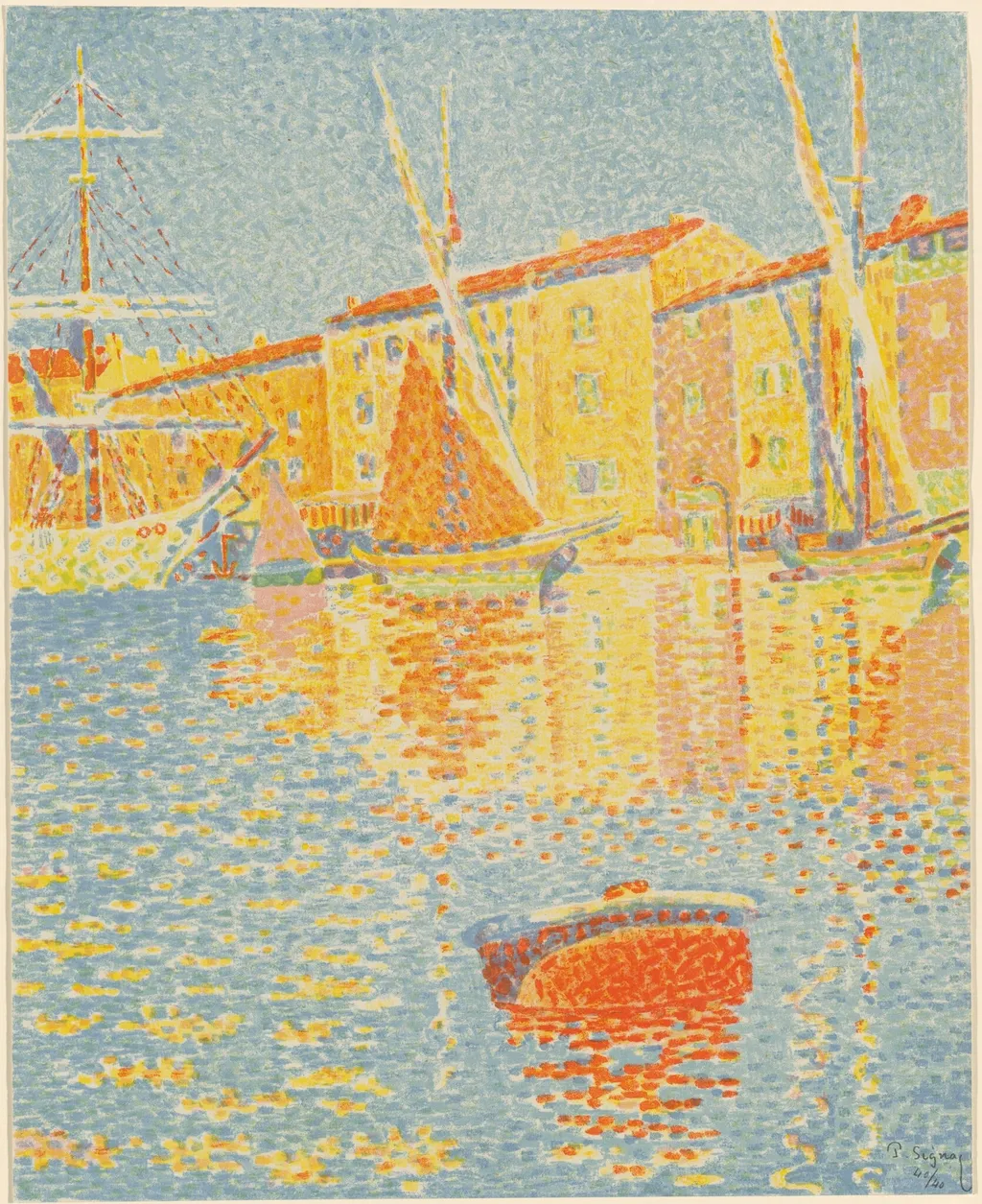
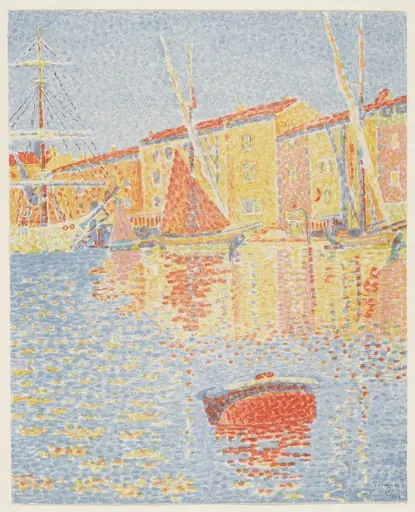
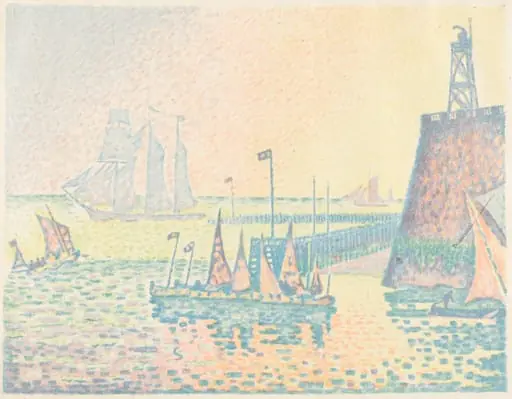
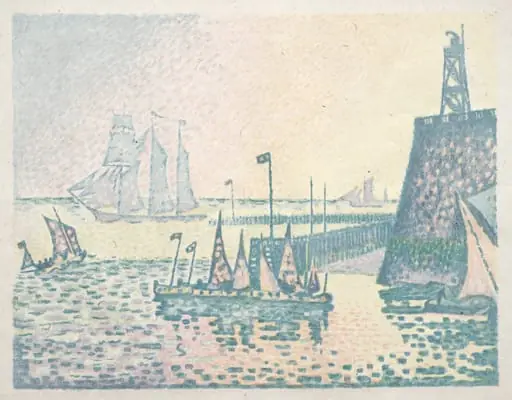
The Buoy (La bouée) is an ink print by the Impressionist artist Paul Signac. It dates from 1894 and is held in the collection of the National Gallery of Art.
About this work
Overview
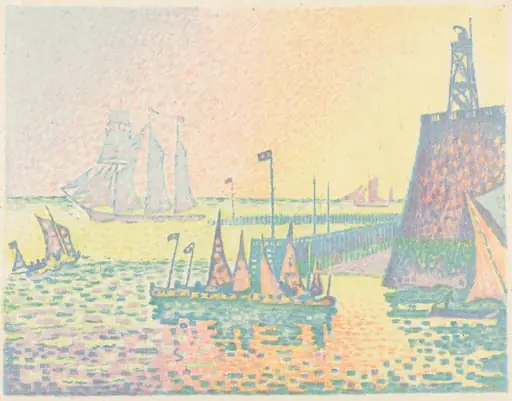
The Buoy (La bouée), a 1894 six-color lithograph by Paul Signac, captures a vibrant harbor scene characterized by a unique blend of bold outlines and soft, wavy forms, achieved with an unusually limited palette.
Subject & Meaning
The subject, a buoy, reflects Signac's enduring fascination with maritime themes, stemming from his passion for sailing and coastal landscapes. The buoy serves as a focal point within the bustling harbor setting.
Technique & Style
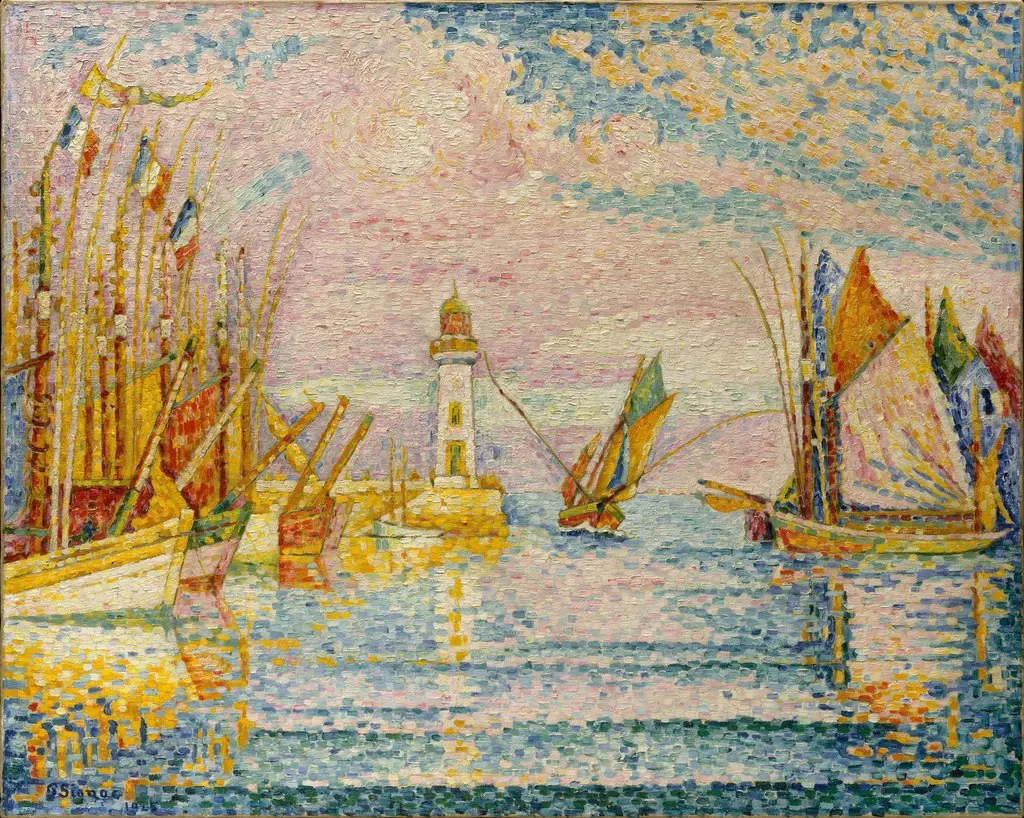
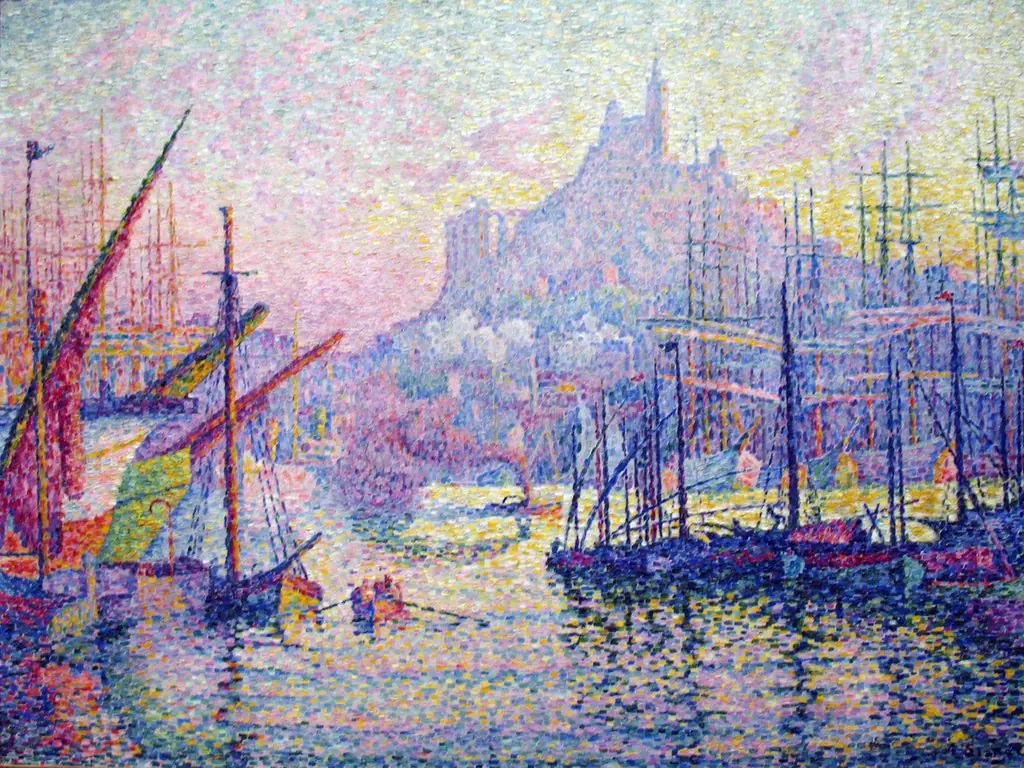
Executed in just six colors, the lithograph exemplifies Signac's adherence to Neo-Impressionist principles. The water's surface is rendered with yellow and blue specks, evoking light, while distant elements are defined by bold, yet softly rendered, red and yellow outlines.
History & Provenance
Created in 1894, The Buoy is a product of Signac's period of exploration with lithography, a medium that allowed him to disseminate his Neo-Impressionist visions more widely. Provenance details are not specified in available information.
Context
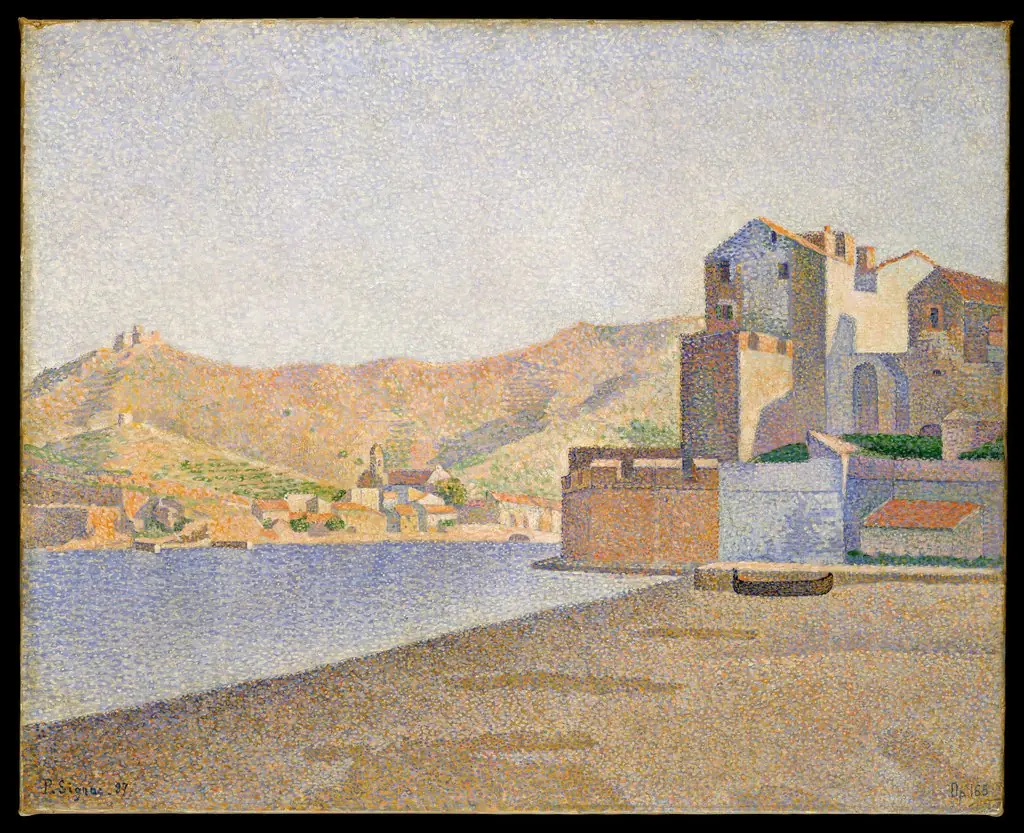
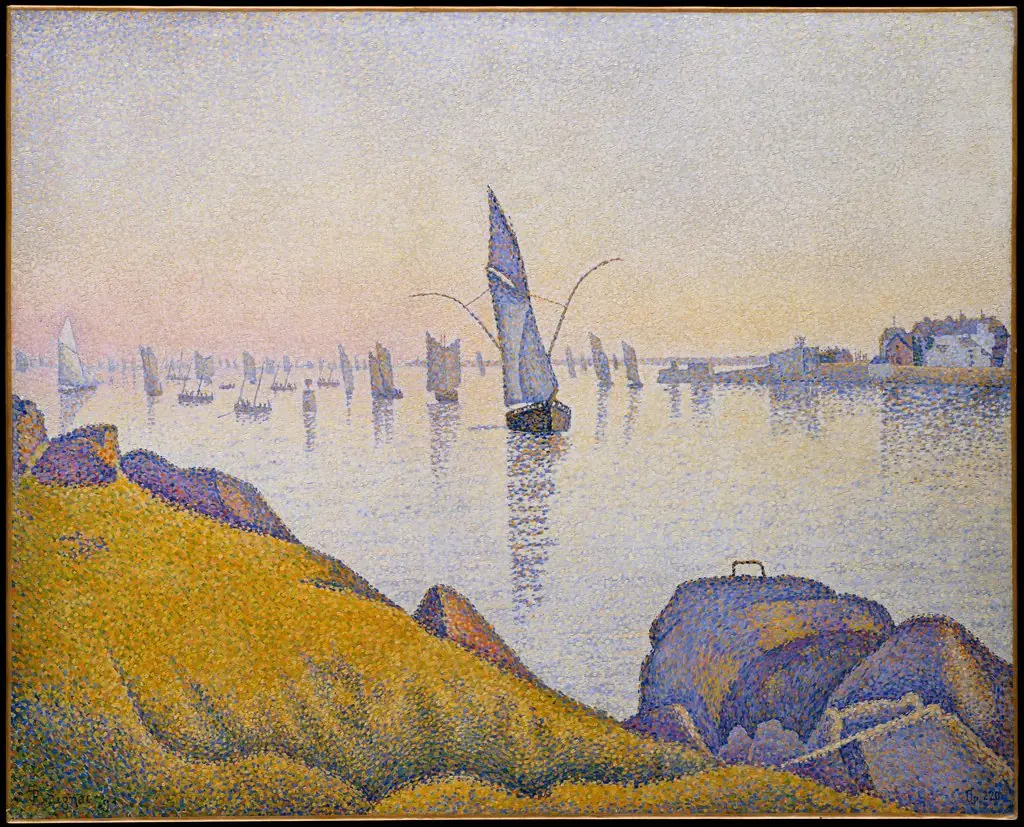
As a leading Neo-Impressionist and contributor to the development of Pointillism alongside Georges Seurat, Signac's The Buoy reflects the movement's emphasis on light, color, and the modern experience of urban and natural landscapes.
Legacy
The Buoy contributes to Signac's legacy as a master of capturing the interplay of light and color in maritime settings, influencing subsequent generations of artists in their approach to landscape and the depiction of modern life.
Own this work as a print
Artist & collection

Artist
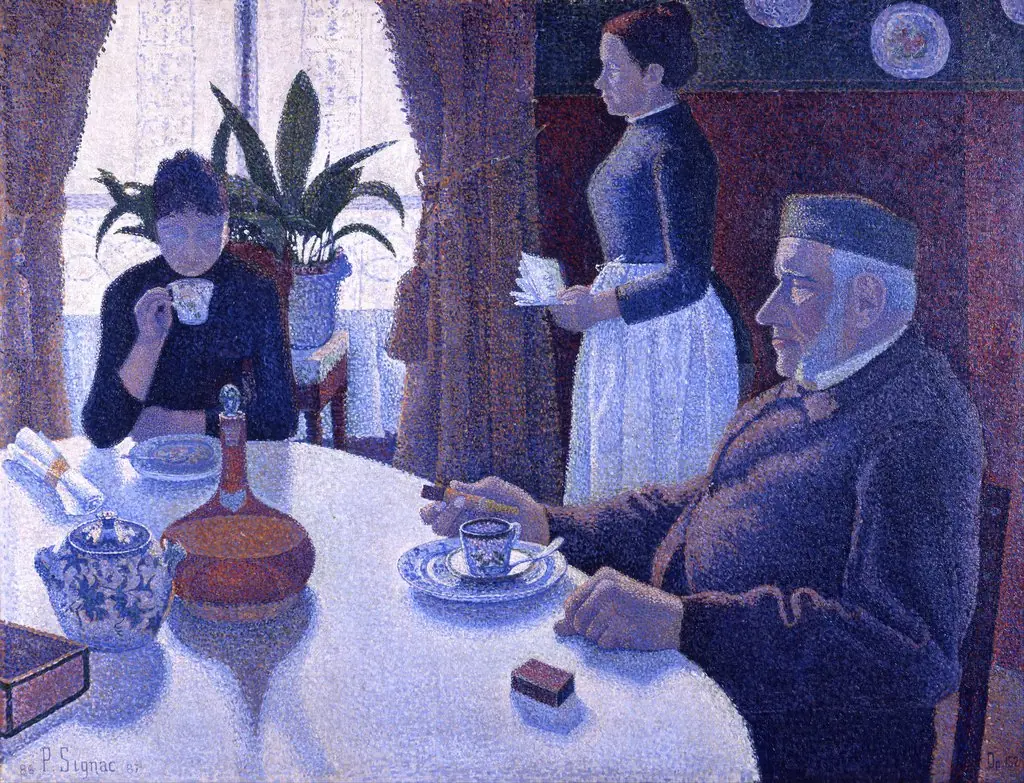
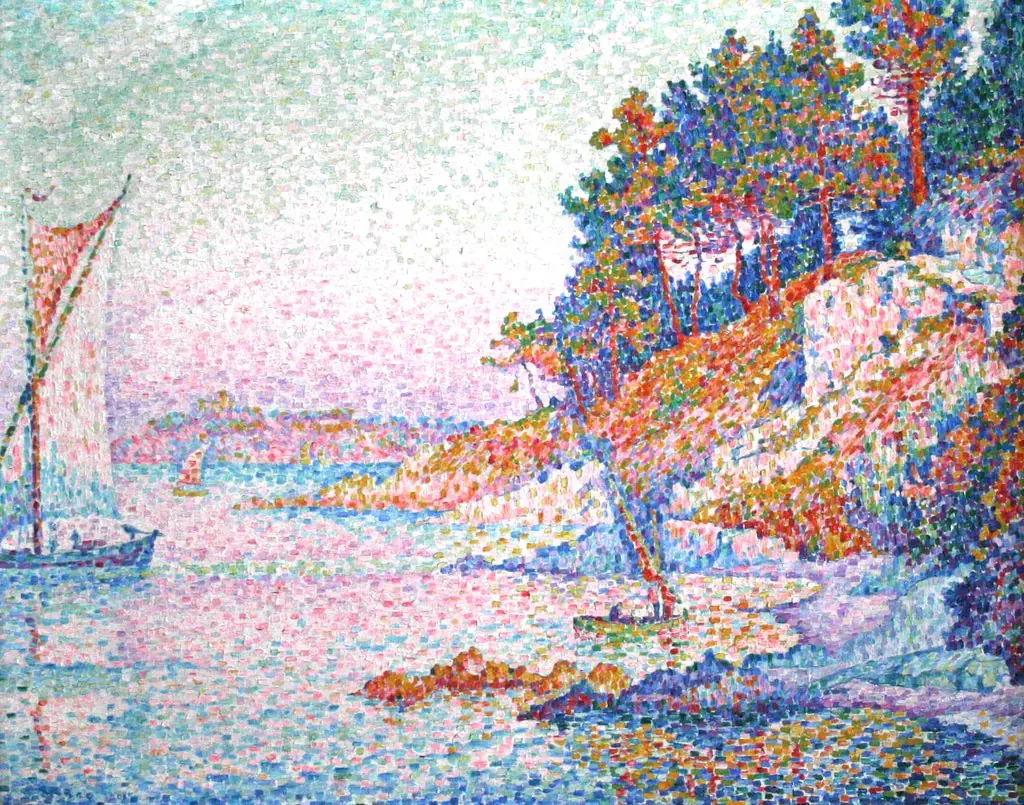
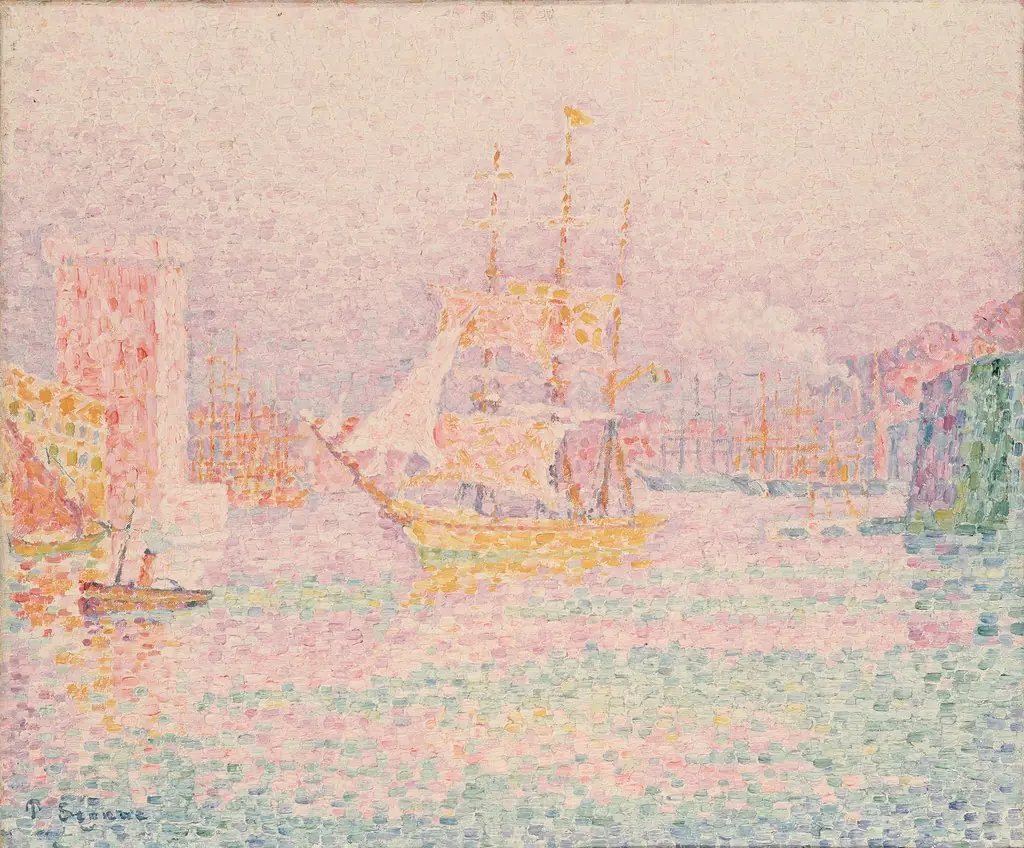
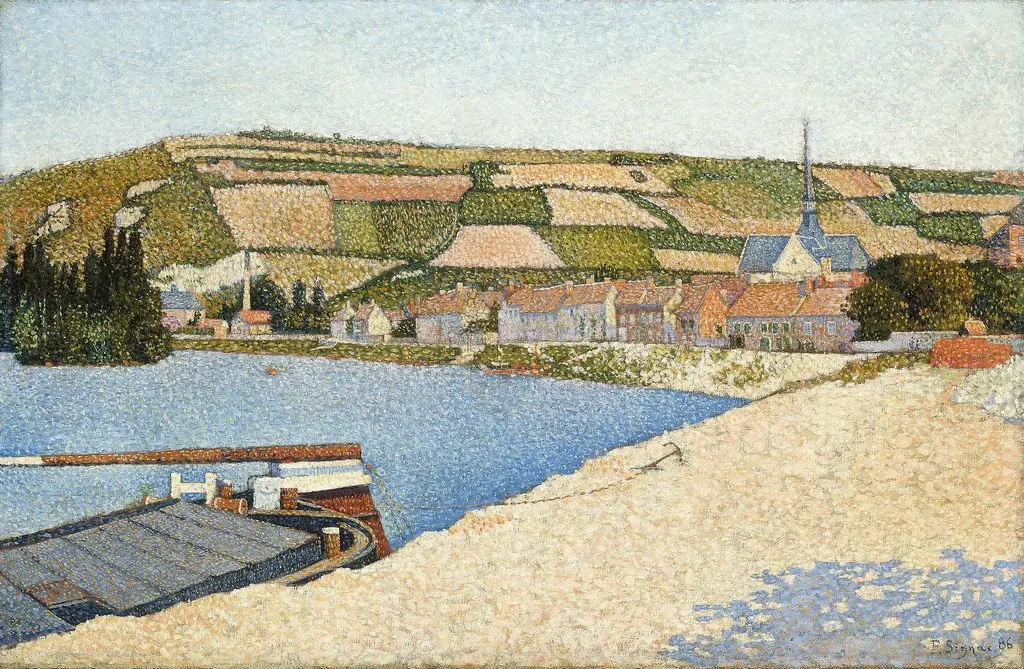
Paul Victor Jules Signac ( seen-YAHK, French: ; 11 November 1863 – 15 August 1935) was a French Neo-Impressionist painter who, with Georges Seurat, helped develop the artistic technique Pointillism.