Artwork
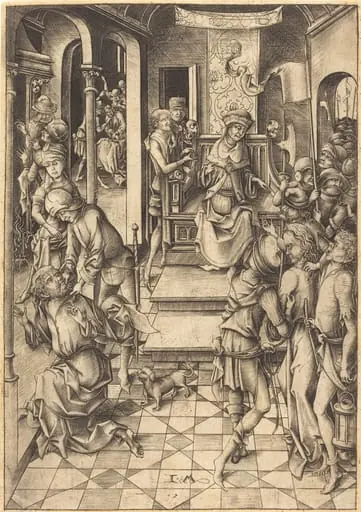
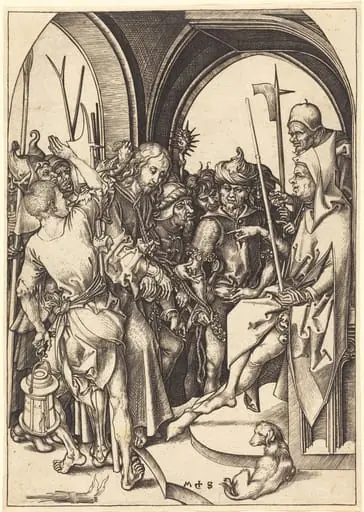
Christ before Pilate
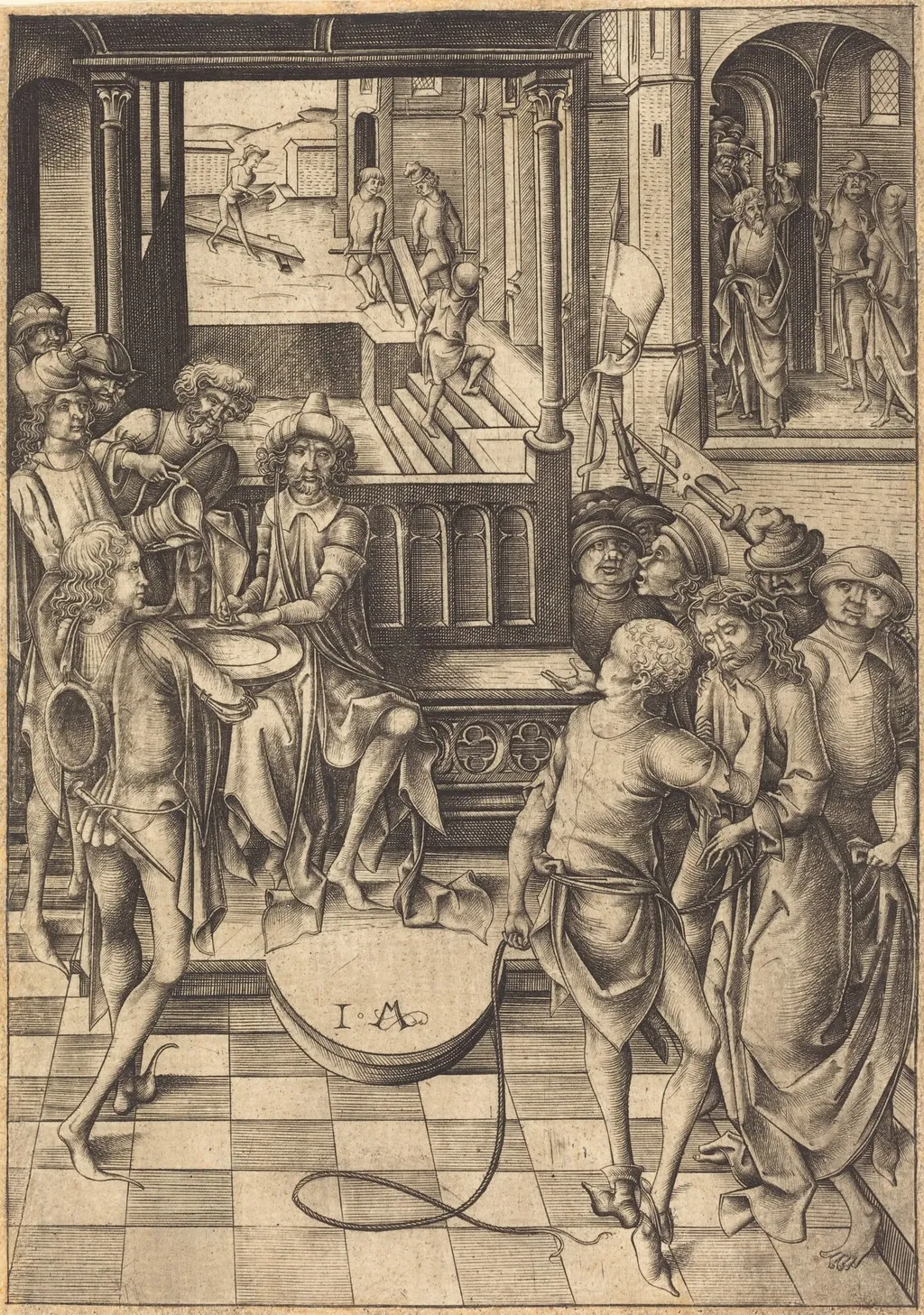
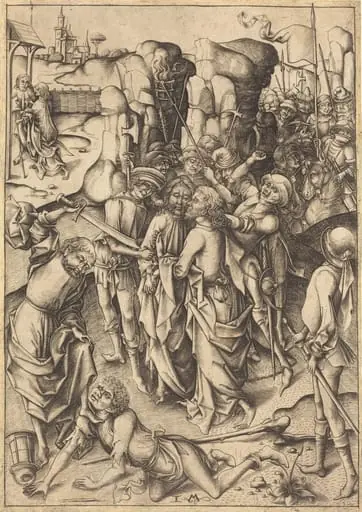
Christ before Pilate is an ink print by the Renaissance artist Israhel van Meckenem. It dates from 1480 and is held in the collection of the National Gallery of Art.
About this work
Overview
Executed in black‑line engraving, the image measures roughly a hand‑size sheet and reflects the artist’s prolific output during the late fifteenth century.
Around 1480 Israhel van Meckenem, a German goldsmith‑turned printmaker, produced an engraving titled *Christ before Pilate*. The work belongs to the religious genre, illustrating the New Testament episode in which Jesus is presented to the Roman governor. Executed in black‑line engraving, the image measures roughly a hand‑size sheet and reflects the artist’s prolific output during the late fifteenth century.
Subject & Meaning
The composition captures the moment of Jesus’ trial, with Pilate seated on a raised dais and a shield‑like disc in his hand, while a semi‑nude figure—presumably Christ— is escorted forward by two attendants. A dense crowd gathers on either side, embodying the public scrutiny and tension surrounding the judgment, a theme commonly invoked for devotional reflection.
Technique & Style
Van Meckenem employs fine, intersecting lines to model forms, a method known as cross‑hatching. This technique builds tonal variation in the drapery, facial features, and architectural elements, creating a sense of depth within the limited black‑and‑white medium. The engraving’s intricate line work demonstrates the artist’s skill in rendering texture and spatial relationships without the aid of tone washes.
History & Provenance
Active between 1465 and 1503, van Meckenem was the most productive engraver of his century, leaving a legacy of over six hundred prints, many of which reinterpret earlier compositions. *Christ before Pilate* likely circulated among devotional collectors and may have been reproduced in workshop copies, reflecting the period’s practice of disseminating religious imagery through prints.
Context
The late fifteenth‑century Holy Roman Empire saw a surge in printed devotional material, driven by the expanding market for portable, affordable images. Van Meckenem’s work fits within this trend, providing visual access to biblical narratives for lay audiences and reinforcing the didactic role of print in pre‑Reformation religious culture.
Artist & collection
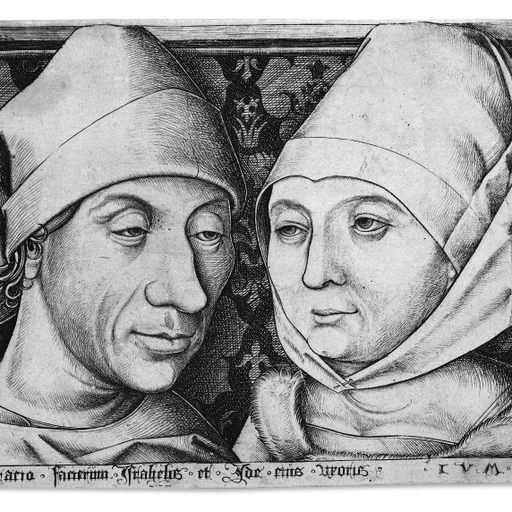
Artist
Israhel van Meckenem (c. 1445 – 10 November 1503), also known as Israhel van Meckenem the Younger, was a German printmaker and goldsmith, perhaps of a Dutch family origin. He was the most prolific engraver of the…