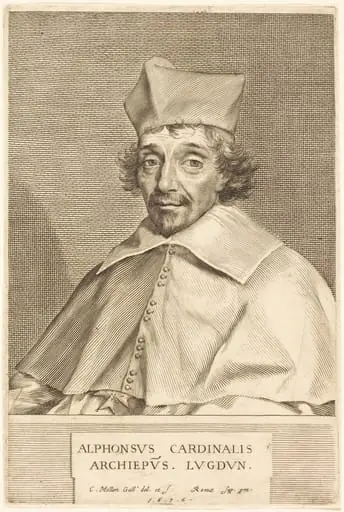
Artwork
Alphonse III Delbene, Bishop of Orléans
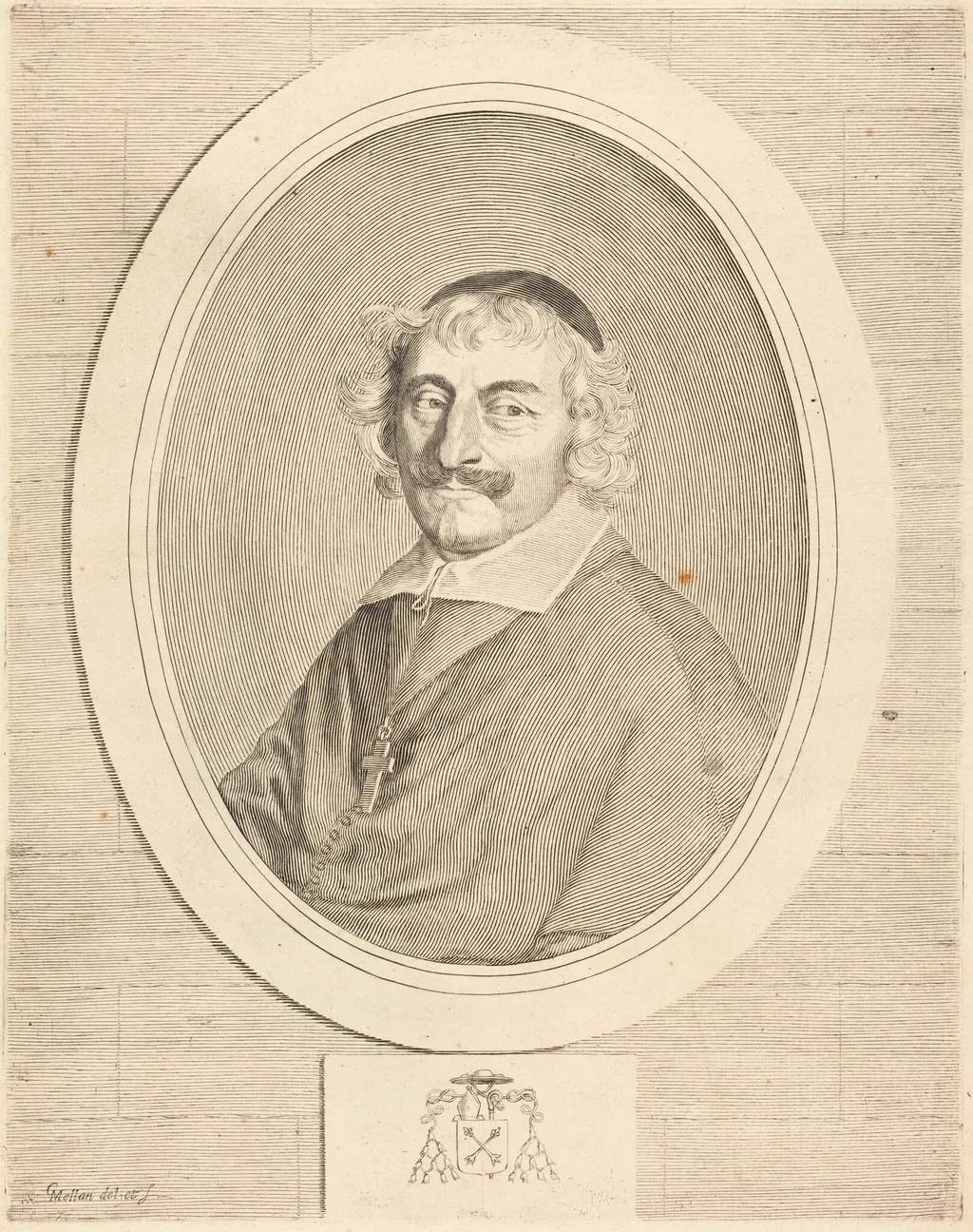
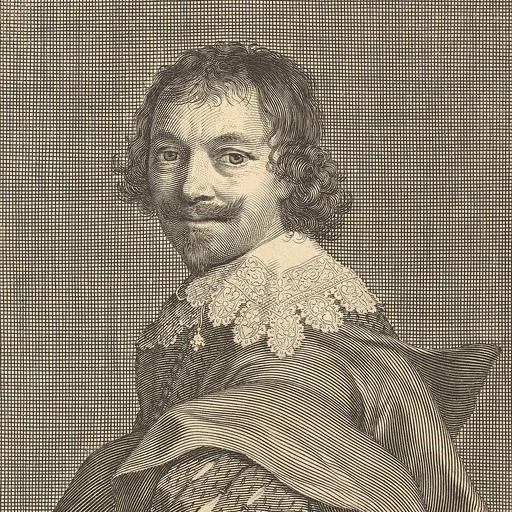
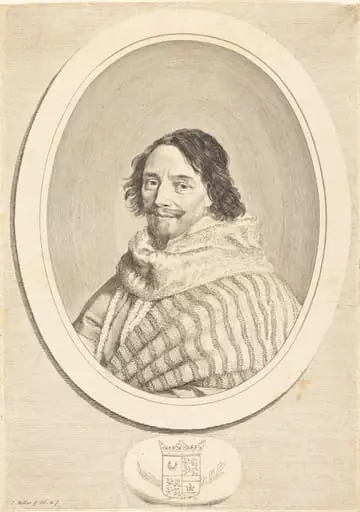
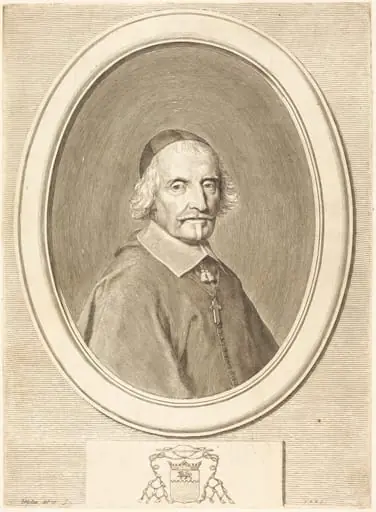
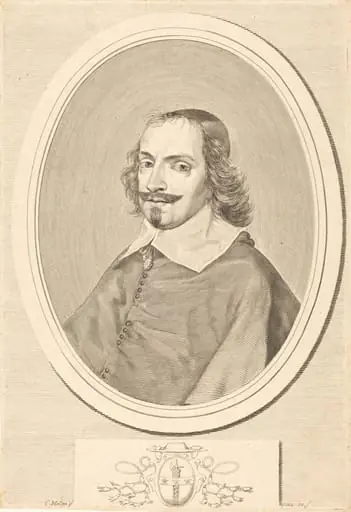
Alphonse III Delbene, Bishop of Orléans is an ink print by the Renaissance artist Claude Mellan. It dates from 1643 and is held in the collection of the National Gallery of Art.
About this work
Overview
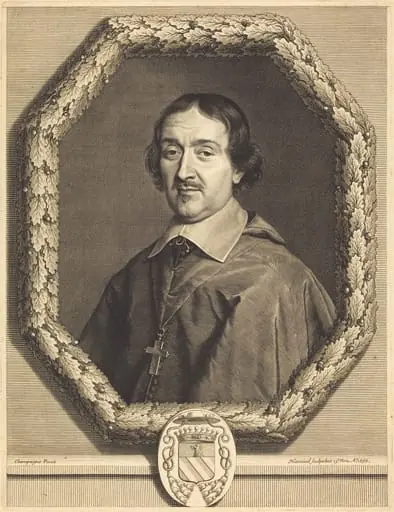
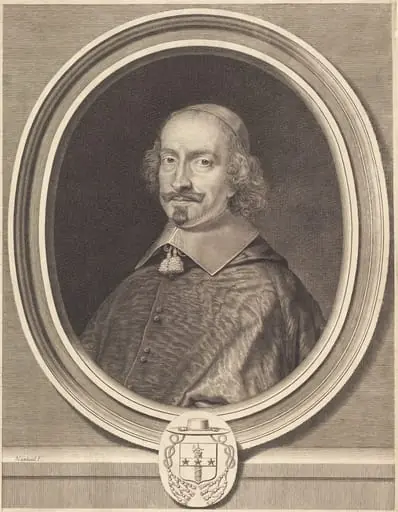
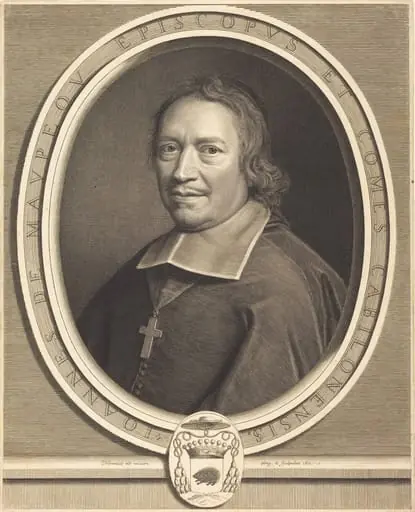
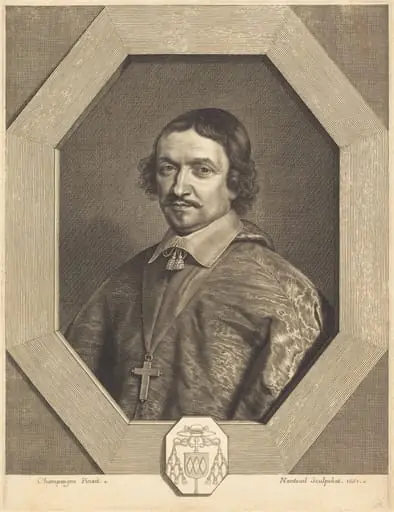
This 1643 engraving by Claude Mellan depicts Alphonse III Delbene, Bishop of Orléans, rendered in fine linear detail on laid paper.
This 1643 engraving by Claude Mellan depicts Alphonse III Delbene, Bishop of Orléans, rendered in fine linear detail on laid paper. The portrait captures the bishop in formal ecclesiastical dress, framed within a circular border against a pale background. Mellan’s mastery of the burin is evident in the precision of the lines that define texture and form, characteristic of his refined approach to portraiture in print.
Subject & Meaning
Alphonse III Delbene is portrayed with the insignia of his ecclesiastical office: a dark robe, white clerical collar, and a cross suspended at his chest. The headband, likely a zucchetto, and his neatly curled hair and mustache reflect both his status and the fashion of mid-17th-century French clergy. The image conveys dignity and authority without overt symbolism, emphasizing the bishop’s identity through attire rather than narrative.
Technique & Style
Mellan executed this portrait using a single spiral line technique, a signature method in which he began at the nose and wound outward to define contours and shading. The result is a seamless gradation of tone and texture, particularly visible in the folds of fabric and the softness of facial hair. The absence of cross-hatching creates a fluid, almost sculptural quality unique to his engraved works.
History & Provenance
Created in 1643, the engraving was likely produced as part of a series documenting French bishops or for private circulation among ecclesiastical circles. No documented early ownership is recorded, but the work survives in several institutional collections, including the Bibliothèque nationale de France. Its preservation suggests it was valued for its technical excellence and likeness.
Context
In mid-17th-century France, engraved portraits of clergy served both commemorative and propagandistic functions, reinforcing the Church’s presence in public life. Mellan, active in Paris, was among the most skilled engravers of his time, known for translating painted likenesses into intricate prints. This work aligns with broader trends in religious portraiture that emphasized sobriety and spiritual authority.
Legacy
Though not widely reproduced in popular media, Mellan’s engraving of Delbene remains a reference for studies of French Baroque printmaking. His technical innovation, particularly the spiral line method, influenced later generations of engravers. The portrait endures as a quiet example of how portraiture could convey status through restraint and meticulous craftsmanship.
Artist & collection