Artwork
Anne of Austria
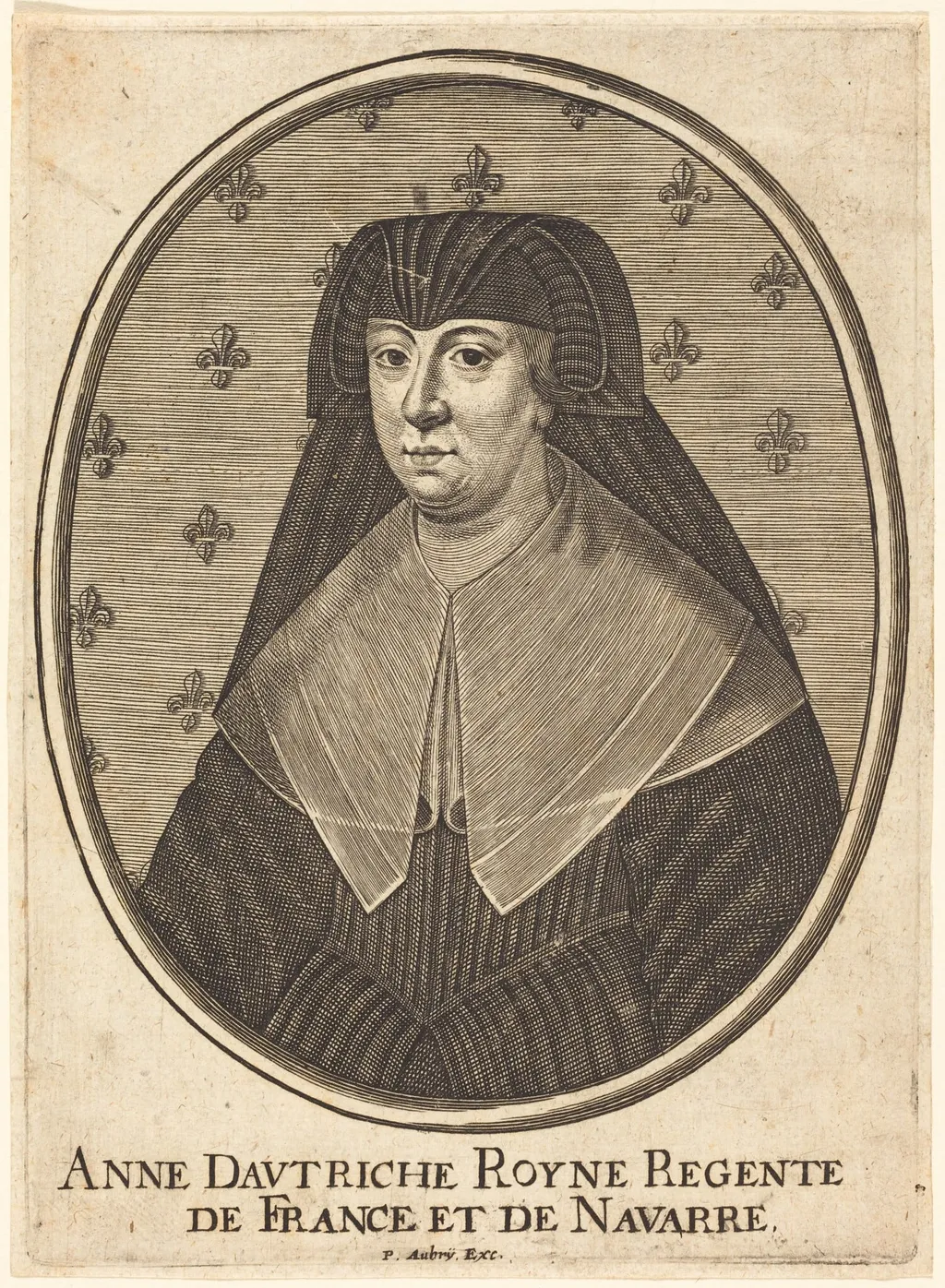
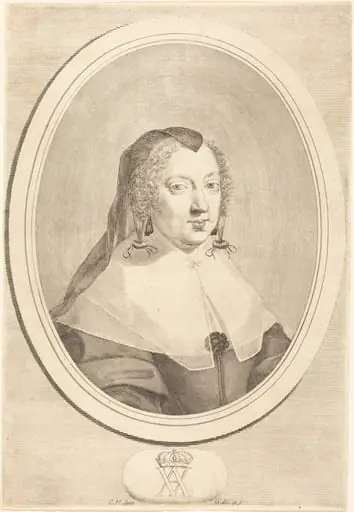
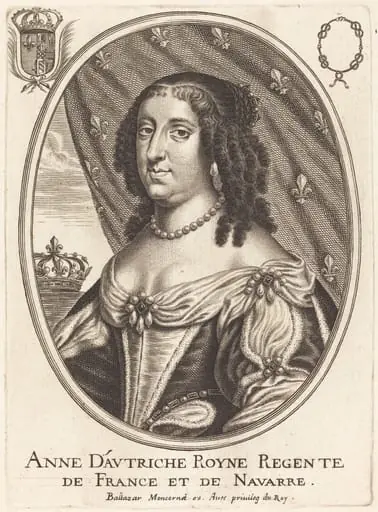
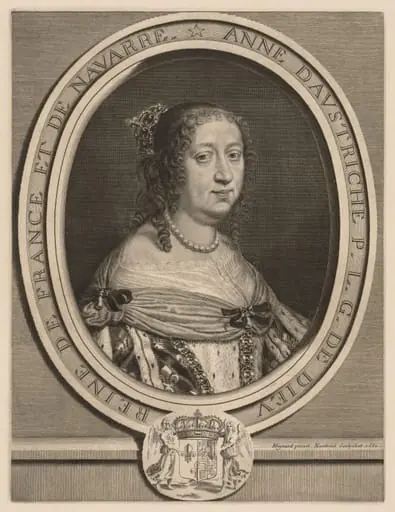
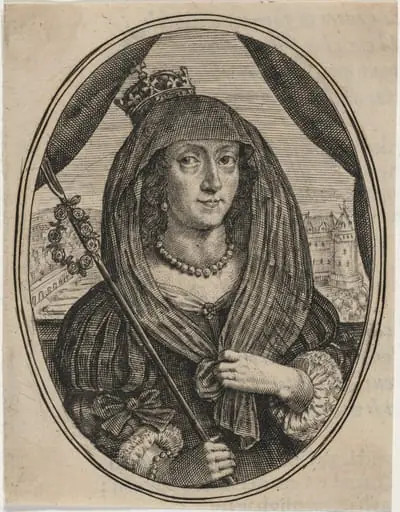
Anne of Austria is an ink print by the Baroque artist Pierre Aubry. It dates from 1648 and is held in the collection of the National Gallery of Art.
About this work
Overview
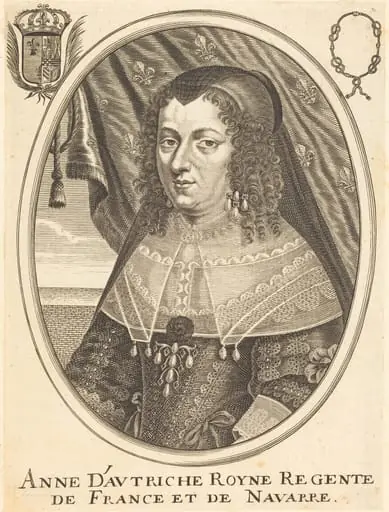
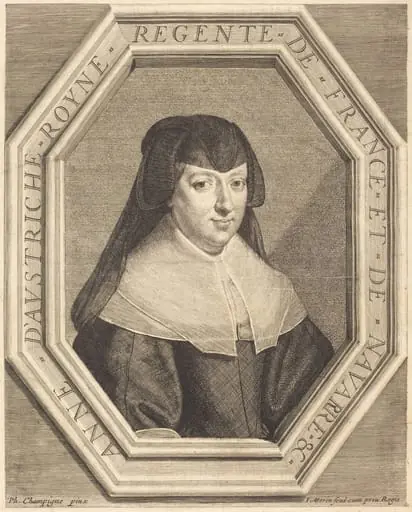
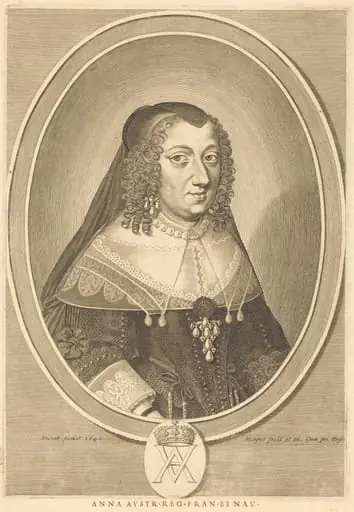
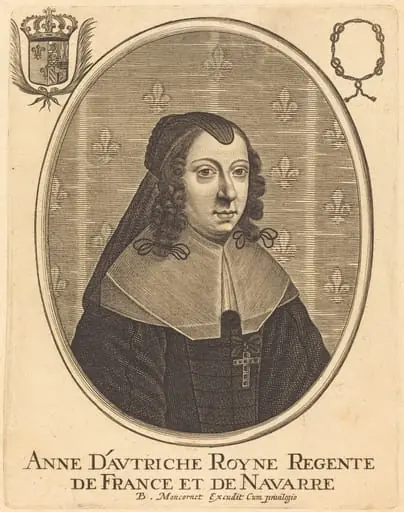
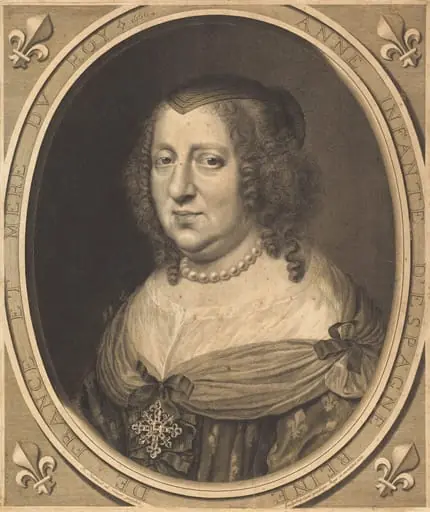
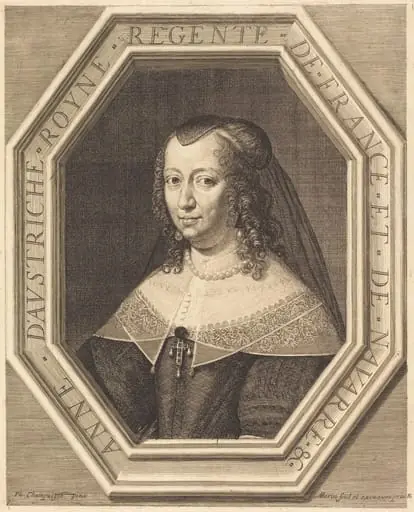
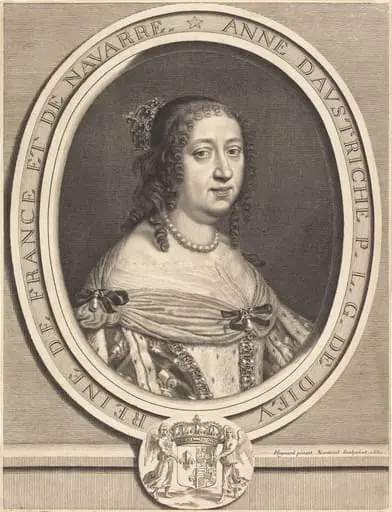
This black-and-white engraving, produced by Pierre Aubry in 1648, depicts Anne of Austria, Queen Regent of France and Navarre.
This black-and-white engraving, produced by Pierre Aubry in 1648, depicts Anne of Austria, Queen Regent of France and Navarre. Executed on laid paper, the portrait follows the conventions of official royal imagery of the mid-seventeenth century. The composition is restrained, emphasizing clarity and dignity over ornamentation. The image was likely intended for dissemination among courtiers and foreign dignitaries as a representation of sovereign authority during a period of political transition.
Subject & Meaning
Anne of Austria is portrayed not as a bride or mother, but as a ruler wielding regency power after the death of Louis XIII. Her solemn expression and formal attire convey gravitas and control. The inclusion of the fleur-de-lis, a traditional symbol of French monarchy, reinforces her legitimacy. The inscription identifies her official titles, anchoring the image in the political reality of her role: governing France during the minority of her son, Louis XIV.
Technique & Style
Aubry employed fine, controlled lines typical of engraving to render texture in the fabric of her robe and the structure of her hat. The absence of color and the plain background focus attention on the sitter’s facial features and the precision of her attire. The subtle gradations of tone, achieved through cross-hatching, suggest volume without theatricality. This method reflects the era’s preference for disciplined, reproducible portraiture suited to print circulation.
History & Provenance
Created in 1648, the engraving emerged during Anne’s regency, a time of internal strife and external conflict in France. It was likely produced for political or diplomatic use, possibly to affirm her authority amid challenges from nobles and foreign powers. While its exact early ownership is undocumented, its survival in institutional collections suggests it was preserved as a historical document of royal representation rather than as a decorative object.
Context
In mid-seventeenth-century France, engraved portraits of monarchs served as tools of state propaganda. With limited access to original paintings, prints like this one allowed the image of the sovereign to reach a broader audience. Anne’s role as regent made her visibility particularly important; her portrayal needed to project stability and continuity, especially as France navigated the early years of Louis XIV’s reign.
Legacy
This engraving remains a primary visual record of Anne of Austria in her political capacity. It exemplifies how print media functioned as a medium of political communication before photography. Though not widely known today, it contributes to scholarly understanding of how female rulers were visually constructed in early modern Europe—emphasizing authority, restraint, and dynastic legitimacy over personal expression.
Artist & collection